





Tripod Leg Tiered Stand
These tripod leg tiered stand pieces are clever stacking furniture built to serve drinks or hold books, offering classic timber tiers on steady three-legged bases.
Tripod Leg Tiered Stand
A tripod leg tiered stand appears primarily in the form of antique dumb waiters, occasional tables, and side tables designed with multiple vertical levels. Buyers searching for a tripod leg tiered stand will notice that the overwhelming majority of pieces are Georgian or Regency serving stands with revolving or folding wooden tiers.
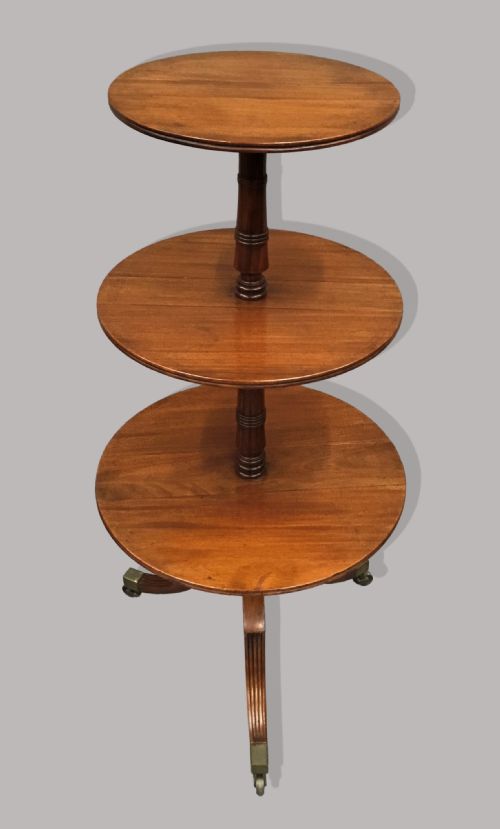
The configurations span from two-tier George II side tables up to towering George III three-tier serving stands supported by slender wooden columns. These utilitarian tables served dining rooms and parlours across the eighteenth and nineteenth centuries, holding dishes or bottles close at hand.
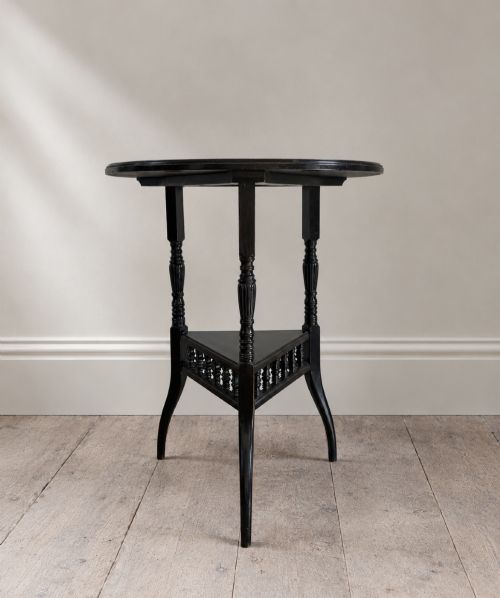
Later Victorian interpretations, such as ebonised Arts and Crafts side tables and hand-painted gypsy tables, translate the tiered format into lighter domestic settings. Every tripod leg tiered stand relies on a balanced tripartite base to keep the elevated shelves stable.
How they were made
Cabinetmakers constructed the main bodies of these pieces using solid mahogany or walnut, frequently selecting dense timbers capable of supporting cantilevered shelves. Marquetry inlay appears on select eighteenth-century examples, adding ornamental detail through contrasting wood veneers.
Brass fittings, including castors and folding mechanisms, allow the multi-level tiers to pivot or collapse for storage. Ebonised hardwood and painted finishes emerge in later nineteenth-century pieces, shifting the visual character away from natural timber grains.
Tripod Leg Tiered Stand Retail Price Guide 2026
Typical asking prices for tripod leg tiered stand among the pieces listed under this phrase on Sellingantiques today, from the lower quarter to the upper quarter. They describe what is for sale here now, not the wider market.
Early dining tables on three legs had to behave politely, lest a clumsy lean sent the entire claret supply crashing down.
What varies in quality
The structural integrity of the central column and the tightness of the tripod joints determine how steadily the tiers hold weight. Finer pieces demonstrate precise joinery where the tiered trays meet the turning shaft without wobble.
The choice of raw materials also dictates standing value, separating plain utility tables from superior examples featuring figured mahogany or intricate marquetry inlay. Surviving original brass hardware and working folding mechanisms further elevate the calibre of an individual stand.
The Tripod Leg Tiered Stand Glossary
- Dumb waiter
- A freestanding tiered stand used in dining rooms to hold food, plates, or drinks without requiring a servant present.
- Tripod base
- A three-legged support structure designed to keep a central pillar stable on uneven floors.
- Marquetry
- The art of applying decorative veneer pieces in wood to form intricate patterns across a surface.
- Ebonised wood
- Timber treated with a dark stain or finish to simulate the appearance of expensive ebony.
- Tiered table
- Any piece of furniture featuring multiple horizontal surfaces stacked vertically above one another.
Tripod Leg Tiered Stand: Frequently Asked Questions
What is a tripod leg tiered stand used for?
These pieces functioned historically as portable serving stations in dining rooms, holding extra dishes, cutlery, and wine bottles during long meals.
Today, they make versatile corner display pieces or bedside tables where multiple levels provide practical surface space in compact rooms.
How do I identify a Georgian tiered stand?
Georgian examples rely heavily on solid mahogany construction, featuring robust turned columns and tripod legs ending in pad or spade feet.
They often incorporate clever pivoting trays or folding mechanisms designed to save space when not holding service ware.
Are all tiered stands fitted with folding trays?
Not every stand collapses, as many eighteenth-century and nineteenth-century pieces feature fixed circular tiers attached permanently to the central pillar.
Folding versions typically employ brass hinges underneath the trays so the leaves drop down flat against the vertical shaft.
How do I care for antique mahogany tiered tables?
Protect the polished wood surfaces by avoiding direct sunlight and keeping them away from extreme temperature shifts that cause timber to split.
Dust regularly with a dry cloth and apply a quality beeswax sparingly to nourish the grain without building up heavy residues.