




Vintage Dessert Stand
These vintage dessert stand selections offer tiered serving solutions in mahogany, brass, glass, and rosewood for period interiors.
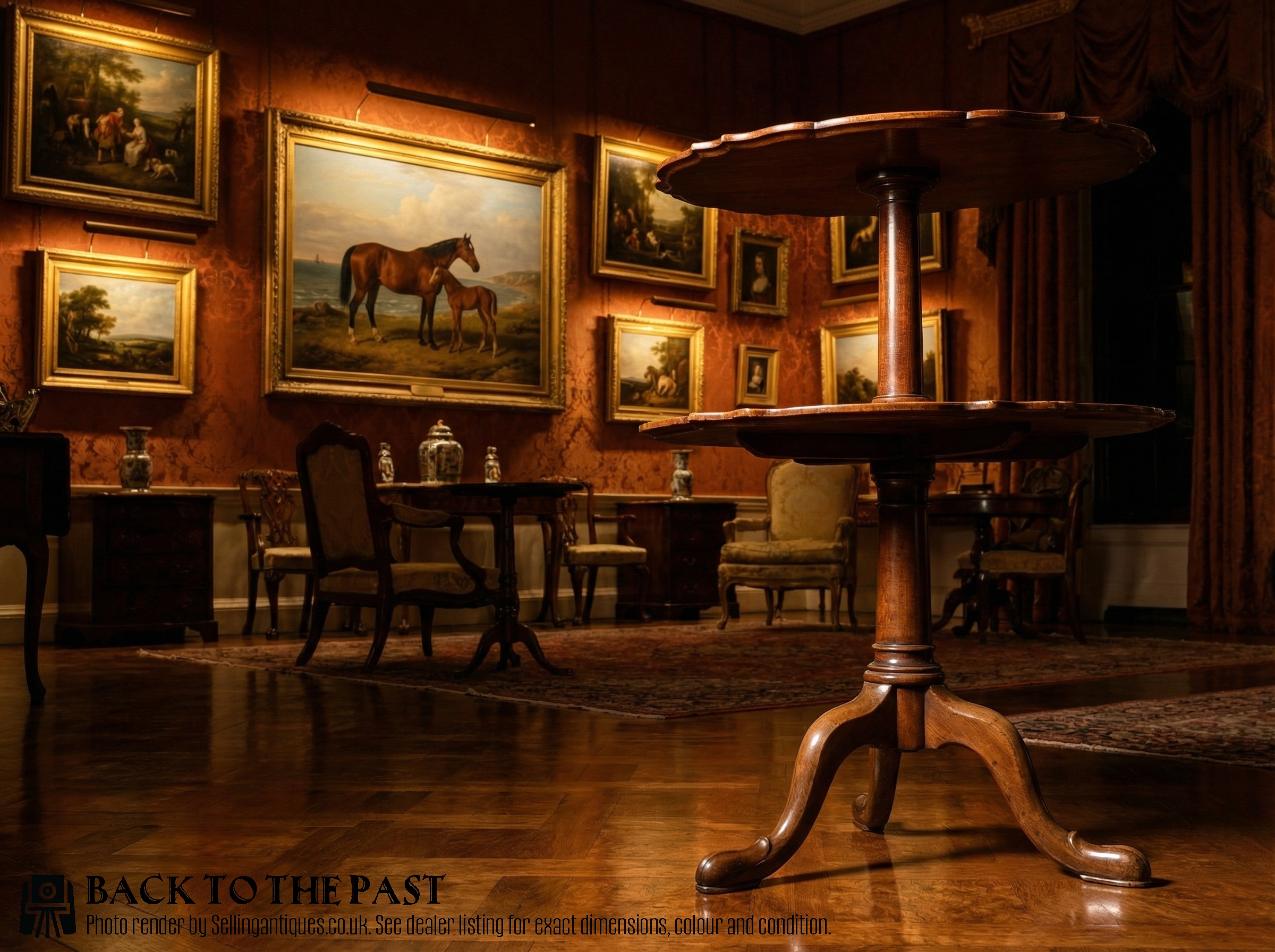
Vintage Dessert Stand
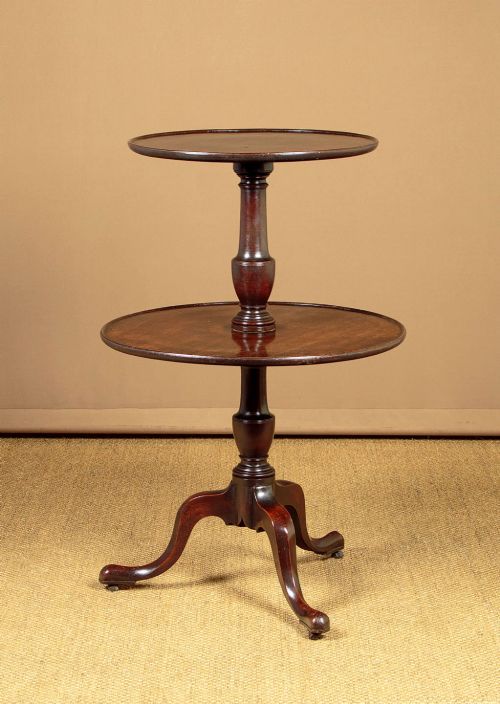
A vintage dessert stand encompasses tiered serving furniture designed for displaying sweet courses and cakes across Georgian, Victorian, and Edwardian periods.
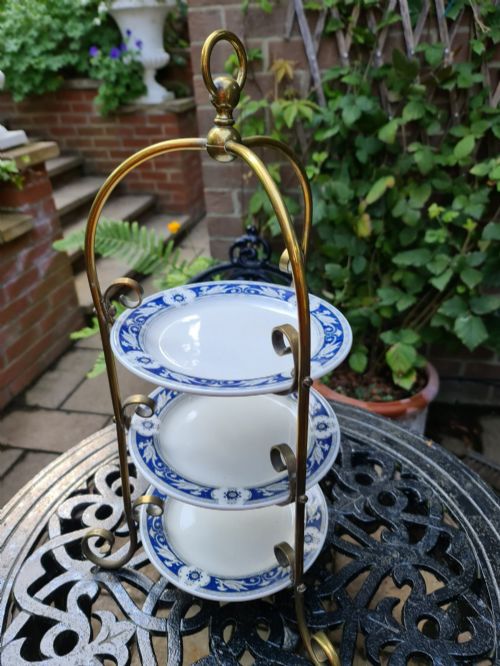
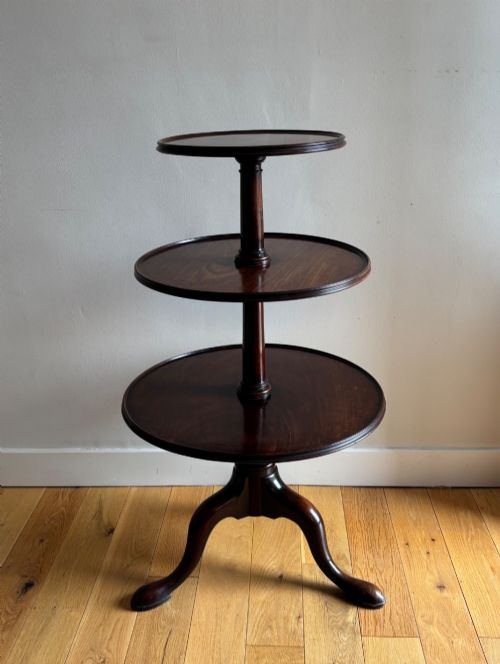
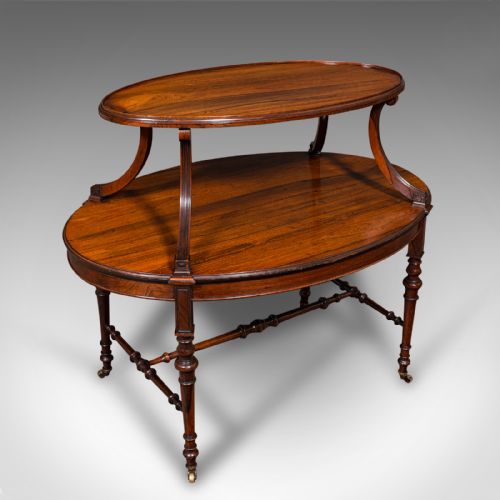
The selections on this page primarily consist of mahogany dumb waiters, multi-tiered cake stands, and polished brass and glass display tables.
Buyers encounter forms ranging from folding cake stands in walnut and rosewood to substantial multi-tier dumb waiters in mahogany and oak.
Materials and Construction
Cabinetmakers utilised dense timbers such as mahogany, rosewood, walnut, and oak to construct sturdy tiered frameworks capable of supporting tableware.
Metal elements including polished brass feature alongside mirrored glass and ceramics to create tiered serving platters and display centres.
Folding mechanisms and tiered tiers required precise joinery to ensure stability across multiple levels of shelves.
German workshops contributed mirrored gateau centrepieces, proving that sweet tooths required proper optical engineering.
Assessing Quality and Execution
Quality rests upon the selection of timber grain, the crispness of turned wooden columns, and the integrity of brass fittings.
Superior examples demonstrate smooth operation in folding tiers and dumb waiter rotations, paired with substantial weight in the pedestals.
The Vintage Dessert Stand Glossary
- Dumb waiter
- A freestanding tiered serving table designed to hold dishes without domestic staff present. These pieces typically feature multiple rotating or fixed circular shelves.
- Cake stand
- A multi-tier furniture piece intended for presenting cakes and pastries in domestic settings. Examples appear in various woods including mahogany, walnut, and rosewood.
- Pedestal table
- A table supported by a central pillar rather than four corner legs. This construction allows greater clearance for serving vessels.
- Gateau centrepiece
- A specialised display platform intended for large cakes, often incorporating mirrored glass surfaces. German and English makers produced these in oak and other materials.
Vintage Dessert Stand: Frequently Asked Questions
How were dumb waiters used?
Dumb waiters held extra dishes, wine bottles, and desserts within reach of diners during meals.
They stood beside the dining table to reduce the need for servants in the room.
What woods were used for cake stands?
Cabinetmakers utilised dense hardwoods such as mahogany, walnut, and rosewood for durability.
Oak also appears in specific regional pieces alongside brass and glass.
How do I identify a Georgian stand?
Georgian pieces display classical proportions, fine mahogany grain, and traditional column turnings.
Details align with stylistic markers from the eighteenth century and early nineteenth century.
Are folding stands stable?
Folding cake stands utilise hinged tier supports designed to collapse for compact storage.
Well-made examples lock securely into position to hold heavy ceramic or glass platters.