




Tripod Fire Screen
These tripod fire screen designs are clever adjustable heat reflectors and needlework panels mounted on slim stands, offering both period charm and practical fireside warmth.
Tripod Fire Screen
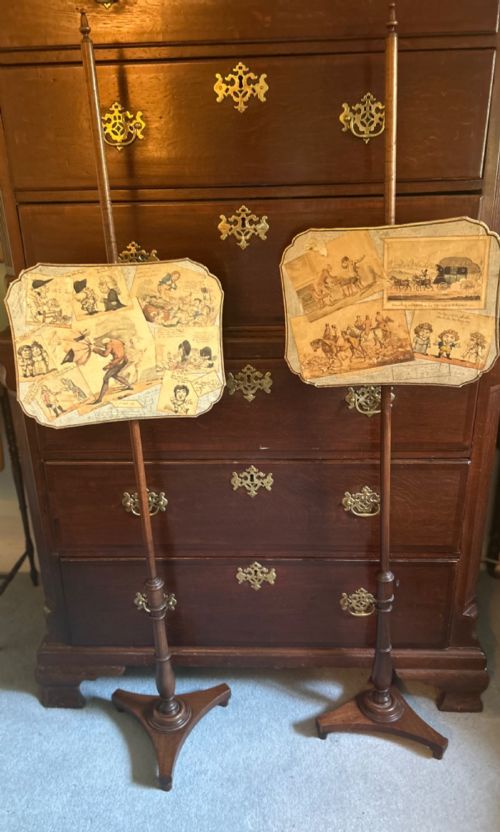
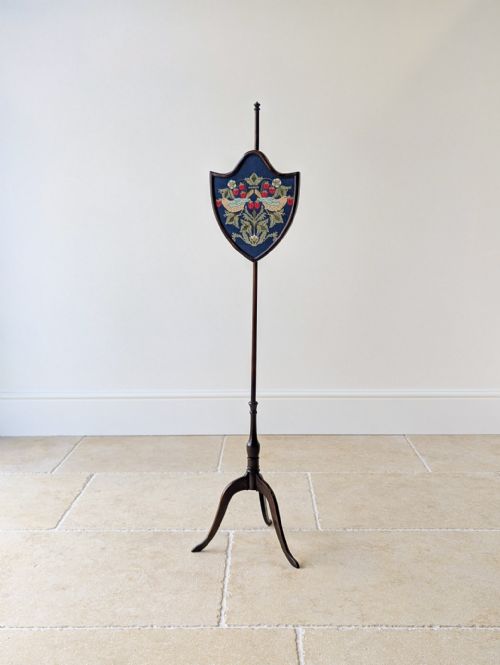
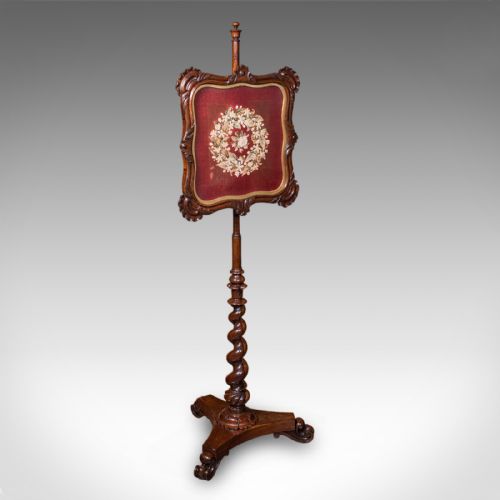
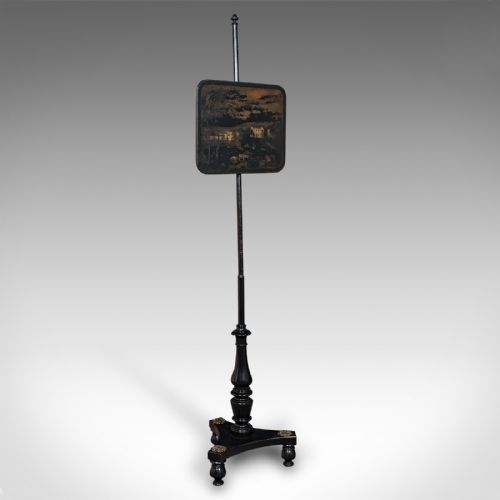
A tripod fire screen, also encountered as a pole screen, stands on a three-legged base with a vertical shaft carrying an adjustable panel. These pieces served to shield a person's face from the intense blaze of an open hearth while seated in a parlour.
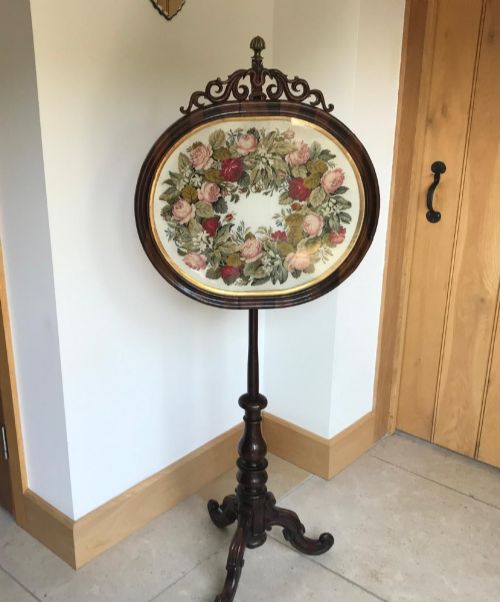
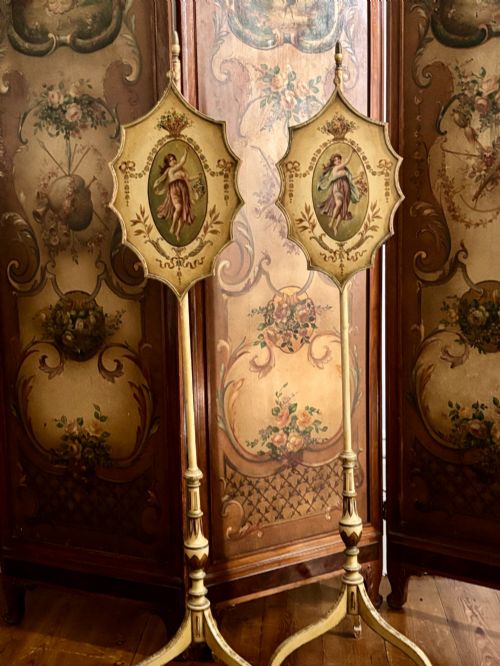
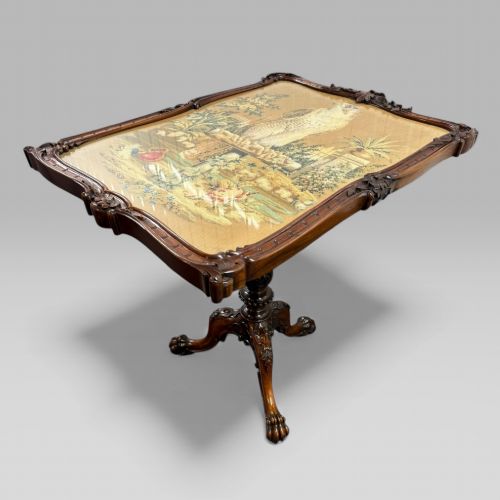
The selection ranges across the Georgian, Regency, and Victorian eras, taking forms from simple mahogany frames to elaborate rosewood stands with tilt tops and carved tripod bases. Makers produced them in pairs as well as single monumental examples.
How They Were Made
Craftsmen built these stands predominantly from dense timbers like mahogany, rosewood, and walnut, turning the slender shafts on lathes and shaping the tripod legs with spade feet or carved curves. Brass fixtures commonly secured the sliding mechanism for height adjustment.
The central panel typically housed needlework, tapestry, silk, or wool embroidery held firmly within a wooden frame, though some utilised glass, prints, or giltwood reflectors.
Listings demonstrate a strong preference for rosewood and mahogany across the Regency and Victorian periods.
What Varies in Quality
Finer examples distinguish themselves through the crispness of the wood carving on the tripod base and the stability of the adjustable brass collar on the pole. Heavy, well-proportioned timber prevents the tall stand from tipping during height adjustments.
Gillows
The Tripod Fire Screen Glossary
- Pole screen
- A type of tripod fire screen featuring a vertical wooden rod on which a framed panel slides up and down. This allowed occupants to adjust the height of the shield relative to the fire.
- Tilt top
- A mechanism allowing the upper surface or panel to pivot into a vertical position when not in use. It appears on versatile pieces that functioned as both tables and screens.
- Needlework
- Hand-stitched textile art using wool or silk threads on a canvas ground. These panels form the decorative and insulating face of the screen.
- Tripod base
- A three-legged support structure designed to stand firmly on uneven floorboards. It provides stability for the tall, slender vertical shaft.
Tripod Fire Screen: Frequently Asked Questions
How did people use a tripod fire screen?
Gentlemen and ladies placed the screen between their seating position and the hearth to deflect the fierce heat of an open coal fire, protecting facial complexions and cosmetic waxes from melting.
The adjustable panel allowed the user to raise or lower the shield depending on whether they sat or stood in the room.
How do I tell Georgian from Victorian screens?
Georgian screens typically display restrained classical proportions in mahogany, often featuring simple tripod bases or Hepplewhite spade feet.
Victorian examples tend to utilise darker rosewood or walnut with heavier, more ornate carving, elaborate tapestry panels, and more complex brass adjusting mechanisms.
Can these screens still be adjusted?
Many surviving examples retain their original brass thumbscrews or internal clutch mechanisms, permitting the panel to slide and hold its position on the pole.
Because centuries of use can wear the brass components, one should handle the height adjustment gently to avoid straining the wood grain.
Where should I place a pole screen at home?
These tall, slender pieces suit corners of drawing rooms, beside reading chairs, or against empty wall spaces where their decorative textile panels can be appreciated.
Keep them away from direct, strong sunlight to protect the fragile antique silks, wools, and exposed wooden finishes from fading.