


Georgian Tripod Screen
These georgian tripod screen pieces are adjustable fire screens designed to deflect hearth heat, offering both utility and period elegance.
Georgian Tripod Screen
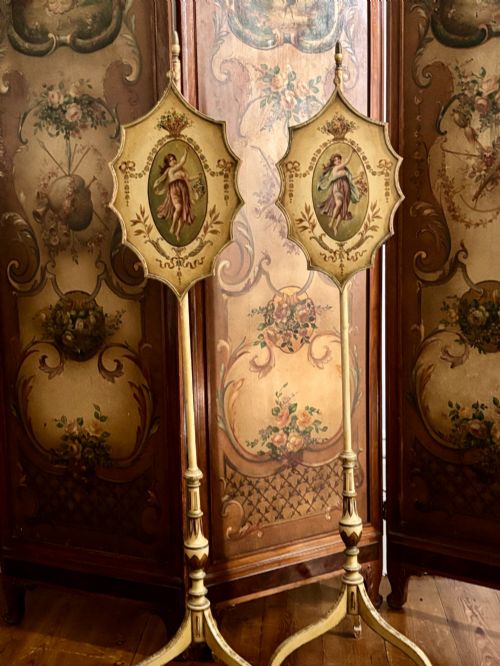
When you search for a georgian tripod screen, you are looking at tall stands featuring a vertical pole mounted on three legs, designed to hold an adjustable panel that shields the face from the fierce heat of an open fire. The pieces seen here span the Georgian, Regency, and nineteenth century periods, appearing in forms such as pole screens and fireplace screens alongside occasional converted lamp tables.
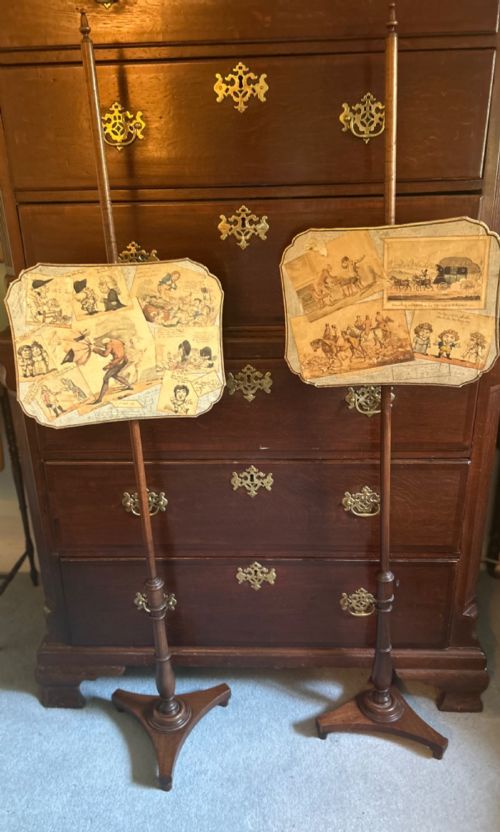
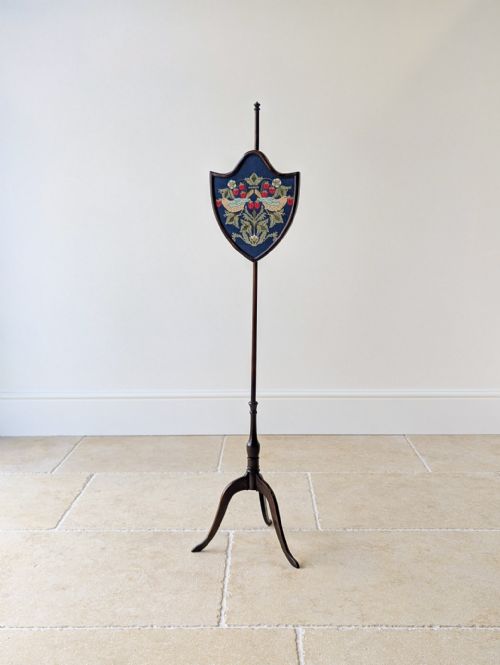
The most common versions encountered on this page are mahogany pole screens equipped with needlework panels, tapestry inserts, or satirical prints. Makers utilised adjustable mechanisms to slide the screen up and down the pole, allowing sitters to control the amount of heat deflected from the hearth.
How they were made
Makers constructed these stands primarily from timbers such as mahogany, rosewood, goncalo alves, and giltwood, turning the central poles and shaping slender legs that often terminate in spade feet or carved bases. Brass components frequently served as the adjustable fittings that secured the sliding panels to the central shafts.
The screens themselves display textile artistry through hand-stitched needlework, wool tapestries, and glass panels or satirical prints mounted within wooden frames. Craftspeople combined fine cabinetmaking on the tripod bases with textile display, creating functional items for the hearth.
The object forms grouped under this search range from traditional pole screens to fireplace screens and converted lamp tables.
What varies in quality
The distinction between standard examples and the finest pieces lies in the crispness of the carved details upon the tripod base and the choice of dense, highly figured timbers like goncalo alves or rosewood. Superior examples demonstrate refined proportions in the turned poles and elegant shaping in the three legs.
Quality also rests in the preservation and artistry of the central panel, whether an intricate needlework tapestry from the eighteenth or nineteenth centuries or an engaging satirical print. The mechanical action of the adjustable slide reflects the care taken by the original cabinetmaker.
The Georgian Tripod Screen Glossary
- Pole screen
- A standing firescreen featuring a vertically adjustable panel mounted on a central pole with a tripod base. This design allowed sitters to adjust the screen height to protect their faces from hearth flames.
- Tripod base
- A three-legged support structure typical of small Georgian and Regency tables and stands. These legs often end in spade feet or carved scrollwork.
- Needlework panel
- A decorative textile worked in yarn or silk, frequently mounted into the frame of a pole screen. These panels often depict floral designs or classical scenes.
- Giltwood
- Wood that has been coated with gold leaf or gold paint to provide a decorative metallic finish. It appears on more elaborate Regency frames.
Georgian Tripod Screen: Frequently Asked Questions
What is a georgian tripod screen?
A georgian tripod screen is an adjustable stand with three legs and a vertical pole that holds a panel, originally placed near a fireplace to shield the face from radiant heat.
These pieces combine cabinetmaking on the base with decorative textiles, prints, or glass panels held within the adjustable frame.
How were these screens used?
They were positioned near open hearths in sitting rooms to prevent the fire's heat from scorching the face or melting heavy makeup worn by ladies.
The sliding panel could be moved up or down the pole depending on where the sitter was seated relative to the fire.
How do I spot a Regency screen?
Regency examples often display bolder woods like goncalo alves or rosewood, alongside giltwood finishes and crisp, classical carving styles.
They reflect the design shifts of the early nineteenth century away from earlier Georgian restraints.
What woods were used?
Makers relied heavily on mahogany for standard Georgian and Hepplewhite pieces, while later Regency items embraced exotic timbers.
Giltwood and rosewood also appear among the materials recorded in these listings.
Can these screens still adjust?
Many retain their original brass adjustment mechanisms that allow the panel to slide freely along the central pole.
Care should be taken with older fittings to preserve the integrity of the wood and the supporting collar.