
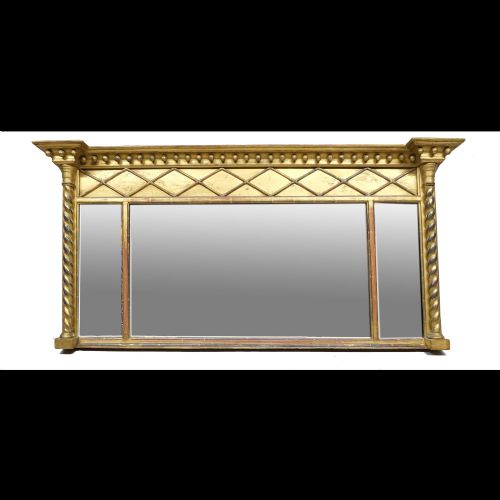


Triple Plate Overmantel Mirror
A triple plate overmantel mirror brings proportion and reflected light to a principal room, anchoring the hearth with layered glass.
Triple Plate Overmantel Mirror
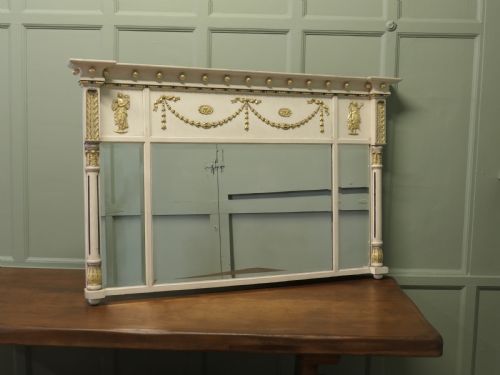
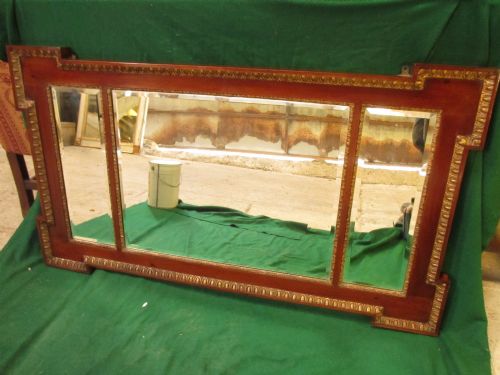
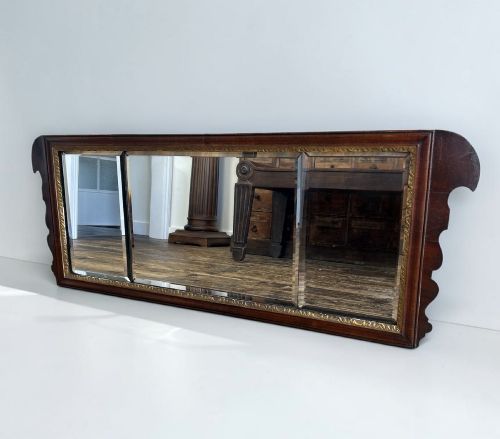
A triple plate overmantel mirror is designed to sit above a fireplace, dividing the field of reflection into three sections across a wide landscape format. Buyers seeking this phrase encounter examples stretching from the eighteenth century into the twentieth, with nineteenth-century interpretations appearing most frequently.
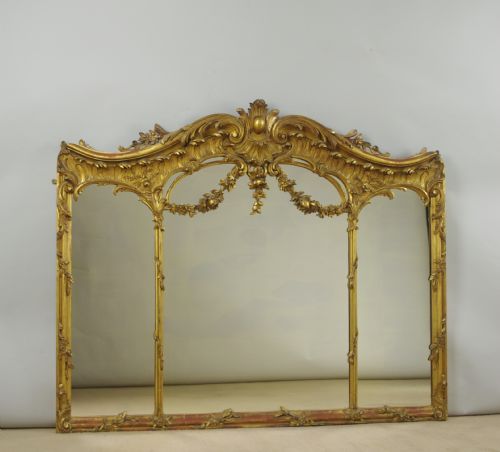
The dominant aesthetic draws upon Regency and Victorian vocabulary, often taking the form of a substantial giltwood frame with architectural moulding. Earlier walnut pieces and later mahogany variations also occur, alongside pieces finished in gesso and paint.
The tripartite division serves both a functional and decorative purpose, historically designed to bounce daylight across wide chambers while providing a balanced architectural presence over a mantelpiece.
Materials and construction
Makers constructed these frames using timber substrates such as pine, mahogany, oak, or walnut, which were then gilded directly or layered with gesso to receive intricate carved detail. Composition material frequently appears on nineteenth-century mouldings to shape repetitive decorative motifs efficiently.
The multiple mirror plates are set side by side within internal divisions of the wooden framework, secured by backing boards and sometimes bordered by subtle engraving or bevelled edges.
Griffin friezes peer down from the tops of certain Regency frames, keeping a watchful, winged eye over the mantelpiece.
Gradations of execution
Quality rests in the crispness of the carved ornament and the depth of the gilding, where hand-applied gold leaf holds greater warmth and tonal variation than later chemical finishes. The integrity of the original wood ground beneath the gesso determines whether the framing retains its sharp architectural lines.
The character of the glass itself defines the standard, as genuine period mirror plates display subtle imperfections, foxing, and wavy distortions that distinguish them from modern replacements.
The Triple Plate Overmantel Mirror Glossary
- Overmantel mirror
- A large horizontal mirror specifically scaled to hang on the wall directly above a fireplace mantel.
- Triple plate
- A mirror configuration featuring three distinct glass sections mounted side by side within a single frame.
- Giltwood
- Timber that has been coated with a thin layer of gold leaf over a prepared bole and gesso foundation.
- Gesso
- A plaster-like mixture applied to wood frames to create a smooth surface for subsequent carving or gilding.
- Frieze
- The decorative horizontal band situated along the upper portion of the mirror frame, often ornamented with classical motifs.
Triple Plate Overmantel Mirror: Frequently Asked Questions
Where should a triple plate overmantel mirror hang?
These pieces traditionally anchor the space immediately above a fireplace mantel, where their horizontal proportions balance the hearth below.
They also function effectively on principal walls in reception rooms to distribute natural light across the interior.
How do I identify a nineteenth-century example?
Nineteenth-century pieces typically exhibit construction details such as pine backing boards, hand-applied gesso moulding, and composition ornaments applied to timber frames.
The mirror glass often displays subtle signs of age, including light foxing and uneven reflection.
What maintenance do antique mirror plates require?
Antique glass and delicate gilt surfaces require gentle dusting with a dry microfibre cloth, avoiding commercial chemical cleaners entirely.
Moisture must be kept away from the timber joints and the edges of the mirror plates to protect the silvering.
Are the mirror plates original to the frame?
Many surviving examples retain their original glass, which can be identified by consistent oxidation patterns and slight surface distortions.
Replacement glass is occasionally fitted during conservation to restore clarity while preserving the historic frame.