


Tripartite Wall Mirror
A tripartite wall mirror divides its reflective surface into three distinct panels, bringing breadth and light to a room through balanced proportions.
Tripartite Wall Mirror
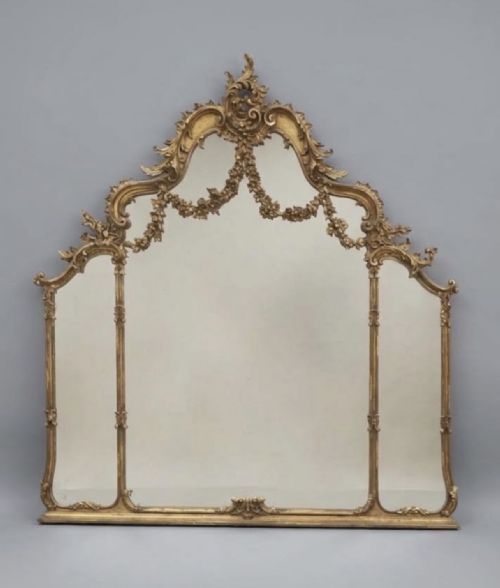
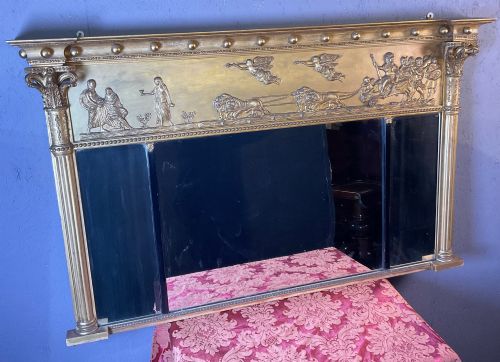
A tripartite wall mirror is a divided glass plate configuration, most frequently encountered on this page as an overmantel mirror designed to sit above a fireplace. These large formats span the eighteenth century, the Regency era, the nineteenth century, and into the Edwardian period.
The tripartite division usually presents a dominant central glass flanked by two narrower side sections, framed within horizontal rectangles or tall upright proportions. Surviving examples reflect styles such as Regency, Rococo Revival, Chippendale Style, Neoclassical, and Victorian.
Makers utilised wood carcasses, often pine or mahogany, finished with gesso and giltwood, gold leaf, or silver. Forms include pier mirrors, hall mirrors, and chimney piece mirrors alongside standard overmantel designs.
Materials and construction
Makers constructed the foundational frames from timber such as pine and mahogany, joining the sections to bear the substantial weight of the glass panels. Woodcarvers then shaped ornamental details directly into the timber or applied composition material.
Gesso layers were built up over the wood to receive water gilding or oil gilding with gold leaf, creating the bright reflective surfaces characteristic of giltwood frames. Silver leaf or painted finishes also appear, paired with heavy mirror glass secured from behind.
The documented forms include chimney piece mirrors, hall mirrors, and architectural overmantels spanning several classical revival styles.
Distinctions in quality
Quality rests in the crispness of the carved ornament and the depth of the gesso mouldings, where sharp, hand-tooled detail separates finer pieces from softer, massed castings. The integration of the tripartite frame dictates the architectural harmony of the whole object.
The treatment of the timber carcass and the purity of the gilding further define the tier of the piece, with skilled layering of gold leaf providing a warmer, more enduring lustre than simple paint or flat metallic finish.
Ciceri and Co
The Tripartite Wall Mirror Glossary
- Giltwood
- Wood carved and coated with gold leaf over a prepared gesso ground. This finish provides the characteristic metallic sheen seen on period frames.
- Gesso
- A mixture of gypsum and binder applied to wooden frames to create a smooth surface for gilding or carving. It allows for intricate relief ornament.
- Overmantel mirror
- A large mirror specifically proportioned to hang on the wall above a fireplace mantelpiece. These often feature tripartite glass divisions.
- Pier mirror
- A tall mirror designed to hang on the wall between two windows, usually positioned above a pier table. They often echo the tripartite layout.
- Regency
- An architectural and decorative style spanning the early nineteenth century. It draws heavily on classical Greek and Roman motifs.
Tripartite Wall Mirror: Frequently Asked Questions
Where should a tripartite wall mirror be hung?
These mirrors find their traditional home mounted directly above a fireplace mantelpiece, where their horizontal width balances the hearth below. They also work effectively along a principal living room wall to reflect window light.
Ensure the wall fixings are secured firmly into structural studs or masonry, given the substantial combined weight of the timber frame and heavy glass plates.
How do I identify a Regency mirror?
Regency pieces often display classical motifs such as reeded columns, ball details along the frame cornice, and symmetrical architectural lines. The gilding tends to be bright, and the proportions favour horizontal width for overmantel placement.
Examining the construction methods at the back of the frame helps confirm the period timber and assembly techniques used during the early nineteenth century.
Can these mirrors be cleaned safely?
Dust the giltwood frame gently with a dry, soft-bristled brush to prevent particulate buildup in the carved recesses. Avoid using liquid cleaners or abrasive cloths near the gilded surfaces, as moisture strips gold leaf.
Clean the mirror glass sparingly with a mild glass cleaner applied to a cloth rather than sprayed directly, ensuring liquid does not seep behind the bevelled edges.
What is the difference between an overmantel and a pier mirror?
An overmantel mirror is built wide to span the horizontal space above a fireplace, frequently utilising a tripartite glass layout to catch room light. A pier mirror is typically taller and narrower, designed to fit the wall space between two windows.
Both forms utilise similar decorative vocabulary, but their original architectural function dictated their overall dimensions and proportions.