

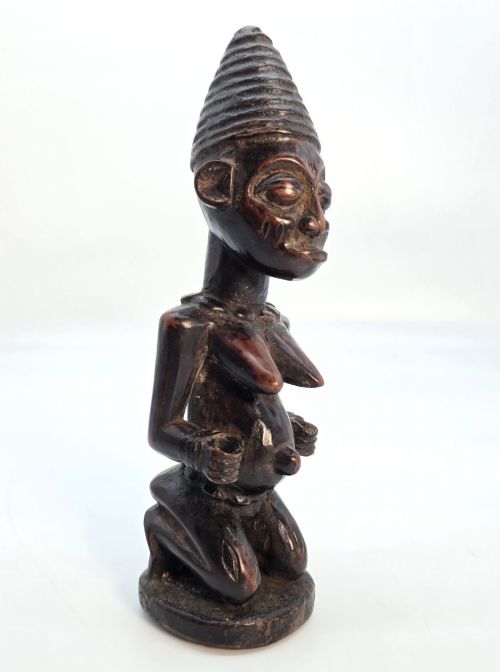
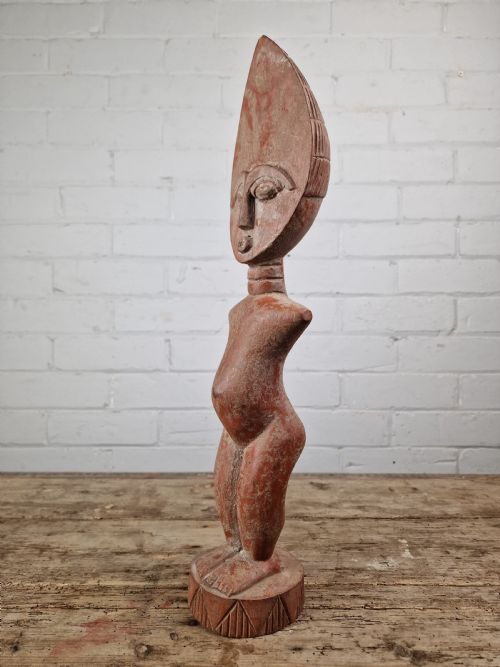


Tribal Wooden Sculpture
Tribal wooden sculpture brings together carved figures, masks and ceremonial objects shaped by hands across centuries and continents.
Tribal Wooden Sculpture
Tribal wooden sculpture covers a diverse range of carved forms originating from African, Asian, and Oceanic traditions. Pieces on this page span the nineteenth century through the mid-twentieth century, capturing utilitarian items, ritual figures, and decorative works.
Buyers encounter fertility figures, dance masks, headrests, and architectural elements created by specific peoples such as the Yoruba, Fang, Baule, and Dogon. These objects reflect distinct cultural practices, spiritual beliefs, and regional carving traditions.
Forms vary widely from monumental shoulder masks and reliquary guardian heads to small domestic items like spoons and combs. Each category reveals the specific aesthetic language and functional purpose intended by its maker.
Materials and construction
Makers primarily utilised native timbers, ranging from dense tropical hardwoods to lighter local woods, shaped entirely by hand using adzes, chisels, and knives. The natural grain and density of the wood dictate the weight and tactile presence of each carved piece.
Evaluating quality and execution
Quality rests in the confidence of the carving, where fluid lines and deliberate tool marks demonstrate the carver's mastery over the material. Superior examples display balanced proportions and a strong sense of internal movement within the carved form.
Surface finish and evidence of use significantly influence the character of a piece. A rich, accumulated patina developed through handling and ceremonial application distinguishes works created for active cultural life from later commercial productions.
Abegunde of Ede
The Tribal Wooden Sculpture Glossary
- Patina
- The surface sheen and coloration developed through extensive handling, age, and exposure to environmental elements over decades. It serves as a primary indicator of historical use.
- Reliquary
- A container or guardian figure designed to hold ancestral remains or sacred relics. These pieces often protect the spiritual contents while expressing lineage.
- Ibeji
- A wooden figure carved by the Yoruba people to represent a deceased twin. These sculptures receive ritual care and reflect beliefs surrounding duality and rebirth.
- Adze
- A traditional cutting tool with an arched blade set at a right angle to the handle. Carvers utilise it to rough out forms and create distinctive surface textures on timber.
Tribal Wooden Sculpture: Frequently Asked Questions
How were these sculptures used?
Many of these pieces served active roles in religious ceremonies, agricultural rituals, and rites of passage. Masks were worn during dances, while figures acted as spiritual guardians, fertility talismans, or commemorative memorials.
Other items fulfilled everyday domestic or status functions, such as carved headrests, ceremonial spoons, and seating furniture designed for community leaders.
How do I care for wooden tribal art?
Preserving these wooden objects requires stable indoor humidity and protection from direct sunlight to prevent timber shrinkage and pigment fading. Dusting should be done gently with a soft, dry brush without applying modern oils or polishes.
Allowing the natural surface and accumulated patina to remain untouched ensures the historical integrity of the piece is maintained over time.
How can I tell the period of a carving?
Dating relies on assessing the tool marks left by the carver, the species of wood, and the nature of the surface wear. Nineteenth-century and early twentieth-century pieces typically exhibit hand-forged tool signatures and deep surface oxidation.
Comparing regional styles, scarification patterns, and construction methods against documented examples helps place a sculpture within its historical era.