




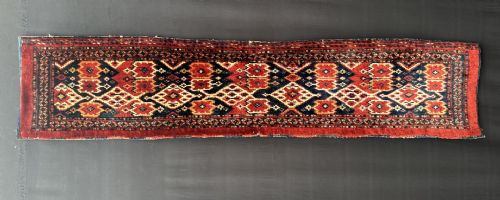


Tribal Wedding Rug
These tribal wedding rug examples are genuine Central Asian textiles woven with natural dyes, prized by collectors for their rich history and striking tribal geometry.
Tribal Wedding Rug
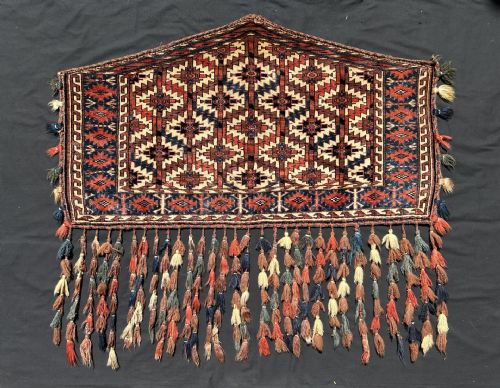
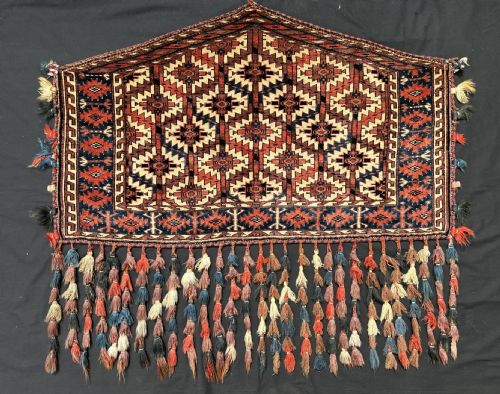
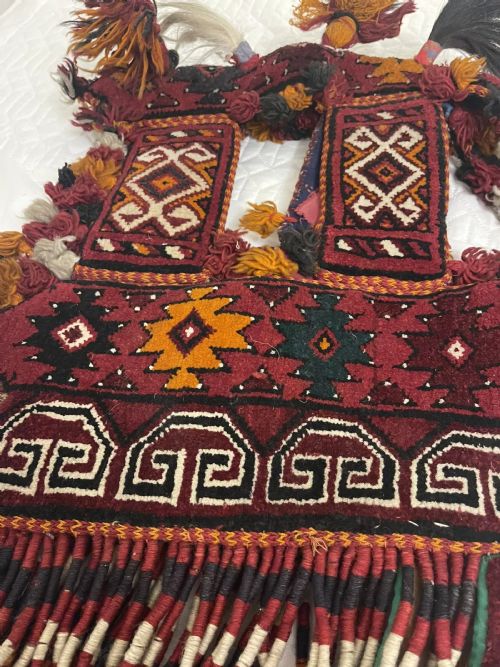
A tribal wedding rug represents traditional Central Asian weaving created by nomadic groups across the Trans-Caspian steppes and surrounding regions. You will frequently encounter specialised forms like asmalyks, dizlyks, and camel trappings alongside floor rugs.
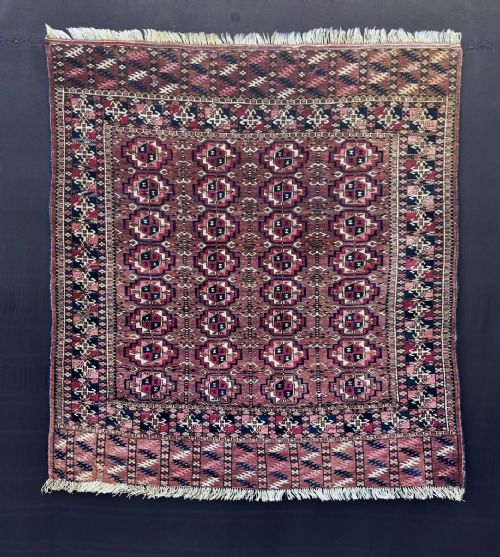
The pieces on this page span the mid-to-late nineteenth century and the turn of the twentieth century. Tekke and Yomut tribes dominate the selection, showing the characteristic motifs of their respective weaving traditions.
Many of these textiles functioned originally as dowry items or ceremonial trappings for weddings rather than simple floor coverings. Wall hangings and textiles of this nature bring distinct regional character into a modern interior.
Factors of quality in nomadic weaving
Quality rests upon the density of the knotting and the crispness of the tribal patterns. Finer knotting allows intricate geometric motifs to emerge with sharper definition across the field.
The preservation of the original pile and tassels heavily influences the standing of a textile. Intact fringes, secure selvedges, and vibrant, unfaded natural dyes elevate certain examples above others.
Materials across the inventory consist entirely of wool and cotton yarns coloured with traditional natural dyes.
The Tribal Wedding Rug Glossary
- Asmalyk
- A pentagonal trapping traditionally hung inside a yurt or used during wedding processions on the flank of a camel. These decorative pieces display intricate Yomut or Tekke tribal gull motifs.
- Dizlyk
- A specific form of horse or camel trapping used in wedding ceremonies. This textile is designed to protect or adorn the animal's knee area.
- Gull
- A primary recurring medallion or floral-derived motif found in Turkmen rugs. Each tribal group utilises distinct gull variations to signal its specific heritage.
- Selvedge
- The reinforced side edges of a rug formed by wrapping the outermost warp threads. A tight selvedge prevents the edges from fraying over time.
- Warp
- The stationary vertical threads stretched onto the loom before weaving begins. The pile knots are tied directly around these foundation threads.
Tribal Wedding Rug: Frequently Asked Questions
What is a tribal wedding rug?
A tribal wedding rug is a hand-knotted textile created by nomadic groups in Central Asia, specifically associated with dowries and wedding ceremonies. These pieces often take the form of asmalyks or wall hangings.
They showcase traditional wool construction and natural dyes, reflecting the distinct cultural heritage of tribes such as the Tekke and Yomut.
How do I hang a textile on the wall?
Hanging a textile safely requires distributing the weight evenly across the entire top edge rather than pinning it at single points. A professional mounting method uses a fabric sleeve stitched to the reverse.
This sleeve accepts a flat wooden slat or metal rod which is then secured to the wall brackets. Such a technique prevents stretching and protects the wool pile.
How are Tekke and Yomut rugs told apart?
Tekke rugs typically feature octagonal gull motifs arranged in precise rows with a subdued red ground colour. Their field patterns tend to be formal and rigorously ordered.
Yomut weaving often displays more angular diamond motifs, hooked polygons, and greater use of white or contrasting borders. The overall aesthetic is bolder and less rigid than Tekke work.
How do I care for antique wool textiles?
Antique wool textiles benefit from gentle vacuuming with a mesh screen placed over the surface to protect fragile pile. Professional cleaning should only be undertaken by specialists in historic rugs.
Keeping the textile out of direct sunlight prevents the natural dyes from fading. Stable indoor humidity protects the wool fibres from becoming brittle.