



Tribal Pattern Hall Rug
A tribal pattern hall rug brings direct geometric warmth and durable floor coverage to long domestic spaces.
Tribal Pattern Hall Rug
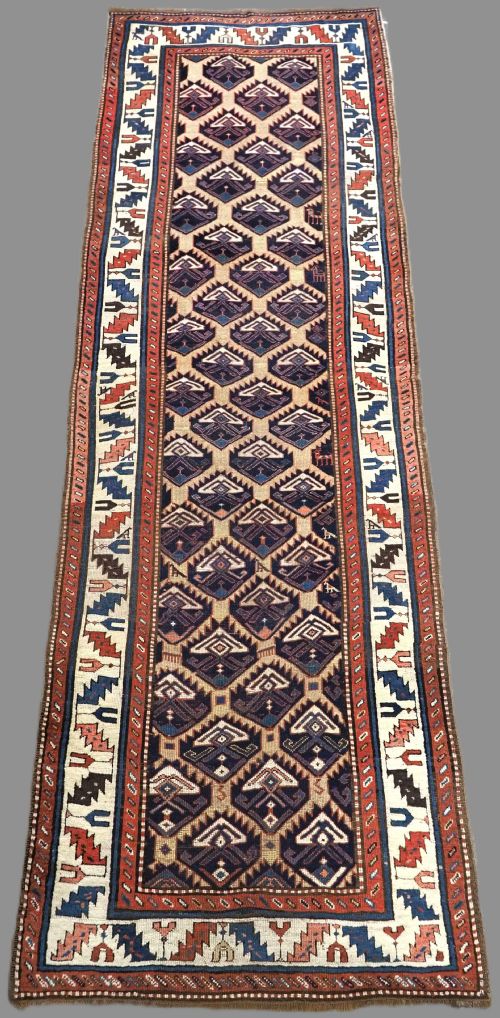
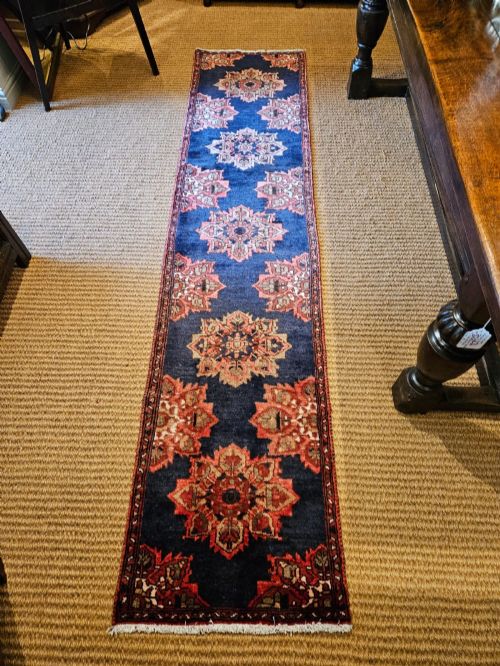
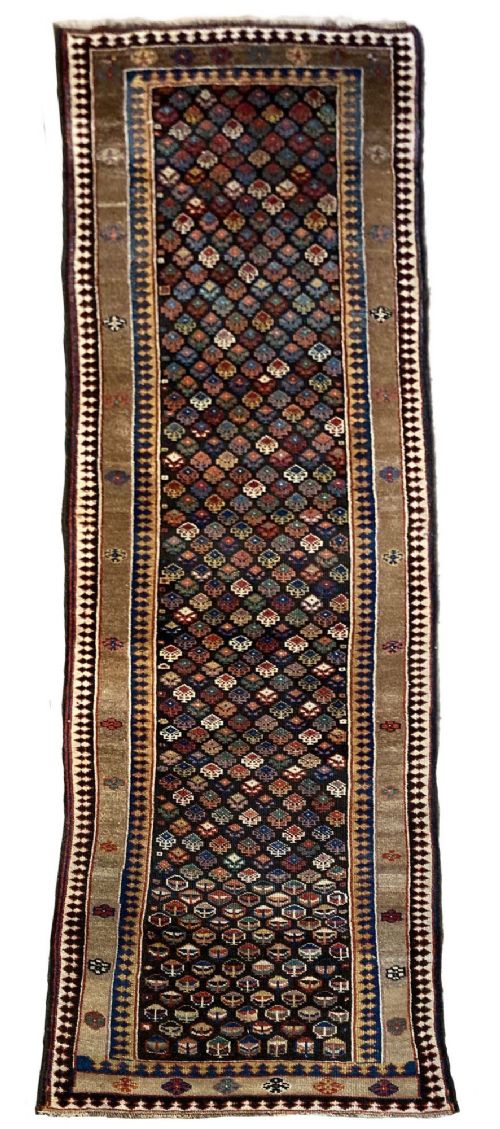
A tribal pattern hall rug functions as a narrow floor covering designed specifically for corridors, passageways, and entryways. These pieces measure significantly longer than they are wide, adapting to linear spaces while delivering striking floor design.
The selection on this page centres on antique runners originating from Caucasian, Kurdish, and Persian tribal traditions. These rugs combine functional utility with strong, repeating motifs suited to high-traffic domestic areas.
Makers and weavers across the nineteenth and early twentieth centuries produced these long formats using traditional regional layouts. Buyers encounter formats such as narrow runners and long hallway carpets dating from the mid-nineteenth century up to the 1920s.
How they were made
Traditional weavers constructed these textiles using wool and hand-spun wool for the pile and foundation structure, often supported by cotton elements. This natural fibre combination provided the dense resilience necessary for heavy foot traffic in active halls.
Craftsmen relied upon natural dyes to achieve the saturated navy blue and striking colour variations seen across the pile. These botanical and mineral colourants yielded deep tones that aged with rich complexity over decades of use.
Tribal Pattern Hall Rug Retail Price Guide 2026
Typical asking prices for tribal pattern hall rug among the pieces listed under this phrase on Sellingantiques today, from the lower quarter to the upper quarter. They describe what is for sale here now, not the wider market.
Listings span production dates from 1850 through 1920, incorporating Caucasian, Kurdish, and Persian tribal styles.
What varies in quality
The distinction between standard and superior examples lies in the crispness of the lattice, boteh, and Mina Khana patterns. Tighter knot density and more purposeful drawing elevate a piece from a simple utility runner to a work of artistic heritage.
Material preparation also dictates overall standard, particularly the consistency of hand-spun wool and the stability of natural dyes. Superior pieces retain depth of colour and structural integrity along the narrow edges despite decades of service.
The Tribal Pattern Hall Rug Glossary
- Runner
- A long, narrow carpet format intended for corridors, staircases, and hallways. This shape directs foot traffic and visually extends interior spaces.
- Boteh
- A traditional almond-shaped or paisley motif with a curved upper end, frequently seen arranged in diagonal or repeating rows. It holds ancient symbolic roots across regional weaving traditions.
- Lattice
- An open network of crisscrossing diagonal lines that form geometric compartments across the field of the rug. This framework often encloses secondary floral or abstract motifs.
- Natural dye
- A colourant derived from plants, insects, or minerals rather than synthetic compounds. These dyes interact with wool fibres to produce nuanced, shifting tones.
- Mina Khana
- A repeating geometric flower pattern arranged within a grid or lattice framework. The design balances formal symmetry with tribal abstraction.
Tribal Pattern Hall Rug: Frequently Asked Questions
Where should I place a hallway runner?
A tribal pattern hall rug suits narrow passages, corridors, and entranceways where length and durability matter most. The linear format bridges rooms while protecting wooden or tiled floors from heavy daily footsteps.
Ensure you measure both the length and width of your corridor carefully before choosing. Leave a consistent margin of exposed floor around the edges to frame the piece properly.
How do I identify a Caucasian runner?
Caucasian runners typically feature bold geometric medallions, sharp lattice work, and stiff, angular drawing styles. The colour palettes often rely on strong contrasts with deep navy blues and vivid accents.
Examination of the wool texture and regional motifs helps separate these pieces from softer Persian or Kurdish village weaves.
Are these rugs durable enough for daily use?
Antique runners constructed from wool and hand-spun wool possess inherent resilience against foot traffic. The natural lanolin in traditional wool helps repel dirt and cushions the pile against daily wear.
Using a quality underlay beneath the runner prevents slipping and reduces friction between the foundation and the floorboards.
What does a boteh motif represent?
The boteh represents a stylized leaf, seed, or flame motif found widely across traditional regional weaving. Its curved shape appears in diagonal rows or contained within geometric lattice fields.
This enduring symbol connects antique village carpets to centuries of textile artistry across Persian and Caucasian production centres.