
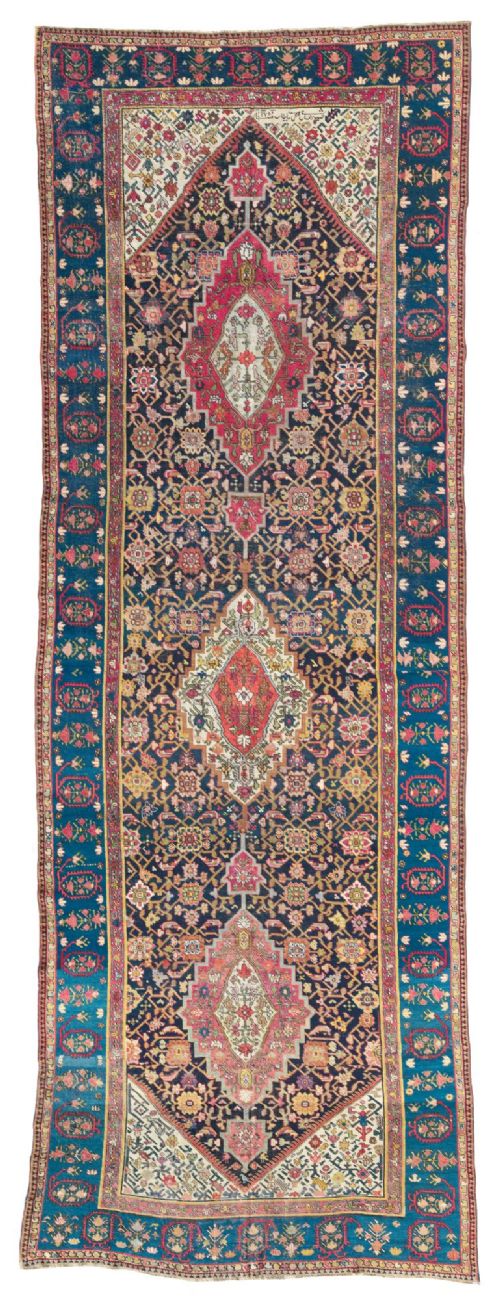
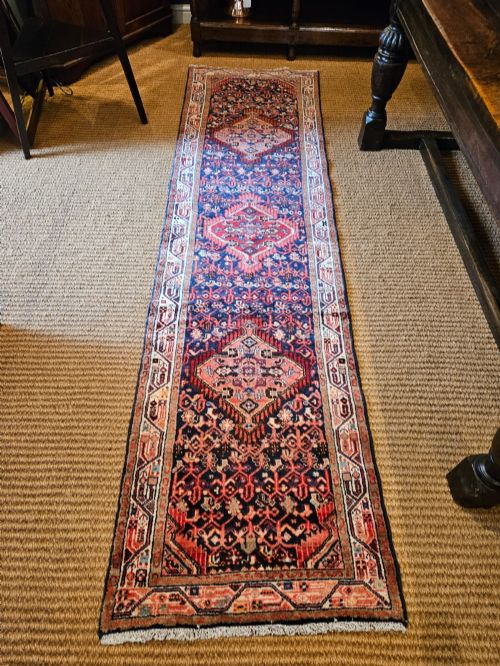
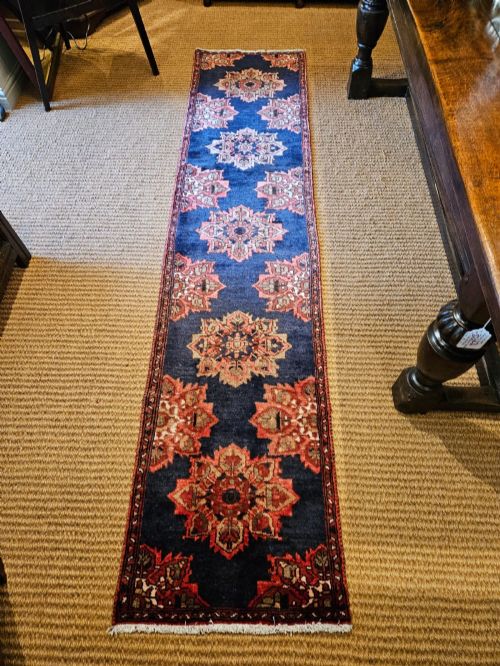
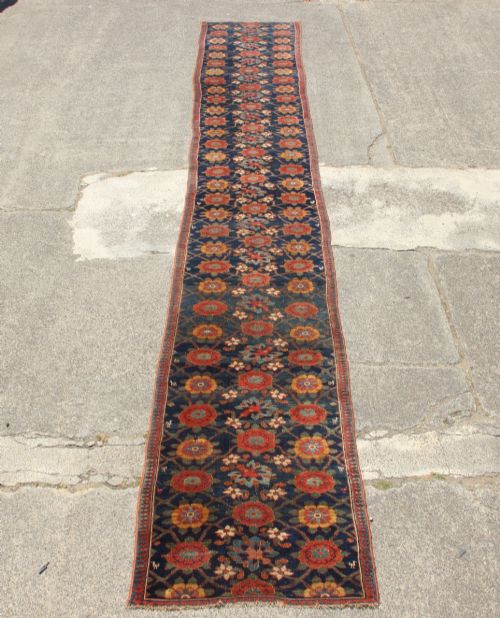
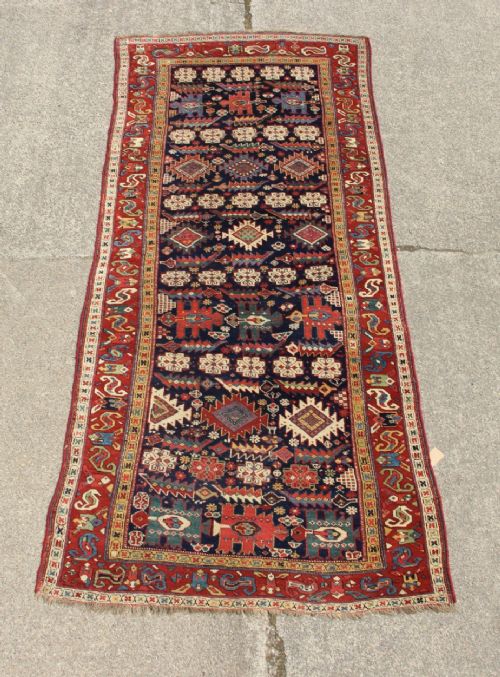
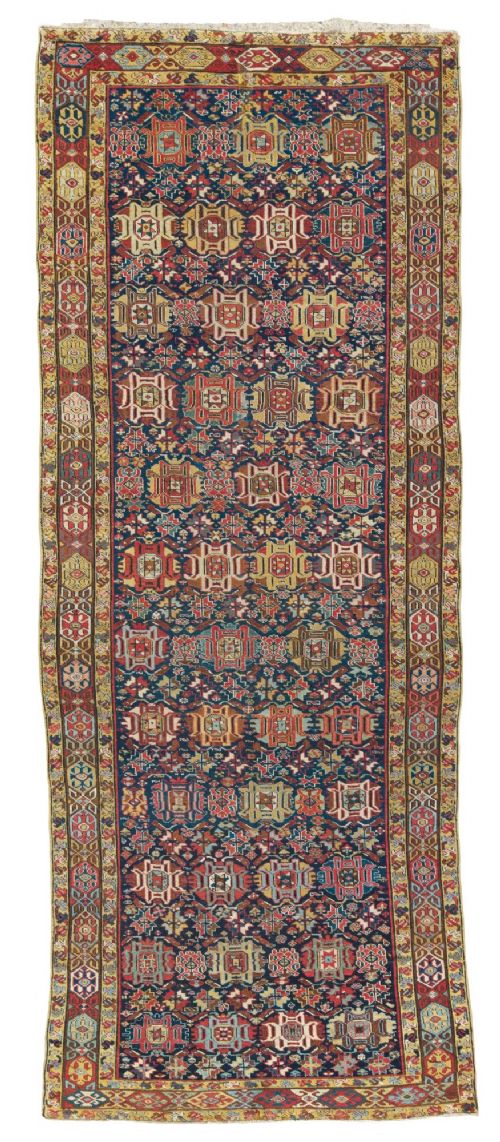


Long Navy Corridor Carpet
A long navy corridor carpet brings a grounded, linear formality to extended spaces through time-tested regional weaving traditions.
Long Navy Corridor Carpet
A long navy corridor carpet typically manifests as an elongated runner or narrow kelleh designed specifically for hallways and passageways. The selection spans production eras from the mid-nineteenth century through the early twentieth century, originating primarily from Persian and Caucasian weaving centres.
Buyers encounter traditional tribal and village formats, including Kurdish, Heriz, Hamadan, and Malayer pieces alongside Caucasian Kuba examples. These items share a functional narrow geometry tailored for architectural corridors while displaying deep indigo and navy dye foundations.
The prevalent formats on this page range from room-length kelis to slender room runners that utilise repeated geometric motifs, medallion structures, or all-over field patterns.
Materials and Construction Methods
The construction relies fundamentally on wool piles knotted onto cotton or wool foundations, utilising hand-spun wool for durability and rich texture in high-traffic corridors. Natural dyestuffs provide the distinct navy and dark blue grounds that characterise these runners.
Weavers employed traditional upright looms, tying symmetrical or asymmetrical knots depending on the regional workshop or tribal tradition. The resulting textiles combine dense pile retention with flexible structural integrity suited for continuous floor placement.
Certain narrow runners preserve the accidental handprints of the village tribeswomen who sat side by side at the vertical loom.
Assessing Weaving Quality and Design
Quality varies significantly in the fineness of the knot density and the precision of the geometric or floral drawing across the runner length. Tightly packed wool foundations and even pile wear distinguish superior examples from simpler village work.
The depth and saturation of the navy indigo dye, combined with the complexity of secondary accent colours like madder red and ivory, determine the visual impact of the piece. Artisanal skill is further evident in how steadily the narrow format maintains its parallel margins along the entire corridor length.
Waring and Gillow
The Long Navy Corridor Carpet Glossary
- Kelleh
- A large rectangular carpet format, narrower than a standard room-size rug but wider than a runner. It was traditionally woven for specific alcoves or long rooms in Persian households.
- Runner
- A long, narrow carpet format specifically proportioned for corridors, hallways, and staircases. It guides movement through domestic architecture.
- Mina Khani
- A repeating floral pattern composed of daisy-like flowers linked by a lattice network. It appears frequently in Kurdish and Persian village carpets.
- Kuba
- A regional designation for rugs originating from the eastern Caucasus mountains. These pieces are noted for crisp, geometric tribal designs and saturated palettes.
- Heriz
- A style of carpet from north-west Persia characterised by bold geometric medallions and robust structural wool. They are known for architectural rigidity in their patterns.
Long Navy Corridor Carpet: Frequently Asked Questions
Where should I place a long navy corridor carpet?
These narrow formats suit extended hallways, entryways, and long gallery spaces where linear textiles define the walkway.
Their dark navy grounds provide a durable visual anchor that handles foot traffic while establishing an ordered rhythm in architectural passages.
How do I identify a Kurdish runner?
Kurdish pieces often feature expressive tribal motifs, robust hand-spun wool, and distinctive rectilinear patterns derived from north-west Persian traditions.
They frequently display idiosyncratic colour shifts and charming village imperfections that distinguish them from urban workshop carpets.
What is the difference between a kelleh and a runner?
A kelleh is traditionally broader and more substantial than a standard hallway runner, functioning as an intermediate size between a carpet and a runner.
Both formats serve elongated spaces, but kelleh rugs offer a wider field for complex medallion designs.
How are nineteenth-century runners different from later ones?
Nineteenth-century examples tend to rely entirely on natural dye palettes, producing muted abrashe variations in the navy wool over time.
Twentieth-century pieces often introduce tighter, more uniform commercial yarns and sharper synthetic influences in secondary shades.