


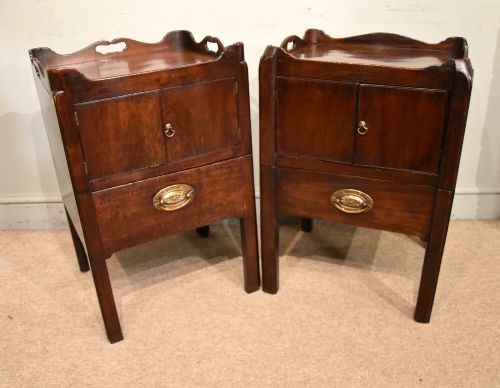


Tray Top Night Commode
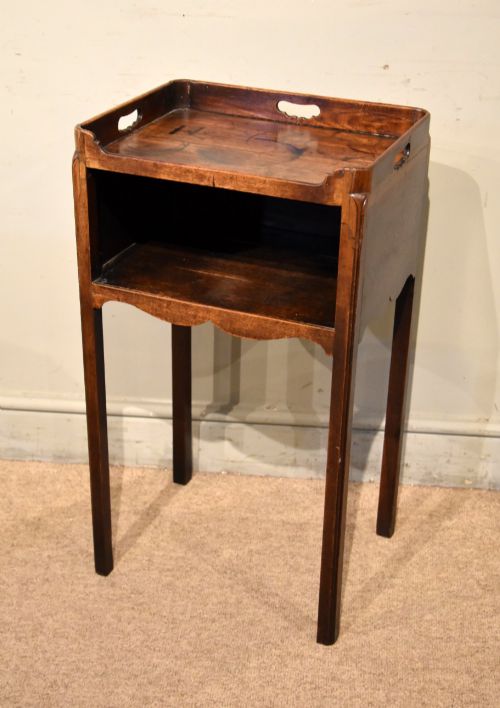
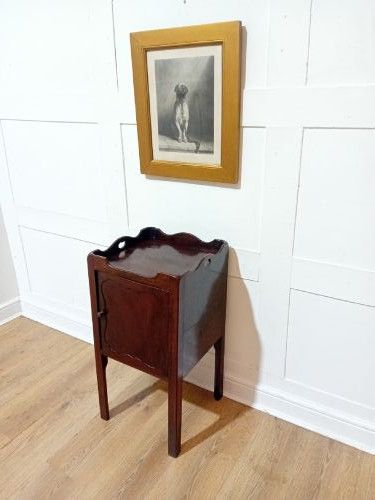
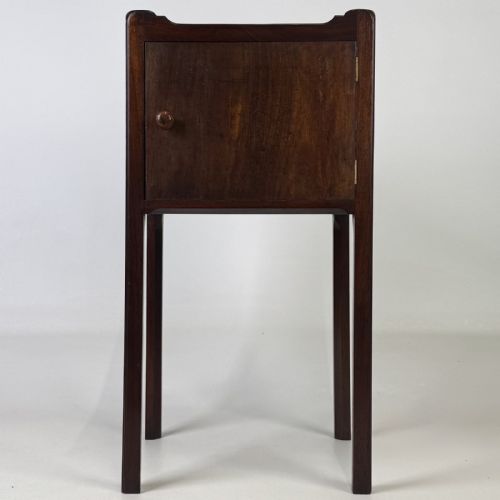
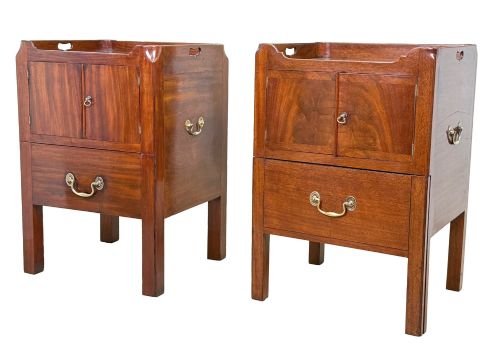
A tray top night commode is a compact Georgian bedside cupboard designed to keep nighttime essentials neatly enclosed.
Tray Top Night Commode
A tray top night commode represents a specific form of eighteenth-century and nineteenth-century bedroom furniture, appearing in varieties such as bedside cupboards, night tables, and pot cupboards. When exploring this phrase, a buyer encounters pieces designed primarily during the Georgian and Regency periods, spanning the eighteenth and nineteenth centuries.
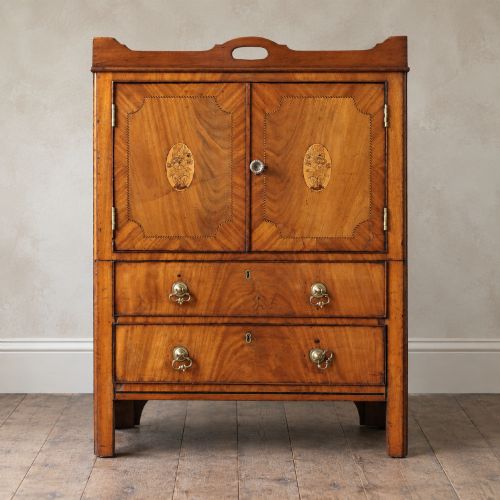
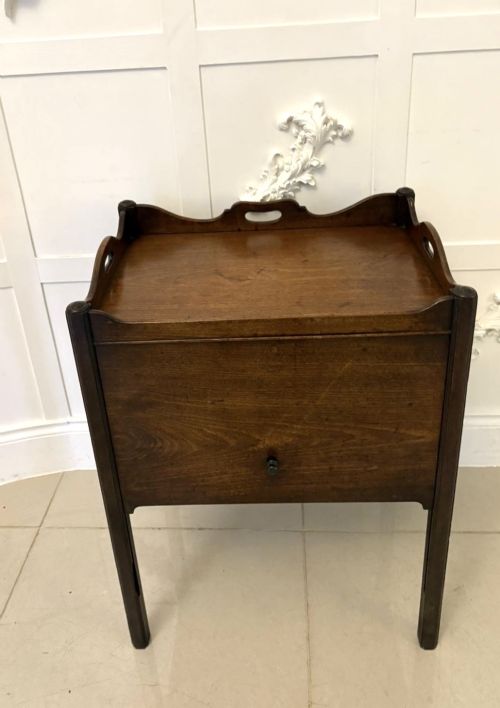
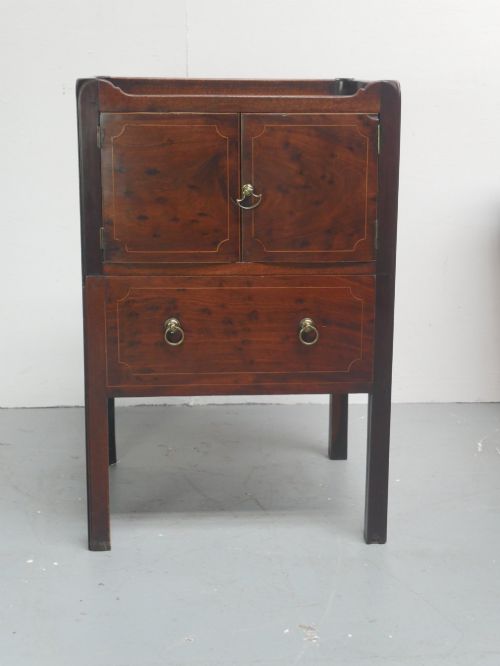
The form typically stands on four legs, supporting an enclosed cabinet space beneath a distinctive raised gallery edge. Surviving examples frequently employ mahogany as the principal timber, occasionally complemented by satinwood, boxwood inlay, or marquetry.
Makers of the period constructed these cabinets to serve practical domestic functions alongside aesthetic refinement in private chambers. The listings show a heavy concentration of George III pieces, alongside later nineteenth-century interpretations and twentieth-century revival styles.
How they were made
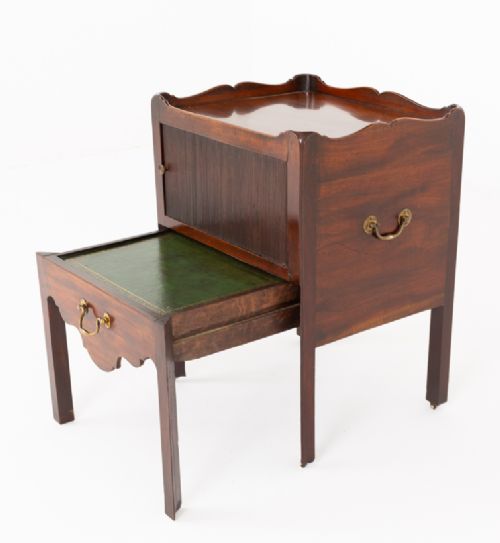
Cabinet makers relied predominantly on solid and veneered mahogany, shaping the timber to form sturdy carcass structures and curved fronts. Edges and tops frequently incorporated shaped tray surrounds, sometimes pierced with handgrips or fashioned with serpentine profiles.
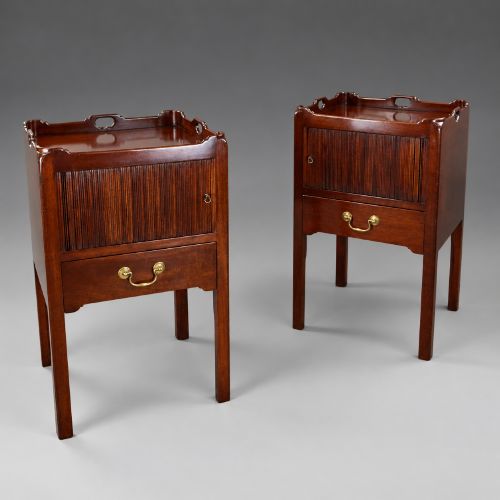
Surface decoration often utilised contrasting elements like boxwood inlay, satinwood banding, and intricate marquetry. Hardware components incorporated cast brass pulls and handles, whilst specialised mechanisms such as tambour shutters and pull-out steps appeared in more elaborate examples.
Tray Top Night Commode Retail Price Guide 2026
Typical asking prices for tray top night commode among the pieces listed under this phrase on Sellingantiques today, from the lower quarter to the upper quarter. They describe what is for sale here now, not the wider market.
Listings for this phrase predominantly feature mahogany timber, with occasional examples incorporating satinwood, boxwood inlay, and brass hardware.
What varies in quality
The standard of a tray top night commode rests upon the selection of timber and the precision of its construction. Superior examples display dense, figured mahogany grains and crisply executed boxwood or satinwood inlay that remains flush with the surrounding surface.
Structural refinement distinguishes finer pieces, particularly in the handling of serpentine fronts, dovetailed drawer construction, and integrated tray edges. The integration of functional elements, such as smoothly operating tambour doors or neatly fitted pull-out steps, indicates higher atelier execution.
The Tray Top Night Commode Glossary
- Tray top
- A raised rim or gallery surrounding the upper surface of a table or commode to prevent items from rolling off. This feature defines the primary silhouette of the commode.
- Commode
- A small cabinet or chest of drawers, often adapted for bedside use in eighteenth-century bedrooms. The term encompasses various forms of enclosed bedside storage.
- Tambour
- A flexible shutter constructed from narrow strips of wood glued to canvas, allowing curved cabinet doors to slide open smoothly. It appears on select George III night stands.
- Marquetry
- Decorative veneer work formed by fitting together small pieces of various woods to create pictorial patterns. This technique enhances the visual depth of select cabinet doors and tops.
- Serpentine
- A shaped furniture front featuring a convex centre flanked by concave curves. This undulating profile demands advanced woodworking skill.
Tray Top Night Commode: Frequently Asked Questions
How do I date a mahogany commode?
Dating relies on observing construction methods, timber choice, and stylistic details such as leg shapes and hardware. Eighteenth-century pieces frequently display hand-cut dovetails and dense, rich mahogany timbers.
Later nineteenth-century and revival pieces often exhibit subtle shifts in proportion and secondary woods. Comparing the piece against documented George III and Regency design characteristics clarifies its age.
What are tambour doors on these tables?
Tambour doors consist of narrow vertical wooden slats affixed to a fabric backing, allowing the door to slide around a curved track. This mechanism conceals the interior storage space without requiring swinging clearance.
Cabinet makers utilised this technique on select eighteenth-century night stands to combine smooth mechanical operation with a clean exterior aesthetic.
Where should I place a bedside commode?
These compact cabinets fit naturally beside a bed as functional bedside tables, offering enclosed storage alongside a surface for lamps and books. Their finished backs and refined proportions also allow placement as side cabinets in smaller rooms.
The raised tray top makes them practical for holding daily items safely within reach.