






George III Tambour Cabinet
A george iii tambour cabinet brings ingenious sliding shutters and rich timber together for a practical piece of period furniture.
George III Tambour Cabinet
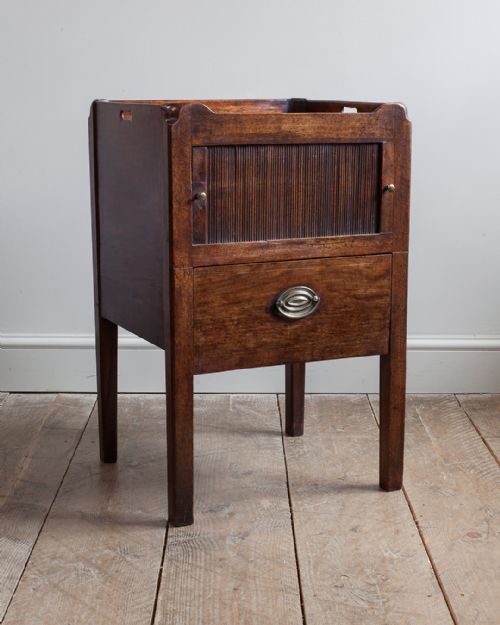
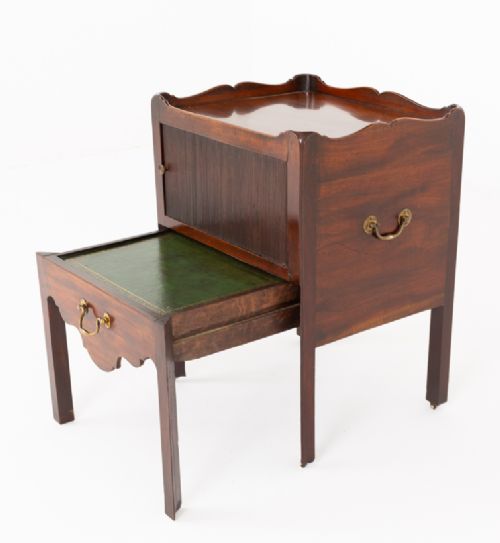
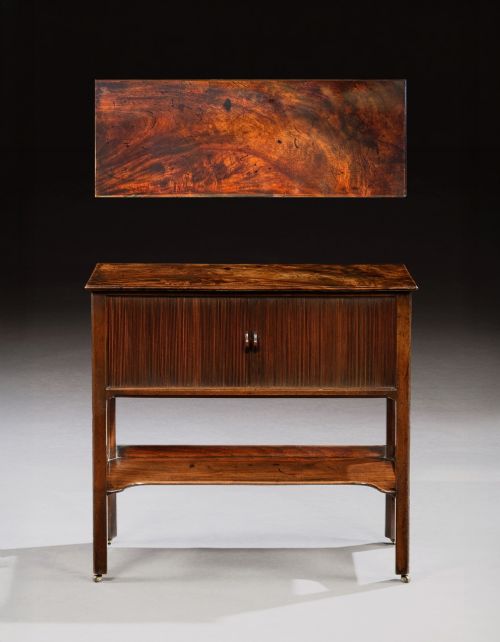
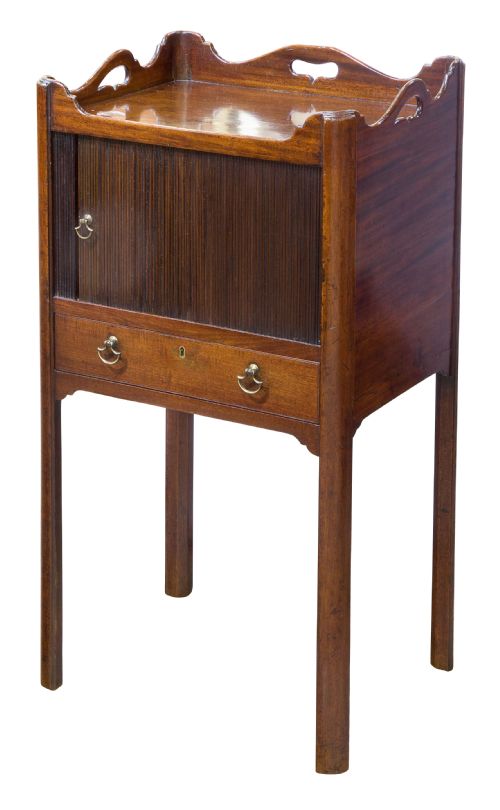
When you search for a george iii tambour cabinet, you are looking at functional storage pieces designed with flexible wooden slat shutters that slide smoothly around a track to conceal the interior compartment. These items predominantly appear as bedside tables, nightstands, and commodes originating from the Georgian era, alongside occasional desks and ladies' writing furniture.
The versions you are most likely to meet on this page date from the eighteenth century and the broader Georgian period, constructed primarily from mahogany with occasional satinwood highlights. They serve as compact storage items where a hinged door would otherwise demand clearance space in a smaller room.
How they were made
Cabinet makers constructed these pieces using solid and veneered timbers, predominantly employing mahogany as the structural base, often paired with satinwood and boxwood inlay for decorative contrast. The defining tambour mechanism relies on small, tightly fitted wooden slats glued to a canvas backing, allowing the shutter to curve around corners without jamming.
Brass fittings frequently appear on handles and hinges, while secondary elements incorporate leather surfaces on writing slides or top sections. The joinery combines traditional framing methods with precise channel cutting to ensure the slatted doors glide without friction.
George III Tambour Cabinet Retail Price Guide 2026
Typical asking prices for george iii tambour cabinet among the pieces listed under this phrase on Sellingantiques today, from the lower quarter to the upper quarter. They describe what is for sale here now, not the wider market.
Early cabinet makers lined tambour tracks with soap to keep the sliding wooden slats moving smoothly.
What varies in quality
The standard of a george iii tambour cabinet rests entirely on the precision of the slatted shutter mechanism and the selection of timber figures. Superior examples demonstrate smooth operation where the canvas-backed slats travel effortlessly within their tracks, whereas lesser pieces suffer from warped timber or catching runners.
Subtleties in timber choice and secondary wood selection separate standard utility pieces from high-status commissions. Finely figured mahogany surfaces, crisp boxwood inlay, and intact original brass hardware elevate a piece far above utilitarian workshop output.
Gillows
The George III Tambour Cabinet Glossary
- Tambour
- A flexible shutter formed of narrow wooden strips glued to a canvas backing. This ingenious device allows cupboard doors to slide around a tight radius without protruding into the room.
- Commode
- A decorative low cabinet or chest of drawers designed for domestic use. In eighteenth-century terminology, this frequently describes bedside storage with enclosed lower compartments.
- Tray top
- A raised rim around the upper surface of a small table or cabinet. This feature prevents items from sliding off the edge.
- Bonheur du jour
- A small, light ladies' writing desk featuring a tiered superstructure with shelves or small drawers above the main work surface. This refined form became popular during the late eighteenth century.
- Serpentine front
- A furniture front featuring a convex centre flanked by two concave curves. This undulating profile requires advanced woodworking skill to execute properly.
George III Tambour Cabinet: Frequently Asked Questions
What is a tambour cabinet?
A tambour cabinet is a small storage item featuring sliding slatted doors made of wood strips on canvas. This design conceals interior shelves while saving space.
These pieces were commonly used in bedrooms and sitting rooms during the Georgian era as nightstands or commodes.
How do tambour doors work?
Tambour doors operate by sliding along hidden grooves cut into the cabinet frame. The individual wooden slats flex around corners because they are fixed to a flexible backing.
Good operation requires clean tracks and properly aligned slats that travel without sticking.
Where were these cabinets used?
These cabinets served primarily as bedside tables or night stands in upper-class bedrooms. They held chamber items, books, or personal belongings out of sight.
Later variations also included small desks and writing tables intended for parlour use.
How do I date a Georgian cabinet?
Dating relies on timber selection, construction methods, and hardware styles typical of the late eighteenth century. Secondary woods and dovetail joints offer clues to the workshop era.
Cabinet makers of the period favoured solid mahogany and subtle boxwood stringing rather than heavy ornamentation.
How do I care for tambour furniture?
Keep the tambour tracks clean and free from dust to ensure the sliding slats move without resistance. Avoid excessive humidity that could cause the timber slats to warp.
Feed the wood periodically with appropriate polish to maintain the finish without building up sticky residue.