





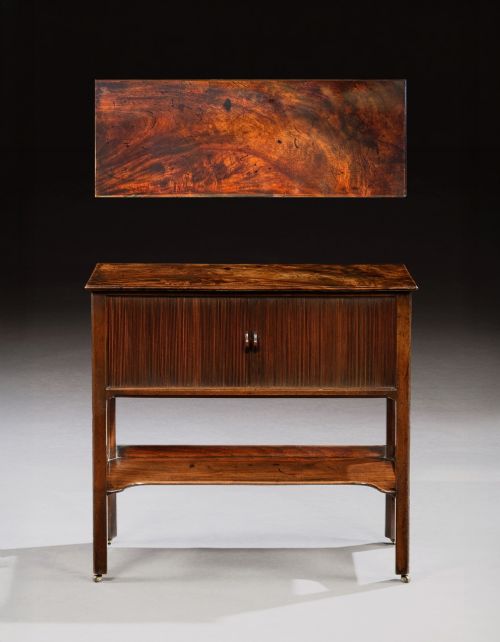


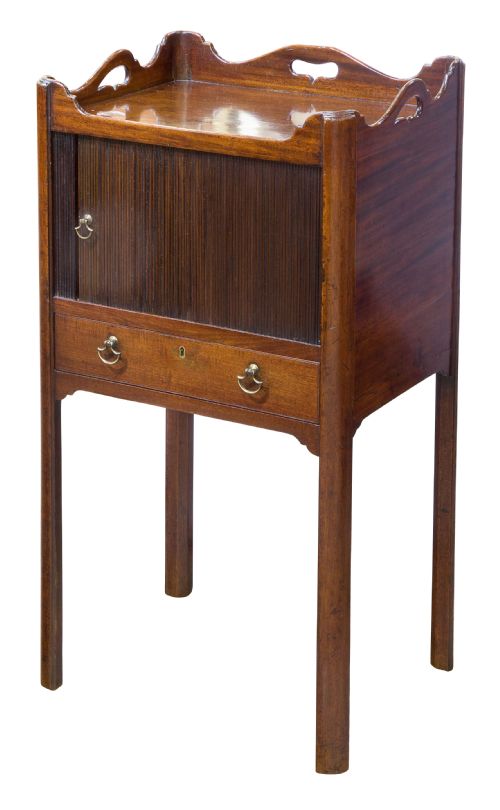

Mahogany Tambour Bedside Cabinet
A mahogany tambour bedside cabinet brings ingenious slatted timber and rich grain to the bedside, offering hidden storage with distinct period charm.
Mahogany Tambour Bedside Cabinet
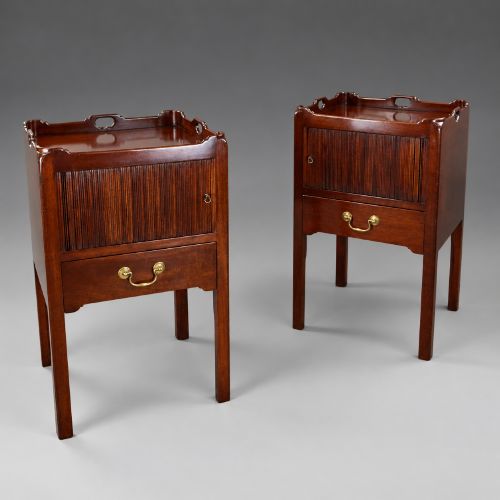
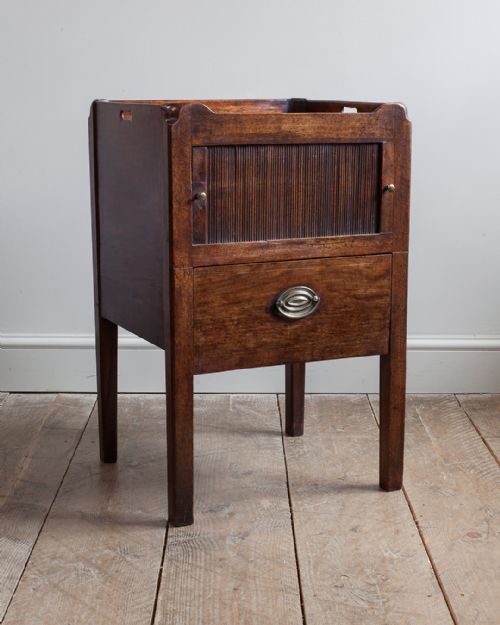
A mahogany tambour bedside cabinet is a compact bedroom piece featuring a flexible slatted door that rolls smoothly within tracks to conceal the interior compartment. These items emerge chiefly from the Georgian and Regency eras, alongside later nineteenth-century interpretations and twentieth-century revivals.
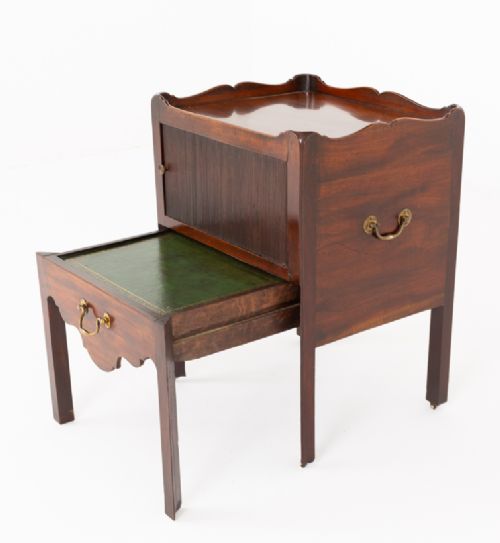
Buyers will encounter various configurations on this page, including George III tray-top commodes, bow-fronted night stands, serpentine commodes, and French examples topped with marble. The underlying architectural forms span straightforward rectangular boxes, concave shapes, and corner pot cupboards designed to fit snugly against walls.
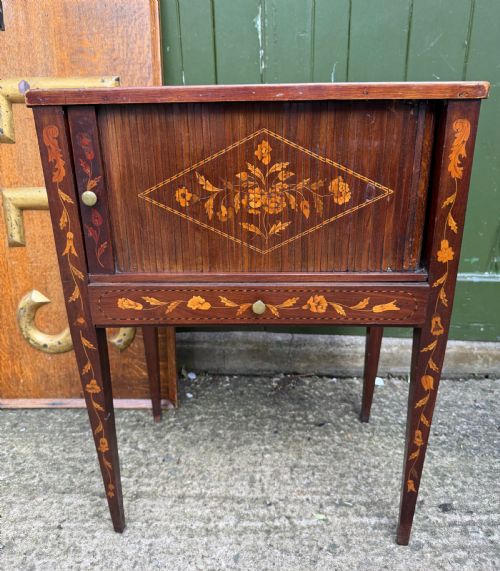
The selection ranges from utilitarian nineteenth-century pieces to refined eighteenth-century examples embellished with boxwood inlay or Dutch floral marquetry. Pairs appear frequently alongside single cabinets, satisfying different furnishing requirements for the bedroom.
Timber and Technique
Cabinetmakers utilised dense, rich mahogany as the primary structural timber, selected for its depth of colour and stability. This was frequently combined with contrasting secondary woods such as boxwood and satinwood for stringing and floral inlay.
The defining tambour mechanism requires precise woodworking, consisting of narrow vertical slats of timber glued to a flexible canvas or leather backing that travels along routed grooves. Surface treatments included brass hardware, leather writing inserts, and occasionally inset marble slabs on French variants.
Mahogany Tambour Bedside Cabinet Retail Price Guide 2026
Typical asking prices for mahogany tambour bedside cabinet among the pieces listed under this phrase on Sellingantiques today, from the lower quarter to the upper quarter. They describe what is for sale here now, not the wider market.
Listings span Georgian, Regency, and Victorian periods, incorporating materials such as mahogany, boxwood inlay, marble, and brass.
Distinctions in Execution
Superior examples display exceptional crispness in the joinery of the tambour tracks, ensuring the slatted door glides effortlessly without binding or sagging. The selection of timber grain on the top and sides also separates standard production from superior cabinetmaking.
Refinement of proportion and decorative restraint dictate the standing of a piece, with finer items incorporating serpentine fronts, delicate boxwood stringing, or authentic period brass handles. The integration of a well-fitted tray top or carved bracket feet further elevates the design.
Gillows
The Mahogany Tambour Bedside Cabinet Glossary
- Tambour
- A flexible sliding door made from narrow vertical strips of timber glued to a fabric backing. It runs in concealed tracks to close off a cabinet opening.
- Commode
- A decorative closed cabinet or chest with doors or drawers. In eighteenth-century terminology, this often designated a bedside table with a cupboard below.
- Tray top
- A raised rim surrounding the upper surface of a bedside table, designed to prevent items from rolling off. This feature is frequently found on Georgian pieces.
- Marquetry
- Decorative veneer work forming intricate pictures or patterns using various coloured woods. Dutch examples on this page often display floral designs.
- Serpentine
- A front contour that curves outward in the centre and inward at the sides. This undulating shape requires advanced woodworking skill.
- Pot cupboard
- An alternative historical term for a bedside cabinet, originally designed to enclose a chamber pot. They often include a small upper surface and a lower door.
Mahogany Tambour Bedside Cabinet: Frequently Asked Questions
What is a tambour door?
A tambour door consists of narrow wooden slats attached to a flexible backing material that slides along a grooved track. This clever engineering allows the door to curve around corners and disappear into the cabinet body.
It provides practical access to the interior compartment without requiring clearance space for hinged doors to swing outward in a tight bedroom layout.
How were these cabinets used?
Historically, these pieces functioned as bedside night stands to hold chamber pots, night lights, and personal items out of sight. The enclosed cupboard kept bedroom necessities neat and tidy.
Today, they serve equally well as lamp tables or bedside storage units, concealing modern reading glasses, books, and electronics behind classic wooden shutters.
How do I spot a Georgian piece?
Georgian and Regency cabinets are identified by their proportion, traditional construction methods, and timber patination. Look for hand-cut dovetails in the drawer construction and mature mahogany grain.
Eighty-century examples often feature tray tops, bracket feet, and subtle boxwood stringing, whereas later nineteenth-century and twentieth-century versions display slightly different stylistic proportions.