


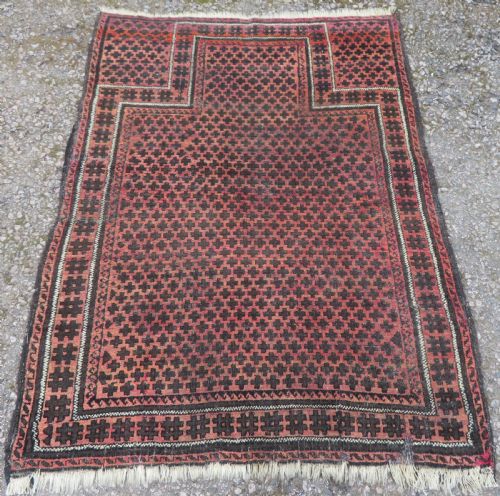


Traditional Wool Prayer Mat
A traditional wool prayer mat brings centuries of woven heritage into a room, offering portable architectural motifs and devotional designs.
Traditional Wool Prayer Mat
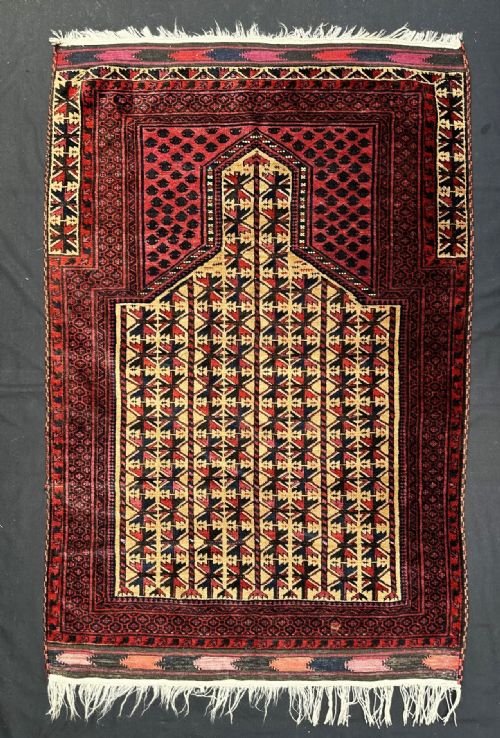
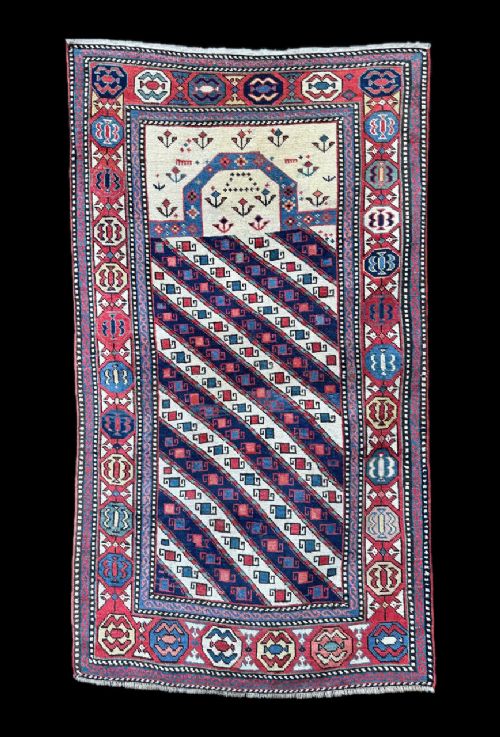
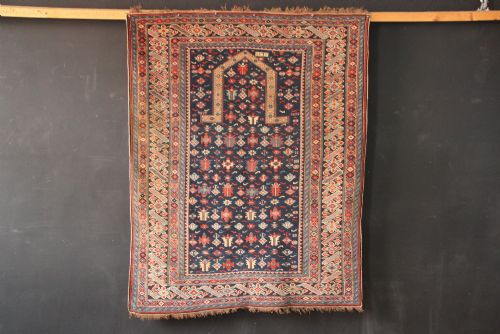
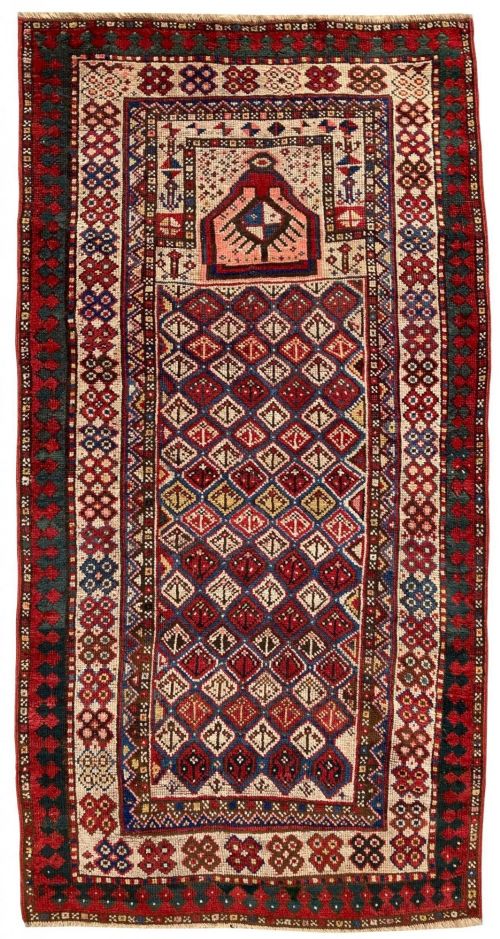
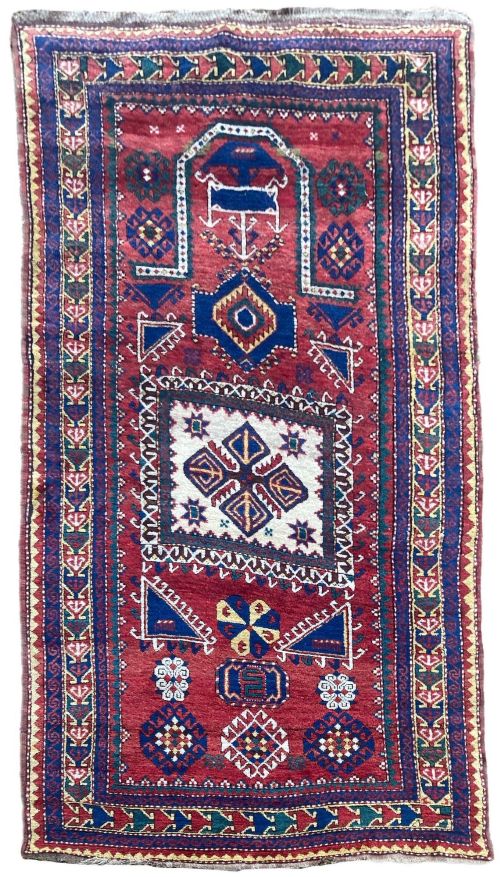
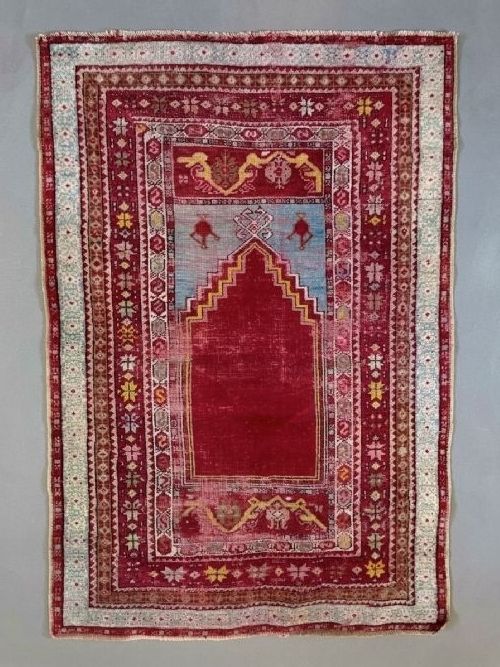
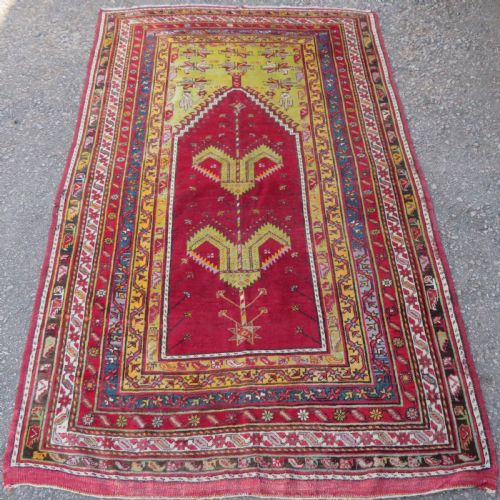
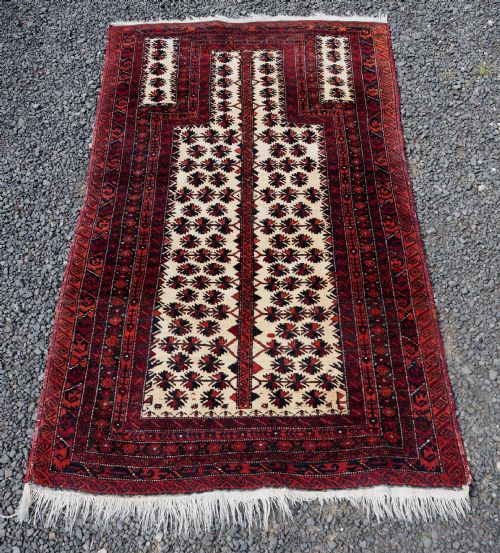
A traditional wool prayer mat functions primarily as a portable devotional space defined by a distinct architectural niche known as a mihrab. These textiles originate from diverse regions including the Caucasus, Anatolia, Persia, and Afghanistan, reflecting distinct tribal and village traditions.
The pieces encountered most frequently on this page date from the nineteenth and early twentieth centuries. They manifest in formats such as single, double, and triple mihrab rugs, utilising regional village aesthetics rather than formal court workshops.
What separates examples within this range
Quality rests upon the precision of the knotting, the handling of the wool, and the clarity of the architectural mihrab design. Finer examples display balanced proportions in their border systems and purposeful saturation of colour.
The integrity of the wool pile and the survival of the original outer guard stripes dictate the enduring character of each piece. Weaving discipline and regional authenticity distinguish standard village production from more exceptional surviving formats.
Traditional Wool Prayer Mat Retail Price Guide 2026
Typical asking prices for traditional wool prayer mat among the pieces listed under this phrase on Sellingantiques today, from the lower quarter to the upper quarter. They describe what is for sale here now, not the wider market.
Listings feature nineteen-century and early twentieth-century pieces produced across Anatolian, Caucasian, and Afghan tribal regions using wool and hand-spun wool.
The Traditional Wool Prayer Mat Glossary
- Mihrab
- The arched architectural niche depicted on a prayer rug, orienting the worshipper. This motif forms the focal point of the design.
- Wool
- The primary animal fibre utilised for the pile of these rugs, sourced from local sheep. Hand-spun varieties yield a varied texture.
- Kazak
- A style of rug originating from the Caucasus, known for bold geometric patterns and saturated primary colours. These pieces display strong tribal characteristics.
- Ghiordes
- An Anatolian town and associated weaving style noted for traditional prayer designs. Rugs from this region frequently feature distinct floral or architectural mihrabs.
Traditional Wool Prayer Mat: Frequently Asked Questions
How do I identify a prayer rug?
A prayer rug is defined by the inclusion of a mihrab, or arch design, which symbolises the niche in a mosque indicating the direction of prayer. These pieces are typically smaller in format than standard floor carpets to facilitate portability and personal use.
The layout usually directs the eye towards a single point, often accompanied by lamps, floral vases, or geometric motifs framing the central field.
Where were these rugs made?
These textiles originate from weaving traditions across the Caucasus, Anatolia, Persia, and Afghanistan. Specific villages and tribal groups, such as the Baluch, Kizil Ayak, and Gendje communities, produced distinct regional variations.
Each area developed a recognisable vocabulary of colour palettes, border configurations, and wool preparation methods that separate them geographically.
How should I care for a wool rug?
Wool rugs require gentle maintenance, beginning with regular, careful vacuuming without a beater bar to protect the hand-knotted pile. Keeping the textile away from direct, prolonged sunlight prevents the natural dyes from fading prematurely.
Professional cleaning tailored to antique textiles ensures the hand-spun wool and foundational structures remain preserved over decades of domestic use.