
Traditional Wooden Writing Desk
A traditional wooden writing desk brings order to a room, offering a solid surface for correspondence framed in walnut, oak or mahogany.
Traditional Wooden Writing Desk
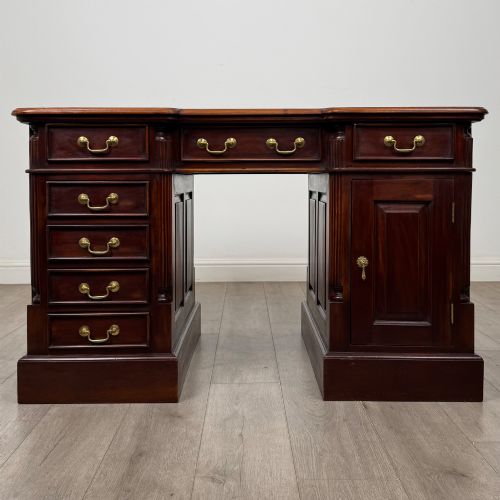
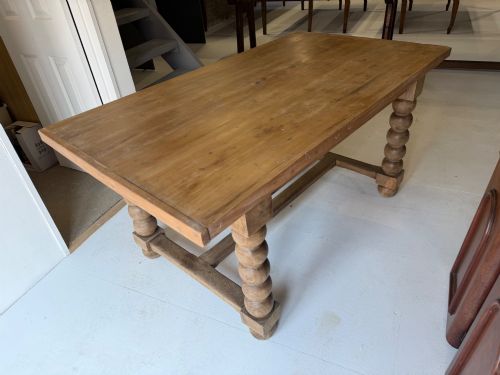
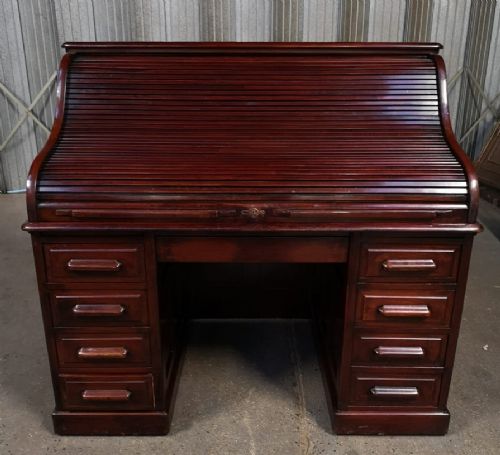
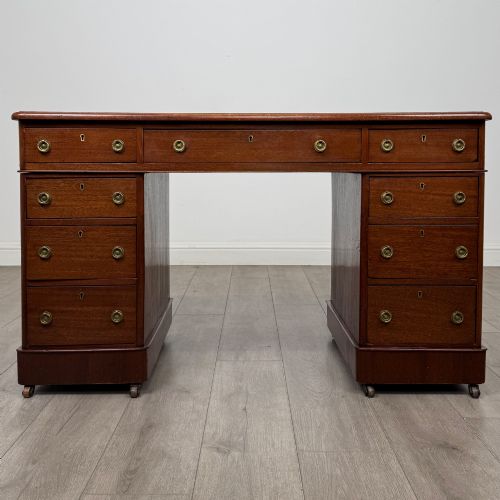
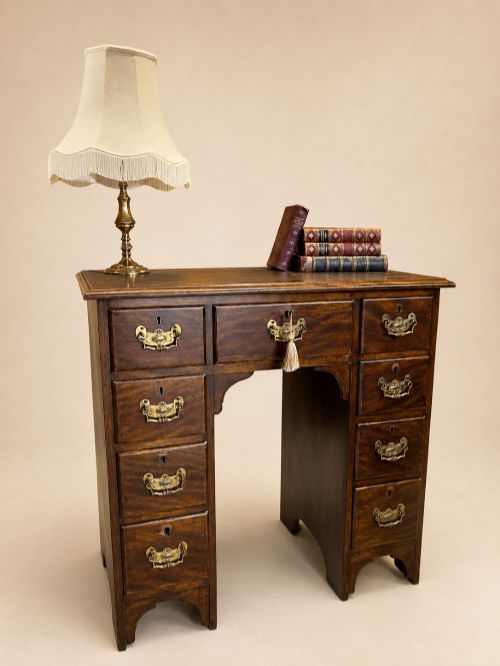
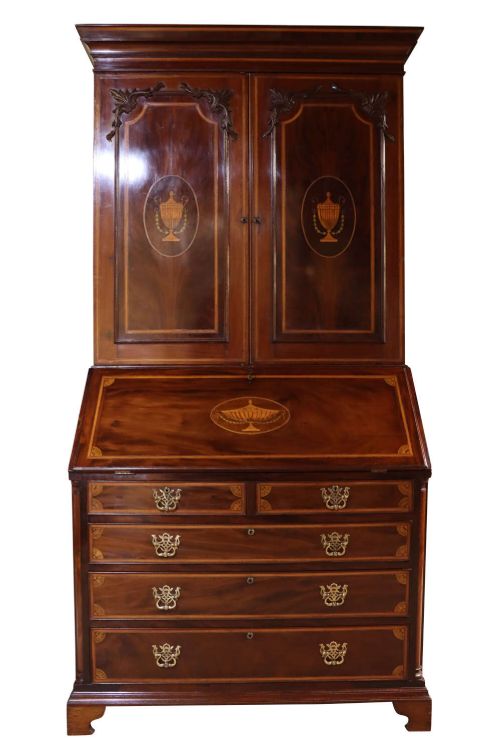
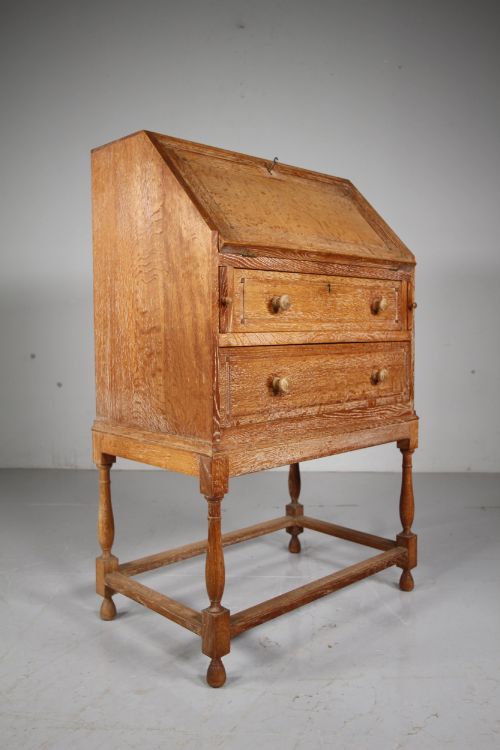
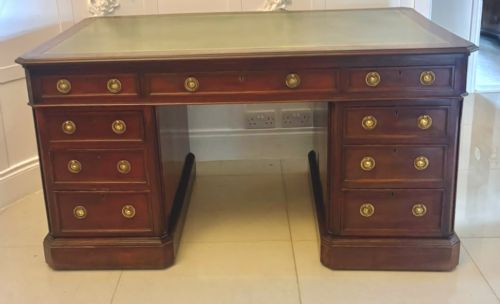
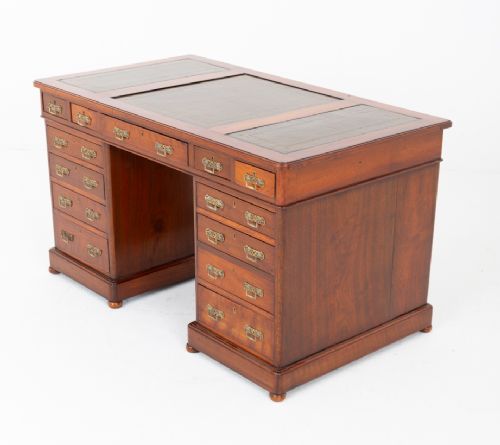
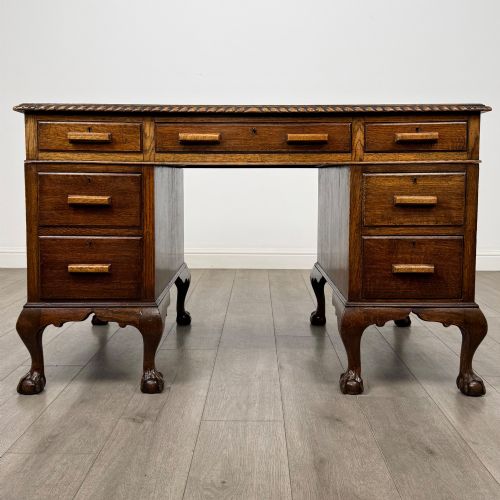
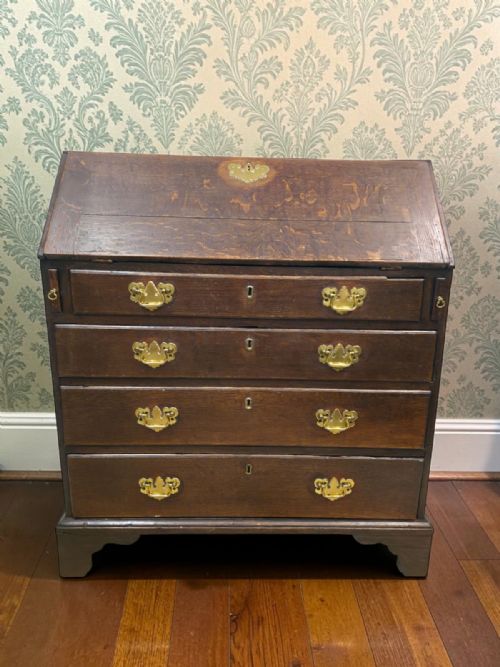
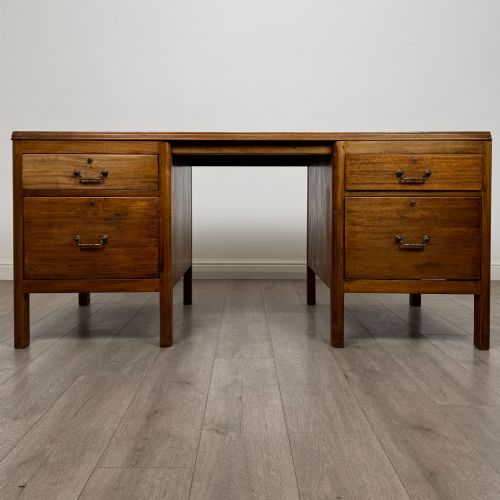
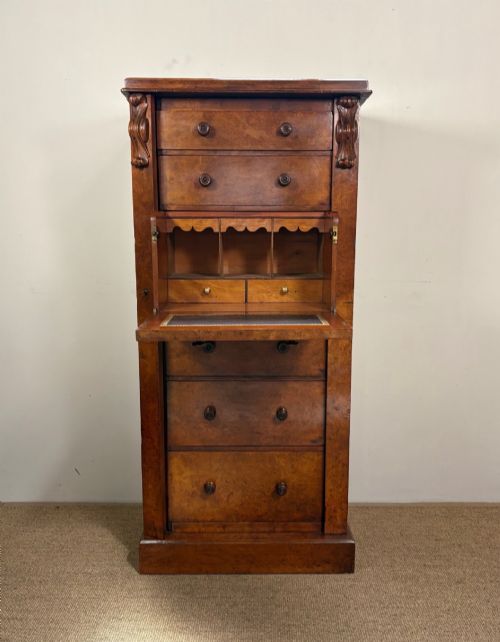
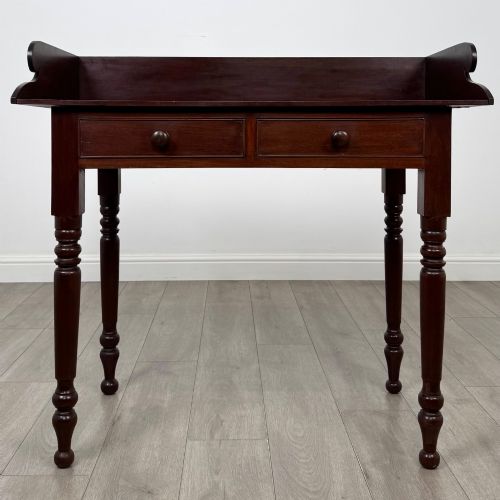
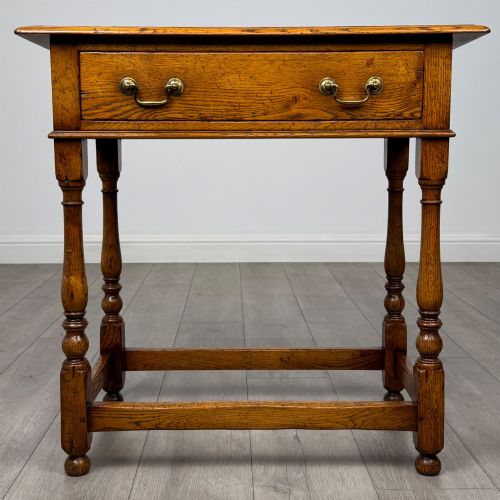
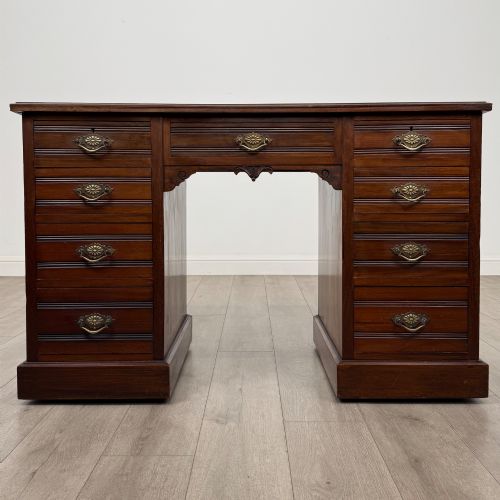
A traditional wooden writing desk serves as a dedicated workspace, appearing in forms such as pedestal desks, kneehole desks, writing tables and fall-front bureaux. Buyers seeking a traditional wooden writing desk encounter pieces spanning the Georgian, Victorian and Edwardian eras.
The inventory on this page ranges from compact walnut writing desks to substantial mahogany pedestal models with fitted stationery drawers. Oak appears frequently in both rustic farmhouse styles and labeled early twentieth-century pieces.
Makers such as Heals of London and Maple and Co represent the fitted and labeled examples found among the selection. These pieces reflect the domestic requirements of nineteenth and early twentieth-century studies and libraries.
What varies in quality
The division between standard and superior pieces rests on the selection of timber, particularly the grain figuration in mahogany and burr walnut veneers. Cabinetmaking skill shows in the precision of drawer dovetails and the smooth operation of sliding writing surfaces.
Maker attribution elevates certain pieces, with factory labels from firms like Maple and Co or Heals indicating documented provenance. The complexity of the interior arrangement, such as secret compartments within fall-front bureaux or fitted stationery drawers, distinguishes finer examples from simpler side tables.
Traditional Wooden Writing Desk Retail Price Guide 2026
Typical asking prices for traditional wooden writing desk among the pieces listed under this phrase on Sellingantiques today, from the lower quarter to the upper quarter. They describe what is for sale here now, not the wider market.
The listings span from the eighteenth century to the mid-twentieth century, featuring oak, mahogany, walnut and pine.
Heals of London·Maple and Co
The Traditional Wooden Writing Desk Glossary
- Pedestal desk
- A heavy freestanding desk comprising two pedestals of drawers supporting a top surface, often featuring an inset leather writing panel.
- Bureau bookcase
- A tall cabinet combining a sloping fall-front writing desk with upper shelving enclosed by doors.
- Kneehole desk
- A compact pedestal desk featuring a central recess for the user's legs, flanked by banks of drawers.
- Tambour top
- A flexible writing surface formed of narrow wooden slats running in a groove, allowing the desk top to roll open.
- Writing table
- A freestanding table with one or more drawers beneath the top, designed primarily for correspondence rather than storage.
Traditional Wooden Writing Desk: Frequently Asked Questions
How do I identify a Victorian pedestal desk?
Victorian pedestal desks typically display rich mahogany or walnut timbers, often with inset leather writing surfaces and panelled sides designed to stand free in a room. They frequently incorporate substantial brass hardware and deep drawer configurations.
Construction details such as hand-cut dovetails in the internal drawers help confirm the period alongside the characteristic weight and proportion of the timber.
Where should I place a kneehole desk?
Kneehole desks suit studies, libraries and larger living spaces where their finished backs allow them to sit away from the wall. Their compact proportions also permit placement against a wall beneath a window.
Ensure adequate clearance for the central recess and chair movement before positioning the desk in a room.
How do I care for a leather desk top?
Leather writing surfaces require gentle cleaning with a damp cloth followed by a suitable leather cream to prevent drying and cracking. Avoid using harsh chemical solvents or excessive water near the surrounding wooden frame.
Keep desks away from direct heat sources and strong sunlight to protect both the leather insert and the polished wood.