



Victorian Tambour Desk
A victorian tambour desk offers a sliding slatted shutter to secure your papers, combining clever nineteenth-century carpentry with practical workspace storage.
Victorian Tambour Desk
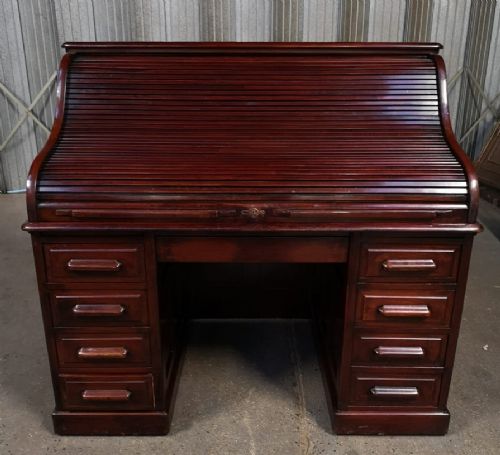
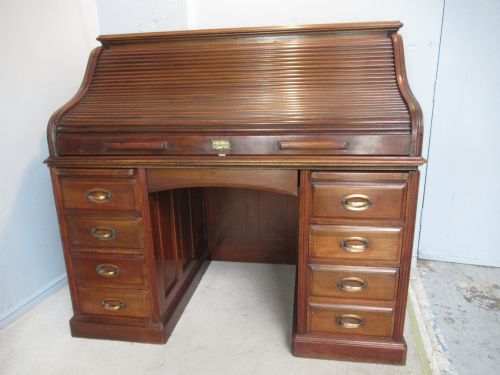
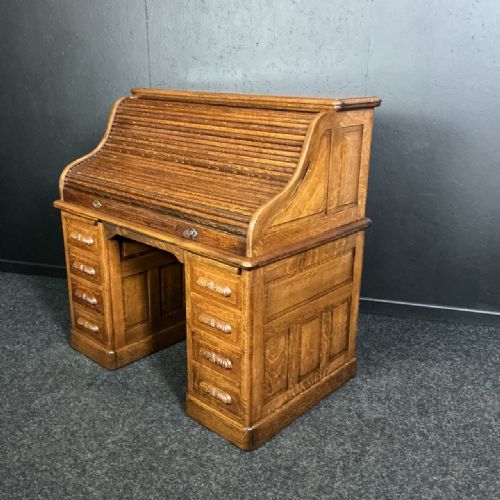
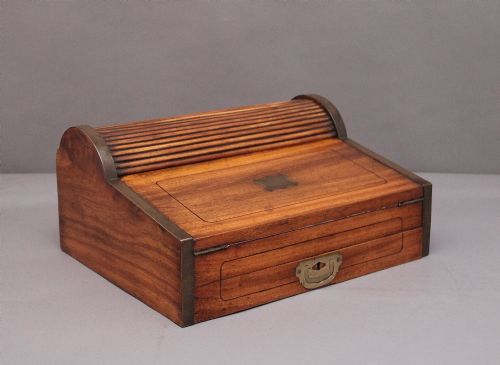
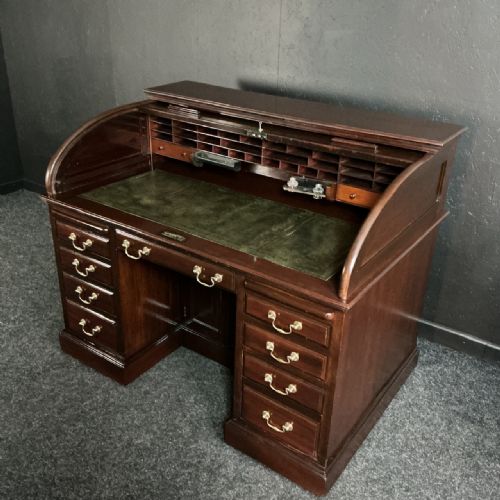
A victorian tambour desk provides a closed writing surface operated by pulling a flexible wooden shutter along tracks, concealing pigeonholes and drawers. These pieces emerge predominantly from the nineteenth century, including Edwardian iterations, utilising forms such as pedestal desks and writing boxes.
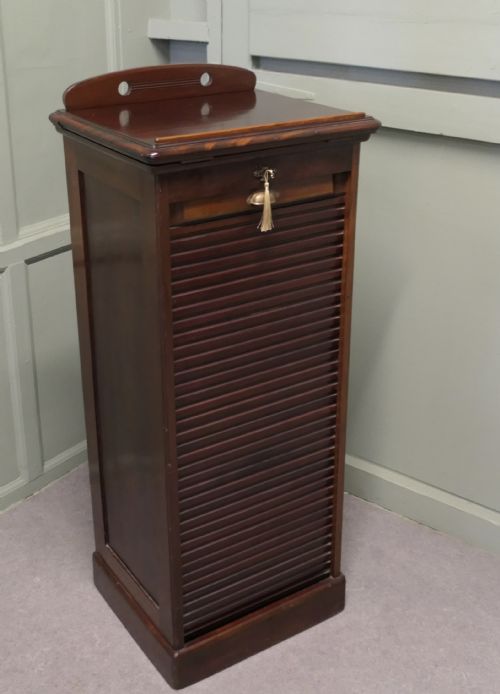
You will encounter mahogany and oak most frequently, alongside walnut and camphor wood, often styled within Victorian, Edwardian, and campaign traditions. The selection spans compact small desks to large kneehole rolltop setups and filing cabinets.
The layout typically incorporates interior stationery compartments behind the slatted cylinder front, serving both home offices and reception areas. Each example demonstrates the period focus on compartmentalised storage for correspondence.
What varies in quality
The smoothness of the tambour action distinguishes finer examples, relying on the original fabric backing and precise alignment of the wooden laths. Superior pieces maintain a fluid slide without catching in the curved tracks.
Timber selection and interior joinery dictate the standing of a desk, visible in the choice of solid mahogany or figured oak rather than secondary veneers. The complexity of the internal pigeonholes and the presence of original locking mechanisms further separate standard production from superior workshops.
Boston Chair Company
The Victorian Tambour Desk Glossary
- Tambour
- A flexible shutter formed of narrow strips of wood glued to canvas, allowing it to slide around a curved track to enclose a desk or cabinet.
- Roll Top Desk
- A writing table featuring a slatted tambour cylinder that pulls down from the back to cover the work surface and pigeonholes.
- Pedestal Desk
- A heavy writing table supported by two vertical banks of small drawers reaching down to the floor.
- Writing Slope
- A portable or table-top box with a hinged sloping lid designed to hold paper and writing instruments.
- Campaign
- Furniture built in sections with brass corners and flush handles, designed for easy transport by military officers during the nineteenth century.
- Kneehole Desk
- A writing table with a central recess for the user's legs, flanked by pedestals containing drawers.
Victorian Tambour Desk: Frequently Asked Questions
How do tambour desks work?
A series of narrow wooden laths are attached to a flexible canvas backing, enabling the shutter to glide smoothly along a recessed track. Pulling the curtain downward secures the entire writing surface and interior pigeonholes.
This clever mechanism allows users to lock away correspondence without needing clearance for swinging doors.
Are all roll top desks tambour?
Most roll top desks utilise tambour construction, employing the slatted sliding shutter to cover the desk interior. However, cylinder desks often use a solid curved wooden panel instead of individual slats.
Checking the interior curve reveals whether the cover is composed of flexible strips or a single formed piece.
Where were these desks used?
These desks served primarily in nineteenth-century offices, studies, and home libraries for managing extensive correspondence and ledgers. Their secure locking mechanism made them valuable for keeping sensitive documents private.
Today, they transition easily into modern home offices while retaining their traditional utility.
What is campaign furniture?
Campaign pieces were built for military officers on the move, featuring robust timbers like camphor wood and protective brass corners. They often incorporated modular sections or folding elements for transport.
Desks from this tradition combine practical portability with characteristic nineteenth-century craftsmanship.