

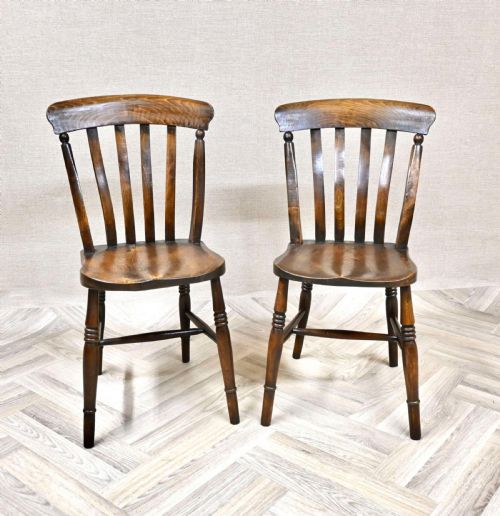
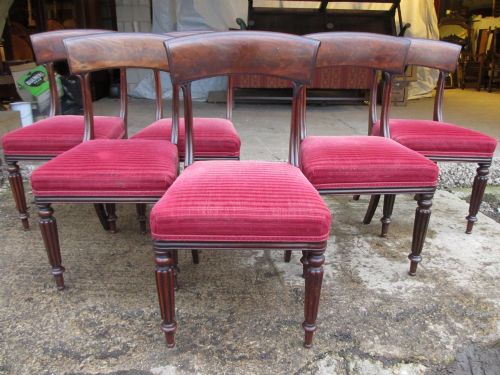
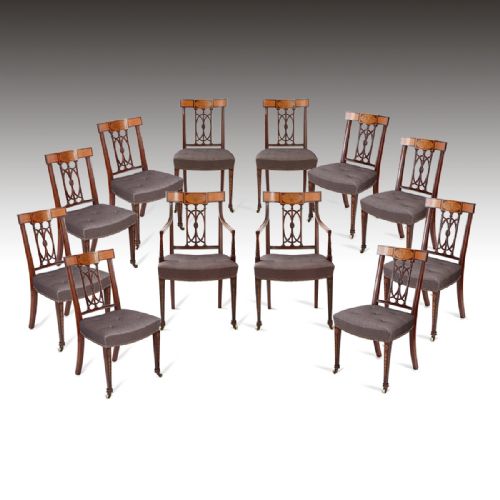
Traditional Wooden Side Seats
Traditional wooden side seats are sturdy occasional chairs and dining chairs designed to sit against a wall or around a table.
Traditional Wooden Side Seats
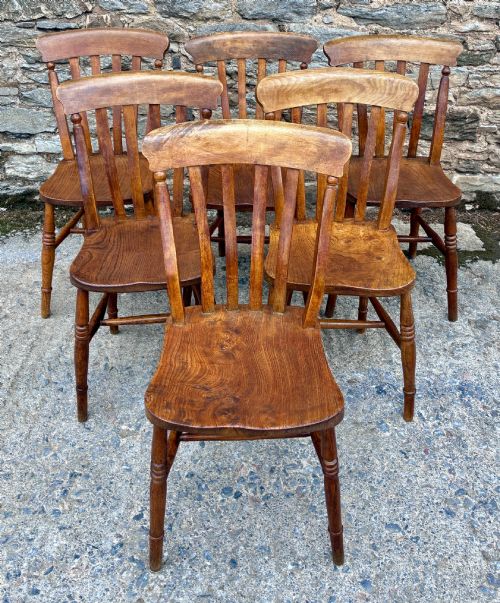
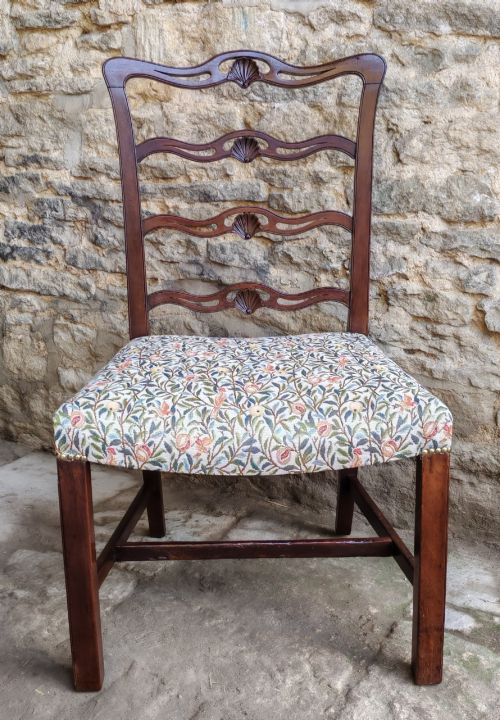
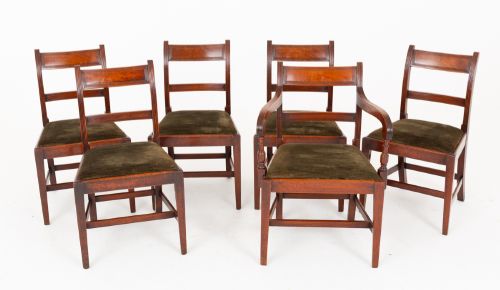
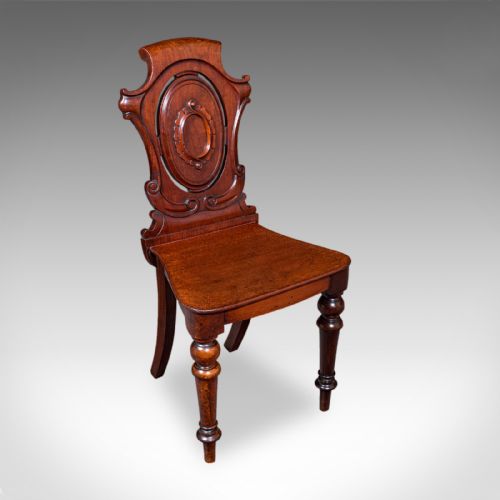
Traditional wooden side seats encompass dining chairs, hall chairs, side chairs, stools, and armchairs drawn from the Georgian, Victorian, and Edwardian periods. Buyers searching for traditional wooden side seats typically encounter sturdy kitchen chairs, formal mahogany dining sets, and simple vernacular stools.
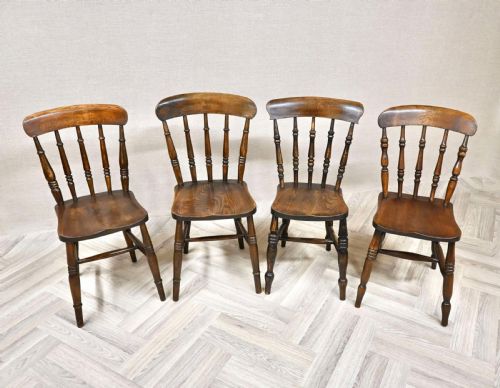
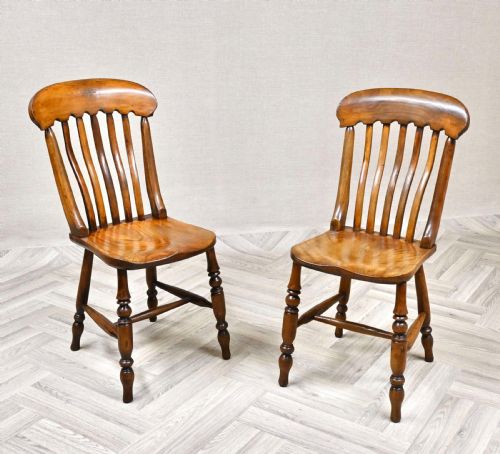
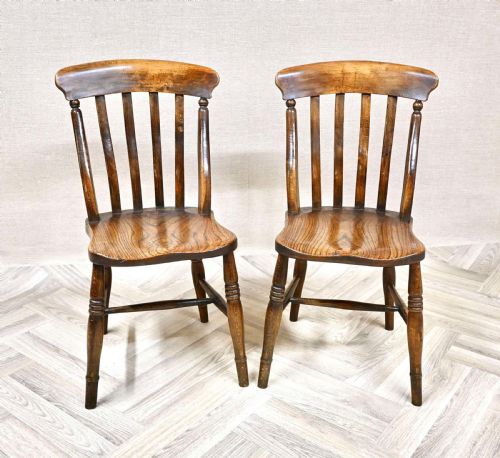
The selection ranges from country Windsor forms in elm, ash, and beech to refined mahogany shield-back and bar-back chairs. Many examples survive in sets or pairs, originating from English and Scottish workshops across the nineteenth and early twentieth centuries.
Materials and construction methods
Cabinetmakers and country joiners utilised timber such as mahogany, oak, elm, walnut, beech, sycamore, and ash to build these seats. Hardwoods provided the strength required for slender carved splats and legs, while softer woods or fruitwoods supported bentwood loops and turned spindles.
Joinery methods combined traditional mortise and tenon joints with steam-bent components for Windsor bows and ladderbacks. Seats often incorporated solid timber saddles, rush weaving, or upholstered pads finished in fabric, leather, or velvet.
Listings feature eighteenth-century to twentieth-century forms in mahogany, oak, elm, walnut, and ash.
Assessing quality and craftsmanship
The standard of a seat rests upon the selection of timber and the crispness of its carving or turning. Dense, well-figured mahogany and finely grained oak demonstrate superior material selection by the maker.
Structural integrity and the retention of original components separate standard examples from finer pieces. Tighter joinery, balanced proportions, and minimal timber replacement elevate the standing of a traditional wooden side seat.
Maple and Co·Rossetti
The Traditional Wooden Side Seats Glossary
- Windsor chair
- A wooden chair characterised by a solid sculpted seat into which the legs and back spindles are directly wedged. These sturdy forms often feature steam-bent hoops and central splats.
- Shield back
- A chair back shaped in the outline of a heraldic shield, popular during the Georgian and Victorian revivals. This design allows for delicate pierced splats and carved drapery.
- Lathe back
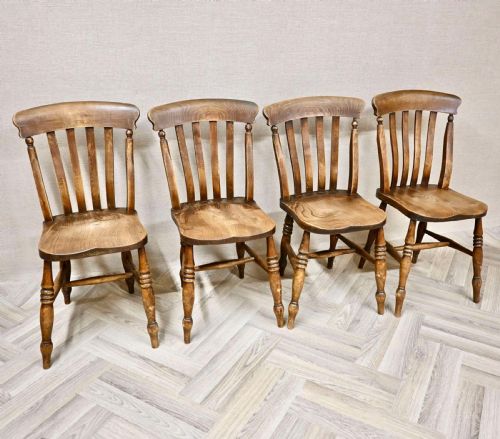
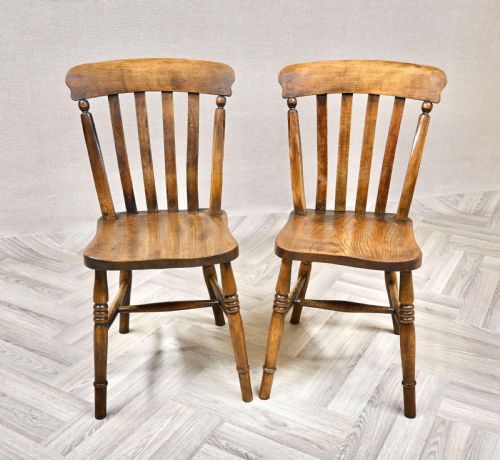
- A chair back constructed with horizontal wooden laths or slats supported by upright spindles. It provides rigid support and appears frequently in farmhouse kitchen seating.
- Rush seat
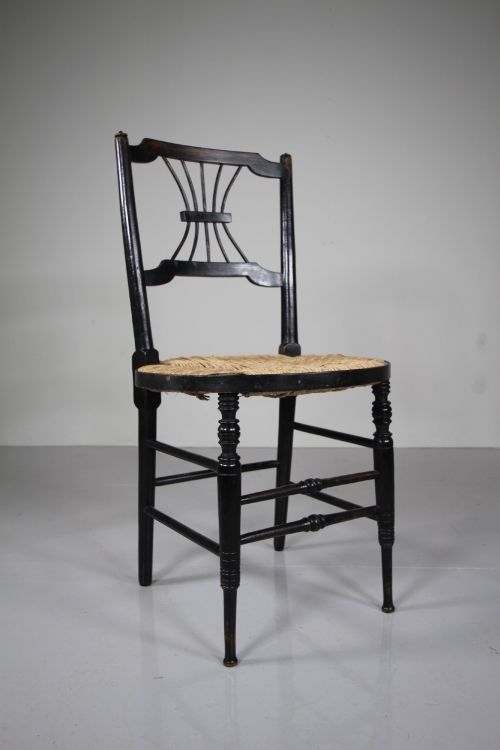
- A seating surface woven from dried marsh rushes or sedge around an internal wooden frame. This traditional technique yields a resilient and textured pad common in country chairs.
- Bar back
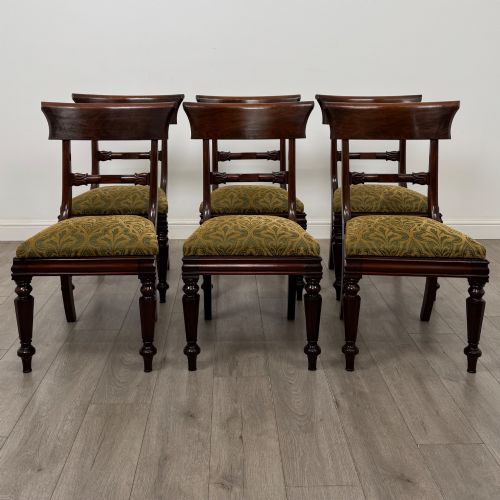
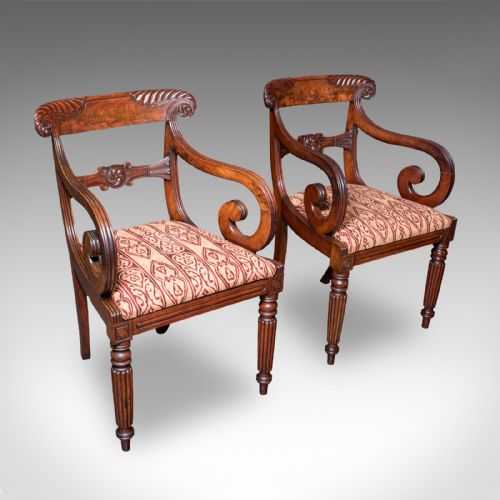
- A chair back featuring a horizontal transverse wooden bar across the uprights, often reeded or carved. This style frequently defines nineteenth-century dining chairs.
Traditional Wooden Side Seats: Frequently Asked Questions
How do I date an antique wooden chair?
Dating relies on observing tool marks, timber selection, construction techniques, and stylistic details. Georgian pieces often display simpler internal framing, while Victorian examples introduce heavier proportions and revival ornamentation.
Secondary woods used in the seat bottoms and undercarriages also help confirm the era of manufacture alongside the primary timber.
Were these chairs used for dining?
Many of these chairs served as formal or everyday dining furniture, particularly the mahogany sets originating from the Georgian and Victorian eras. Sturdier models functioned in kitchens and farmhouses.
Lighter side chairs and hall chairs were frequently kept in corridors and reception rooms for temporary seating rather than dining use.
How should I care for antique wood?
Preserving these seats requires maintaining stable indoor humidity levels and protecting the timber from direct heat sources and strong sunlight. Regular dusting with a dry, soft cloth prevents surface grime accumulation.
Applying occasional appropriate wax polish nourishes the grain and protects the historic finish without building up heavy residues.