



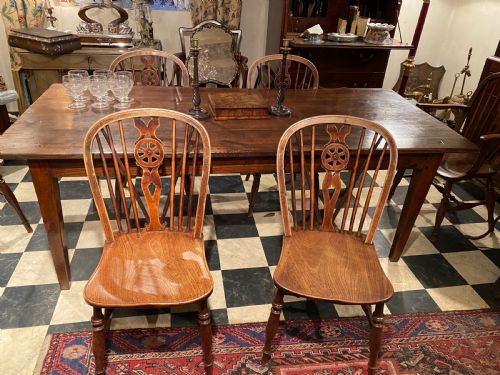

Carved Elm Kitchen Chairs
These carved elm kitchen chairs combine traditional country craftsmanship with robust timber, offering durable seating solutions for rustic interiors.
Carved Elm Kitchen Chairs
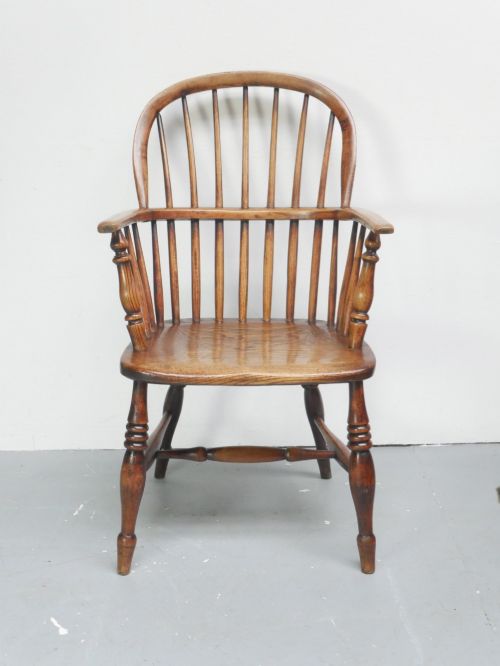
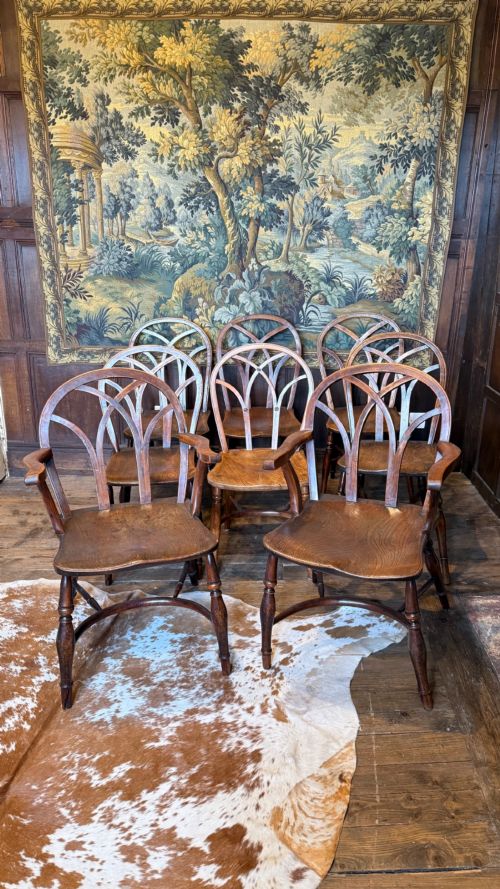
Carved elm kitchen chairs encompass sturdy wooden seating rooted in traditional British country styles. Buyers searching for carved elm kitchen chairs will frequently encounter robust Windsor designs spanning the nineteenth century.
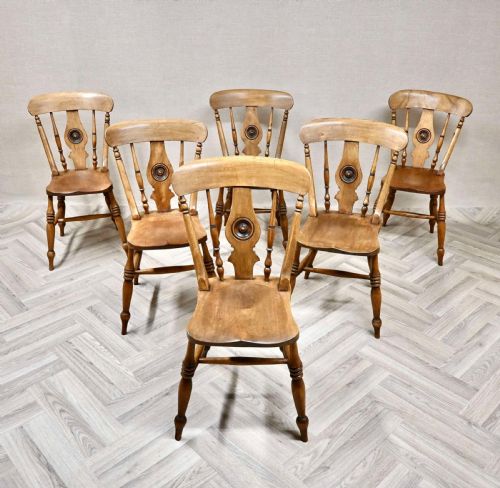
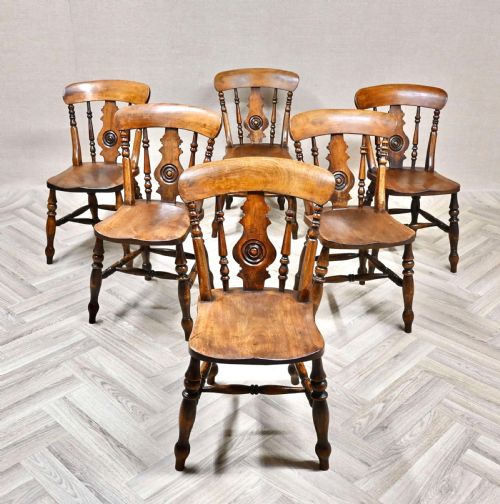
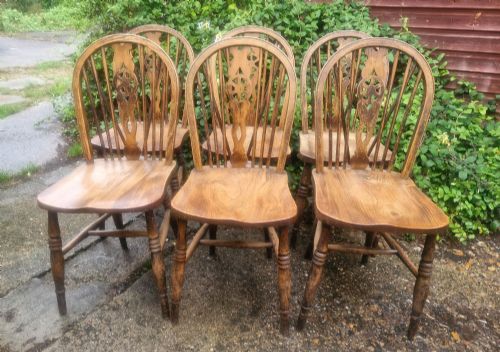
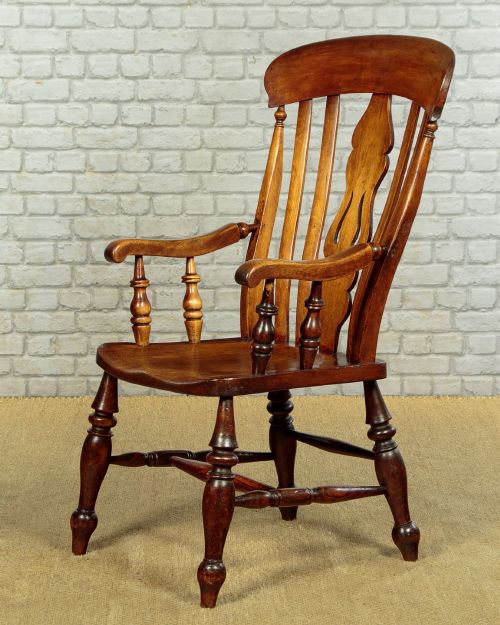
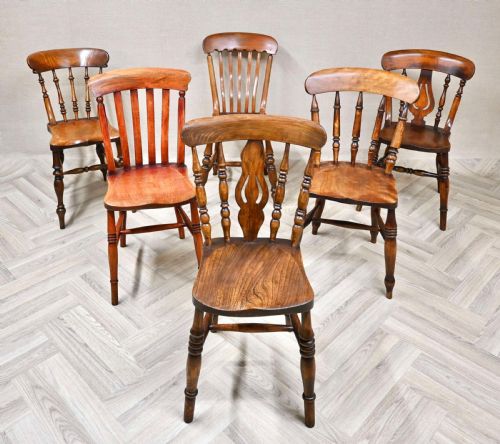
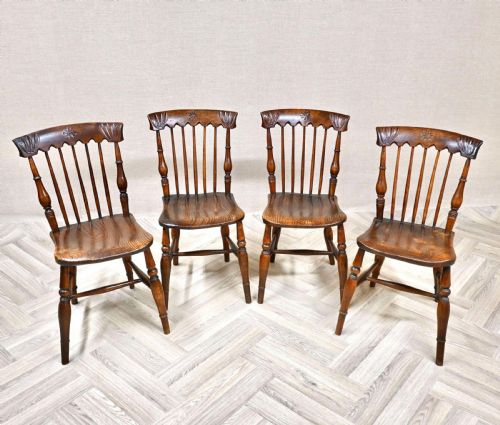
The selection ranges from individual armchairs to large dining sets. These pieces reflect historical domestic utility, featuring distinctive back styles including wheel backs, bullseye motifs, and gothic arches.
Origins trace across regional workshops, with examples recorded from nineteenth century production periods as well as Regency and Victorian eras. Both side chairs and highback armchairs appear regularly within the current lineup.
How they were made
Makers utilised elm for solid seats, prized for its interlocking grain that resisted splitting under heavy use. Complementary timbers such as beech, ash, oak, and yew frequently formed the spindles, legs, and bentwood bows.
Construction relied on traditional joinery techniques, turning green and seasoned hardwoods to assemble braced Windsor frames. Backrests often incorporated carved central splats, pierced wheel motifs, or steam-bent rails secured with wedges.
Listings feature hardwood constructions predominantly in elm and beech, spanning the nineteenth century alongside Regency and Victorian periods.
What varies in quality
The sophistication of the timber figure and the depth of the carved details distinguish finer examples. Seat slabs carved from thick single planks of elm demonstrate superior material selection compared to multi-piece boards.
The Carved Elm Kitchen Chairs Glossary
- Elm
- A dense, tough hardwood with a tangled grain pattern that resists splitting, making it the primary choice for Windsor chair seats. This timber was widely sourced by country cabinet makers.
- Windsor
- A chair style featuring a solid wooden seat into which the legs and back spindles are directly wedged and pegged. These seats are traditionally saddled for comfort.
- Splath
- A central vertical strip of wood in the back of a chair, often carved, pierced, or shaped in styles such as the lyreback or wheel back.
- Bow
- A steam-bent piece of hardwood forming the upper backrest and arm rail of a Windsor armchair. This curved component requires careful steaming to shape without fracturing.
Carved Elm Kitchen Chairs: Frequently Asked Questions
Are these chairs comfortable for daily dining?
Most feature ergonomically saddled wooden seats carved to fit the body. While firm compared to upholstered seating, they offer stable and supportive dining comfort.
Adding loose squab cushions can soften the seat for prolonged sitting around a kitchen table.
How do I care for antique elm timber?
Keep the wood away from direct heat sources and sudden humidity changes to prevent timber movement. Regular dusting and occasional application of natural wax preserve the finish.
Avoid silicone-based polishes that can build up and degrade the historic patina over time.
Can I mix different chair styles together?
Mixing varied country chair forms creates an eclectic, collected aesthetic around a kitchen table. Matching the approximate seat height and overall scale ensures comfortable dining alignment.
Sticking to similar nineteenth century vernacular origins helps unify disparate armchair and side chair designs.
How do I distinguish regional chair types?
Regional differences appear in the turning of the legs, the shaping of the arm supports, and the detailing of the back splats. Scottish and English country workshops developed distinct local variations in Windsor construction.
Examining the underside reveals specific joinery habits and secondary woods characteristic of particular cabinet-making traditions.