



Traditional Wooden Monks Bench
A traditional wooden monks bench serves as practical seating and storage, bringing centuries of craftsmanship directly into your hallway.
Traditional Wooden Monks Bench
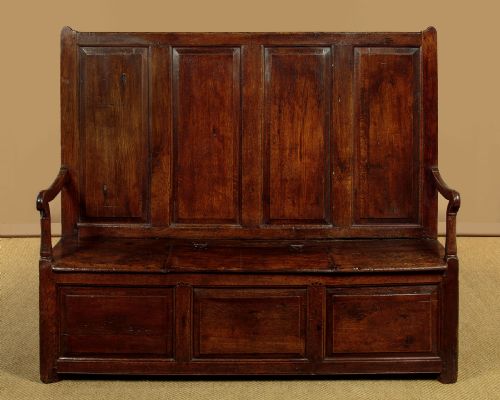
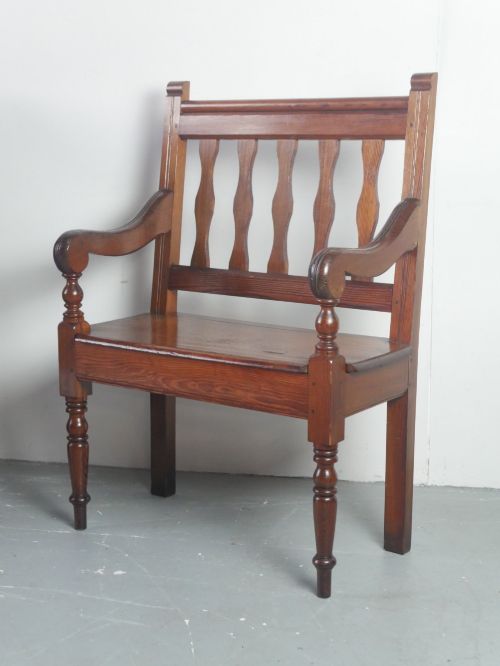
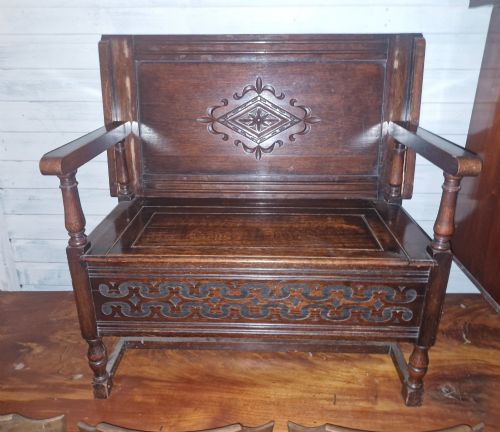
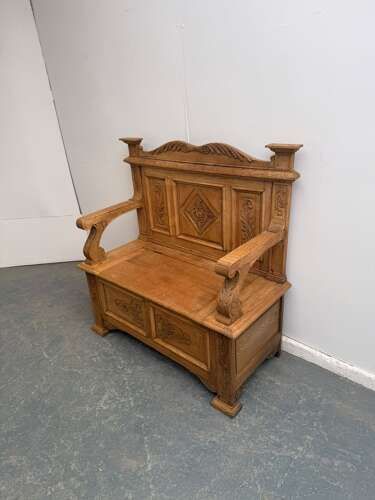
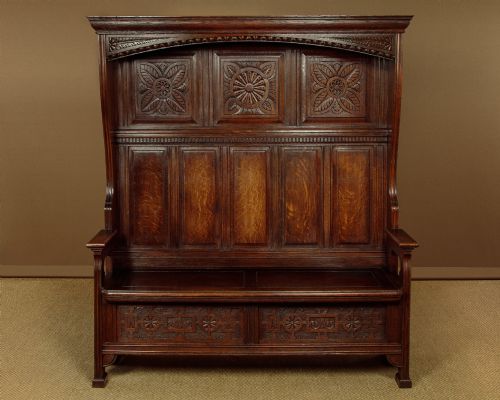
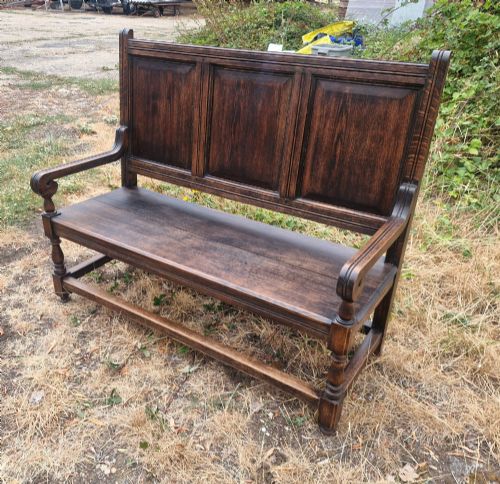
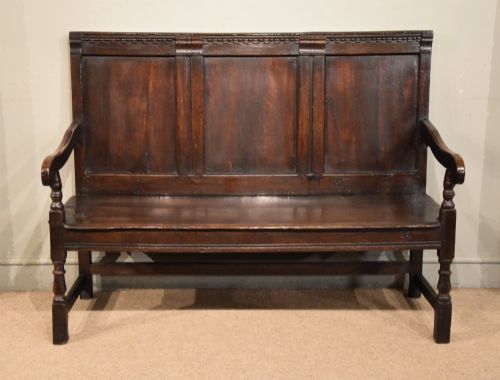
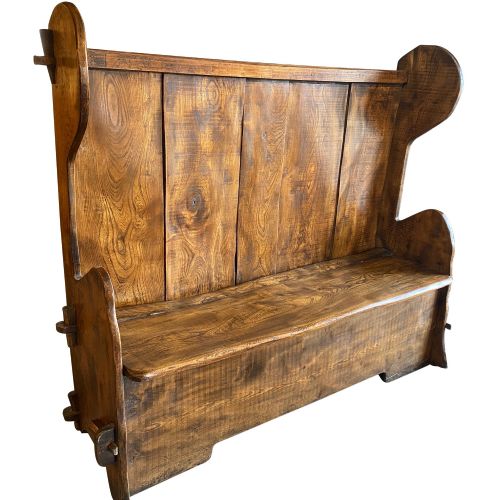
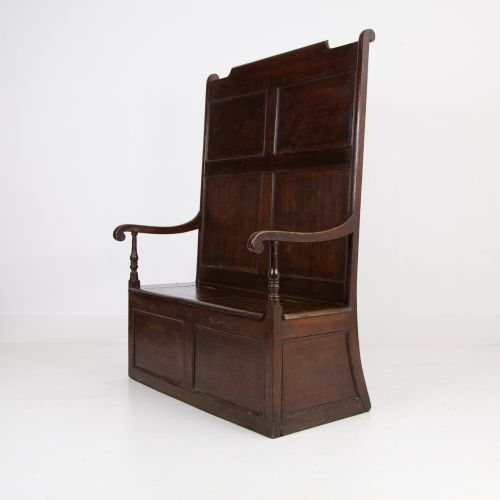
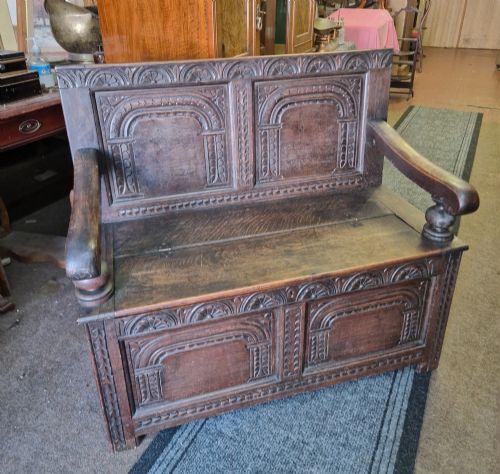
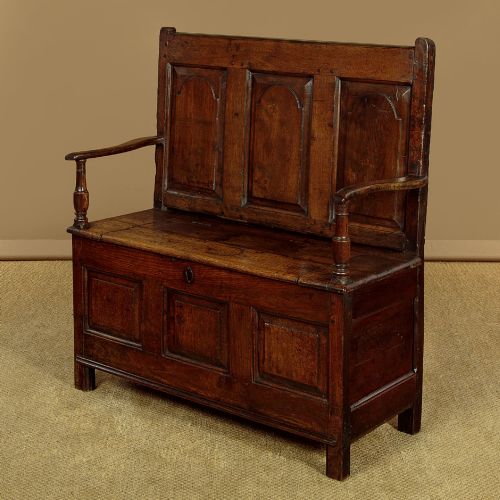
When you search for a traditional wooden monks bench, you encounter sturdy seating designed for hallways, porches and living spaces across British and European homes. These pieces function as benches, settles and hall seats, frequently incorporating lift-up lids or fold-over tops that reveal hidden storage compartments beneath the seat.
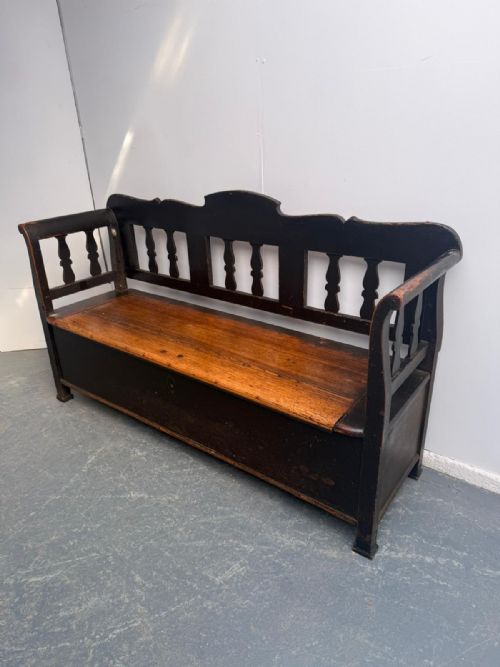
The selections span centuries, featuring robust examples from the eighteenth century, the Georgian era, the Victorian period and the early twentieth century. Oak and pine dominate the offerings, appearing either in waxed natural timber finishes or displaying original painted surfaces in grey and black.
Many items display regional characteristics, ranging from English country and Welsh oak construction to Hungarian pine benches and Catalan shepherd forms. You are most likely to meet panelled oak box settles and practical pine hall benches suited to modern entryways.
Materials and construction methods
Carpenters built these traditional wooden monks bench pieces primarily using solid oak, pine, elm and pitch pine. Timbers were joined using traditional panelled construction, tongue and groove techniques, and sturdy framing to withstand daily use in busy communal rooms.
Surface treatments vary between hand-waxed finishes that highlight the natural grain of the wood and original painted coats in muted tones. Structural iron and metal hardware frequently secure the moving parts, such as the hinges on lift-up storage seats and fold-over tabletops.
Some Catalan shepherd benches come equipped with seating sturdy enough to survive centuries of mountain winds and stubborn livestock.
Evaluating construction and finish
The calibre of a traditional wooden monks bench rests upon the integrity of its timber and the preservation of its original structure. Examples retaining their initial waxed surfaces or untouched period paint command greater appreciation than those stripped or altered over time.
Carved detailing, panel thickness and the smoothness of the mechanism on folding tops and storage lids indicate the care taken by the original maker. Proportion and scale also matter greatly, as compact hall seats require precise joinery to remain stable and functional.
The Traditional Wooden Monks Bench Glossary
- Settle
- A wooden bench with a high back, solid arms and often a closed base containing storage space. This form shielded occupants from draughts in older homes.
- Box settle
- A specific type of settle featuring a hinged seat that lifts to reveal a deep storage box underneath. It combines seating with domestic utility.
- Hall bench
- A narrow seating piece placed primarily in entranceways or corridors for putting on and taking off footwear. These items frequently incorporate storage compartments.
- Pitch pine
- A durable, resinous softwood sourced mainly from North America and utilised extensively during the nineteenth century for furniture and architectural joinery.
- Jacobean Revival
- A nineteenth-century design movement that copied seventeenth-century English styles, characterised by dark oak, heavy mouldings and geometric panel carving.
Traditional Wooden Monks Bench: Frequently Asked Questions
What is a traditional wooden monks bench?
A traditional wooden monks bench is a dual-purpose piece of furniture that typically combines a bench seat with a box storage base or a hinged top that converts into a table.
These items were historically used in hallways and living rooms to save space and provide secure storage for household goods.
How do I date a wooden settle?
Dating relies on examining the timber species, construction joints, tool marks and the style of any carved ornamentation present on the panels.
Eighteenth-century examples often display pegged mortise and tenon joints in native oak, whereas nineteenth-century pieces frequently utilise pine and machine-sawn elements.
Where should I place a hall bench?
A hall bench suits entranceways, boot rooms and corridors where visitors remove coats and shoes.
The built-in storage compartment underneath the seat provides a convenient place to stow away scarves, gloves and everyday clutter.
Are painted finishes period accurate?
Original painted finishes do appear on antique pine benches, particularly those originating from European countries like Hungary during the Georgian and Victorian eras.
Many pieces were coated in practical dark or neutral colours to protect the softwood timber from wear and moisture.