
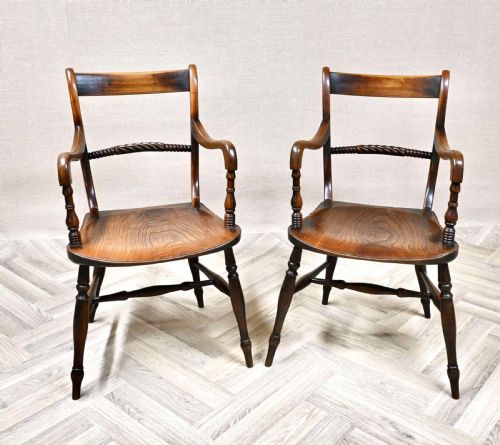
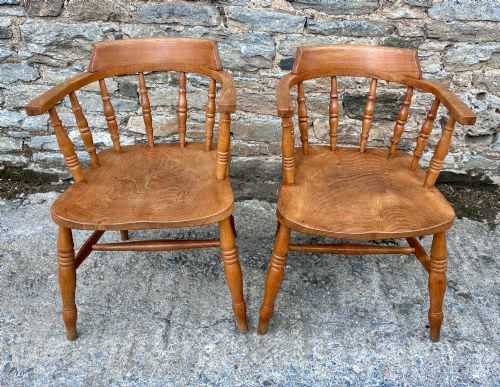
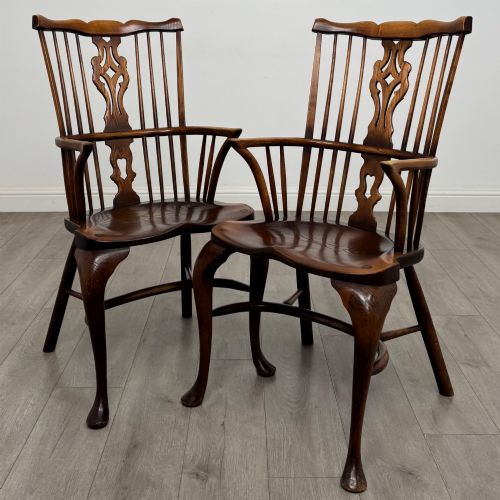
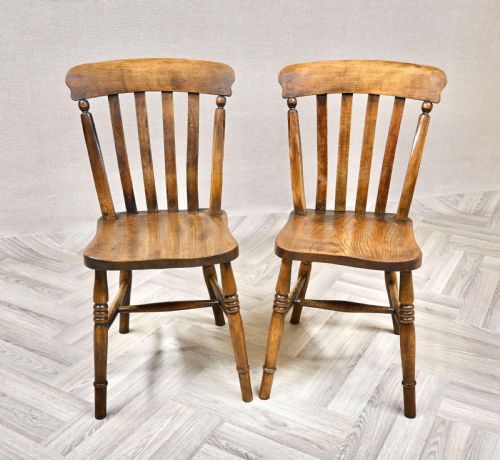
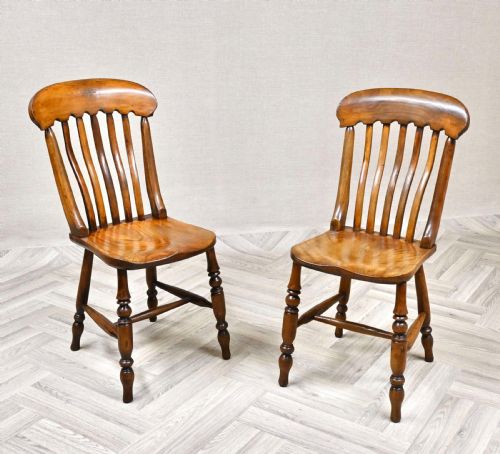
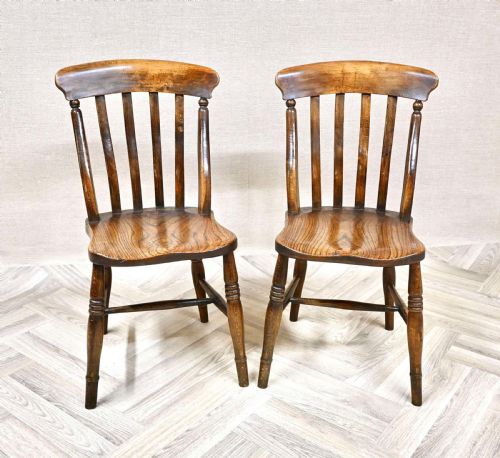
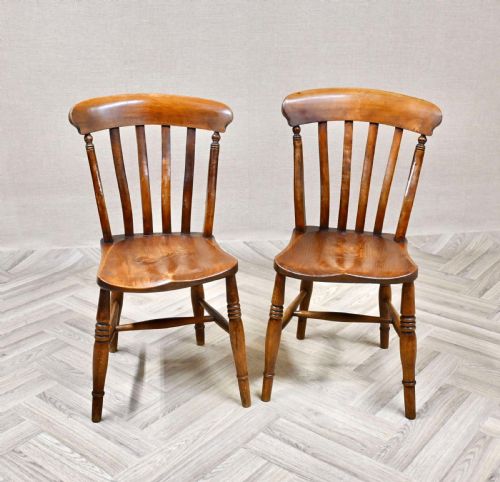
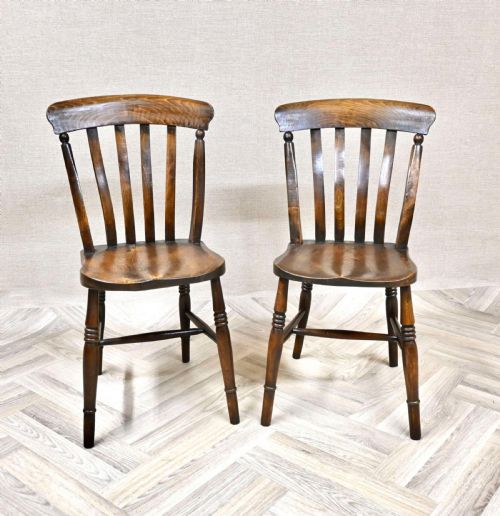
Traditional Windsor Chairs Pair
A traditional windsor chairs pair brings sturdy English country character to a dining room through sculpted seats and turned spindles.
Traditional Windsor Chairs Pair
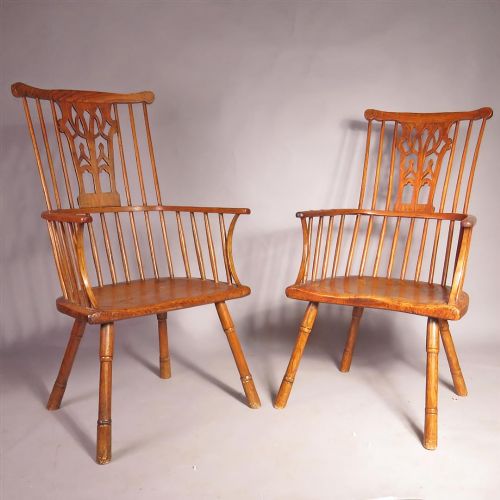
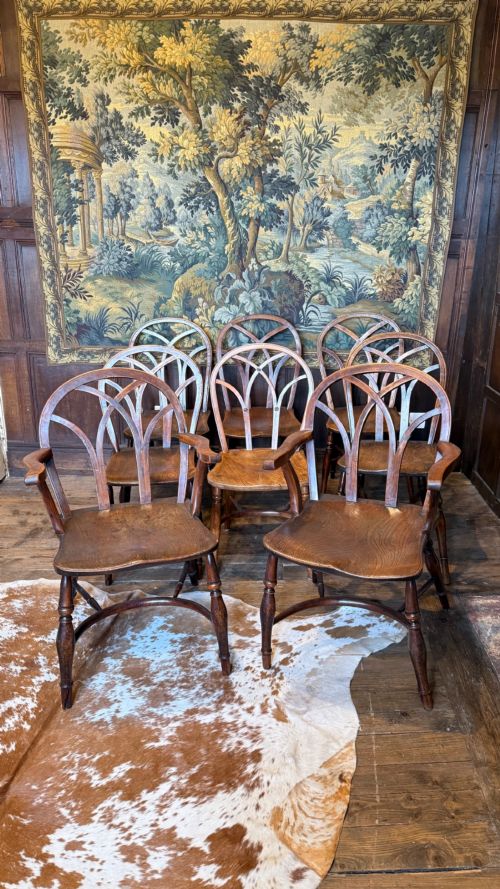
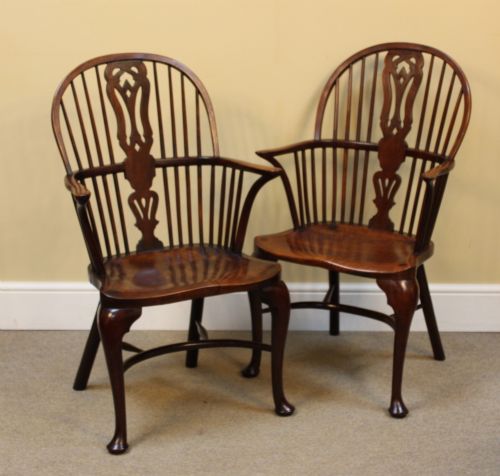
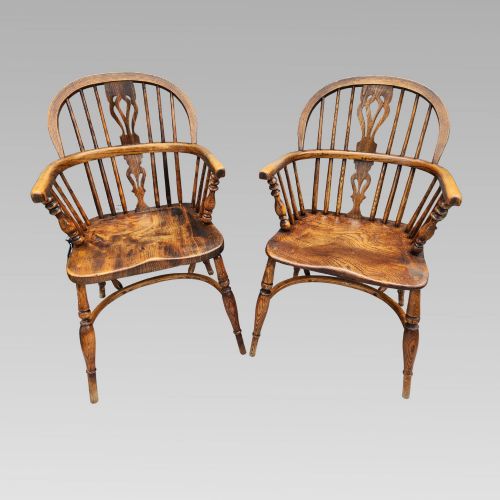
Traditional windsor chairs pair selections comprise matching seating built with distinct wooden components rather than standard frame joints. These sets appear primarily as kitchen chairs, dining chairs, and low back or high back armchairs.
The styles span English country, Victorian, and Georgian forms alongside vernacular designs, kitchen utility pieces, and Gothic Revival variations. Most examples emerge from nineteenth century workshops with occasional eighteenth century and early twentieth century origins.
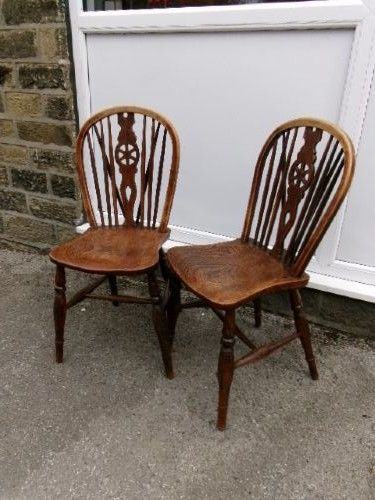
Buyers encounter matched pairs, near pairs, and true pairs fashioned for domestic service in farmhouses, country houses, and cottages. Common back variations include barback, lathback, wheelback, stick back, comb back, and spindle back configurations.
Materials and construction
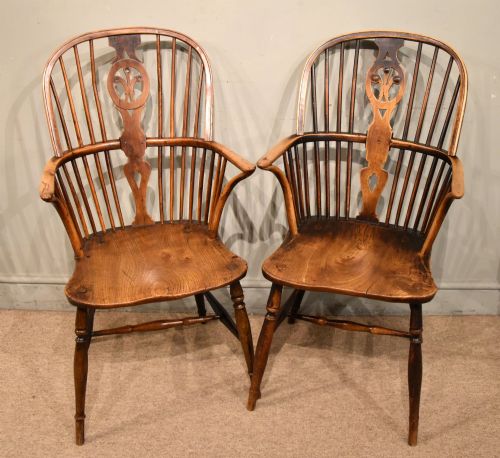
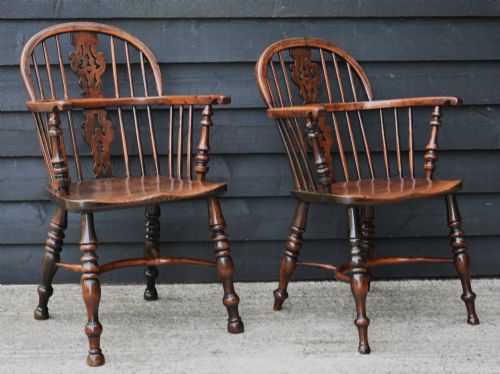
Maker construction relies on seating carved from solid elm paired with turned spindles, legs, and stretchers formed from beech, ash, or birch. Many regional examples utilise yew or burr yew for dramatic grain figures on comb backs and armrests.
Thick wooden seats are bored directly to receive wedged legs underneath and vertical back stems above. This stick-built method creates a rigid union without requiring conventional corner blocks or upholstery.
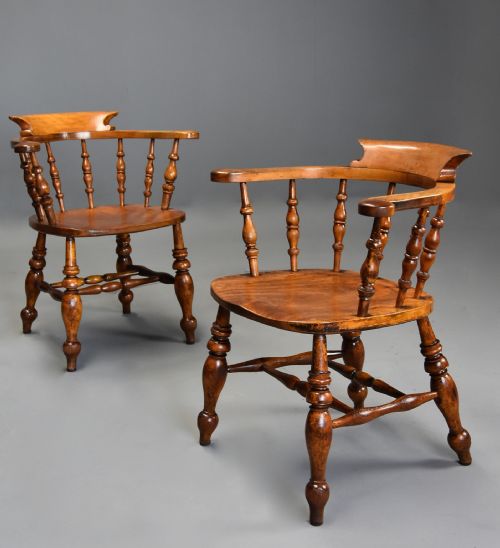
Certain Captains chairs retain deep saddle-sculpted seats designed to keep sitters firmly planted during long rural evenings.
Quality and character
Differentiation across the range rests on timber selection, turning crispness, and surface patination developed over generations of use. Richly figured yew wood and burr grain command particular attention compared to plain hardwood alternatives.
Proportion and comfort define the better examples, where sculpted arm bows and slender spindle arrangements maintain structural integrity alongside visual elegance.
The Traditional Windsor Chairs Pair Glossary
- Wheelback
- A Windsor chair back featuring a pierced splat carved in the shape of a spoked carriage wheel. This decorative motif became widely popular during the nineteenth century.
- Smoker bow
- A low-backed Windsor armchair featuring a continuous bentwood armrail supported by turned spindles. These pieces often served in smoking rooms and country parlours.
- Comb back
- A tall Windsor chair back topped with a horizontal headboard resembling an antique hair comb. Vertical spindles rise through the seat directly into this upper rail.
- Crinoline stretcher
- A curved metal or wooden stretcher linking the legs of a chair in a horseshoe shape. This design provides extra bracing strength to the undercarriage.
- Stick back
- A chair back constructed from simple turned vertical spindles fitted into a solid wooden seat. It represents a fundamental vernacular seating pattern.
Traditional Windsor Chairs Pair: Frequently Asked Questions
What is a true pair of Windsor chairs?
A true pair consists of two chairs made together by the same hand using matching timber and turning patterns.
They display identical proportions and wear characteristics, unlike assembled near pairs matched together later.
Which woods were used to build traditional Windsors?
Traditional makers combined multiple timber species to utilise the specific structural qualities of each tree.
Elm provided strong, split-resistant seats while beech, ash, and yew supplied flexible wood for bent rails and rigid turned legs.
How do I care for antique elm and yew chairs?
These wooden chairs require stable indoor humidity away from direct heat sources to prevent timber shrinkage.
Regular dusting and occasional application of appropriate wax polish will preserve the historic surface patination.