
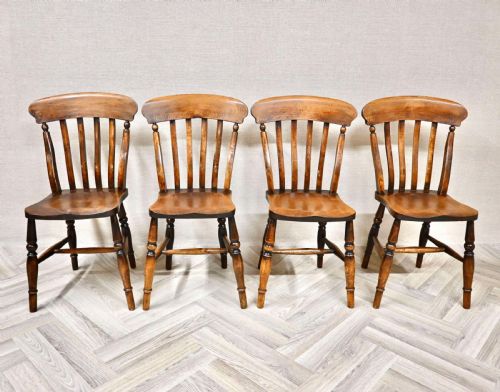
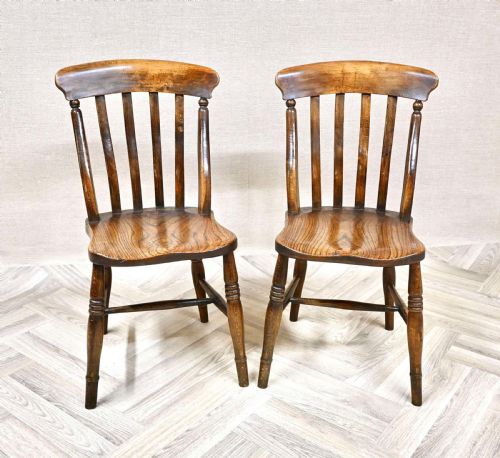
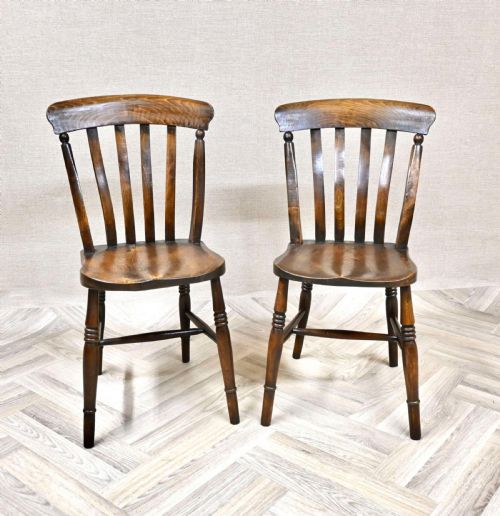
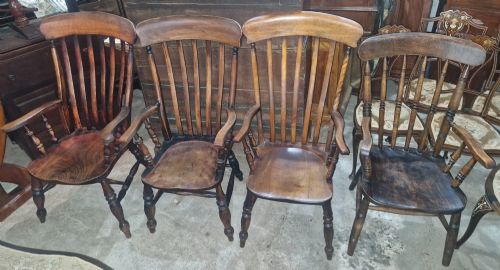
Oak Windsor Dining Chairs
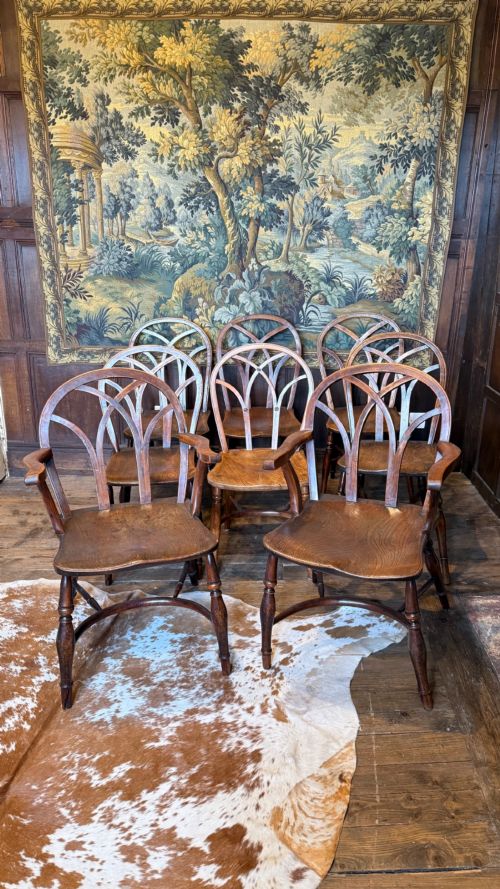
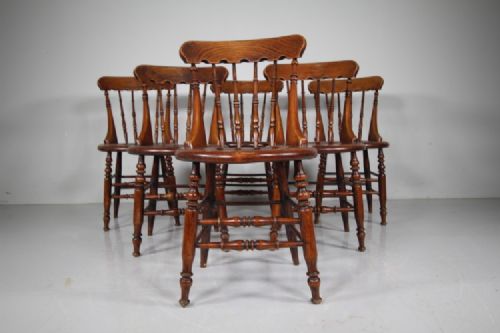
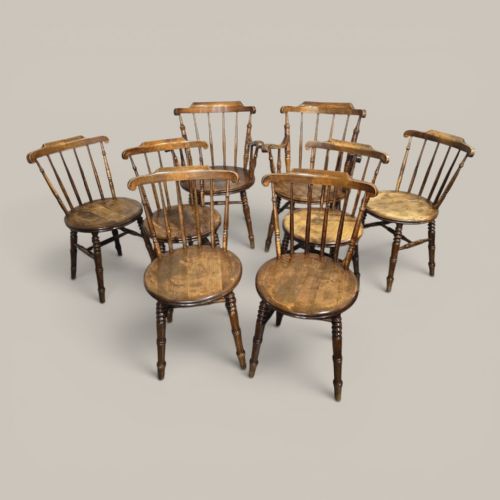
These oak windsor dining chairs bring practical vernacular seating into the modern home, combining sturdy timber construction with shapely spindle backs.
Oak Windsor Dining Chairs
When you search for oak windsor dining chairs, you encounter robust seating shaped by vernacular traditions across the eighteenth, nineteenth, and early twentieth centuries. These pieces typically serve around tables in kitchens, farmhouses, and rustic dining spaces, appearing as individual chairs, pairs, or larger matched sets.
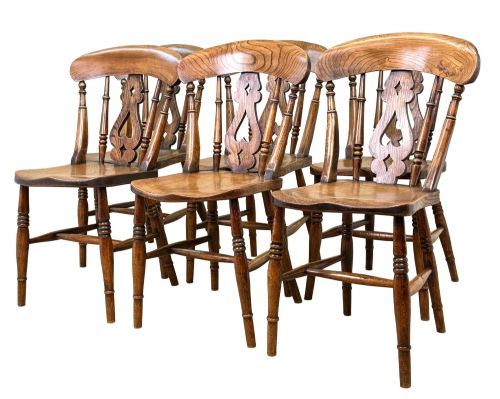
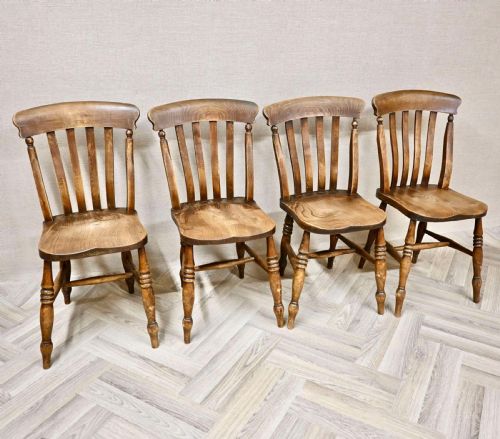
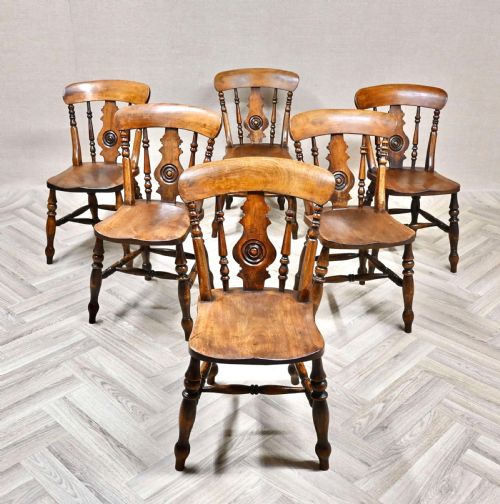
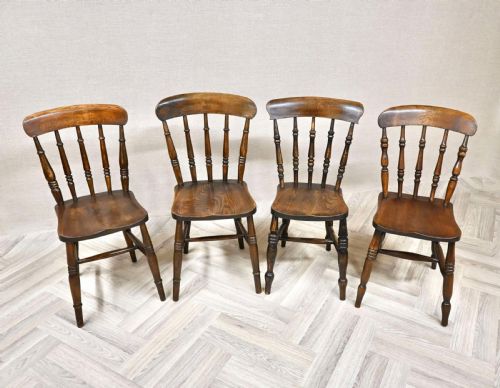
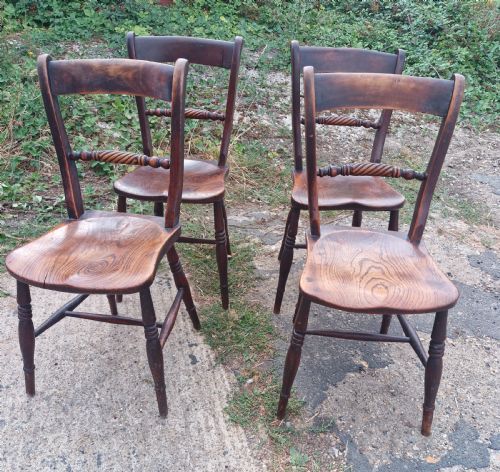
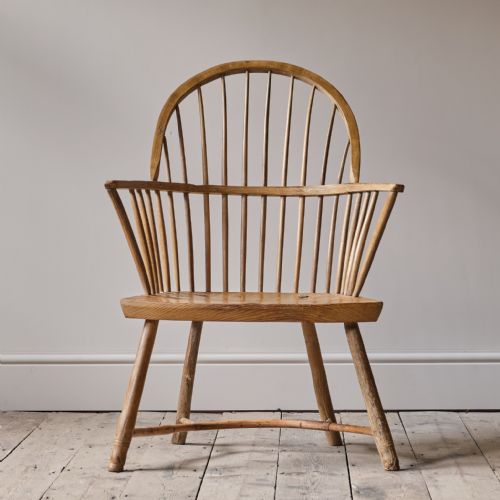
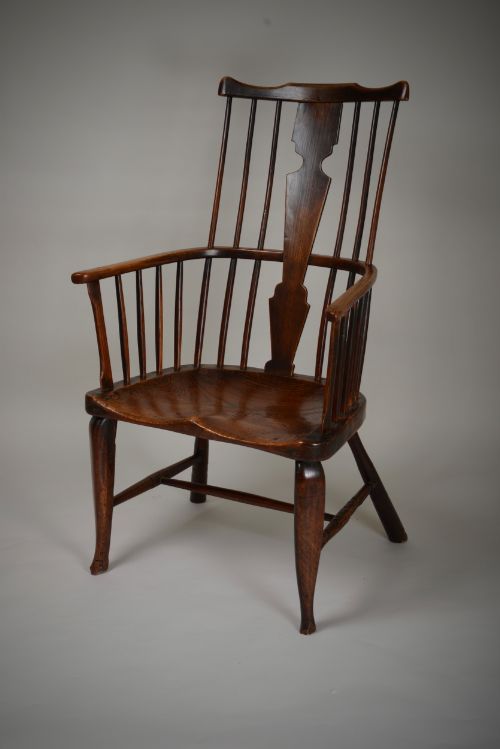
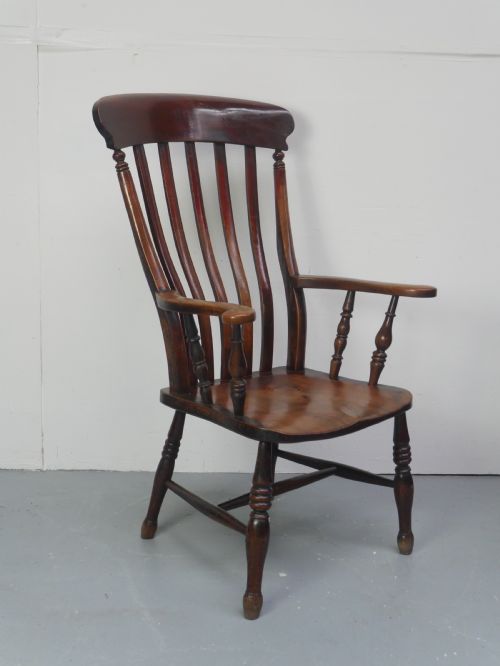
The versions you meet most frequently on this page date from the Victorian era and the nineteenth century, often reflecting English country styles. Makers constructed them with distinct back designs such as lathbacks, wheelbacks, hoop backs, and comb backs to suit everyday domestic use.
How they were made
Traditional craftsmen built these chairs using a combination of timbers selected for specific structural roles, pairing elm or ash seats with beech, oak, and yew components. This multi-wood method allowed makers to utilise the strength of dense hardwoods for turned legs and spindles alongside stable, carved wooden seats.
The characteristic construction involves individual spindles and legs wedged directly into a solid, saddled wooden seat rather than relying on a traditional framed chassis. Steam-bending techniques shaped the overarching hoops and bows, while distinct regional variations produced wheelback, lathback, and stick back configurations.
Many nineteenth-century country chairs bear subtle carpenter's tally marks beneath the seat to ensure every turned leg returned to its rightful hole.
What varies in quality
The standard of a chair often rests upon the selection of timber and the complexity of the turning work on the legs and spindles. Pieces featuring richly figured elm seats combined with contrasting yew or ash framework display a superior material hierarchy.
Proportion and comfort distinguish finer examples from standard utility seating, particularly where the carved saddle seat maintains a generous depth and the steam-bent bow retains an elegant, flowing curve. Sets that have survived together as matching groups also command greater consideration than assembled pairs or singles.
Liberty·Worksop Allsop
The Oak Windsor Dining Chairs Glossary
- Hoop back
- A continuous bentwood rail that forms the upper back and armrests of a chair. This style provides solid structural support while creating a graceful curved silhouette.
- Lathback
- A chair back featuring flat vertical wooden slats or laths secured between the seat and the top rail. It offers a sturdy and comfortable alternative to turned spindles.
- Wheelback
- A design incorporating a pierced wooden splat shaped like a cartwheel in the centre of the backrest. This decorative feature became particularly popular in nineteenth-century country seating.
- Smokers bow
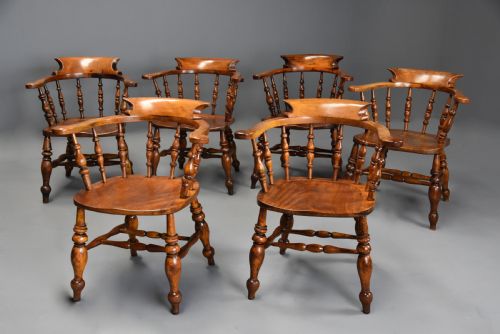
- A low-backed armchair with a rounded Captains style top rail, commonly used in domestic and public interiors. These chairs provide a compact yet supportive seat.
- Penny seat
- A wooden seat shaped with a central circular depression resembling a large coin. This saddle shaping enhances the ergonomic comfort of the bench.
Oak Windsor Dining Chairs: Frequently Asked Questions
Are these chairs comfortable for daily dining use?
The saddle-shaped wooden seats and supportive curved backs make these chairs well suited for regular seating around a dining table. Their traditional ergonomic design accommodates extended sitting without requiring upholstered cushions.
Matching sets can easily be integrated into modern dining rooms or rustic kitchen spaces. Their sturdy timber construction ensures they handle daily wear while retaining their character.
How do I identify a Victorian windsor chair?
Nineteenth-century examples often feature characteristic back types such as wheelbacks, lathbacks, or stick backs combined with turned legs. The use of mixed timbers like elm, ash, and beech is also typical of this period.
Examining the underside of the solid wooden seat reveals the wedged construction of the legs and spindles. These structural details help distinguish authentic nineteenth-century vernacular pieces from later reproductions.
What is the difference between a hoop back and a comb back?
A hoop back utilises a single continuous bentwood piece that forms both the top rail and the arms. This creates a rounded, enclosing frame for the person sitting.
A comb back extends vertical spindles upward into a distinct horizontal headrest that resembles the shape of a traditional hair comb. This earlier eighteenth-century form offers a different aesthetic line compared to the curved hoop.
Can I mix different styles of windsor chairs together?
Combining different vernacular styles, such as pairing stick backs with wheelbacks, creates an authentic country kitchen aesthetic. Historically, households acquired seating over time rather than purchasing uniform suites.
Ensuring consistent seat heights and similar timber tones helps maintain a cohesive look around the dining table. Near pairs and assembled sets often share complementary turning details that unify the group.