

Traditional Walnut Study Desk
A traditional walnut study desk brings warmth and history to a room, offering a dedicated surface for daily correspondence and quiet work.
Traditional Walnut Study Desk
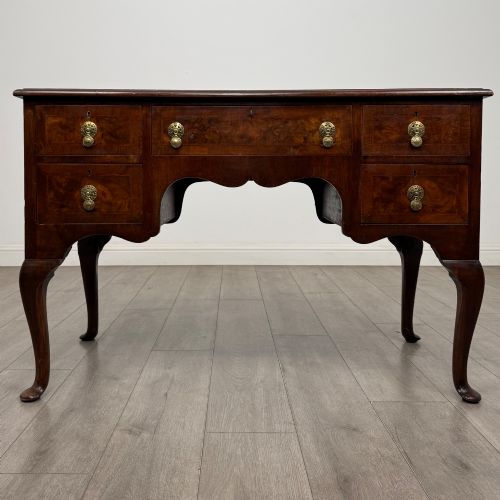
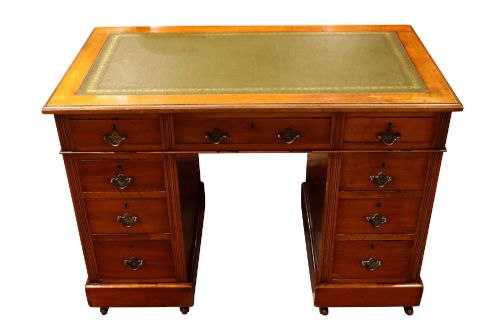
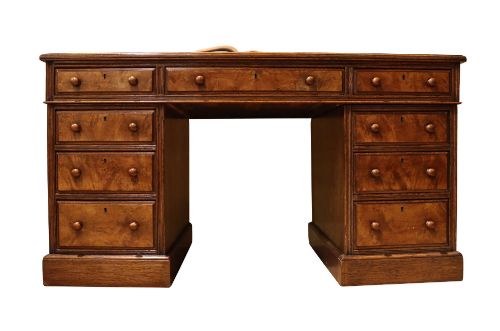
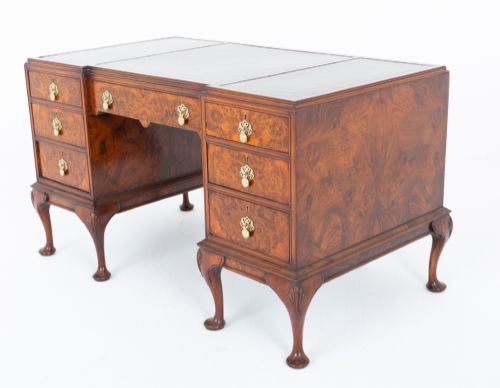
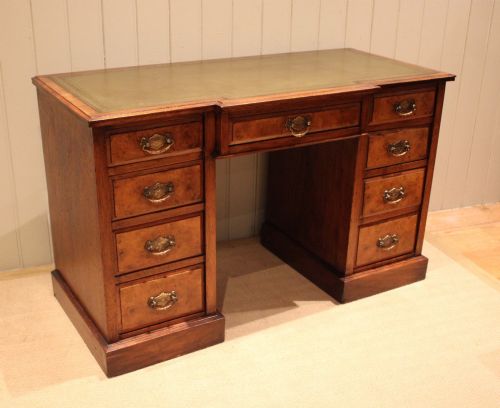
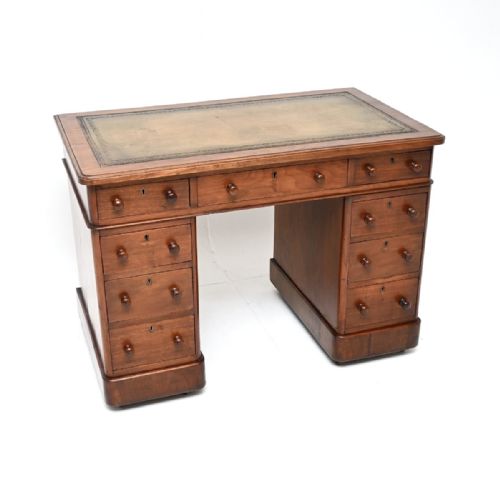
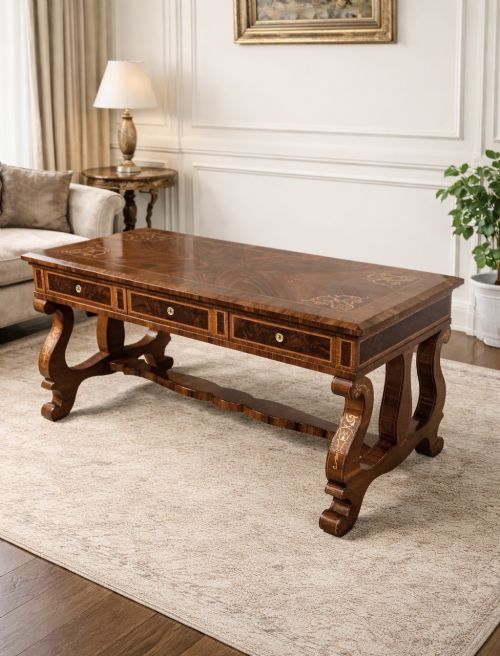
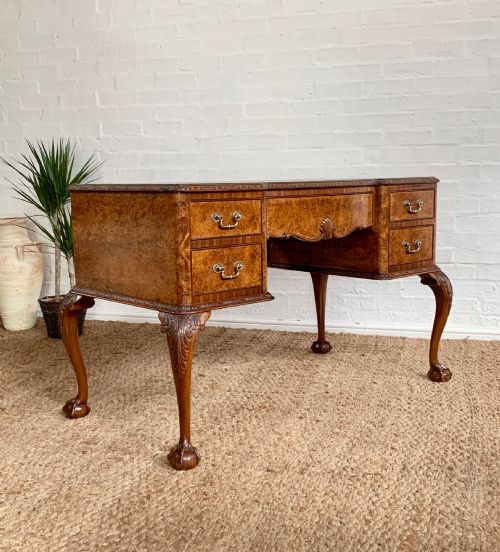
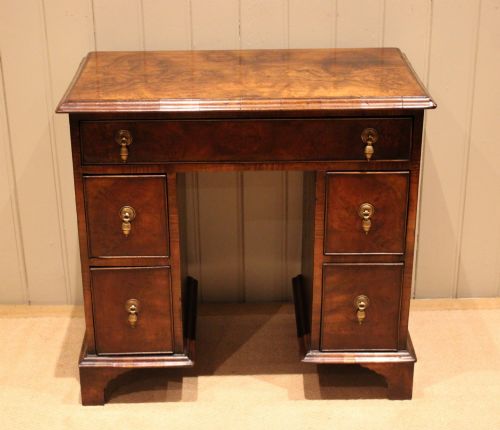
A traditional walnut study desk is a classic workspace foundation, appearing in forms such as pedestal desks, writing tables, partner desks, and compact kneehole variations. These pieces span the nineteenth and early twentieth centuries, drawing on Victorian, Edwardian, and revival aesthetics.
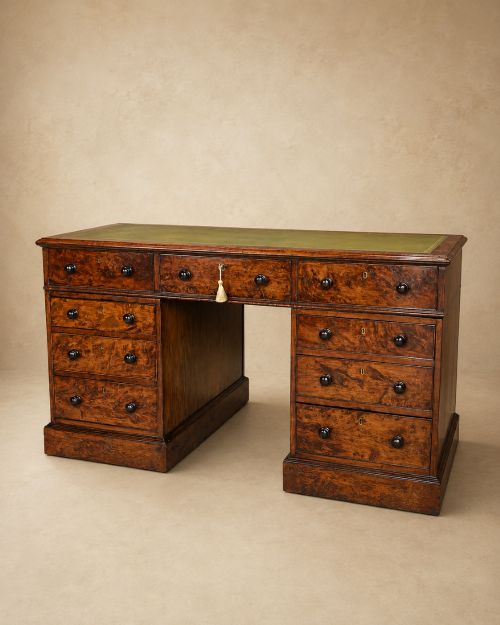
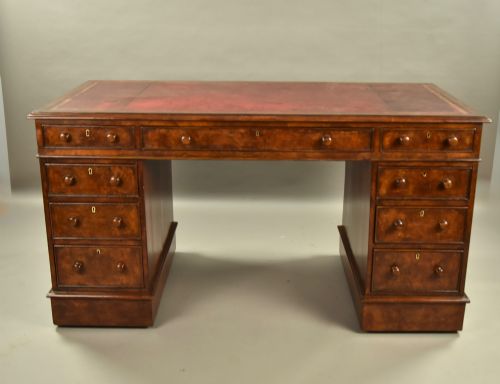
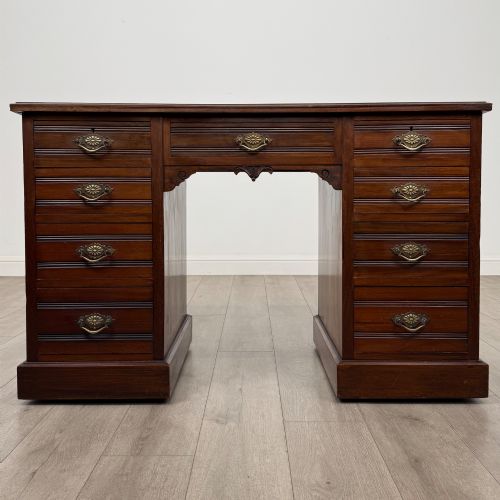
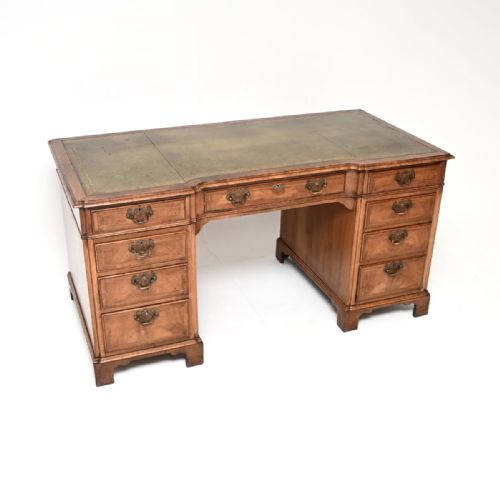
The pedestal desk configuration dominates the selection, featuring banks of drawers flanking a central kneehole. Writing tables and smaller ladies desks also emerge frequently across the periods represented.
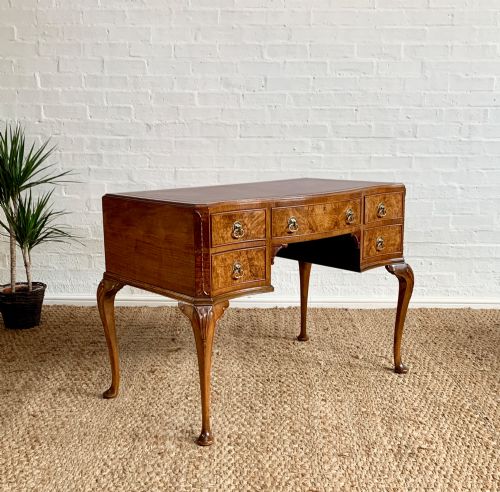
Makers and designers from the past utilised figured and burr timbers to create striking grain patterns across the primary surfaces. Buyers encounter both substantial partners desks designed for central room placement and smaller writing desks suited for compact studies.
Materials and construction
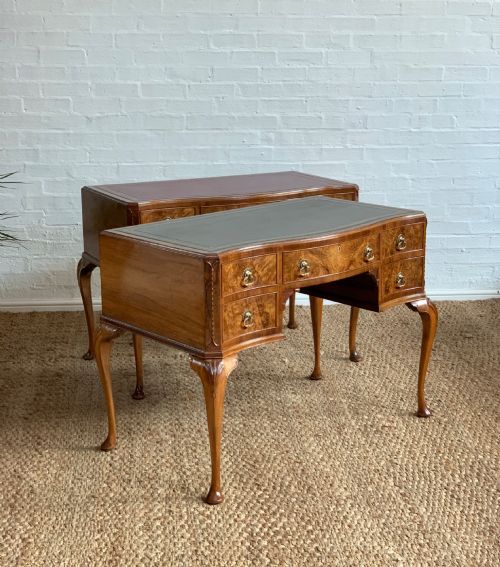
Cabinet makers selected walnut and burr walnut for their rich colour and distinctive figured grain, frequently applying veneers over secondary timbers like oak. Surfaces often incorporated inset leather writing panels tooled with gilt borders.
Brass hardware, including swing handles and keyhole escutcheons, provides functional contrast to the dark wood tones. Joinery techniques ensured durable construction for heavy daily use in offices and libraries.
Desk forms include pedestal configurations, partners desks, kneehole variants, and upholstered office armchairs.
Quality and proportion
The selection of timber veneer dictates much of the visual appeal, with richly figured burr walnut commanding attention over plain grain. Consistency in the matching of veneer across drawer fronts and top surfaces marks superior cabinet work.
Proportion and scale distinguish standard utility pieces from exceptional examples designed for grander libraries. The crispness of carved details in revival styles and the integration of secondary woods reveal the original maker's investment of time and skill.
Wylie and Lochhead Glasgow
The Traditional Walnut Study Desk Glossary
- Burr walnut
- A prized timber harvested from walnut tree growths, producing swirling and mottled grain patterns. Cabinet makers prized this wood for decorative table tops and drawer fronts.
- Pedestal desk
- A freestanding desk comprising two independent drawer pedestals supporting a wide writing surface. This form provides substantial storage beneath the main working area.
- Partners desk
- A large double-sided desk built to accommodate two people working face to face. These substantial pieces feature banks of drawers on both sides.
- Kneehole desk
- A compact writing desk featuring a recessed central space for the user's legs, flanked by single or multiple drawer columns. They suit smaller studies where space remains at a premium.
- Marquetry
- The art of applying small pieces of veneer to form decorative pictures or geometric patterns. Craftsmen utilised contrasting woods to achieve detailed ornamentation on writing surfaces.
Traditional Walnut Study Desk: Frequently Asked Questions
What is a partners desk?
A partners desk is a double-sided workspace designed with drawers and cupboards accessible from both front and back. These large pieces allowed two people to work opposite one another.
Historically placed in the centre of a library or study rather than against a wall, they offer generous proportions and substantial storage capacity.
How do I care for leather desk tops?
Leather writing surfaces benefit from periodic cleaning with a damp cloth followed by a neutral leather cream to maintain flexibility. Avoid harsh chemical cleaners that strip the original colour and gold tooling.
Keeping the leather away from direct sunlight prevents the surface from drying out and cracking over decades of use.
How do I distinguish Edwardian from Victorian desks?
Victorian desks generally display heavier proportions, darker finishes, and robust architectural details reflecting mid to late nineteenth-century tastes. Burr walnut and rich mahogany veneer dominate this earlier era.
Edwardian pieces often embrace lighter construction, simpler lines, and revival aesthetics such as Queen Anne style cabriole legs. These later desks frequently accommodate more compact domestic spaces.
Are these desks suitable for modern computers?
Many traditional study desks accommodate modern laptops and desktop equipment comfortably on their expansive wooden and leather surfaces. Drawer pedestals provide practical storage for contemporary stationery and accessories.
Buyers should verify internal kneehole dimensions and overall height to ensure comfortable seating clearance for daily office work.