

Traditional Walnut Pedestal Table
A traditional walnut pedestal table brings rich timber grain and central support to a room, offering both practical surface area and timeless period character.
Traditional Walnut Pedestal Table
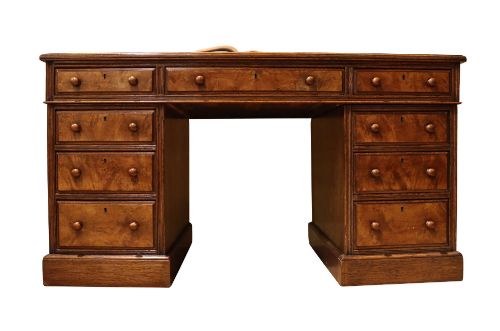
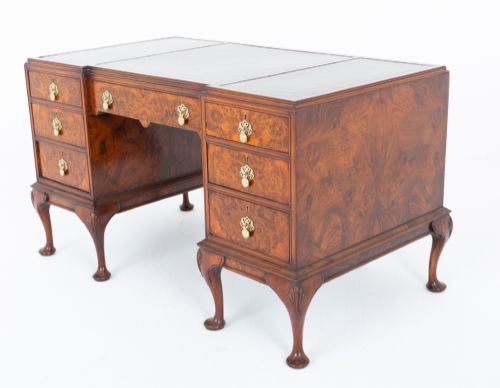
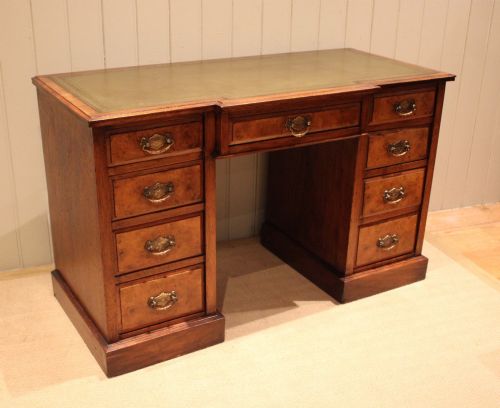
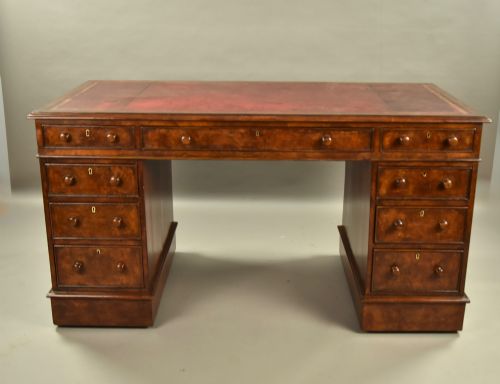
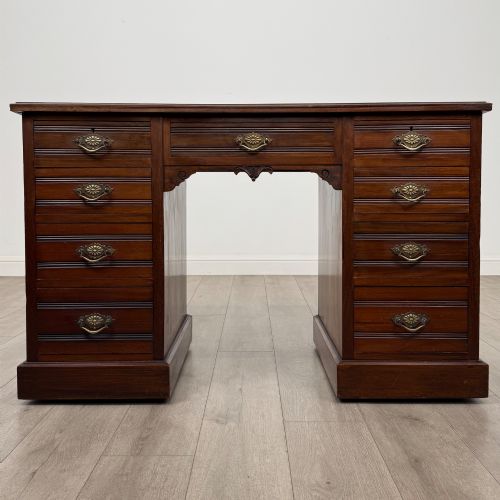
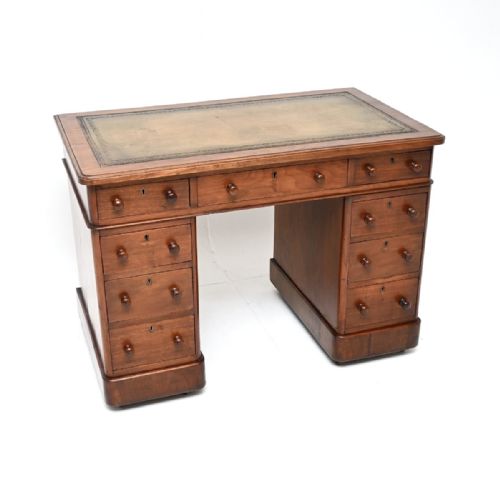
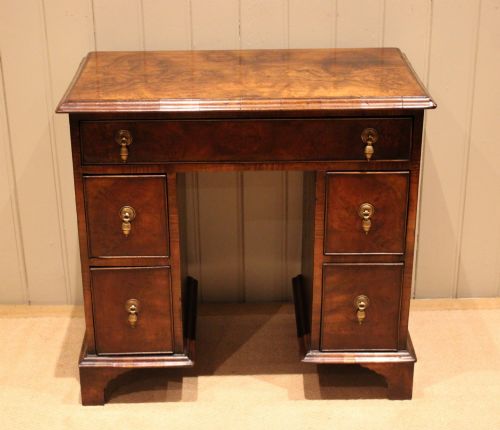
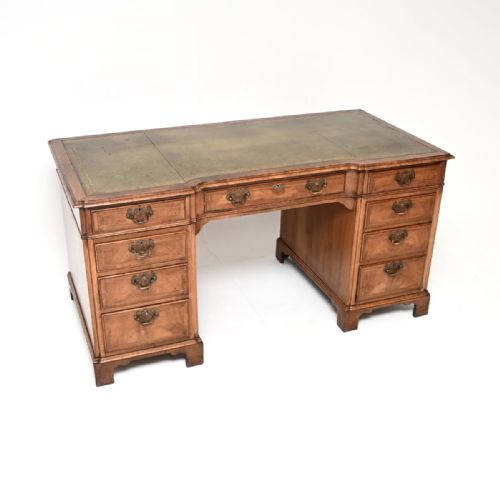
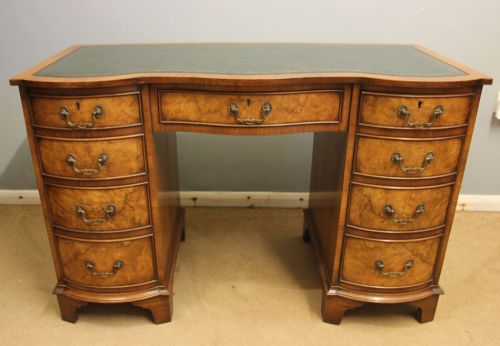
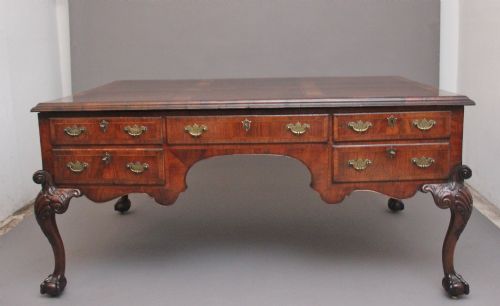
When you search for a traditional walnut pedestal table, you encounter a variety of forms rooted in Victorian, Edwardian, and earlier revival periods. The listings here predominantly comprise pedestal desks, kneehole desks, and occasional or wine tables supported by a central pillar or twin pedestals.
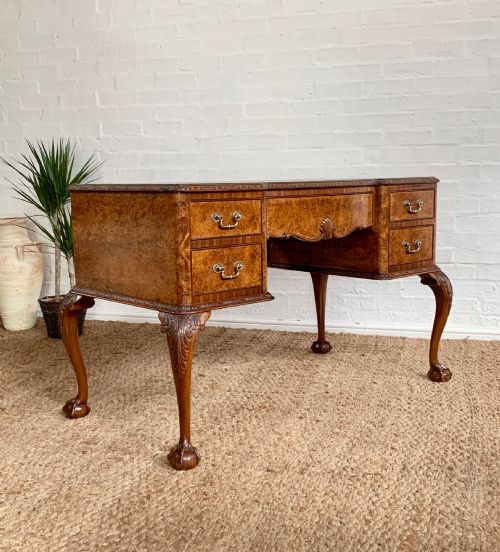
Makers utilised walnut, burr walnut, and figured walnut veneers to create striking surfaces, frequently paired with leather writing inserts or marquetry inlay. Pieces range from compact Edwardian models to large nineteenth-century partners desks and dining tables.
The selection reflects historical revivals, notably Queen Anne style and Georgian design, alongside Victorian production. Buyers find everything from small wine tables to large multi-drawer pedestal desks built for domestic and study spaces.
How they were made
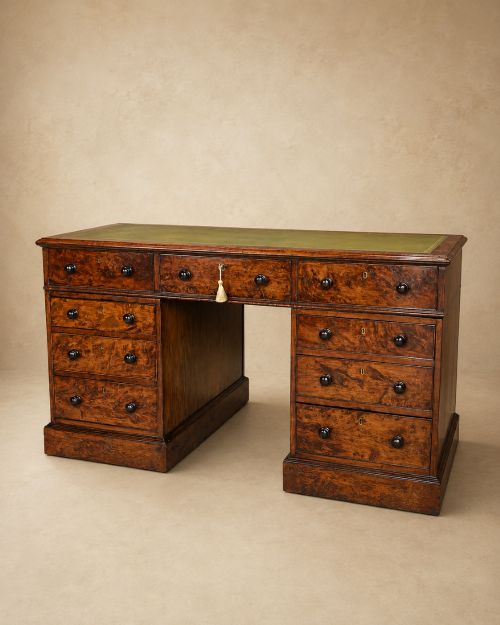
Craftsmen built these pieces using solid wood framing combined with burr walnut and figured walnut veneers to create rich, swirling grain patterns across top surfaces and drawer fronts. Secondary timbers such as oak occasionally formed internal drawer structures.
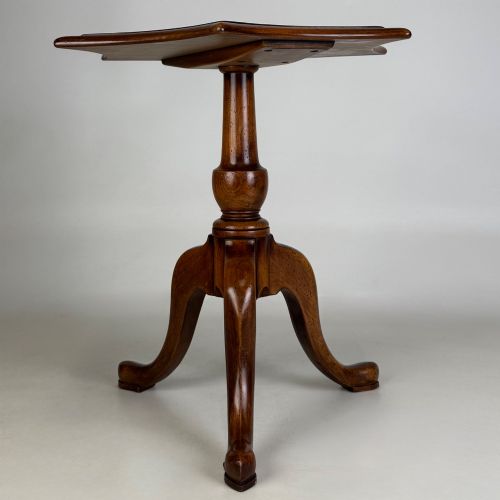
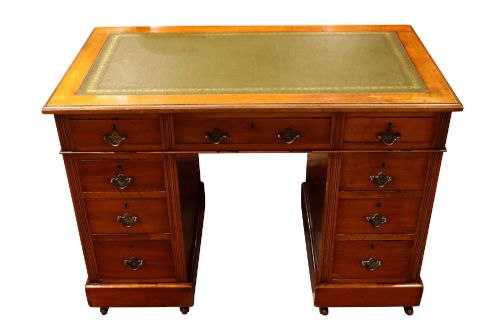
Surfaces frequently incorporated inset tooled leather writing panels, secured with subtle brass hardware on drawers and cabinets. Bases on smaller tables relied on turned tripod legs, while larger desks utilised twin pedestals often fitted with multiple drawers.
The listings span the Victorian, Edwardian, and early twentieth-century periods, alongside Georgian and Queen Anne revival styles.
What varies in quality
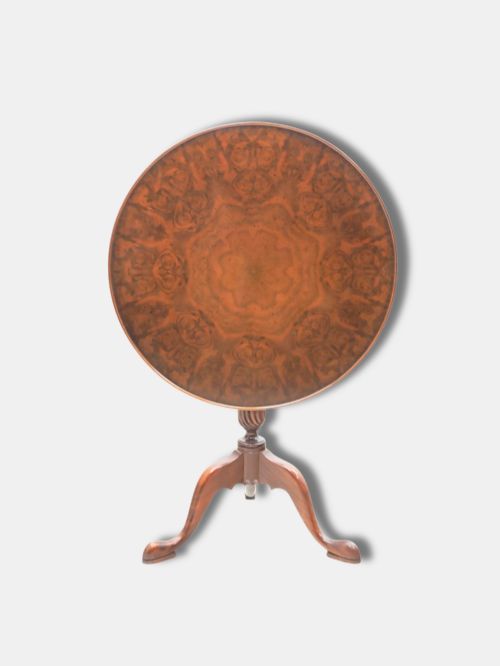
Quality rests heavily on the choice and matching of walnut veneer, where master cabinetmakers selected burr sections for symmetrical visual impact across large surfaces. The depth of hand-carved detail on bases and the crispness of marquetry inlay further distinguish finer examples from standard production.
Construction methods and timber selection in secondary parts, such as drawer linings, indicate the standard of workshop execution. Original brass fittings, well-fitted drawers, and preserved leather writing surfaces contribute to a piece's structural and aesthetic integrity.
The Traditional Walnut Pedestal Table Glossary
- Burr walnut
- A prized timber cut from walnut tree growths, yielding intricate, swirling grain patterns used extensively on decorative desk and table surfaces.
- Pedestal desk
- A heavy writing desk supported by two banks of drawers resting on the floor, creating a central kneehole space.
- Marquetry
- The art of applying pieces of veneer to a structure to form decorative patterns and pictures, seen on table and desk tops.
- Kneehole
- The central recessed space beneath a desk or table designed to accommodate the user's legs while seated.
- Tripod table
- A small freestanding table supported by a central pillar resting on three spreading feet, typical of wine and occasional pieces.
Traditional Walnut Pedestal Table: Frequently Asked Questions
What is a pedestal desk?
A pedestal desk is a large freestanding writing table featuring two supporting columns or pedestals containing multiple drawers. These structures sit on either side of a central kneehole.
Originally designed for libraries and studies, they provide substantial storage alongside a wide working surface.
How do I identify burr walnut?
Burr walnut is recognised by its dense, swirling grain and cluster-like patterns caused by growth deformities in the tree. Cabinetmakers sliced these sections into thin veneers for decorative desk and table tops.
This timber creates a highly figured surface that differs noticeably from straight-grained walnut.
Where were these tables used?
These tables served primarily in studies, libraries, drawing rooms, and estate offices during the Victorian and Edwardian periods. Large pedestal desks functioned as administrative hubs for partners or gentlemen.
Smaller wine and occasional tables stood beside seating areas for holding drinks, books, or decorative objects.
How do I care for walnut furniture?
Walnut furniture benefits from regular dusting with a soft, dry cloth and protection from direct sunlight and dry heat sources. These precautions prevent timber shrinkage and veneer lifting.
Occasional application of appropriate wax polish maintains the lustre of the wood grain without building up heavy residues.