



Traditional Walnut Dresser
A traditional walnut dresser brings rich timber grain and useful storage to a room, ranging from early period chests to later revival pieces.
Traditional Walnut Dresser
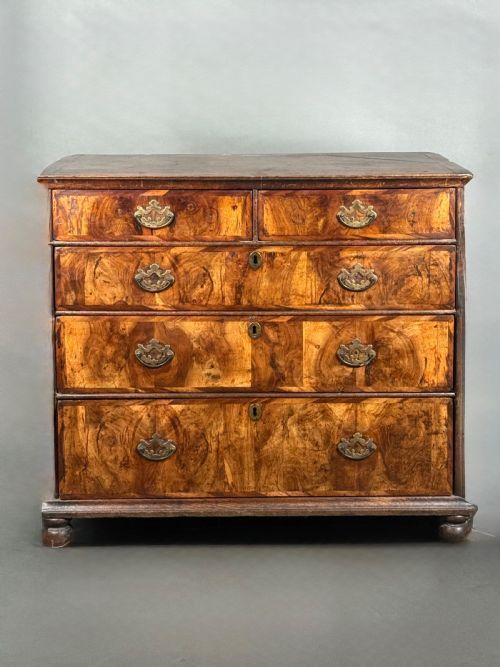
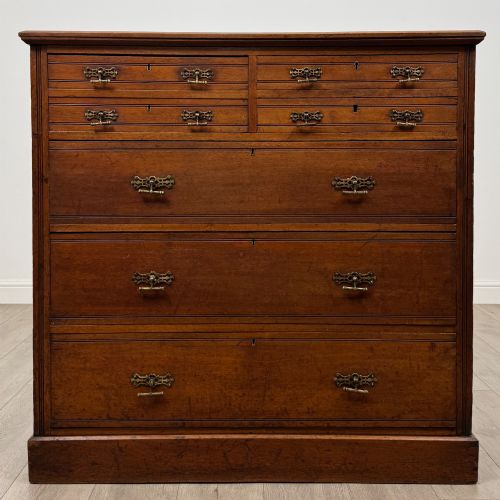
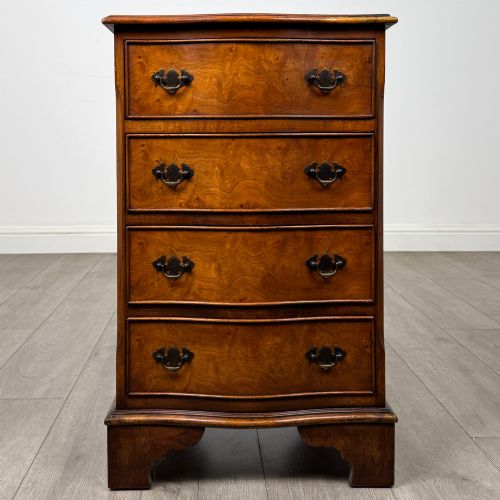
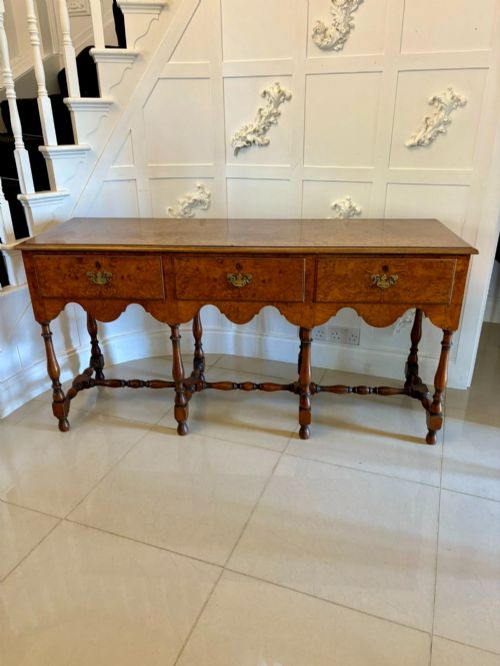
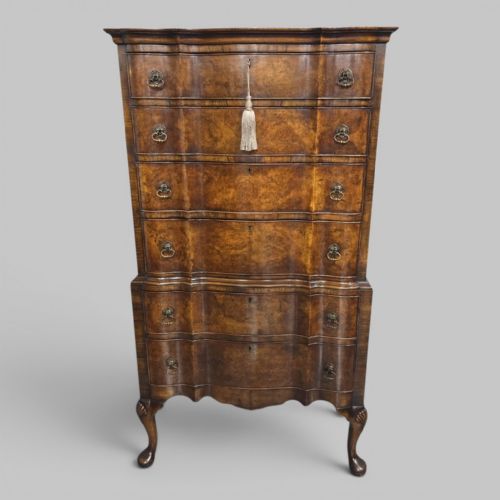
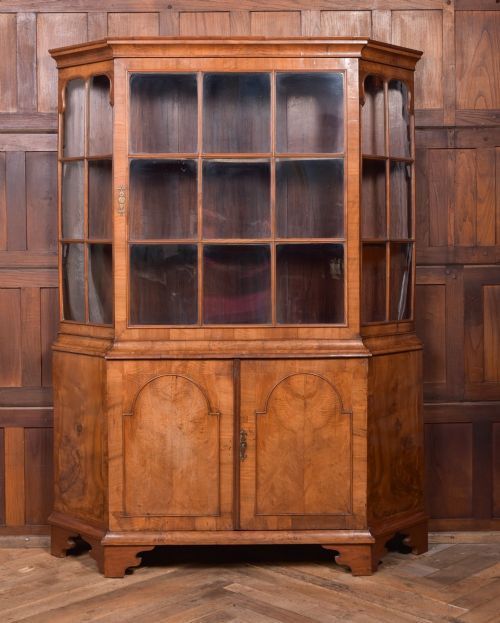
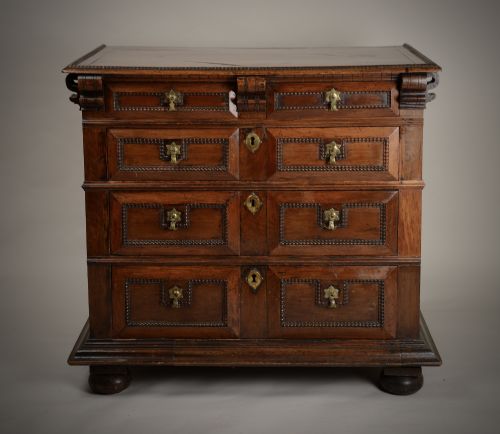
When you search for a traditional walnut dresser, you encounter a variety of storage forms including chests of drawers, dresser bases, tallboys, and display cabinets. These pieces span several centuries of British and continental cabinet-making, incorporating styles from William and Mary and Queen Anne through to Georgian and Edwardian revivals.
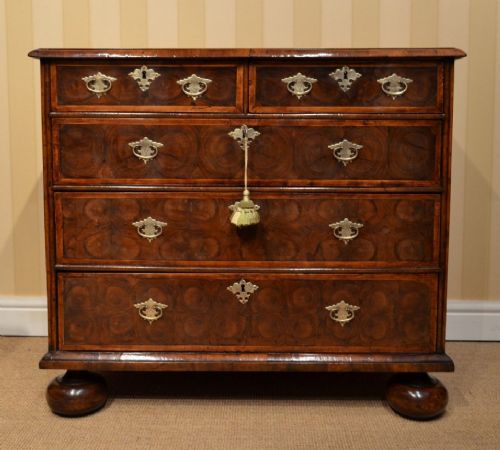
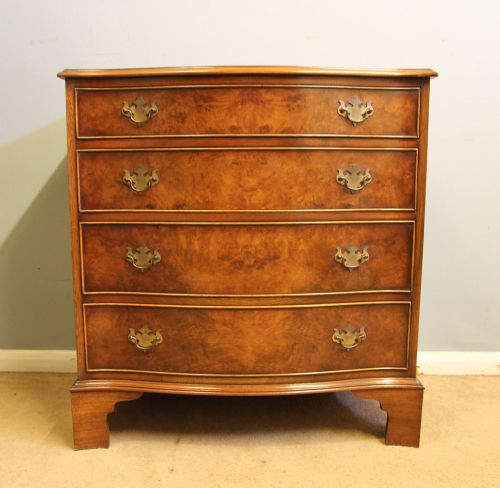
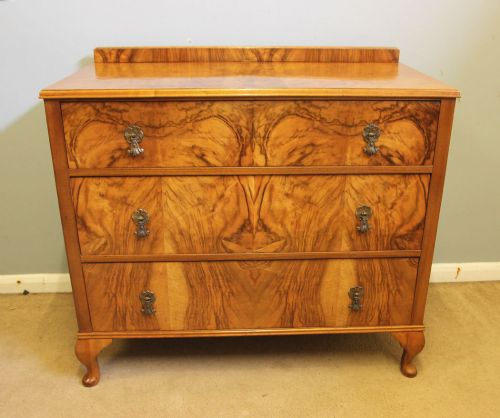
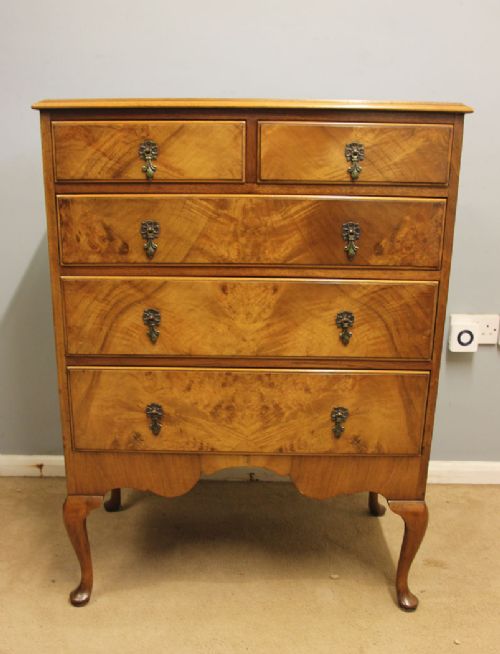
The version you are most likely to meet on this page is a chest of drawers or dresser base in figured or burr walnut, often drawing on earlier 18th-century design proportions. Makers across the Victorian, Edwardian, and 1930s periods frequently reinterpreted these classic forms using walnut veneers and solid timbers.
Objects catalogued under this heading also encompass specialist forms like Dutch display cabinets, gentleman's tallboys, and pieces combining oak, pine, and mahogany carcases with decorative walnut drawer fronts.
What varies in quality
The selection of veneer grain pattern dictates much of the visual hierarchy, with symmetrical burr walnut figures and matched oyster work representing finer craftsmanship. Plain timber surfaces appear on simpler country house items, whilst master workshops achieved seamless transitions across drawer runs and mouldings.
Structural integrity depends on the retention of original brass hardware, stable drawer construction with hand-cut joints, and well-preserved timber surfaces without excessive past restoration.
Listings feature walnut alongside supporting materials including brass, oak, pine, glass, and metal.
Jas Shoolbred·WC Burt
The Traditional Walnut Dresser Glossary
- Burr walnut
- A prized timber harvested from walnut tree growths that produces swirling, highly decorative grain patterns. Cabinet-makers used these sections as veneers on primary display surfaces.
- Oyster veneer
- Thin slices cut transversely from small branches or twigs, creating circular or oval patterns resembling oyster shells. This technique is particularly associated with late 17th-century pieces.
- Tallboy
- A tall storage unit comprising a chest of drawers stacked upon another chest or stand, also known as a chest-on-chest. These pieces maximise vertical capacity whilst maintaining a compact footprint.
- Marquetry
- The art of applying decorative pieces of veneer to a structure to form intricate pictorial or geometric designs. It frequently defines pieces from the William and Mary and Queen Anne periods.
- Serpentine
- A curved furniture front characterised by a convex centre flanked by concave ends. This contour requires precise woodworking skill to execute cleanly in solid timber or veneer.
Traditional Walnut Dresser: Frequently Asked Questions
How do I identify walnut veneers?
Walnut veneers are thin sheets of decorative wood applied over a secondary timber carcase like oak or pine to create striking grain patterns.
Examining the edges and drawer interiors reveals the underlying construction method and timber species used by the cabinet-maker.
How do I care for walnut furniture?
Walnut furniture requires placement away from direct heat sources and strong sunlight to prevent the timber and veneers from drying out.
Regular dusting with a dry cloth and occasional application of appropriate wax polish helps maintain the natural lustre of the surface.
How do I distinguish periods?
Period distinction relies on evaluating construction techniques, hardware styles, timber selection, and overall furniture proportions.
Earlier pieces from the 17th and 18th centuries exhibit hand-cut joinery and specific leg forms, whereas revival pieces from the Edwardian era and 1930s reflect the manufacturing standards of their own time.