
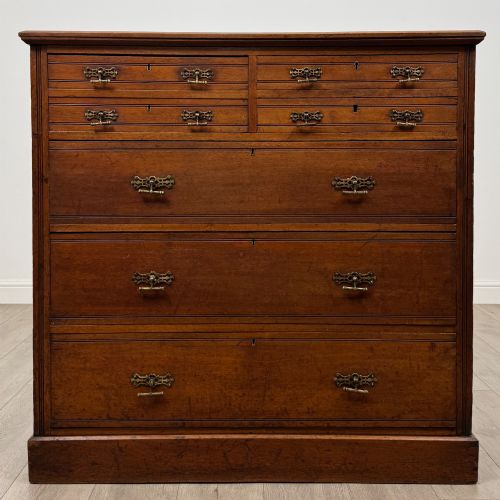
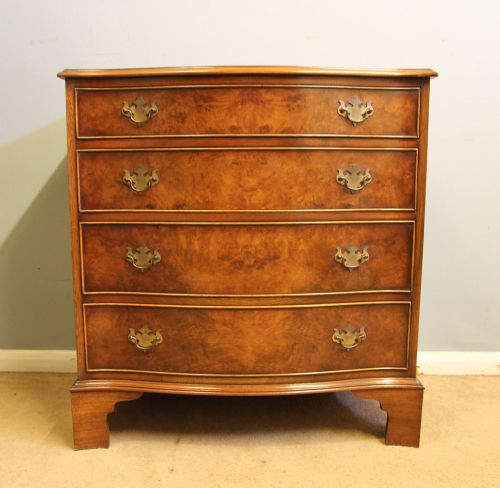
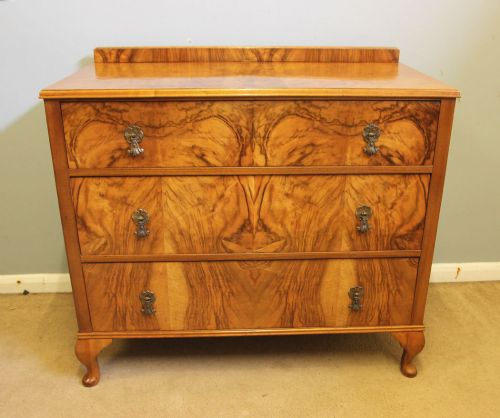
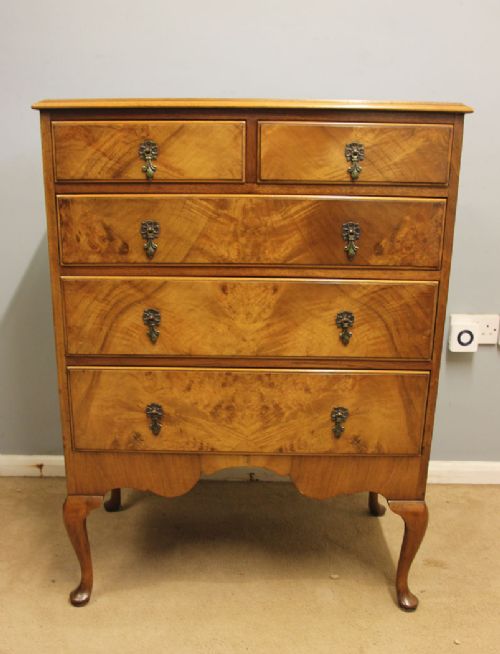
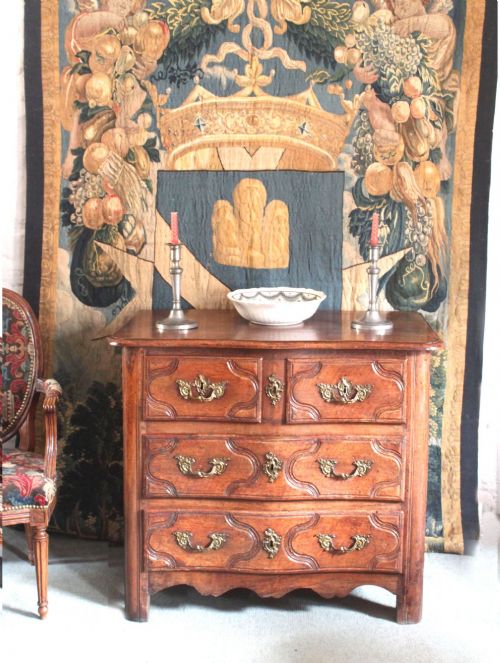
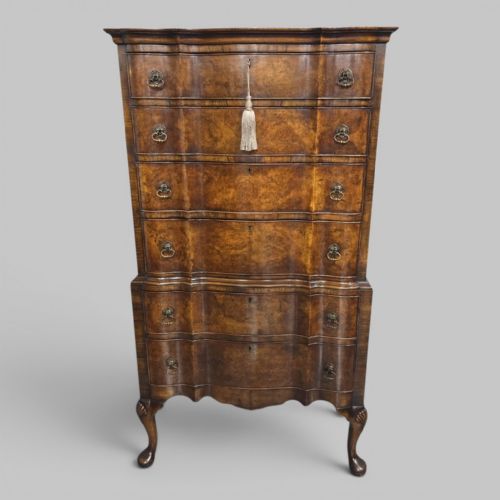
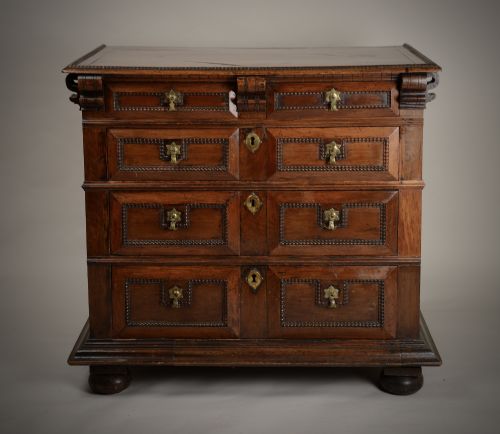


Traditional Walnut Bedroom Chest
A traditional walnut bedroom chest brings rich grain and deep colour to domestic storage, spanning eras from the seventeenth century to the twentieth.
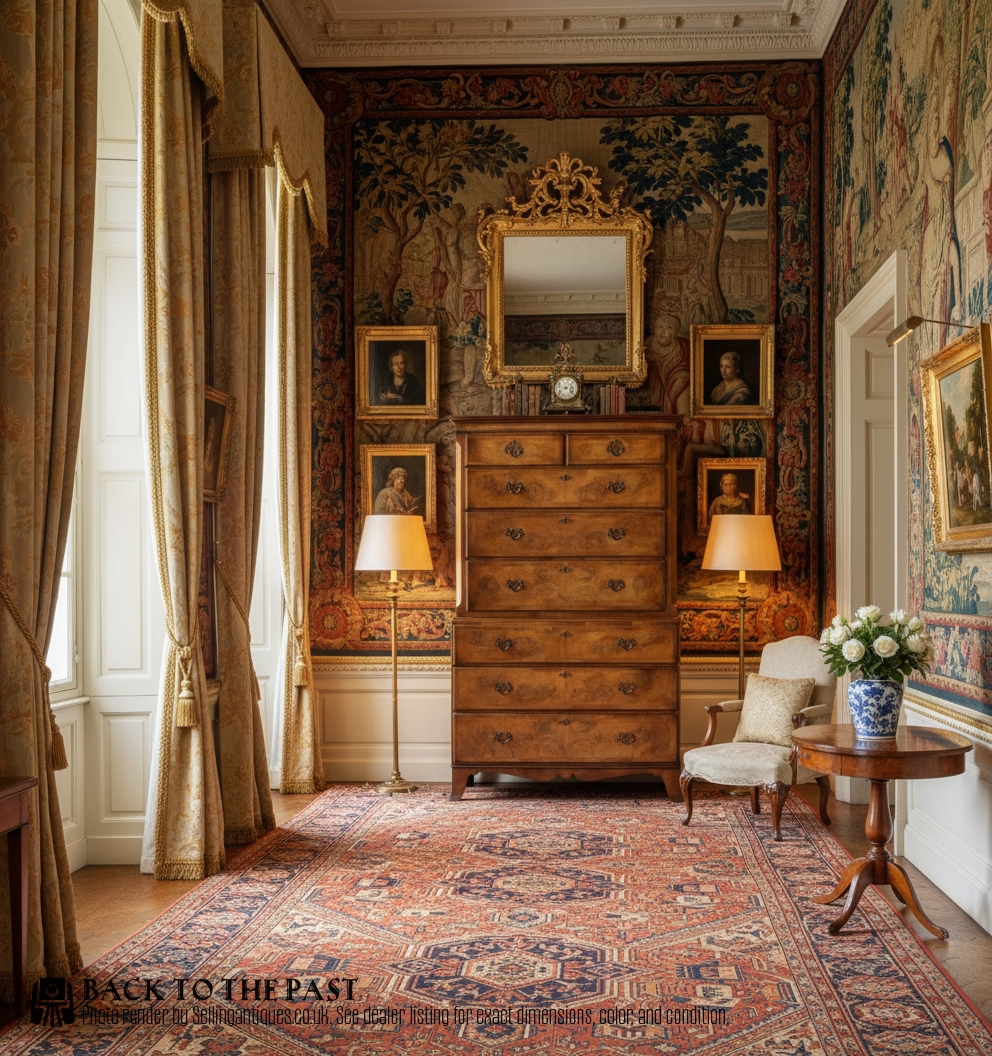
Traditional Walnut Bedroom Chest
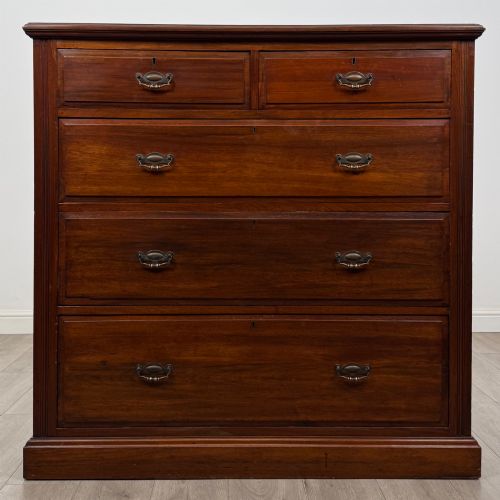
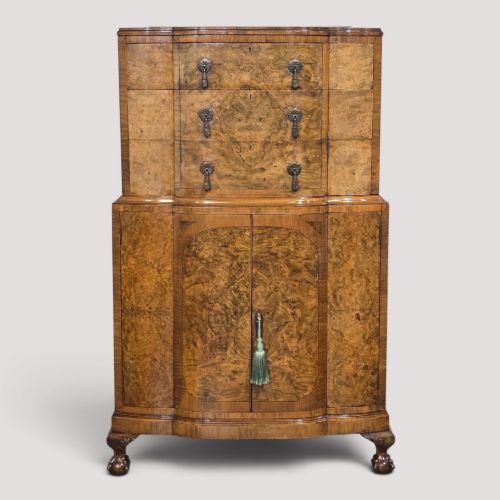
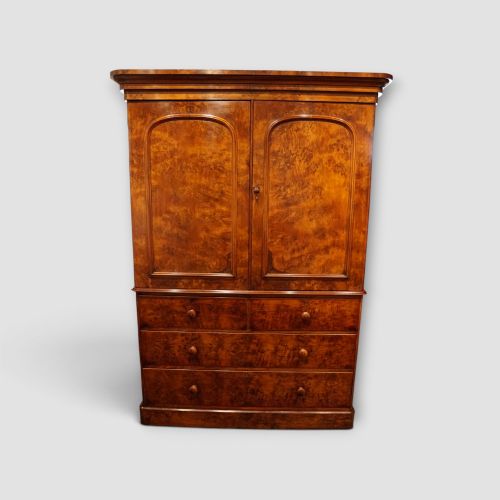
A traditional walnut bedroom chest serves as a primary sleeping chamber storage piece, encompassing forms from low chests of drawers to tallboys and linen presses. Buyers seeking this phrase encounter pieces dating from the seventeenth century through the Edwardian era and the 1930s.
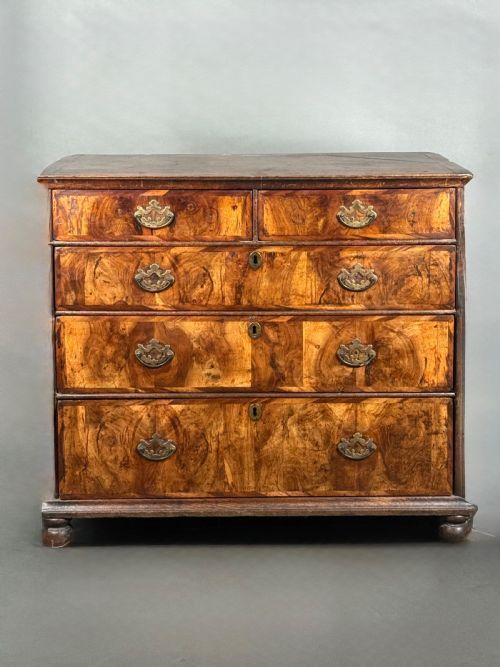
The selections span distinct stylistic revivals, particularly Queen Anne and Georgian styles, alongside French provincial commodes and bedside cabinets. Proportion and drawer configuration vary significantly across these periods, ranging from compact four-height models to large gentleman's tallboys.
Solid timber constructions appear alongside intricate marquetry and figured veneers, showing how cabinetmakers adapted the wood to changing tastes. The forms remain fundamentally practical while displaying the decorative potential of walnut figure.
Materials and construction methods
Cabinetmakers utilised walnut and burr walnut veneers applied to secondary woods such as oak and pine, creating complex grain patterns across drawer fronts. Solid walnut and satin walnut also feature in various pieces, supported by brass drawer furniture and handles.
Construction techniques evolved from early dovetailed drawer boxes and chests on stands to large nineteenth-century carcases and twentieth-century revival pieces. Timber selection dictated the aesthetic, with figured and burr sections reserved for primary visual surfaces.
Gentlemen required specialised tallboys to house their garments, proving that historical storage demands were just as complex as modern wardrobe needs.
Distinctions in construction and finish
The grade of veneer selection and the crispness of the timber figuring separate standard examples from finer works. Master cabinetmakers aligned grain patterns symmetrically across drawer banks, whereas lesser pieces utilised more uniform or plain timber slices.
The integrity of the internal drawer construction, including hand-cut dovetails and matching secondary woods, indicates the standard of workshop production. Surface finishing and the preservation of original brass hardware further distinguish superior examples from later replacements.
Jas Shoolbred·WC Burt
The Traditional Walnut Bedroom Chest Glossary
- Burr walnut
- A highly figured wood grain obtained from tree growths, producing intricate swirling patterns prized by cabinetmakers. It is typically sliced into veneers for drawer fronts and top surfaces.
- Tallboy
- A tall chest of drawers, often constructed in two sections with a smaller chest sitting upon a larger base. This form maximises vertical storage capacity while maintaining floor space.
- Linen press
- A large storage cabinet featuring upper doors enclosing sliding trays or shelves, above a lower chest of drawers. It was traditionally used for storing household linen and garments.
- Serpentine
- A front profile characterised by a convex central section flanked by concave curves, or vice versa. This shaping requires advanced woodworking skill to execute cleanly on drawer fronts.
- Marquetry
- The art of applying veneer pieces in geometric or pictorial patterns onto a carcase structure. Early examples utilise this technique to create elaborate surface decoration.
Traditional Walnut Bedroom Chest: Frequently Asked Questions
How do I date a walnut chest?
Dating relies on examining construction methods, timber thickness, and hardware fixings alongside the overall stylistic proportions. Earlier pieces often display hand-cut dovetails and specific carcase assembly techniques that changed by the Edwardian period.
Secondary woods inside the drawers also offer clues, as oak and pine usage shifted across the eighteenth and nineteenth centuries. Comparing the specific revival style to original period pieces helps clarify the date of manufacture.
What is burr walnut?
Burr walnut comes from a growth or burls on the walnut tree, resulting in twisted, highly decorative grain patterns. Craftsmen slice this wood into thin veneers to display the complex patterns across prominent surfaces like drawer fronts.
Because of its instability as a solid timber, veneering allowed makers to utilise these striking visual effects safely. This material is particularly characteristic of finer pieces from the Queen Anne and later revival periods.
How do I care for antique walnut?
Antique walnut requires stable room conditions away from direct sunlight and extreme humidity changes to prevent timber movement. Gentle cleaning with appropriate wax helps maintain the polish without stripping the historic finish.
Avoiding synthetic sprays and placing pieces away from direct heat sources protects both the solid wood and the delicate veneers. Regular, light dusting preserves the natural lustre of the surface over time.