





Traditional Upholstery Stool
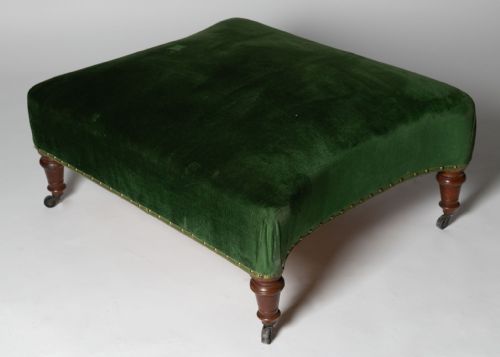
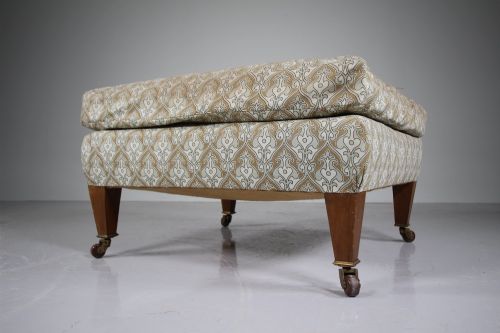
These traditional upholstery stool examples combine period timber frames with textile or leather seating to provide practical low-level resting places.
Traditional Upholstery Stool
A traditional upholstery stool serves as a low seat or foot support, appearing across various historical periods from the nineteenth century into the twentieth century. These pieces combine wooden frames constructed from materials like mahogany, walnut, rosewood, and hardwood with padded textile, fabric, or leather surfaces.
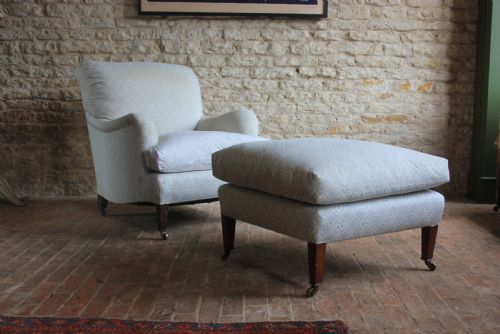
The selections available here range from compact foot stools and ottomans to long benches and matching armchair sets. Formats stretch from simple Victorian foot stools to elaborate Queen Anne style pieces featuring ball and claw details or X-frames.
Buyers most frequently encounter nineteenth-century examples and Edwardian variations on this page. These items reflect traditional seating designs that bridge the gap between functional household support and decorative interior furnishing.
How they were made
The structural frames rely on hardwood timbers including mahogany, walnut, and rosewood, shaped into styles ranging from Regency to Chippendale revival. Cabinet makers and joiners built these robust skeletons to support heavy padding and daily use.
Upper surfaces utilise traditional upholstery methods, incorporating materials such as leather, textile, and upholstery fabric. Buttoning and brass castors often complete the construction, adding both tactile depth and functional mobility.
Traditional Upholstery Stool Retail Price Guide 2026
Typical asking prices for traditional upholstery stool among the pieces listed under this phrase on Sellingantiques today, from the lower quarter to the upper quarter. They describe what is for sale here now, not the wider market.
Current listings feature timber frames in walnut, mahogany, and rosewood paired with leather, textile, and fabric upholstery.
What varies in quality
Quality rests in the relationship between the timber frame and the upholstery finish, where finer pieces display precise carving on mahogany or walnut structures. The integrity of the underlying woodwork dictates the longevity of the entire piece.
The sophistication of the design influences the standing of each item, distinguishing standard foot stools from pieces with detailed ball and claw motifs or X-frame geometry. Superior examples maintain harmony between the chosen fabric or leather and the period frame.
Howard & sons
The Traditional Upholstery Stool Glossary
- Brass castors
- Small swivelling wheels made of brass attached to the feet of furniture to allow easy movement across floors. They appear frequently on nineteenth-century footstools.
- X-frame
- A furniture base constructed from two diagonal members crossing in the centre to form an X shape. This configuration provides sturdy support for formal stools.
- Ball and claw
- A decorative furniture foot carved to resemble a bird's talon gripping a ball. This detail is commonly associated with revival styles.
- Mahogany
- A durable, reddish-brown tropical hardwood favoured for its stability and fine grain. It forms the primary frame material for many period stools.
Traditional Upholstery Stool: Frequently Asked Questions
Where do I put a traditional upholstery stool?
These pieces fit naturally in living rooms as foot rests before armchairs or sofas. They also serve as low seating solutions at the foot of a bed.
Their compact proportions allow them to sit neatly under tables or beside fireplace hearths when space is limited.
How do I clean leather upholstery?
Dust the surface gently with a dry cloth to remove loose particles before applying a suitable leather conditioner. Avoid harsh chemical cleaners that might strip the natural finish.
Test any cleaning product on a small hidden area first to ensure the leather reacts safely to the treatment.
What defines a Regency stool?
Regency pieces typically incorporate classical revival motifs inspired by ancient Greek and Roman designs. They often feature exposed mahogany frames and fluted legs.
These items date from the early nineteenth century and lean toward clean, architectural lines.