

Walnut Leg Footstool
A walnut leg footstool brings rich timber frames and traditional upholstery together to anchor a fireside or dressing room.
Walnut Leg Footstool
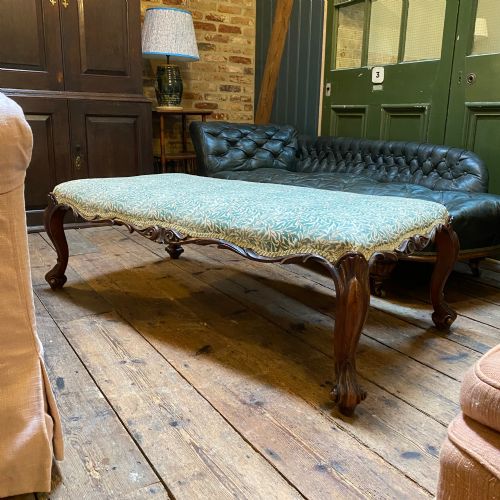
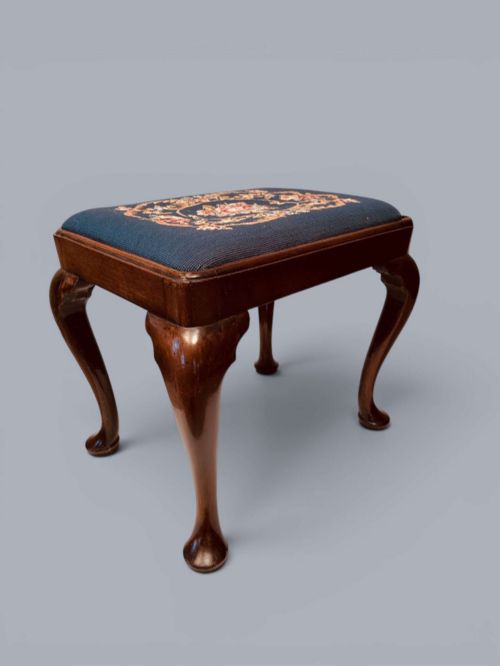
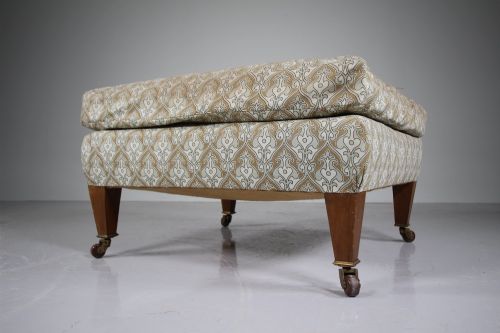
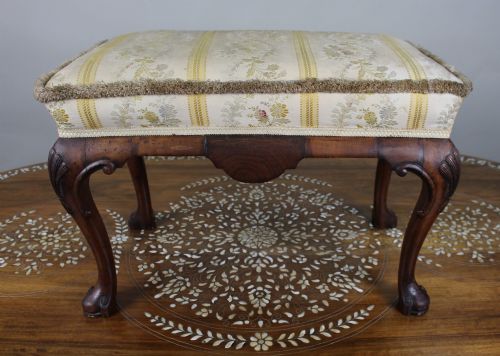
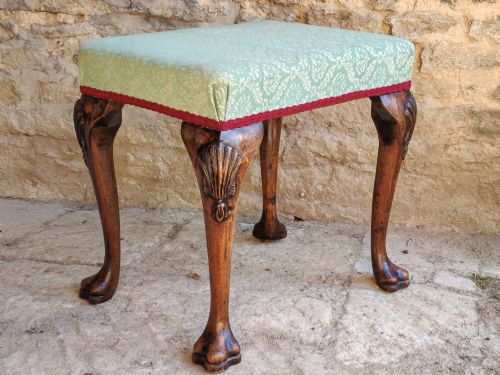
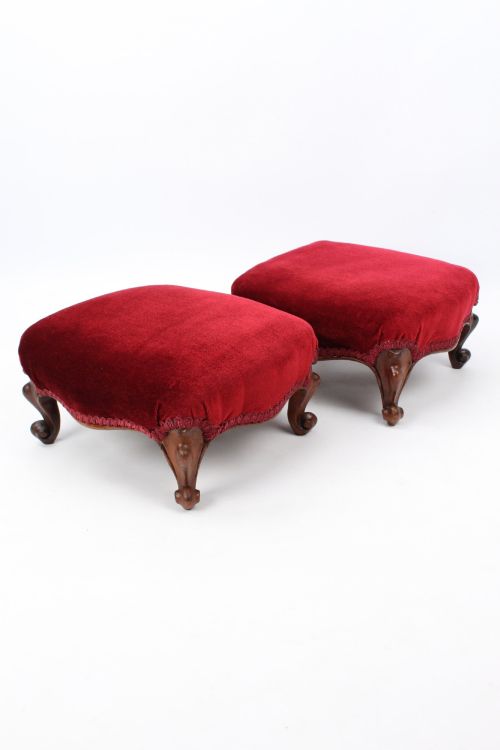
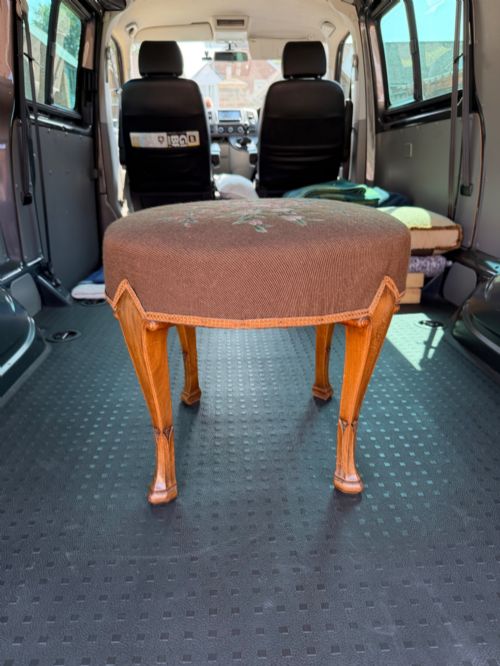
A walnut leg footstool is a low seating piece supported by walnut frames, turning up frequently in Victorian and nineteenth century iterations. These items range from compact fireside rests to larger salon and dressing table benches.
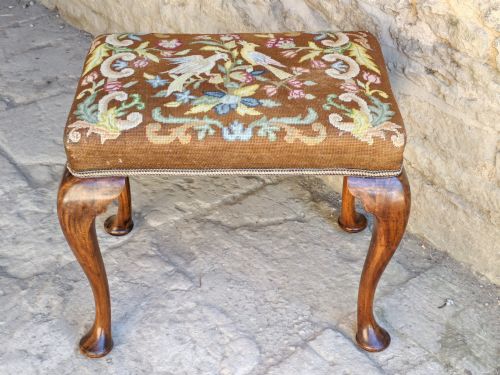
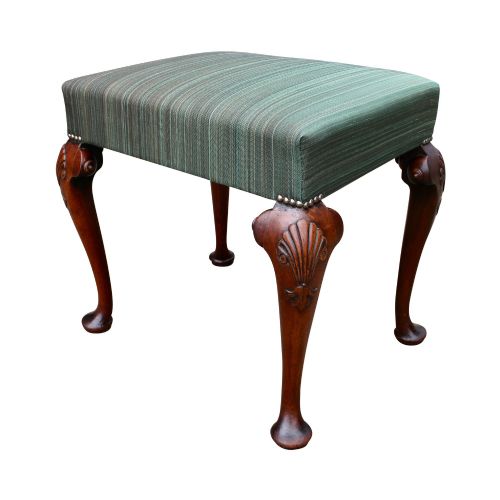
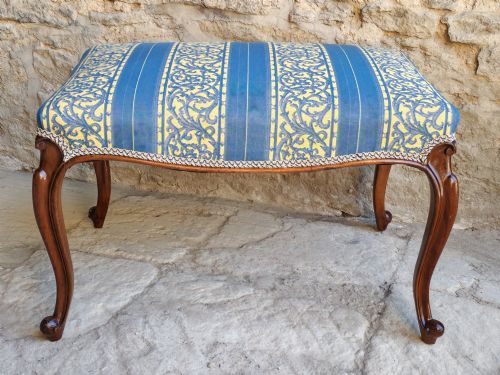
The selection here draws heavily on nineteenth century craftsmanship, alongside pieces referencing earlier George I and Queen Anne revivals. Buyers encounter everything from simple cabriole leg designs to ornate carved frames covered in period textiles.
Makers often shaped these low seats to complement larger armchairs, providing matching textiles and harmonious woodwork for formal rooms. Surviving examples demonstrate how domestic seating evolved from heavy baroque forms toward lighter revival styles.
Assessing quality in walnut frames and upholstery
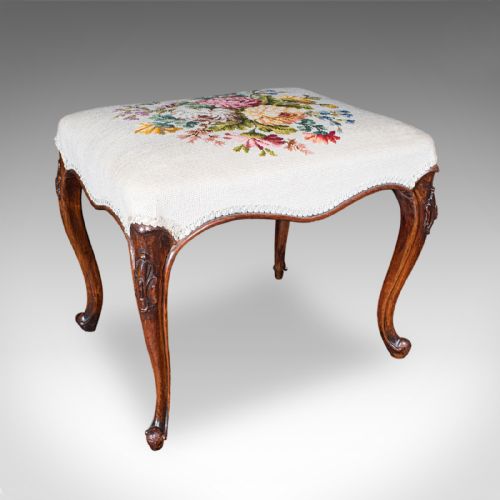
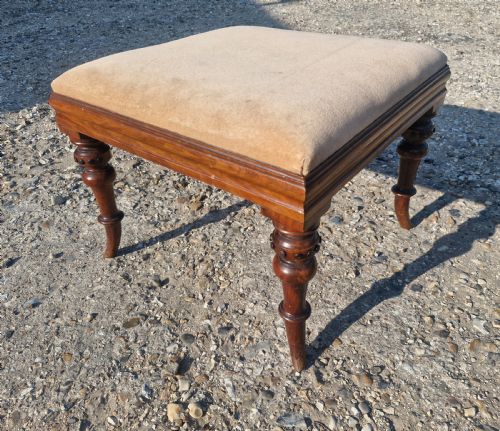
Quality rests in the crispness of the timber carving and the structural integrity of the walnut legs, where deeper relief work and dense grain denote superior execution. Simple turned supports contrast with elaborately carved cabriole legs or detailed stretchers.
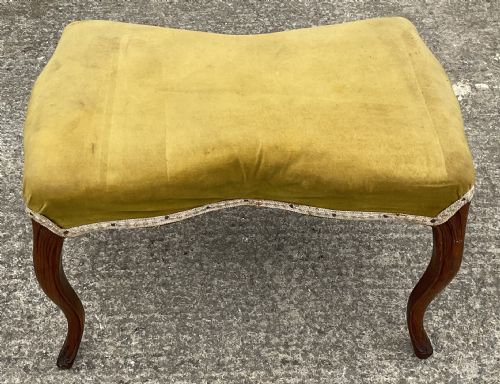
The standard of the upholstery finish and the choice of covering material also divide standard production from finer examples. Original or high-grade replacement textiles like needlepoint and velvet elevate the overall integrity of the piece.
Walnut Leg Footstool Retail Price Guide 2026
Typical asking prices for walnut leg footstool among the pieces listed under this phrase on Sellingantiques today, from the lower quarter to the upper quarter. They describe what is for sale here now, not the wider market.
Materials recorded across the stock include solid walnut, brass hardware, needlepoint, tapestry, velvet, and leather.
Harry & Lou Epstein
The Walnut Leg Footstool Glossary
- Cabriole leg
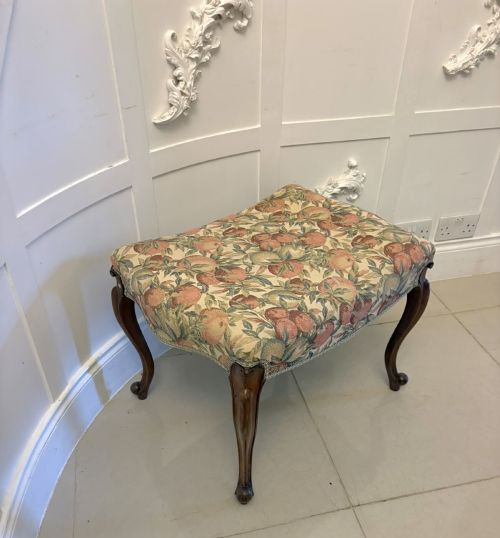
- A furniture leg that curves outward and then tapers inward, mimicking an animal's leg. This form appears frequently on walnut seating from the eighteenth century onward.
- Needlepoint
- A type of canvas work embroidery used extensively for historical stool upholstery. It provides a durable and decorative surface for footrests.
- Barley-sugar leg
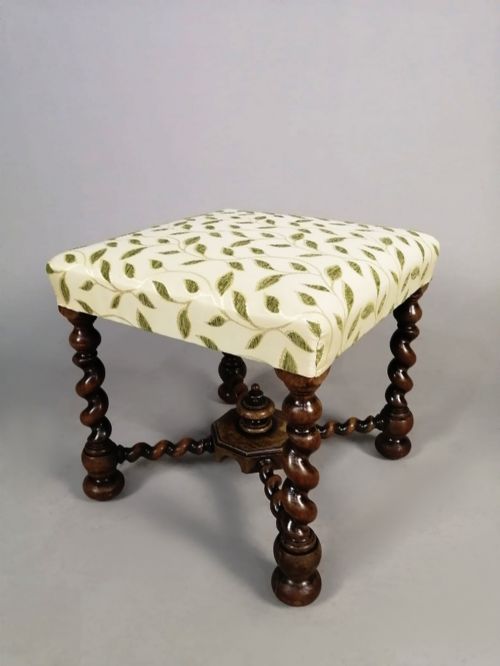
- A turned wooden furniture leg resembling a twisted rope or column. This characteristic seventeenth-century turning style reappears on later revival pieces.
- Oyster-veneer
- Cut cross-sections of branch wood laid in intricate patterns to create decorative wooden surfaces. It ornaments the stretchers of certain early pieces.
Walnut Leg Footstool: Frequently Asked Questions
What periods do these footstools date from?
The selection spans from early eighteenth-century pieces up to Art Deco designs from nineteen thirty. Many examples date to the Victorian era and the later nineteenth century.
Revival pieces from the late nineteenth and early twentieth centuries also appear, mimicking earlier Queen Anne and George I aesthetics.
How were these stools used historically?
Historically, low stools served as footrests near firesides or as auxiliary seating in parlours and dressing rooms. Larger salon benches accommodated multiple occupants or matched parlour armchairs.
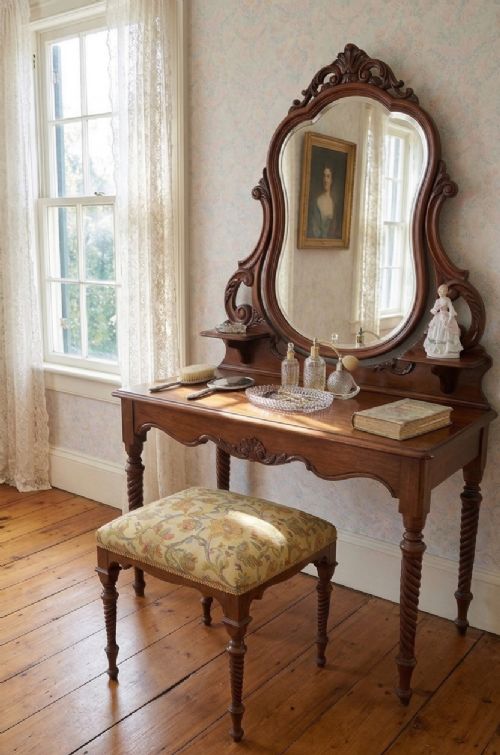
Dressing table variants provided short-term seating during grooming routines in private chambers.
What upholstery materials should I expect?
Upholstery materials include needlepoint, tapestry, velvet, leather, and various patterned fabrics. Many pieces feature traditional textile covers secured with brass tacks.
Some items arrive newly recovered or ready for fresh upholstery depending on the condition of the textile.
How do I identify a Queen Anne style stool?
Queen Anne style stools typically feature curved cabriole legs and solid walnut construction. These designs reflect the graceful proportions popularised during the early eighteenth century.
Revival versions from the Victorian and Edwardian periods often reproduce these characteristic sweeping leg forms.