




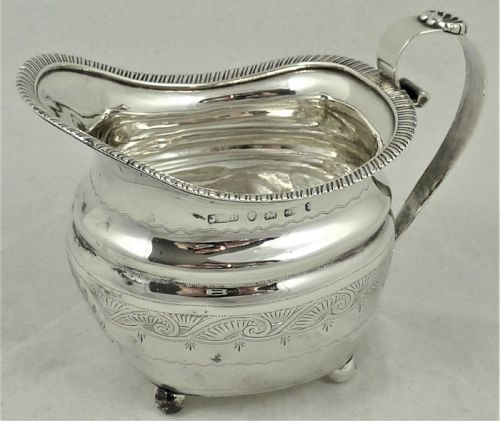

Traditional Tea Set
These traditional tea set examples bring a formal service to the table in bone china, silver plate and porcelain.
Traditional Tea Set
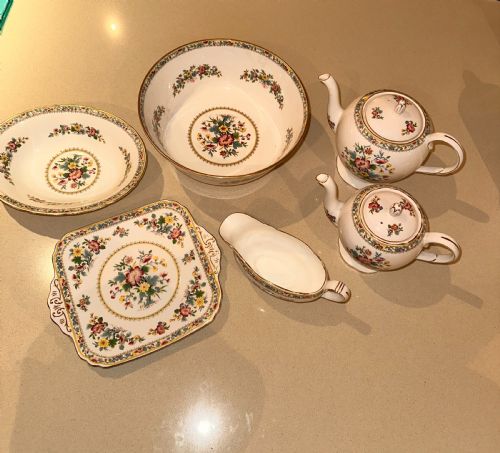
A traditional tea set encompasses matching ceramic services, silver plated packages and associated serving vessels designed for formal gatherings. When exploring this category, collectors encounter multi-piece arrangements from the Victorian and Edwardian eras alongside 1920 and 1930 bone china productions.
The material range spans delicate bone china and porcelain alongside silver plated metalwork. Pieces reflect traditional English aesthetics, Victorian Imari motifs and Chinese Oriental designs, providing a structured approach to formal table service.
Materials and construction
Ceramic components rely on bone china and hard-paste porcelain, shaped and fired to produce thin yet durable walls suitable for hot liquid. Hand-painted decoration and gilding apply colour and pattern directly to the glazed surface.
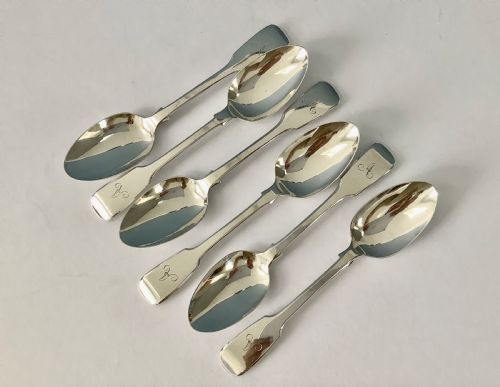
Metal services utilise silver plating over base metal foundations, shaped through pressing, casting and soldering. Handles and spouts are secured carefully to maintain balance during pouring.
Listings feature 19th Century, Victorian, Edwardian, 1920 and 1930 periods alongside bone china and silver plate.
Distinctions in quality
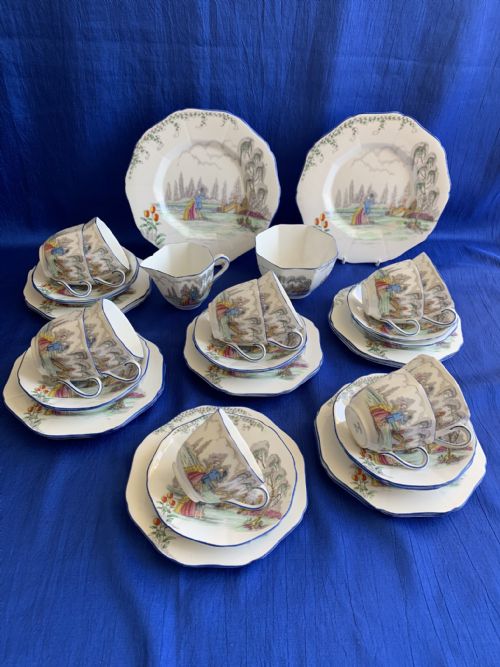
Quality rests upon the crispness of the ceramic moulding and the precision of the hand-painted detailing across cups, saucers and teapots. Finer sets maintain uniform glaze thickness and balanced proportions without distortion from the kiln.
In plated metalwork, the longevity of the silver layer and the solid construction of joints determine the grade of the piece. Weight, ergonomic balance in the handle and clarity of maker marks separate standard productions from superior works.
Royal Albert Crown China·Sutherland
The Traditional Tea Set Glossary
- Bone china
- A type of soft-paste porcelain containing bone ash, known for its high strength, chip resistance and translucent quality. It allows for thinner walls while retaining durability in daily use.
- Silver plate
- A base metal object coated with a thin layer of pure silver through electroplating or mechanical bonding. This technique provides the visual appeal of solid silver at a lower weight and cost.
- Porcelain
- A ceramic material made by heating raw materials, generally including clay in the form of kaolin, in a kiln. It fires at high temperatures to achieve a dense, non-porous body.
- Imari
- A style of Japanese porcelain decorated in underglaze blue and overglaze red, gold and black. Victorian makers frequently borrowed these bold patterns for British ceramic services.
Traditional Tea Set: Frequently Asked Questions
How many pieces make a standard service?
A standard service varies depending on the intended guest count, ranging from small trios to large multi-person settings.
Larger configurations include cups, saucers, side plates, milk jugs and sugar bowls to accommodate formal gatherings.
Can I use these sets for daily tea?
Bone china and ceramic sets are suitable for gentle daily use if handled with care.
Hand washing preserves fragile hand-painted details and gold leaf accents better than mechanical dishwashers.
How do I date a porcelain set?
Dating relies on maker marks, stamp styles and registration numbers stamped or painted on the base.
Stylistic shifts in floral motifs and handle shapes also help narrow down the production era.
What is silver plated hollowware?
Hollowware refers to three-dimensional vessels such as teapots, milk jugs and sugar basins.
These pieces are constructed from base metals and coated in silver to provide a bright reflective surface for the tea table.