



Octagonal China Plates
Octagonal china plates are eight-sided ceramic dishes shaped for service and display, prized for geometric sharpness and historical export designs.
Octagonal China Plates
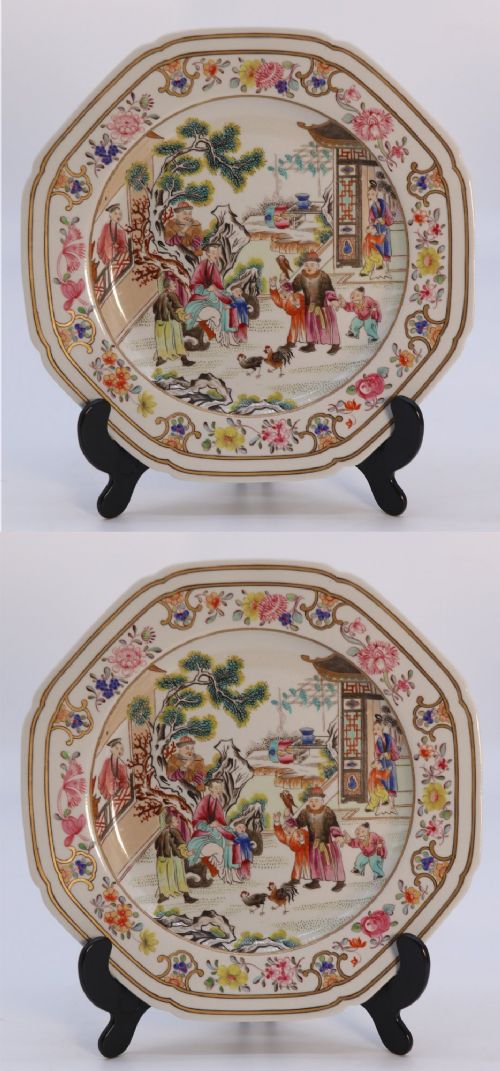
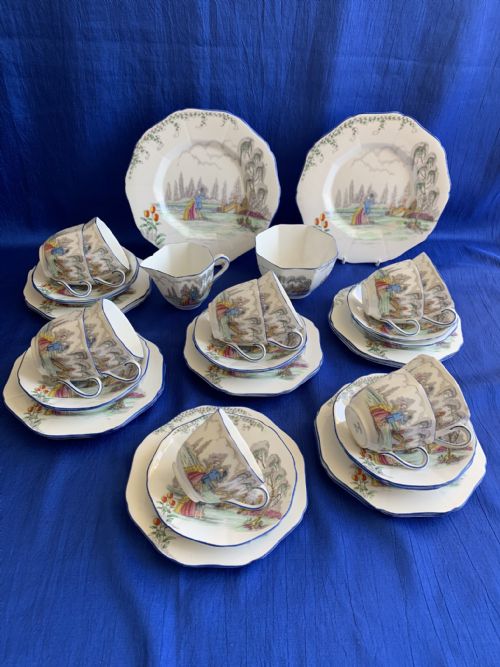
Octagonal china plates present an eight-sided geometry that departs from traditional round ceramics, offering a distinct angular profile on the table or wall. When searching for octagonal china plates, a buyer encounters examples spanning the eighteenth and nineteenth centuries, featuring both Asian export artistry and English responses in porcelain, stone china, and earthenware.
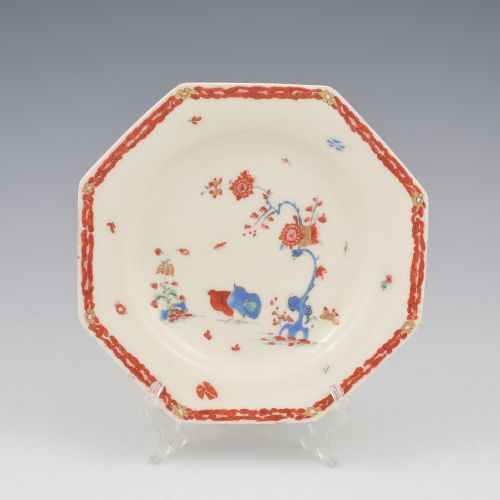
The versions most frequently met on this page range from Chinese export armorial soup plates to English ironstone and porcelain cabinet pieces. Makers adopted the eight-sided form to showcase intricate enamelled motifs, armorial bearings, and Japanese-inspired patterns such as the two quail design.
How they were made
Potters formed these eight-sided pieces using soft-paste porcelain, stone china, or refined earthenware, shaping the clay to maintain rigid, crisp angles rather than soft curves. Cobalt blue and polychrome enamels were then applied by hand before firing, often complemented by gilt detailing in gold leaf.
Glazing techniques varied according to the ceramic body, with hard and soft pastes requiring precise kiln temperatures to fix the underglaze transfer prints and hand-painted famille rose motifs securely.
Two quail match their feathers on porcelain, proving seventeenth-century Japanese birds found new life on British tables.
What varies in quality
Quality in these plates rests upon the crispness of the eight-sided moulding and the precision of the hand-painted or transfer-printed decoration. Finer specimens display steady brushwork, vibrant enamel saturation without pooling, and armorial details executed with exact heraldic accuracy.
The refinement of the ceramic body itself separates standard utilitarian ware from high-status cabinet pieces, where thinner porcelain walls, smoother glazes, and well-preserved gold leaf indicate superior workshop standards.
Bow Porcelain·Spode Stone China·Masons Ironstone·Helena Wolfsohn·Brameld and Co·Sutherland
The Octagonal China Plates Glossary
- Armorial
- Bearing a coat of arms or heraldic crest. These plates were custom-ordered by wealthy families from overseas kilns.
- Stone China
- A dense, durable ceramic body developed in the nineteenth century to imitate Chinese porcelain. It resists chipping better than soft-paste earthenware.
- Famille Rose
- A palette of opaque rose-pink and other pastel enamels introduced in Chinese export ceramics during the eighteenth century.
- Kakiemon
- A style of Japanese porcelain decoration featuring asymmetric arrangements of birds, flowers, and banded hedges in distinctive enamel colours.
Octagonal China Plates: Frequently Asked Questions
Are octagonal china plates safe for daily dining?
Many of these pieces were produced as decorative cabinet plates or part of formal armorial dinner services rather than everyday tableware. Their age and hand-enamelled surfaces mean they benefit from gentle handling and hand washing.
Using them for special occasions is possible provided temperature shocks and abrasive detergents are avoided, preserving the glaze and gold leaf.
How do I tell Chinese export from English pieces?
Chinese export examples from the eighteenth century typically employ thin porcelain bodies with famille rose enamels and armorial details commissioned abroad. English interpretations often utilise denser ironstone or stone china with transfer-printed or hand-painted patterns.
Examining the foot rim and weight helps clarify the origin, as English factories adapted Eastern shapes to suit domestic dining habits.
What does stone china mean?
Stone china is a robust ceramic hybrid developed by nineteenth-century manufacturers to bridge the gap between heavy earthenware and expensive imported porcelain. It offered high resistance to thermal and physical stress.
Plates made from this material feature a heavy, solid handle and a resonant ring when tapped gently.
How should I display octagonal plates?
The geometric eight-sided form makes these plates particularly striking when mounted on wall hangers or supported in plate stands. Their distinct angles create strong visual contrast against round decorative items.
Ensuring the mounting hardware supports the specific weight and shape of the plate prevents accidental slipping.