


Bone China Teacup
A bone china teacup brings tactile warmth to the table through fine porcelain forms shaped across Georgian, Victorian, and later periods.
Bone China Teacup
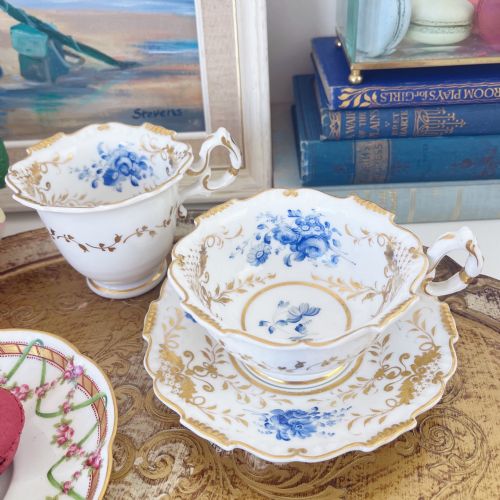
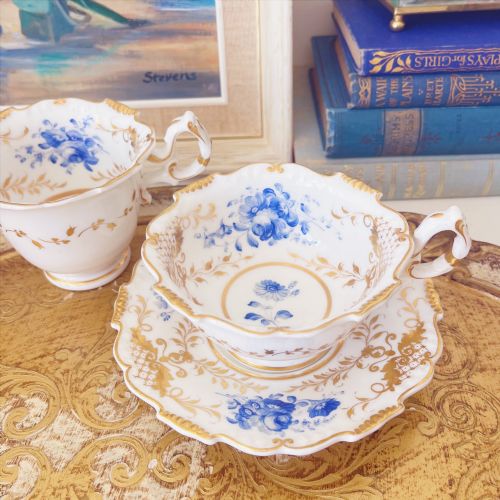
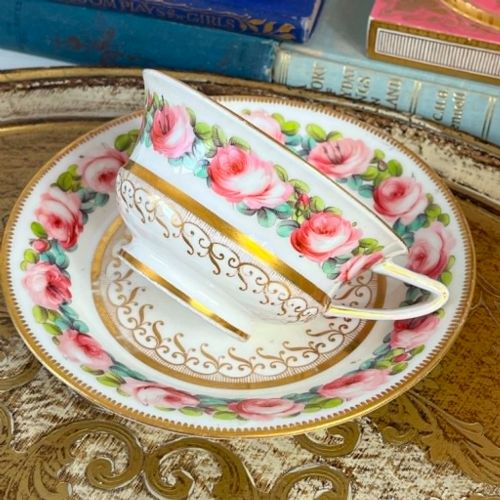
A bone china teacup embodies the practical elegance of historical English ceramics, ranging from individual duos and trios to full afternoon tea services. Collectors encounter single cabinet cups alongside matching saucers and side plates designed for social rituals.
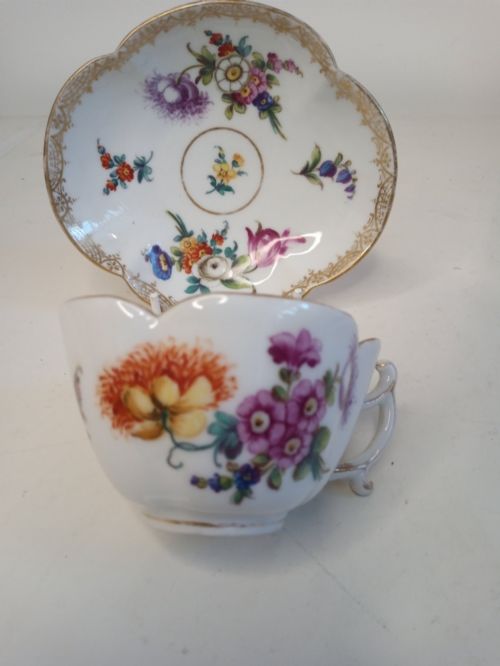
The pieces on this page originate across the nineteenth and twentieth centuries, spanning Regency, Victorian, Edwardian, and Art Deco eras. Makers utilised traditional forms such as coffee cup trios and demitasse sets, decorated with handpainted motifs and transfer prints.
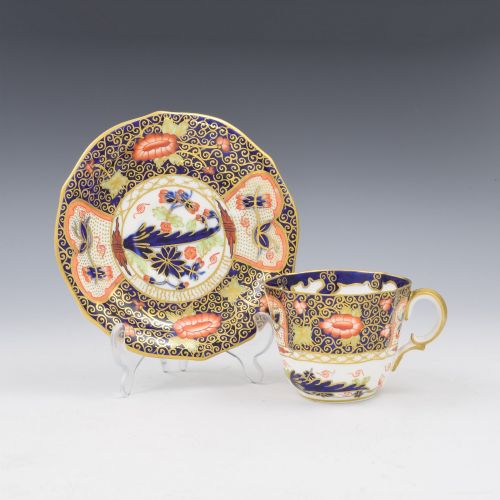
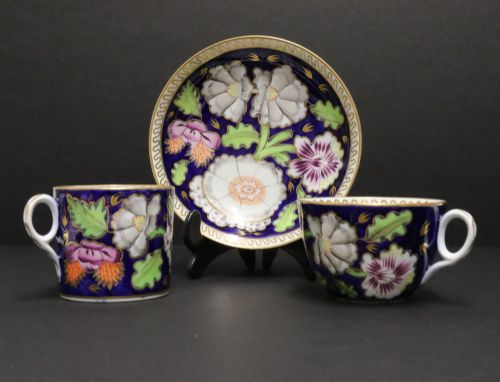
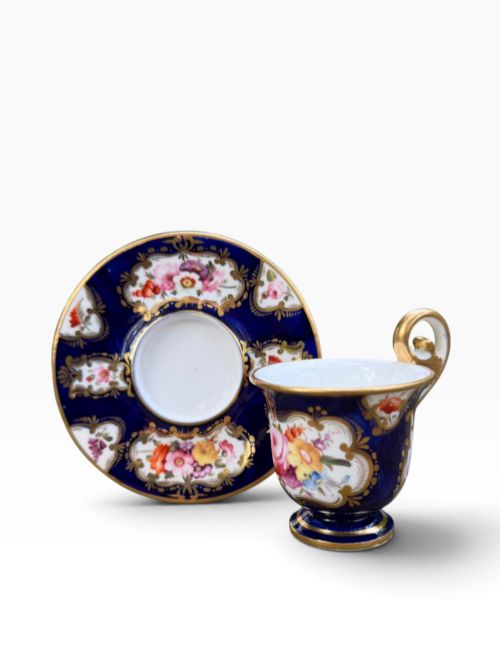
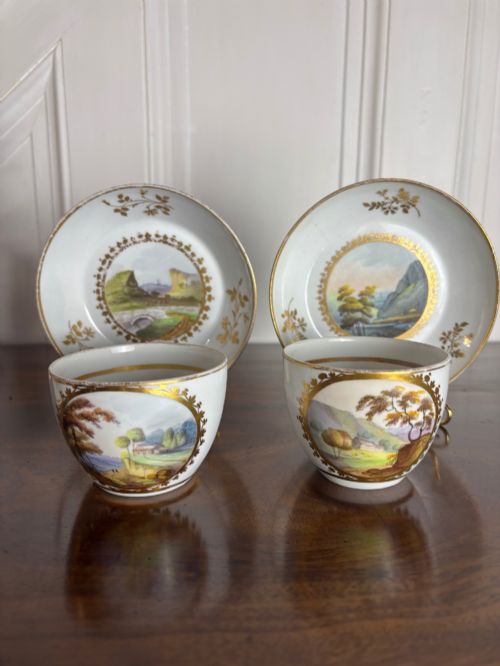
Forms vary from simple domestic tea sets to elaborate cabinet pieces bearing Imari patterns or landscape scenes. Buyers typically select these items to use during afternoon tea or to display English ceramic heritage.
Materials and methods
Potters formed these items using porcelain and bone china bodies, shaped on wheels or pressed in moulds to achieve thin, translucent walls. Artisans then applied enamel colours by hand or transferred printed outlines onto the fired clay.
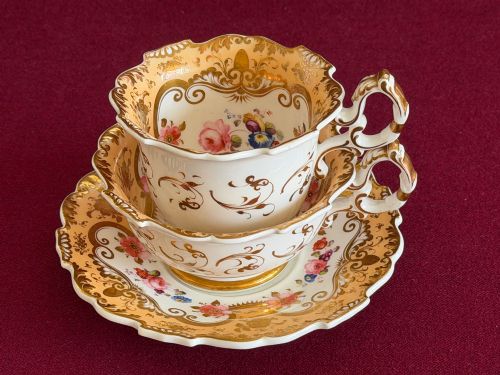
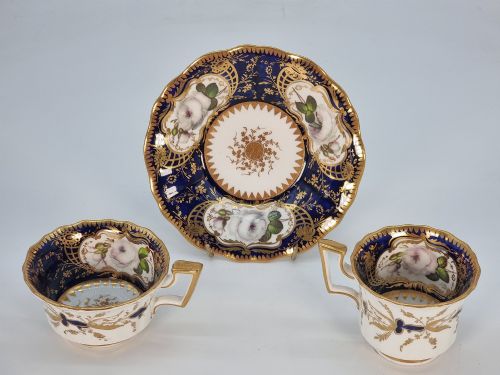
Finishing touches involved the application of gold leaf, gilding, and gold gilt along rims and handles, followed by a second kiln firing to bond the metallic decoration. Handpainted floral sprays and geometric patterns required steady brushwork by skilled decorators.
Early nineteenth-century tea sets occasionally include whimsical pattern names such as "Crazy Cow" and "Bengal Tiger" painted onto delicate cups.
Assessing quality and execution
Quality rests upon the delicacy of the porcelain body and the precision of the handpainted or gilded embellishments. Pieces featuring intricate brushwork and securely bonded gold leaf stand apart from simpler transfer-printed examples.
The reputation of the pottery and the complexity of the pattern shape the distinction between standard domestic wares and high-status cabinet pieces. Well-preserved enamel colours and crisp gilding indicate superior initial manufacture and careful subsequent handling.
Royal Crown Derby·H and R Daniel·Davenport·Newhall·Coalport·Minton·Flight Barr and Barr·Shelley·Royal Worcester·Royal Albert·Spode·Wileman Foley Shelley·Gladstone potteries
The Bone China Teacup Glossary
- Bone china
- A type of soft-paste porcelain incorporating bone ash, resulting in a strong, translucent ceramic body. This material allows for thinner walls than standard earthenware while maintaining durability.
- Trio
- A matching set comprising a teacup, a saucer, and a corresponding side plate. These groups formed the standard unit for nineteenth-century tea service.
- Imari
- A decorative style inspired by Japanese export wares, featuring rich cobalt blue and iron red combined with extensive gilding. English potteries adopted this aesthetic during the Georgian and Victorian periods.
- Cabinet cup
- A decorative cup intended primarily for display rather than daily use. These pieces often feature elaborate handpainted landscapes or unusual handle designs.
- Gilding
- The application of gold leaf or gold paint to ceramic surfaces, typically accentuating rims, handles, and panel borders. It provides a reflective finish that enhances the visual depth of the pattern.
Bone China Teacup: Frequently Asked Questions
How do I identify a bone china teacup?
Examine the piece against a strong light to check for translucency, which distinguishes fine bone china and porcelain from heavier earthenware. Maker marks on the underside often provide further clues to the period and pottery.
Look closely at the handle and rim for signs of hand-applied gilding or painted details. These physical traits align with the historical manufacturing standards recorded in listings.
Can I use antique tea sets daily?
Many collectors prefer to reserve older porcelain and bone china sets for special occasions to preserve handpainted enamel and gold leaf details. Gentle hand washing helps protect fragile glazes from modern detergent wear.
Using them carefully maintains the condition of nineteenth and twentieth-century tableware. Modern storage away from direct sunlight also prevents fading on delicate surfaces.
What is the difference between a duo and a trio?
A duo consists of a teacup and a matching saucer, forming the basic pairing for hot drinks. This configuration appeared frequently in both Regency and Victorian domestic settings.
A trio adds a matching side plate to the cup and saucer combination. This extra piece accommodated cakes or bread and butter during formal afternoon tea.
How do I date a porcelain teacup?
Dating relies on identifying backstamps, stylistic cues, and manufacturing techniques associated with specific ceramic periods like the Regency or Edwardian eras. Shape profiles and floral motifs often reflect the design trends of their decade.
Comparing pattern numbers with factory archives helps narrow down the production window. Reference guides on English potteries provide detailed timelines for specific marks.