


Blue Rimmed China
Blue rimmed china brings together centuries of ceramic tradition, offering table services and cabinet pieces defined by their distinct painted borders.
Blue Rimmed China
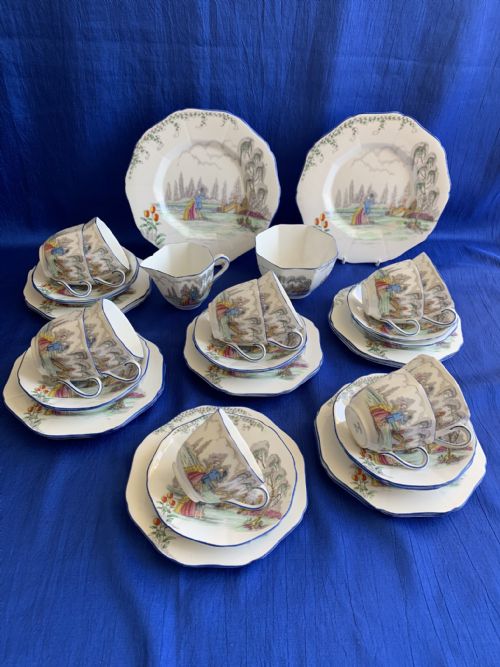
When you search for blue rimmed china, you encounter a varied selection of tablewares and display pieces spanning multiple centuries. These items range from eighteenth-century porcelain cups and nineteenth-century ironstone serving dishes to twentieth-century bone china teasets.
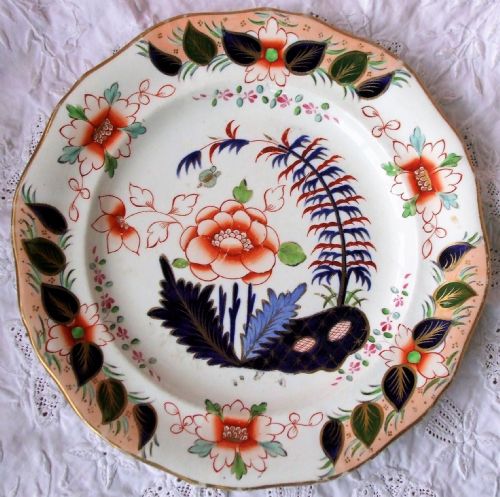
The objects take many forms, including cabinet plates, decorative bowls, soup dishes, and complete coffee services. Their defining characteristic is the presence of blue pigment along the edges, whether applied as a simple painted band, a transfer-printed pattern, or part of a more elaborate Imari design.
Examples on this page draw from British and Japanese traditions, moving through Georgian, Victorian, and Edwardian periods up to mid-century eras. The maker and the period dictate the weight and function of each piece, from delicate porcelain intended for display to robust ironstone designed for the dining table.
Materials and methods
Potters utilised hard-wearing ceramic bodies such as bone china, ironstone, and traditional porcelain to form these vessels. Glaze sealed the surface, often providing a glossy finish over hand-painted or transfer-printed decoration.
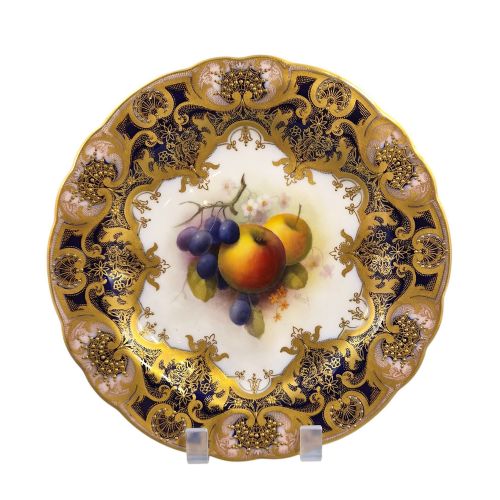
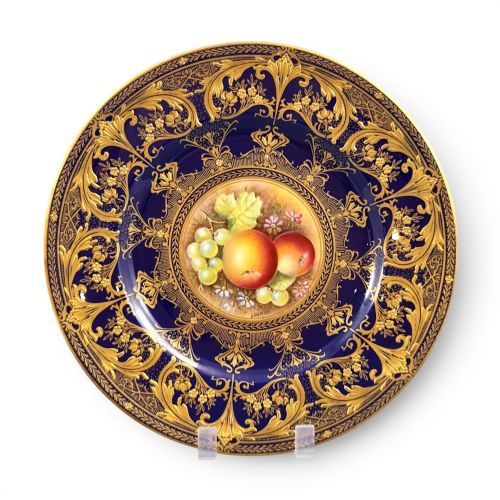
Makers applied cobalt blue pigments directly to the ceramic body or over the glaze, occasionally adding gold leaf or gilt highlights for richness. Painted fruit scenes, Chinese figures, and geometric net patterns required steady brushwork by skilled hands working in factories like Royal Worcester, Doulton, and Coalport.
Materials represented include traditional porcelain, bone china, ironstone, and earthenware embellished with enamel and gold leaf.
Assessing quality
Quality rests upon the crispness of the blue pigment and the precision of the brushwork along the border. Hand-painted details by named artists display greater nuance than standard transfer prints.
The fineness of the ceramic body and the condition of any gilt or enamel embellishments set finer cabinet pieces apart from everyday tablewares. Well-preserved plates and services retain the original brilliance of their colours without excessive rubbing to the rims.
John Davenport of Longport·Royal Worcester·Doulton Burslem·Coalport·Crescent China
The Blue Rimmed China Glossary
- Bone china
- A type of soft-paste porcelain incorporating bone ash, known for its bright white body and high strength. It allows for thinner, more delicate tableware forms.
- Ironstone
- A heavy, durable earthenware patented in the nineteenth century to imitate Chinese porcelain. It withstands frequent dining use while maintaining a clean glazed surface.
- Imari
- A decorative style originating in Japan and copied by European potteries, characterised by a palette of underglaze blue, iron red, and gilt. It often appears on plates and vases from various periods.
- Cabinet plate
- A decorative plate intended for display on a wall or in a cabinet rather than for serving food. These pieces frequently feature detailed hand-painted scenes by known artists.
- Glaze
- A glassy coating fused to the ceramic body through firing, which waterproofs the piece and protects the underlying painted decoration.
Blue Rimmed China: Frequently Asked Questions
Can I use these plates for everyday dining?
Robust ironstone and sturdy bone china pieces from later periods suit regular use if handled with care. Items featuring delicate overglaze enamel or gold leaf belong strictly to display or special occasions.
Check the thickness of the ceramic body and the hardness of the glaze before deciding how to incorporate the items into daily life. Heavier nineteenth-century wares manage regular use better than fragile eighteenth-century porcelain.
How do I distinguish eighteenth-century pieces from later copies?
Examine the weight, translucency, and footrim of the ceramic body under good light. Early porcelain often shows minor firing flaws and unglazed footrings characteristic of period kilns.
Compare the style of the blue painting and the formulation of the glaze with documented examples from the same era. Maker marks, where present, help confirm the exact period of production.
What is the difference between porcelain and ironstone?
Porcelain is a vitrified ceramic fired at high temperatures, resulting in a white, translucent body that rings slightly when struck. It forms the basis for fine cabinet plates and teacups.
Ironstone is an opaque, heavy earthenware developed to resist chipping and heavy use. It provides a thick, durable surface ideal for large serving dishes and soup bowls.