



Traditional Swivel Chair
A traditional swivel chair offers solid construction and smooth movement, bringing practical comfort and period character to any study or desk.
Traditional Swivel Chair
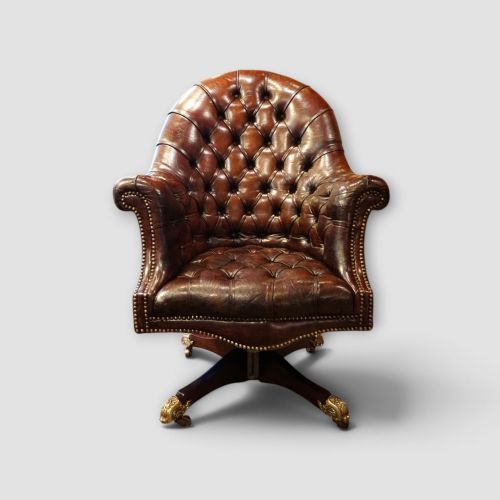
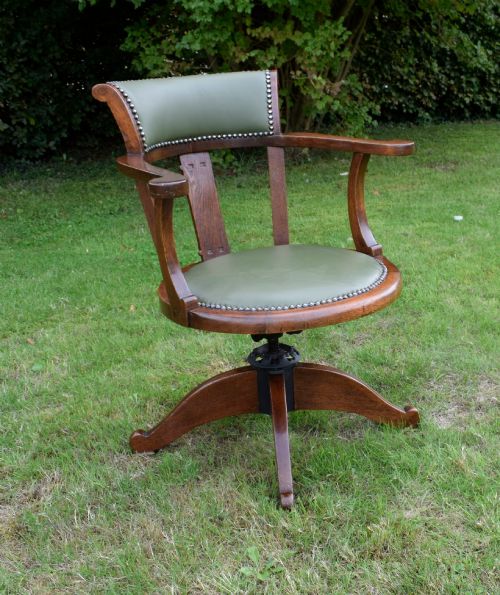
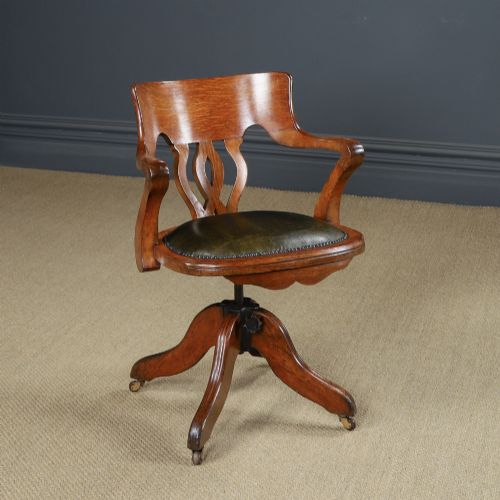
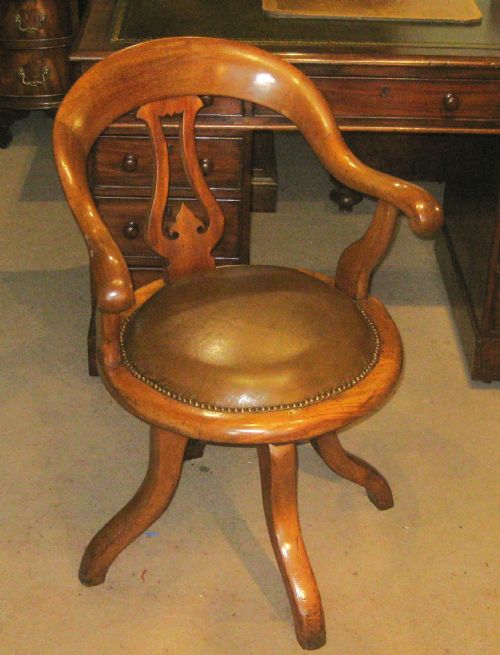
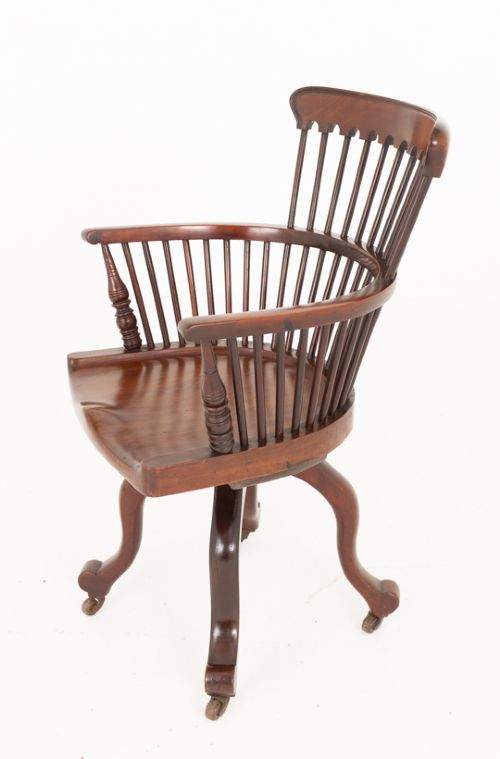
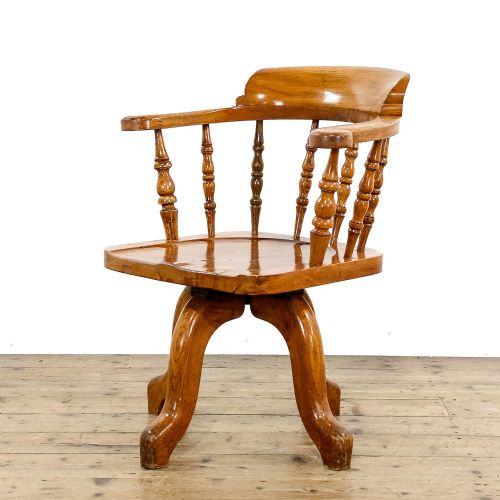
A traditional swivel chair is designed for working at a desk or table, combining a revolving mechanism with a sturdy timber frame and supportive armrests. Buyers searching for a traditional swivel chair will find numerous examples ranging from the Victorian and Edwardian eras up to the early twentieth century.
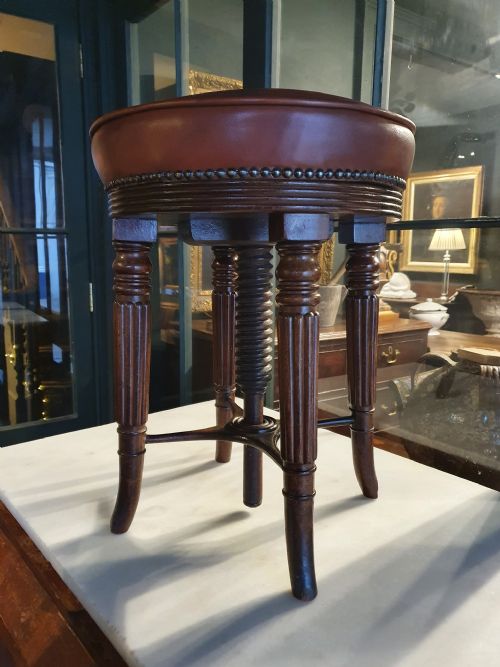
The most common forms on this page include office and desk chairs alongside piano stools, originating from periods such as the Regency, Victorian, Edwardian, and William IV eras. These pieces typically take the form of armchairs or compact seating designed to rotate and tilt for daily use.
Materials span various hardwoods and metals, with mahogany, oak, walnut, and beech frequently paired with leather seats and iron or brass swivel mechanisms.
Materials and construction methods
Makers utilised dense timbers such as mahogany, oak, walnut, and beech to build the frames, ensuring the structural integrity needed to support a revolving mechanism. These woods were often polished or carved to reflect the prevailing styles of the nineteenth and early twentieth centuries.
Leather hide, sometimes set over wooden seats, provided durable upholstery for desk chairs and office armchairs. Iron and brass components formed the swivel and tilt mechanisms that allowed the seats to turn smoothly.
Joinery techniques relied on traditional framing methods to secure the revolving iron or brass spindles beneath the wooden seats, balancing mobility with stability.
Current listings feature desk chairs and piano stools spanning the nineteenth century through the Edwardian period, constructed from oak, mahogany, walnut, and beech.
Assessing quality in period seating
The quality of a revolving chair depends largely on the selection of timber and the robustness of its central turning mechanism. Heavier hardwoods like mahogany and oak, combined with solid brass or iron fittings, offer superior longevity compared to lighter secondary woods.
Fine craftsmanship is evident in the execution of carved details, the neatness of the leather upholstery work, and the balance of the swivel and tilt action. Pieces that retain their original mechanical components and matching timber patination stand apart from those with replaced or altered parts.
Edward William Godwin·George Bartholomew and Co
The Traditional Swivel Chair Glossary
- Swivel chair
- A seat mounted on a central pivot that allows the user to turn through a full circle. This movement is typically facilitated by an iron or brass spindle mechanism concealed beneath the seat.
- Revolving desk chair
- An office chair equipped with a rotating mechanism designed for placement at a writing table. These often feature curved armrests and supportive wooden or leather-upholstered backs.
- Piano stool
- A seat intended for use at a keyboard instrument, frequently constructed with a revolving top to adjust the height of the player. Regency and William IV examples often feature carved wooden pedestals.
- Tilt mechanism
- An integrated feature that allows the backrest and seat to incline slightly backward. This adds comfort during extended periods of sitting at a desk.
- Hide
- Animal skin used for upholstery, commonly seen in tan or green shades across Victorian and Edwardian desk chairs. It provides a durable and smooth surface for regular use.
Traditional Swivel Chair: Frequently Asked Questions
How do I care for the leather seat?
Keep leather upholstery clean by dusting it regularly with a dry cloth and applying a suitable leather conditioner periodically to prevent drying out.
Avoid placing the chair in direct sunlight or near heat sources, as excessive warmth can cause the hide to crack over time.
Can I use these chairs on modern flooring?
Traditional swivel chairs typically feature wooden bases or metal spider feet rather than modern castors, making them relatively stable on carpets and rugs.
For hard floors such as wood or tile, consider placing a small protective mat underneath to prevent any friction from the wooden feet during rotation.
How do I distinguish between Victorian and Edwardian examples?
Victorian office chairs often display deeper tones of mahogany and walnut with more ornate carving, reflecting the rich aesthetic preferences of the nineteenth century.
Edwardian pieces generally lean towards lighter oak or beech frames with simpler Arts and Crafts influences and cleaner structural lines.
What is the purpose of the tilt function?
The tilt mechanism allows the user to lean back comfortably while seated, reducing strain during long hours of writing or administrative work.
Combined with the swivel action, this movement provided nineteenth-century office workers with greater flexibility and reach around a large desk.