


Traditional Sporting Art Print
A traditional sporting art print captures the momentum of the field and the stable through historic engravings, lithographs, and watercolours.
Traditional Sporting Art Print
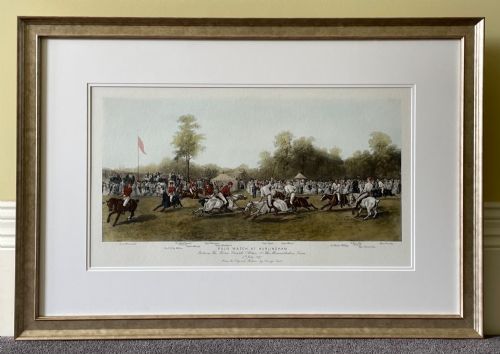
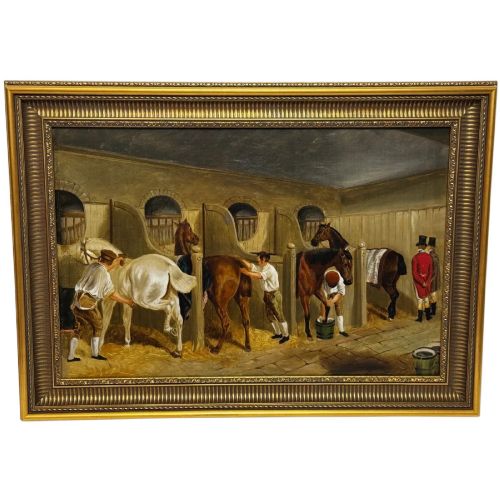
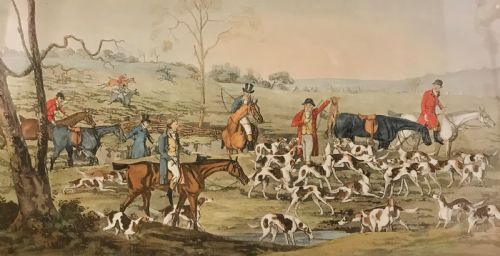
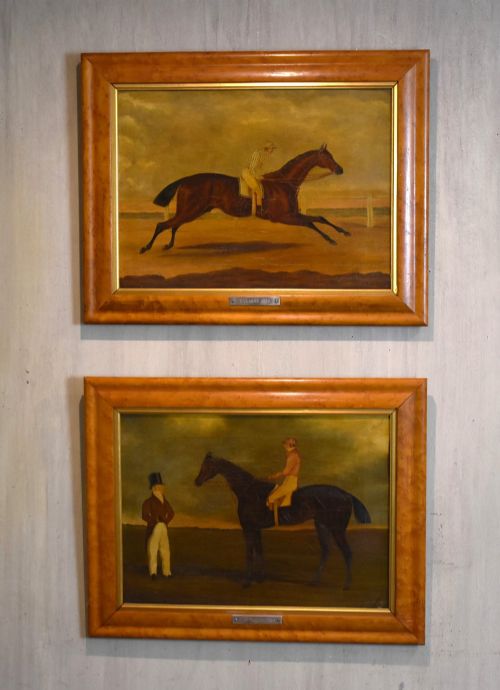
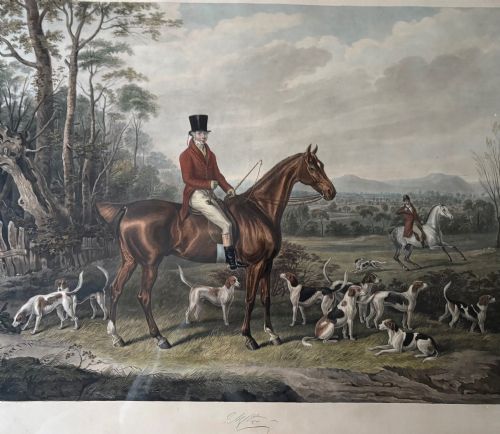
A traditional sporting art print records the history of equestrian pursuits, hunting scenes, and racing subjects across paper and canvas. These works celebrate horses, hounds, and field sports through historic imagery produced from the Georgian era into the mid-twentieth century.
The selection on this page focuses heavily on framed prints, hand-coloured engravings, and lithographs depicting mounted hunts, steeplechases, and racing portraits. Buyers encounter framed artworks alongside original watercolours and oil paintings documenting the sporting calendar.
Victorian and Edwardian periods dominate the selection, offering framed prints and published plates by notable artists and publishers. Pieces range from single plates to complete sets of four depicting hunting sequences and shooting scenes.
Materials and methods
Makers utilised paper sheets bearing copperplate engravings, aquatints, and lithographs, frequently finished with hand colouring using watercolour pigments. Publishers paired these printed works with wood frames, glass glazing, and occasionally gilt mounts.
Artists also produced original works in oil on canvas and watercolour on paper, capturing precise anatomical details of racehorses and hounds. Eglomise reproductions introduce reverse-painting techniques beneath glass panels.
Keep a sharp eye out for hounds named Marquis sharing wall space with notorious nineteenth-century sportsmen.
Distinctions in quality
Quality rests upon the crispness of the impression and the precision of the plate work or brushwork. Early impressions retain sharp lines and clear typography, whereas later editions can appear soft or muddy.
The preservation of the paper and the integrity of the original framing elements influence the character of the piece. Hand colouring applied with skill and subtlety elevates the visual depth of engraved plates.
C. H. Weigall·John Frederick Herring Snr·Charles Faulkner·Alfred Wheeler·John Atkinson·Isaac Cullin·Charles Johnson Payne Snaffles·Francis Calcroft Turner·Frank Algernon Stewart
The Traditional Sporting Art Print Glossary
- Lithograph
- A print produced from a flat stone or metal plate treated to repel ink except where desired. This method allowed artists to render tonal gradations and fluid lines reminiscent of drawings.
- Aquatint
- An intaglio printmaking technique that produces areas of tone resembling watercolour washes. It was widely utilised in sporting prints to render skies and landscape backgrounds.
- Hand coloured
- A print embellished with watercolour or gouache by hand after the printing process. This treatment added vibrant hues to monochrome engravings of hunting and racing scenes.
- Eglomise
- The process of applying gold or silver leaf and painting on the reverse side of glass. It creates a reflective, decorative panel often used for sporting subjects.
- Chromolithograph
- A colour lithographic technique using multiple stones to build up rich hues. It enabled mass production of vibrant sporting images during the Victorian and Edwardian eras.
Traditional Sporting Art Print: Frequently Asked Questions
What subjects appear in these prints?
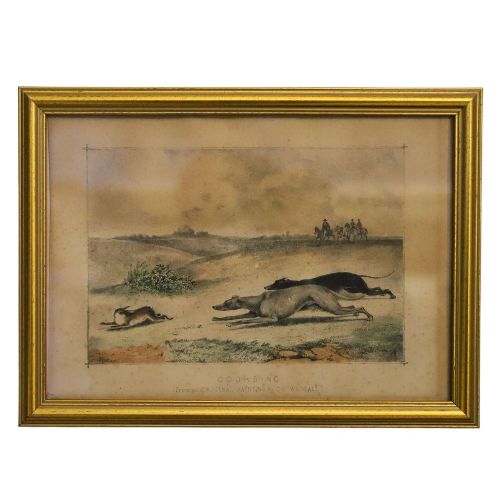
The images record equestrian sports, horse racing, fox hunting, shooting, and coursing events. Scenes depict famous racehorses, notable huntsmen, and point-to-point races.
Compositions range from single portraits of thoroughbreds to multi-part sequences documenting the progression of a hunt or race day.
How should I hang framed sporting art?
Hang pieces at eye level in rooms with stable indirect lighting to protect paper and pigments from fading. Grouping complete sets of four creates a balanced display along hallways or library walls.
Ensure frames with glass glazing utilise proper wall fixings suited to the weight of wood and moulding.
How do I identify the printing technique?
Examine the surface under magnification to spot plate marks, dot patterns, or fine lines characteristic of engravings and lithographs. Hand-coloured plates often show subtle brush textures over printed outlines.
Signatures, publisher imprints, and publication dates printed in the margins help date the edition accurately.
Are these works original or reproduction?
The selection includes period engravings and lithographs published in the nineteenth and early twentieth centuries alongside original watercolours and oil paintings. Original prints derive from the primary publication runs by period printmakers.
Listings specify whether an artwork is a contemporary period print, an original painting, or a later decorative reproduction.