
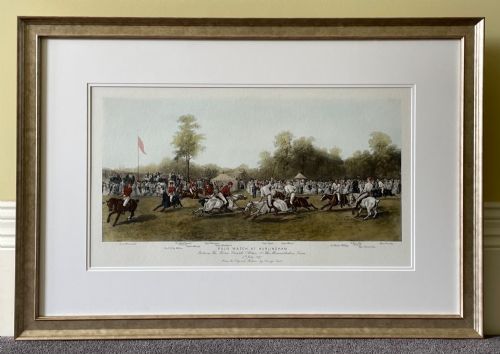
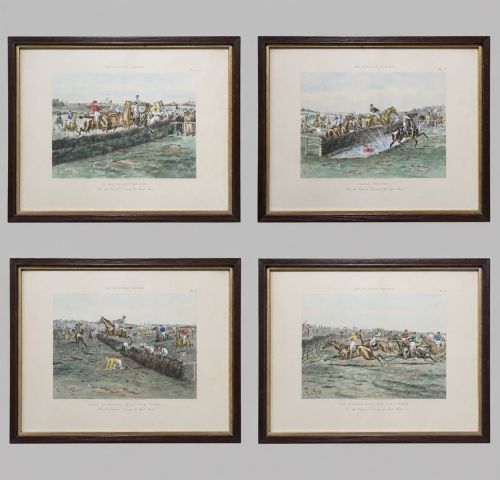
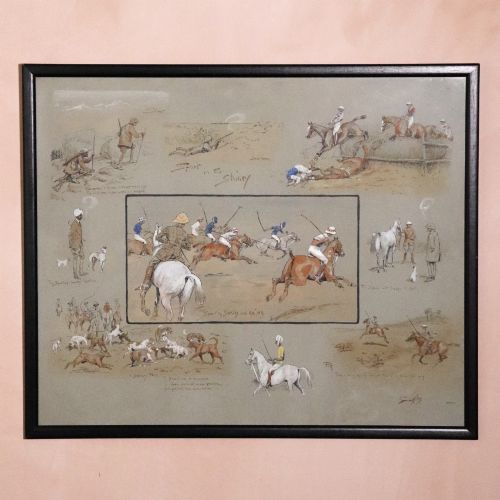
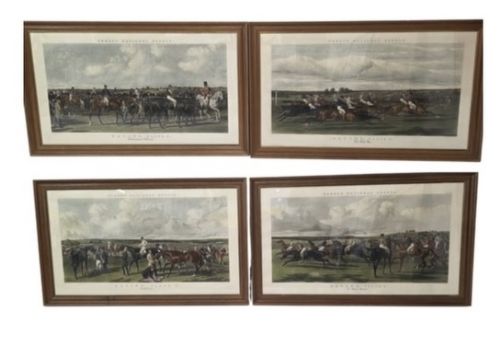
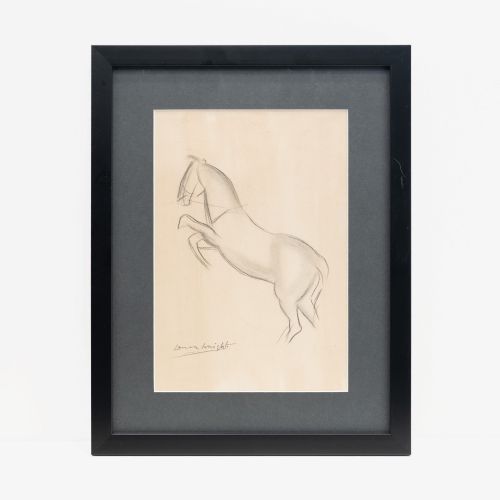
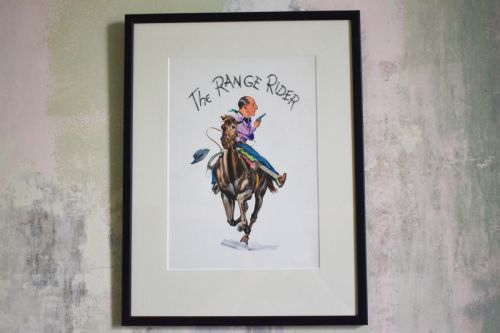
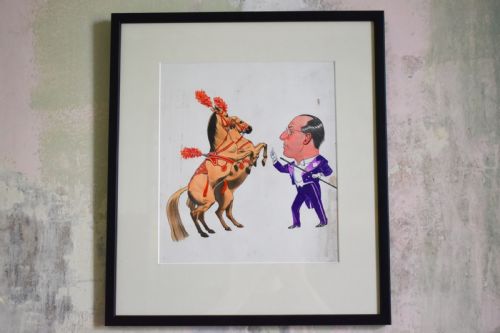


Framed Equestrian Paper Print
Framed equestrian paper print works depict horses and racing under glass, bringing historical sporting action straight to the wall.
Framed Equestrian Paper Print
A framed equestrian paper print brings together historical paper works and protective wooden surrounds, capturing subjects from polo matches and fox hunting to individual racehorses. The pieces seen here span the Victorian era, the nineteenth century, and the early decades of the twentieth century, reflecting enduring British sporting traditions.
Buyers frequently encounter nineteenth-century lithographs, engravings, and aquatints alongside twentieth-century works by named military and sporting artists. Many examples are presented as sets of four, recording meets, steeplechases, and game shooting scenes in uniform frames.
Materials and technique
The core material is paper, bearing images applied through engraving, lithography, chromolithography, or aquatint, occasionally finished with hand colouring, ink, or watercolour. These works are paired with graphite or ink touches in specific drawings and prints.
Encasing these works are wood and gilt wood frames, fitted with glass to protect the delicate paper surface from atmospheric moisture and handling damage.
Several horses immortalised in these prints bear specific nineteenth-century racing names such as Creeping Molly and Canezou.
Distinctions in quality
Quality rests upon the clarity of the printed line and the crispness of the plate impression, distinguishing sharp early pulls from softer later printings. The depth of hand-applied watercolour and the preservation of the original paper tone further separate superior examples.
The standard of the framing matters considerably, with period wood and gilt wood surrounds complementing the historical integrity of the paper work within. Complete sets matched in size and frame design hold distinct visual weight compared to assembled groups.
The Framed Equestrian Paper Print Glossary
- Aquatint
- An intaglio printmaking technique that produces tonal areas resembling watercolour washes. It was frequently utilised for sporting scenes to render atmospheric backgrounds.
- Chromolithograph
- A colour lithographic printing process using multiple stones or plates. This method allowed vibrant multi-colour reproduction of nineteenth-century illustrations.
- Engraving
- A printmaking process where an artist cuts lines directly into a metal plate with a burin. The resulting sharp lines yield precise detail in historical horse and hunting depictions.
- Lithograph
- A planographic print drawn on limestone or a metal plate with a greasy medium. It captures subtle crayon or pen marks faithfully.
- Gilt wood
- Wood coated with a thin layer of gold leaf or metallic paint. It provides a traditional reflective border for framing antique artwork.
Framed Equestrian Paper Print: Frequently Asked Questions
How should I hang framed equestrian paper prints?
Keep these framed paper works out of direct sunlight to prevent fading of the ink, watercolour, and paper substrate over time.
Hang them at eye level in dry rooms where humidity fluctuations remain minimal.
Are these prints originals or reproductions?
The selection comprises period originals, ranging from eighteenth-century engravings to twentieth-century lithographs and watercolours.
Each piece dates from the era of its creation rather than being a modern facsimile.
Why do hunting prints often come in sets?
Publishers routinely issued sporting subjects in numbered series of four to document sequential stages of a hunt or race.
Keeping these sets intact preserves their original narrative and decorative arrangement.
How do I identify the age of a paper print?
Examine the paper stock for watermark clues, texture, and natural ageing characteristics appropriate to the nineteenth or early twentieth century.
The printing technique, whether hand-coloured engraving or early chromolithography, also indicates the period of production.