


Vintage Hunting Horse Artwork
Vintage hunting horse artwork captures the grit and speed of equestrian sport through centuries of oils, watercolours and prints.
Vintage Hunting Horse Artwork
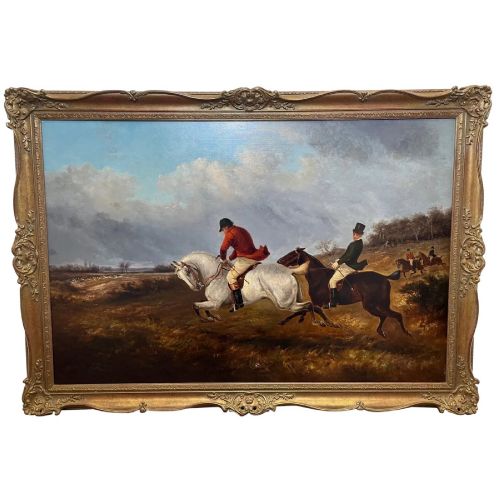
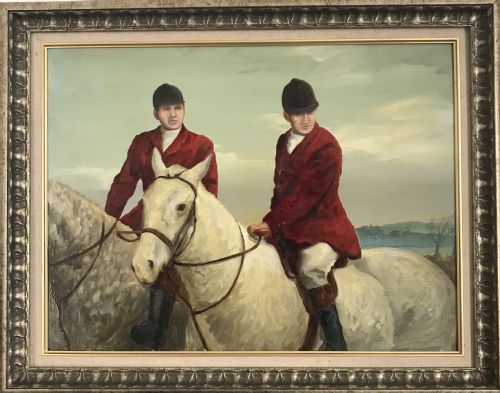
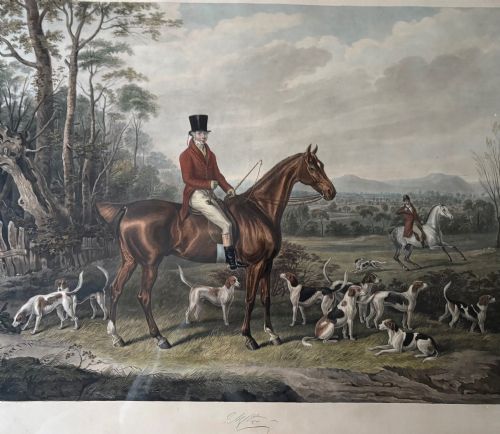
Vintage hunting horse artwork spans depictions of riders, hounds, and stable scenes executed across the nineteenth and twentieth centuries. Buyers examine framed prints, hand-coloured engravings and original paintings created within British sporting art traditions. The selection ranges from nineteenth-century oil paintings on canvas to early twentieth-century prints by named military and sporting artists.
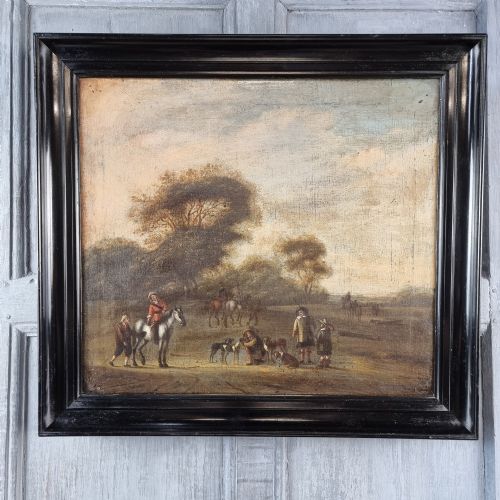
Oil paintings on canvas and panel dominate the earlier periods, often housed in heavy gilt wood frames that reflect the tastes of Victorian and Edwardian collectors. Original watercolours and pencil drawings appear alongside lithographs and printed Christmas cards issued by well-known illustrators. Many subjects record specific packs, huntsmen, and named horses across English landscapes.
Materials and Technique
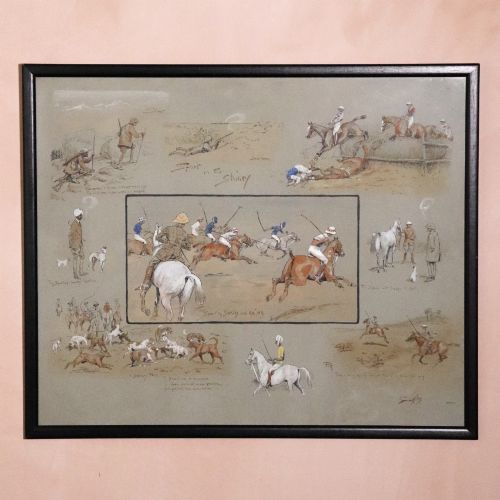
Artists relied upon oil paint applied to canvas or wood panels to build rich layers of colour for the horses and coats. Watercolour and chalk on paper served for lighter compositions and preliminary hunting drawings, frequently finished with ink or gum arabic to heighten detail. Engravings and prints utilised paper bases, with hand colouring applied via watercolour washes after the ink transfer.
Framing forms an integral part of the physical object, employing wood and gilt wood mouldings designed to protect and display the work. Glass covers works on paper, such as watercolours and original prints, safeguarding the delicate pigments from atmospheric moisture and dust.
Periods represented span from the seventeenth century through to the 1960s.
Distinctions in Execution
Quality rests upon the artist's anatomical command of horses and hounds, distinguishing rigid postures from the convincing weight and movement of animals at full gallop. Hand-painted oils and original watercolours display a direct touch from the maker, whereas mass-produced prints rely on mechanical dot patterns or flat lithographic plates.
The integration of the landscape with the figures separates competent illustration from masterwork composition. Finer works capture atmospheric conditions like grey light or mud on coats through varied brushwork, while lesser pieces depend on formulaic backgrounds and repetitive foliage.
Thomas Smythe·Basil Nightingale·Philip Henry Rideout·Michael Lyne·John Sanderson-Wells·Charles Johnson Payne Snaffles·William J Hodgson·H. Alken·J F Herring·Frank Algernon Stewart
The Vintage Hunting Horse Artwork Glossary
- Sporting Art
- A genre of painting and illustration dedicated to equestrian pursuits, hunting, shooting, and racing. These works record the landscape and animals associated with rural field sports.
- Aquatint
- A printmaking technique that produces tonal areas resembling watercolour washes. It was frequently used in tandem with etching to create multi-plate hunting prints.
- Chromolithograph
- A colour lithographic printing process using multiple stones or plates. This method allowed publishers to reproduce the rich hues of original oil paintings and watercolours for a wider market.
- Gilt Wood
- Wood carved and coated with a thin layer of gold leaf or metallic paint. It frames many traditional British sporting oils and watercolours.
Vintage Hunting Horse Artwork: Frequently Asked Questions
What periods do these pieces cover?
The works span from the late seventeenth century through the Victorian and Edwardian eras into the mid-twentieth century. Most examples cluster in the nineteenth and early twentieth centuries.
Creators utilised oil, watercolour, and printmaking techniques typical of British sporting art traditions across these decades. Styles shift from formal nineteenth-century canvases to characterful twentieth-century prints.
How do I identify an original print from a reproduction?
Original prints from this era often feature signatures, publisher details, and plate marks indented into the paper by the printing press. Magnification reveals the distinct lines of hand-engraving or lithographic stones rather than modern dot matrices.
Many bear the specific blind stamps or pencil signatures of the artist. Watercolours and oils show direct brushwork and pigment texture under close examination.
How should I display antique hunting artwork?
Pieces executed on paper, including watercolours and prints, require protection from direct sunlight to prevent fading. Traditional gilt wood frames benefit from stable indoor humidity away from direct heat sources.
Wall placement should accommodate the substantial scale of many oil paintings and framed sets. Secure hanging hardware suited to heavy wooden frames ensures safe mounting.
What subjects appear most often in these scenes?
Fox hunting scenes dominate the selection, showing riders in red or black coats following packs of hounds across open countryside. Compositions capture moments from the meet, the full cry, and portraiture of named hunters.
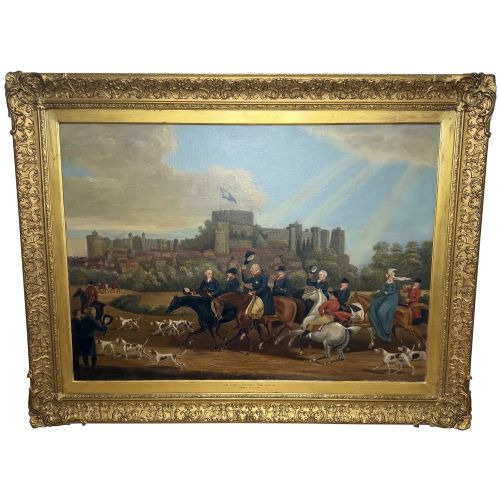
Other works depict historical royal hunts, military figures, and rural landscape studies with horses. The focus remains on equestrian action and traditional rural pursuits.