
Traditional Spindle Chairs
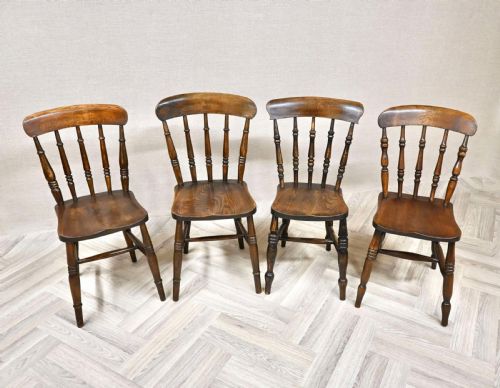
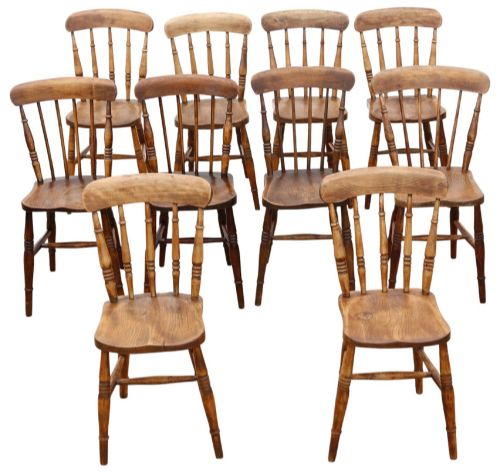
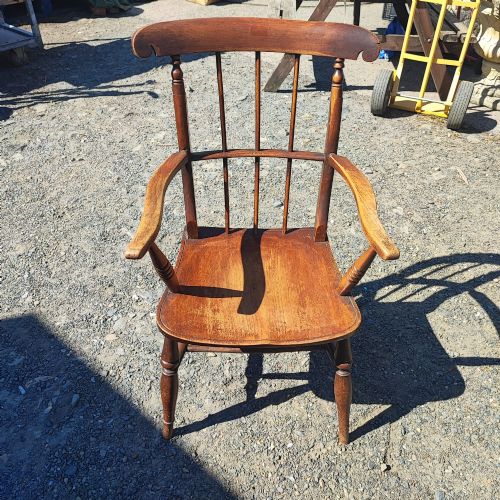
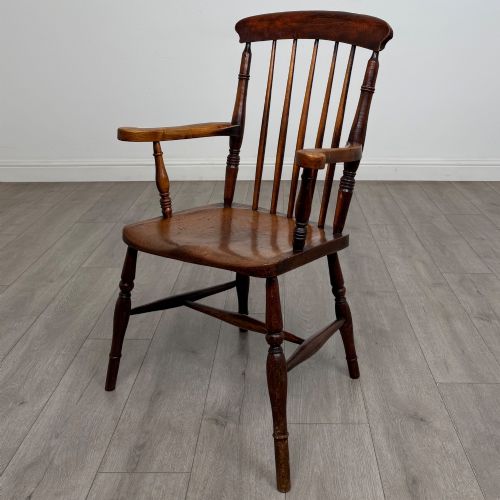
Traditional spindle chairs offer rustic charm and sturdy vernacular seating, ranging from simple kitchen dining sets to high hoop-back armchairs.
Traditional Spindle Chairs
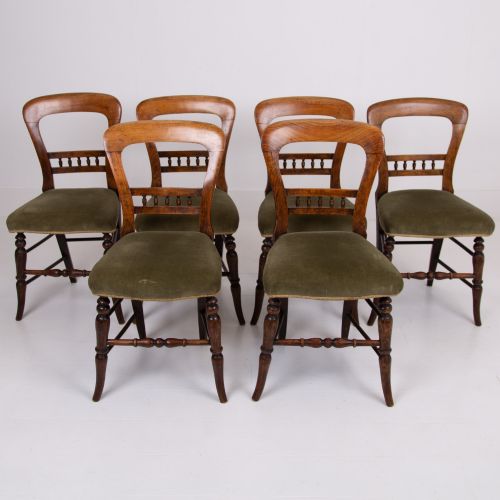
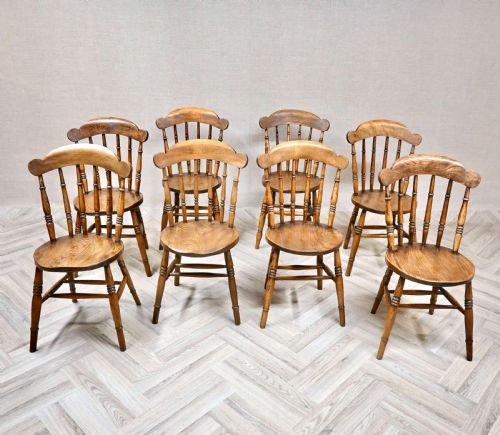
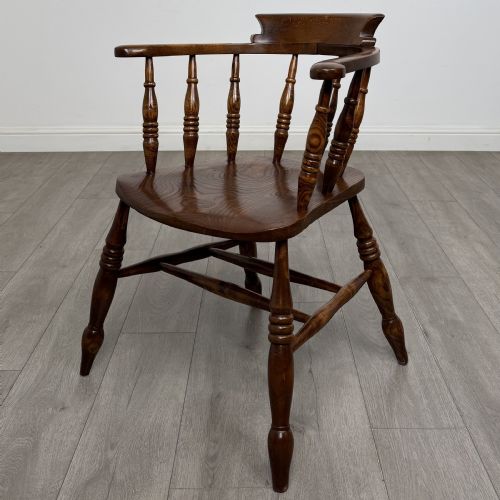
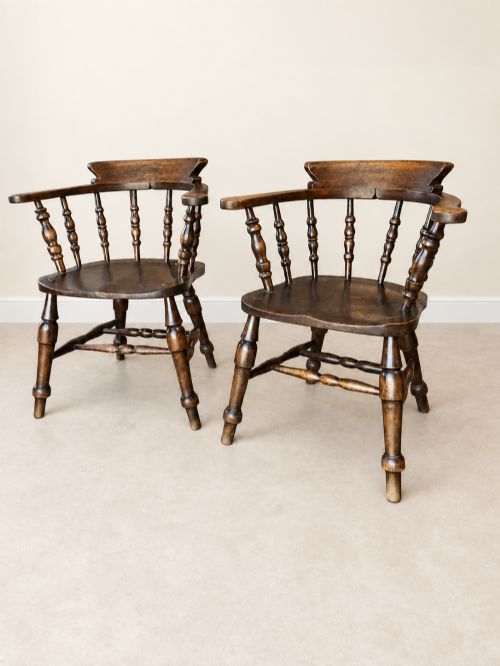
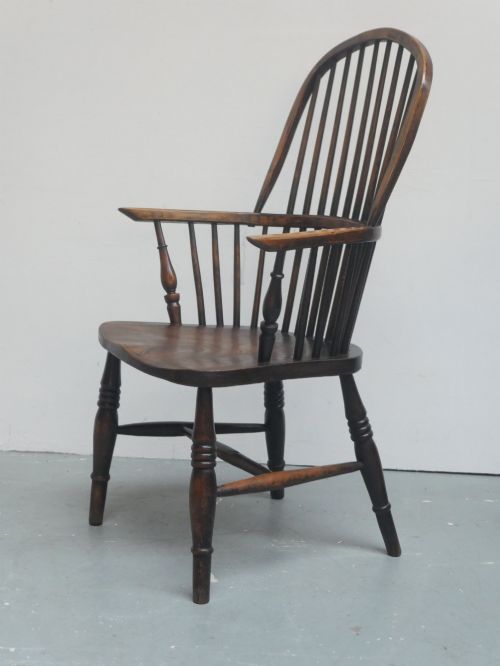
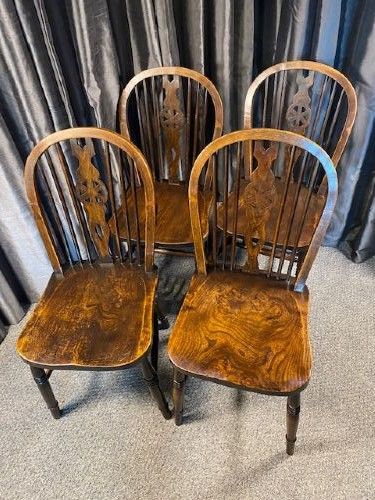
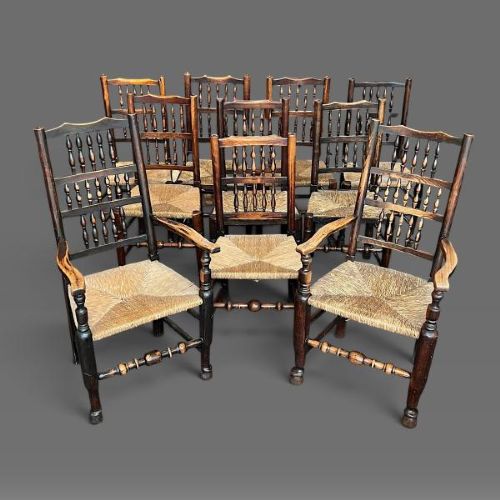
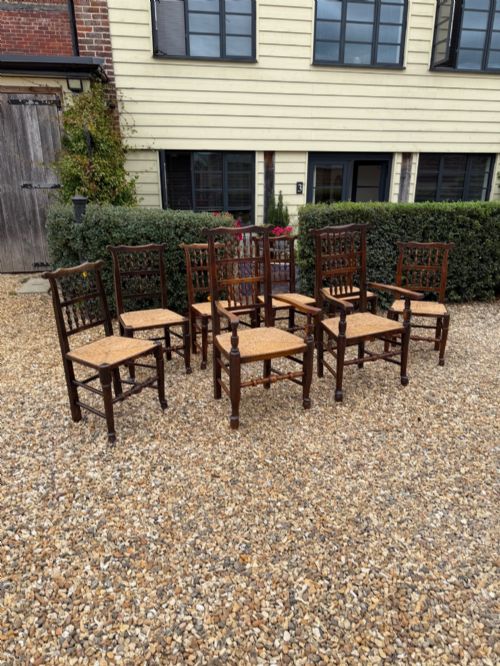
The selection ranges from single armchairs, desk chairs, and rocking chairs to matching sets of dining chairs and harlequin groupings. Forms include comb backs, stick backs, and captains' chairs, often originating from regional traditions such as the Thames Valley, the West Country, or Yorkshire.
Makers utilised a mix of woods to suit different structural demands, resulting in chairs that served practical roles in farmhouses, offices, and country homes. Today, these pieces provide functional seating with distinct historical character and varied regional silhouettes.
How they were made
Traditional spindle chairs rely heavily on timber combinations tailored to the structural needs of the frame, commonly pairing elm seats with ash, beech, or oak spindles and legs. Elm provides a tough, interlocking grain suitable for solid plank seats that resist splitting under stress, while ash and beech offer flexibility and strength for steam-bent bows and slender turned spindles.
Turnery techniques dictate the appearance of the uprights and legs, utilising lathes to shape structural components such as bobbin frames and crinoline stretchers. Cabinetmakers and regional bodgers assembled these parts using traditional wedged mortise and tenon joints, creating rigid, resilient frames without relying on metal fasteners.
Some nineteenth-century makers stamped their work directly into the elm seat, leaving a quiet maker mark for future generations to find.
What varies in quality
Quality in traditional spindle chairs rests largely on the harmony of timber selection, the crispness of the turnery, and the integrity of the original construction. Chairs built with well-matched native woods like elm and ash, possessing deep patination and minimal replacement parts, sit at the upper end of the scale.
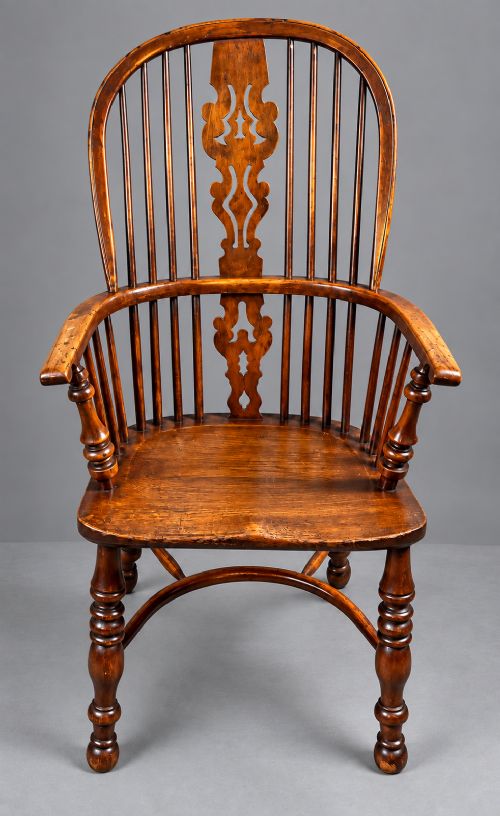
Proportion and regional detailing further distinguish superior examples, such as those featuring high hoop backs, crinoline stretchers, or stamped maker marks. Heavy alterations, mismatched harlequin sets, or heavily replaced components reduce the uniformity and historical coherence of a piece.
Philip Webb·J Spencer
The Traditional Spindle Chairs Glossary
- Windsor chair
- A wooden chair constructed with a solid plank seat into which the legs and back spindles are separately bored and wedged. These chairs frequently feature bow backs and sculpted seats for comfort.
- Smoker's bow
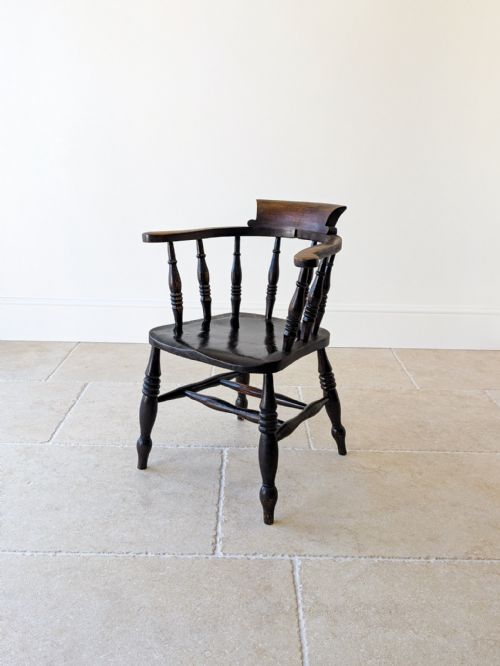
- A low-backed Windsor armchair with a continuous curved arm rail supported by short spindles, commonly used in nineteenth-century smoking rooms and country kitchens.
- Crinoline stretcher
- An arched under-stretcher connecting the legs of a Windsor chair in a continuous loop, providing additional lateral stability to the frame.
- Harlequin set
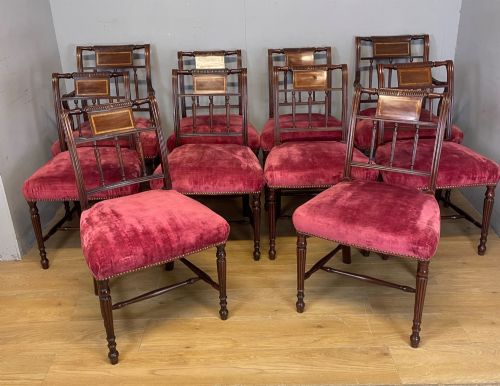
- A collection of chairs that share similar periods, styles, or materials but were not originally manufactured as a single matching set. These sets offer a collected appearance for dining tables.
- Turners chair
- A heavy chair constructed entirely of turned wooden spindles and posts, following seventeenth-century vernacular traditions using oak or ash.
Traditional Spindle Chairs: Frequently Asked Questions
How do I identify an eighteenth century windsor chair?
Eighteenth century Windsor chairs typically display high comb backs or hoop backs with generous proportions, constructed from native elm and ash.
They often exhibit vernacular regional traits, deep surface patination, and robust, pegged joinery characteristic of early country craftsmanship.
Are harlequin sets suitable for daily dining?
Harlequin sets consist of individual chairs sharing similar nineteenth-century vernacular styles, periods, and materials, making them practical for dining tables.
They provide a cohesive country aesthetic while allowing buyers to assemble a functional group of sturdy wooden seating.
What wood was used for chair seats?
Elm was the preferred timber for solid chair seats due to its interlocking grain, which prevented splitting when multiple holes were bored for legs and spindles.
Makers paired these solid seats with ash or beech for the turned uprights and bentwood components.