


Traditional Side Table with Drawers
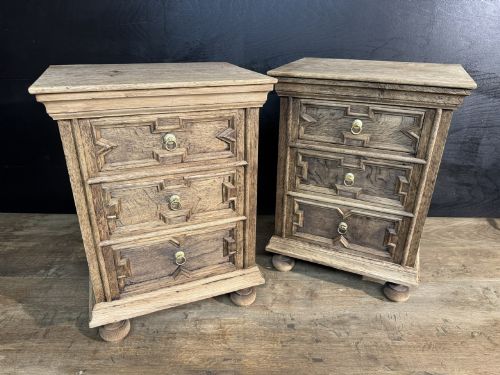
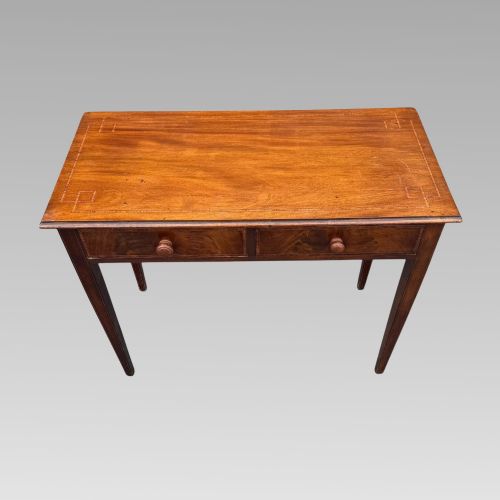
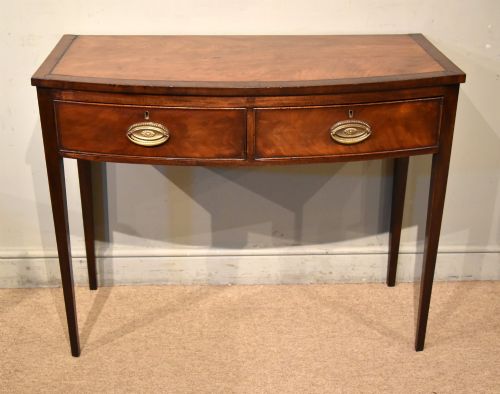
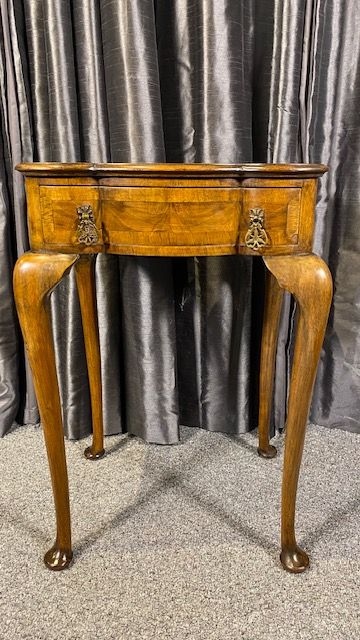
A traditional side table with drawers offers neat domestic storage, and the examples gathered here span centuries of timber craftsmanship.
Traditional Side Table with Drawers
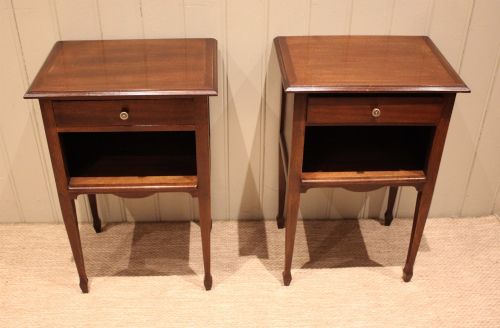
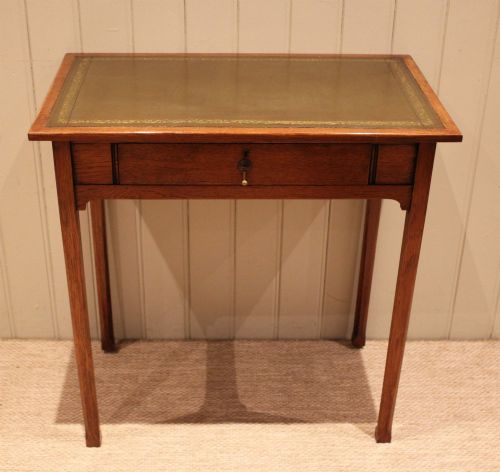
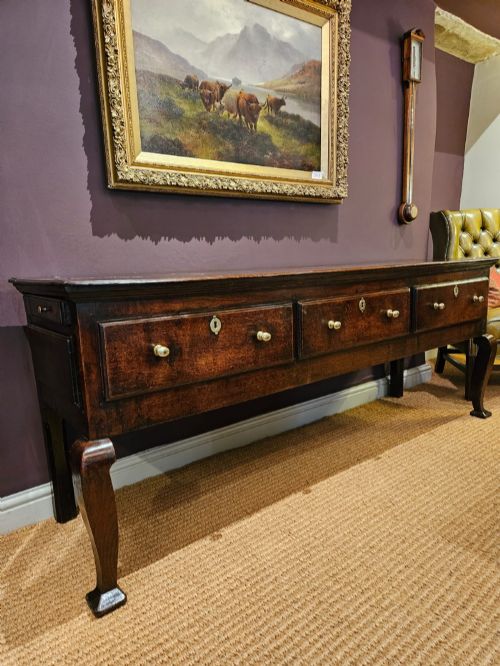
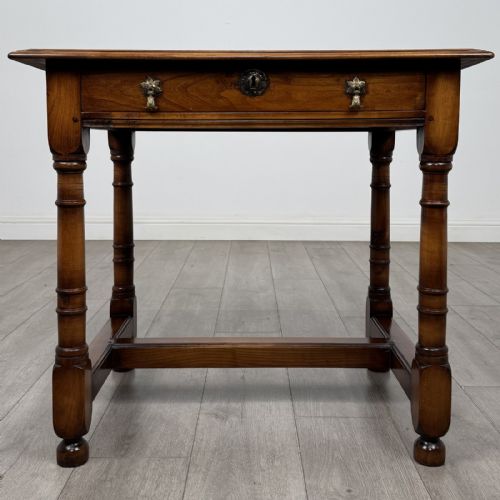
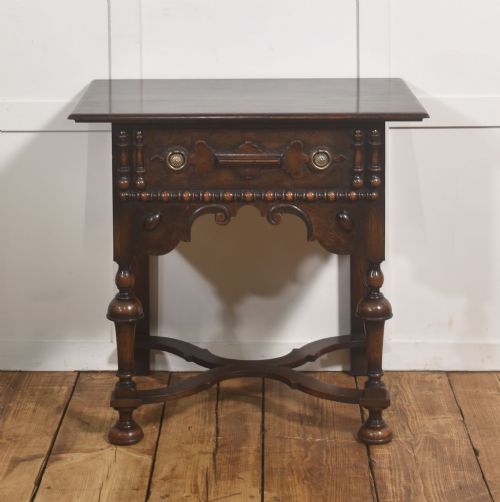
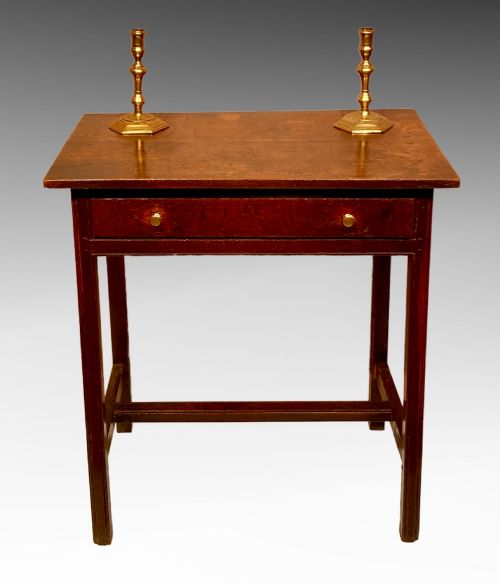
A traditional side table with drawers is a functional domestic piece designed to stand against a wall or beside seating, providing surface space alongside enclosed storage. The selection spans utilitarian farmhouse tables, elegant writing desks, and console pieces produced across the Georgian, Victorian, and Edwardian eras.
Oak and mahogany dominate the offerings, appearing alongside pine, burr walnut, and elm. These timbers take the form of side tables, desks, writing tables, and console tables, ranging from narrow Edwardian designs to substantial country house examples.
Materials and Construction
Cabinet makers utilised solid hardwoods such as mahogany and oak alongside softer timbers like pine and elm for utility furniture. Drawer construction typically involves hand-cut joints, while hardware includes brass handles and fitted locks appropriate to the period.
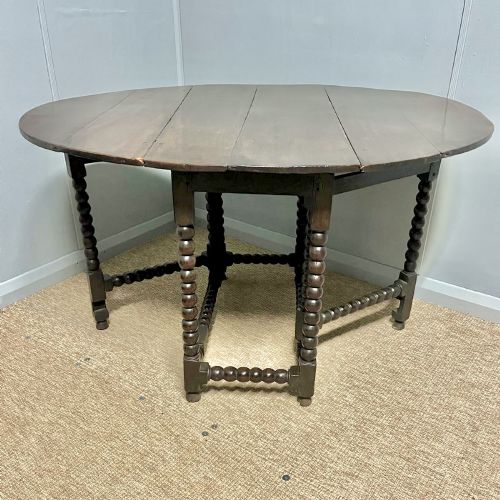
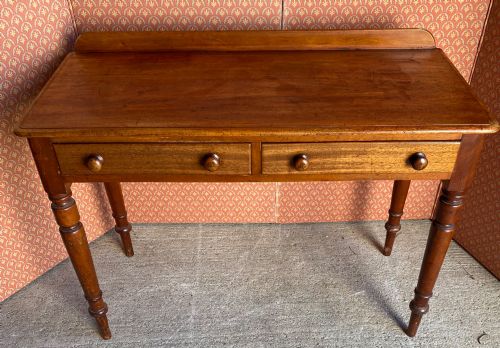
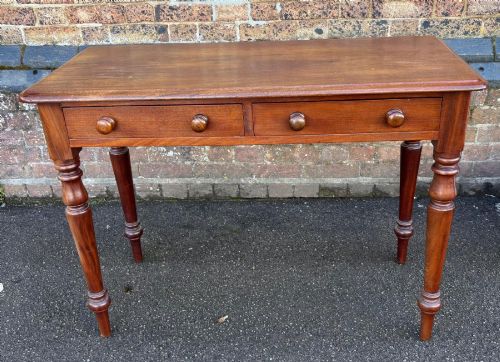
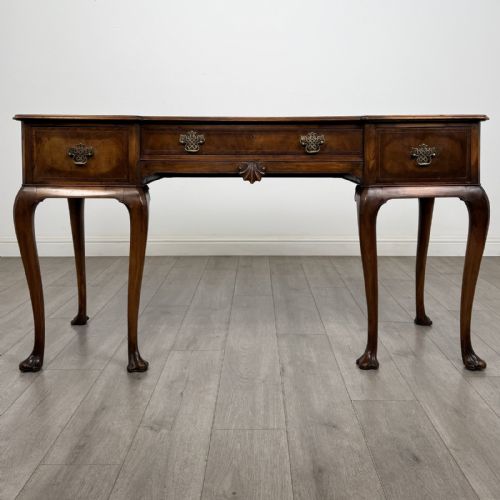
Turned legs, barley twist supports, and carved details distinguish the decorative styles, from Jacobean Revival to Queen Anne Revival and Regency. Painted finishes also appear on vernacular pine and dairy tables.
Traditional Side Table with Drawers Retail Price Guide 2026
Typical asking prices for traditional side table with drawers among the pieces listed under this phrase on Sellingantiques today, from the lower quarter to the upper quarter. They describe what is for sale here now, not the wider market.
The listings span multiple centuries, capturing Georgian, Victorian, and Edwardian periods in oak, mahogany, pine, and walnut.
Judging the Workmanship
The distinction between standard utility pieces and finer examples rests on the selection of timber figures, such as burr walnut or figured mahogany, and the precision of the joinery. Crisp carving and well-proportioned turned legs elevate a standard side table into a distinguished piece.
Original hardware, sound drawer movement, and untouched timber patination mark the better survivals from periods where craftsmanship prioritized both utility and refined appearance.
J A Mein Edinburgh Cabinet Maker
The Traditional Side Table with Drawers Glossary
- Lowboy
- A traditional English low-standing table with one or more rows of drawers, commonly produced in the Georgian period. It often served as a dressing table or writing desk.
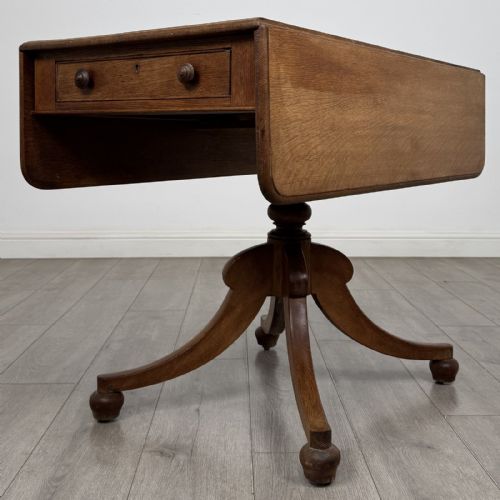
- Pembroke table
- A drop-leaf table featuring hinged flaps on either side and typically a single drawer. This form allows the surface area to expand when needed.
- Console table
- A table designed to fix or stand flat against a wall, frequently used in hallways or reception rooms. These pieces often feature decorative front legs and balanced proportions.
- Barley twist
- A type of turned furniture leg resembling a spiral rope. This decorative woodworking technique appears frequently on 19th-century oak and mahogany tables.
- Patina
- The surface sheen and colour developed by wood over decades of handling, polishing, and exposure to light. Unaltered patination is valued by collectors.
Traditional Side Table with Drawers: Frequently Asked Questions
What is a traditional side table with drawers?
These pieces are compact tables featuring one or more built-in drawers, designed for auxiliary surface space and storage in hallways, living rooms, or bedrooms.
They appear in various woods like oak, mahogany, and pine, reflecting the domestic needs of the 18th, 19th, and early 20th centuries.
How do I date an antique side table?
Dating relies on timber selection, construction methods, and stylistic details such as leg turning or hardware. Georgian pieces often show linear mahogany framing, while Victorian examples frequently employ heavier oak or walnut.
Secondary woods inside drawers and tool marks also provide physical clues to the manufacturing decade.
Where should I place a side table with drawers?
These tables suit hallways for correspondence storage, living rooms as lamp tables, or bedrooms as writing desks. Their modest depth allows them to fit into narrow spaces without obstructing movement.
Matching the timber tone to existing room furnishings helps integrate the piece smoothly.
Are these tables suitable for daily use?
Solid construction in hardwoods like oak and mahogany ensures these tables withstand regular domestic service. Drawers provide practical containment for small household items.
Routine dusting and occasional wax maintenance keep the historic timber surfaces in good condition.