



Traditional Safety Stand Glider
These traditional safety stand glider models are sturdy wooden children's toys designed for smooth indoor movement across Victorian and twentieth-century nurseries.
Traditional Safety Stand Glider
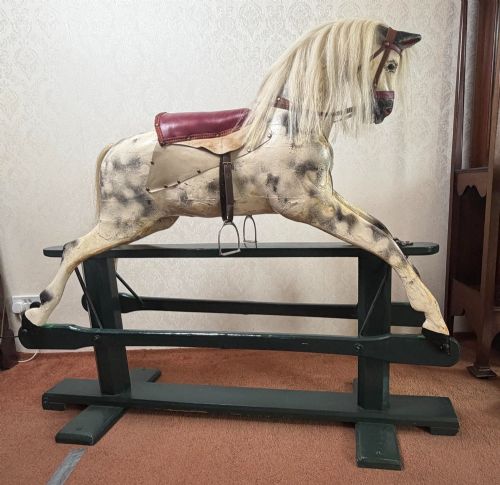
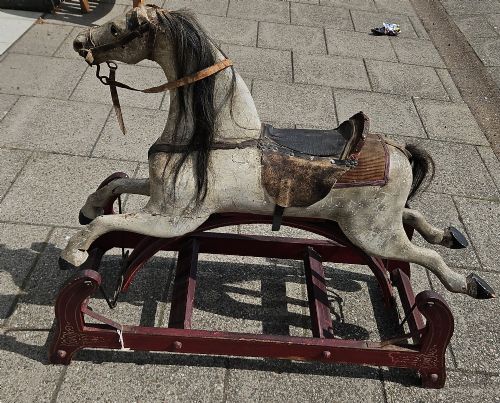
When you search for traditional safety stand glider pieces, you are looking at carved wooden rocking horses dating from the late nineteenth century through to the interwar period and the nineteen-forties. The examples you are most likely to meet on this page span Victorian, Edwardian, and mid-century eras, reflecting generations of children's play.
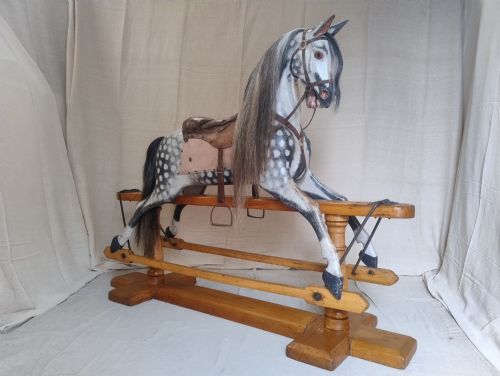
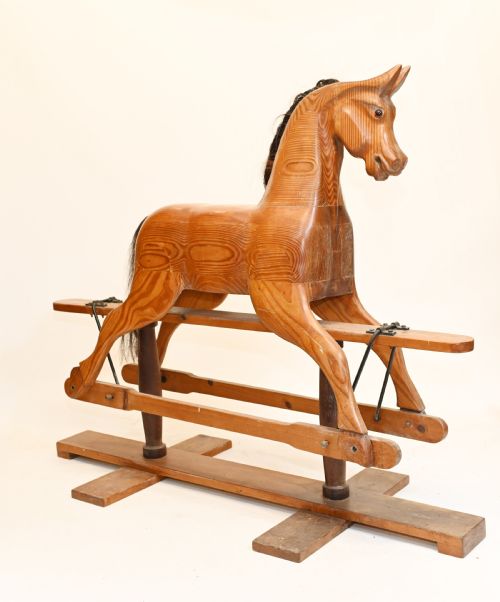
Makers such as F.H. Ayres, Lines Bros, and Collinsons produced these substantial wooden toys, often mounted on fixed stands or traditional rockers. The forms range from large carved pine horses in original paint to dappled finishes utilising genuine horsehair and leather details.
How they were made
Makers carved the primary bodies from wood such as pine, shaping the animals by hand before applying layers of paint and dapple effects. Glass often formed the inset eyes, adding a lifelike gaze to the finished animal.
Artisans secured leather tack, saddles, and horsehair manes to complete the figures. Iron and steel components reinforced the stands and mechanical joints to ensure stability during use.
Listings feature periods spanning from the Victorian era through the nineteen-forties, utilising wood, iron, leather, and glass.
What varies in quality
The survival of original painted surfaces and traditional tack dictates the desirability of a piece. Retaining the authentic stand or rocker frame also distinguishes the better specimens.
F.H. Ayres·Lines Bros·Collinsons
The Traditional Safety Stand Glider Glossary
- Dapple
- The painted grey spotting pattern applied to imitate a specific horse coat. This traditional finish required careful hand painting by workshop artisans.
- Rocking Horse
- A wooden toy carved in the shape of a horse mounted for motion. Children rode these figures indoors across the Victorian and Edwardian periods.
- Pine
- A common softwood used for carving the main body of the toy. This timber provided a sturdy yet manageable medium for nineteenth-century makers.
- Horsehair
- Natural tail and mane hair utilised for realistic trimming. Makers attached this material securely to the carved wooden heads.
- Stand
- The fixed wooden base supporting the moving toy. This frame allowed stable motion without tipping during play.
Traditional Safety Stand Glider: Frequently Asked Questions
What periods do these pieces date from?
The listings span from the late nineteenth century through the Edwardian era and into the interwar period and nineteen-forties. Victorian examples sit alongside nineteen-thirties productions.
Makers active during these decades produced diverse styles, utilising traditional pine and iron components.
What materials were used?
Makers relied primarily on carved wood and pine for the main body. Iron and steel components reinforced the structural stands and interior mechanisms.
Leather and horsehair completed the tack and manes, whilst glass formed the inset eyes.
How do I care for wooden toys?
Keep the pieces away from direct sunlight and damp environments to protect the original painted surfaces. Gentle dusting helps preserve the horsehair and leather elements.
Avoid harsh chemical cleaners that might damage the historic finish or pine wood.