

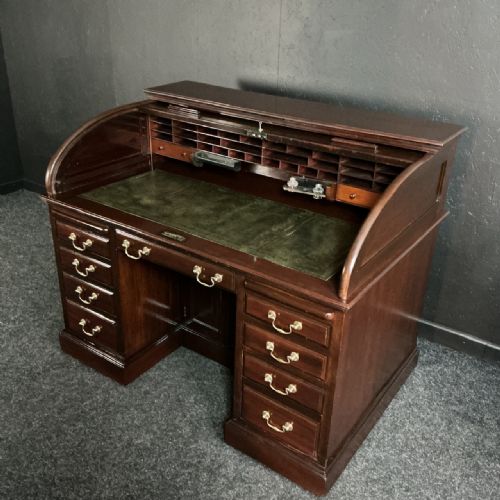


Traditional Roll Top Bureau
A traditional roll top bureau provides a concealed workspace with a slatted or cylindrical shutter.
Traditional Roll Top Bureau
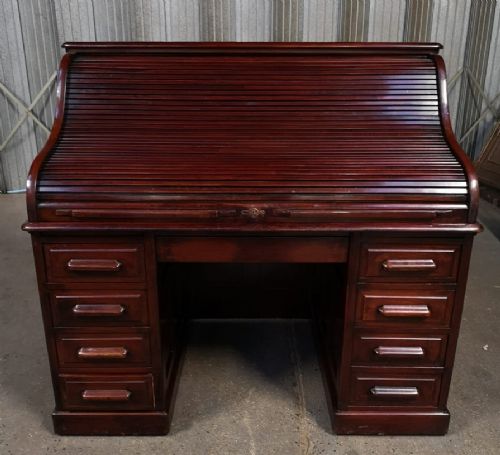
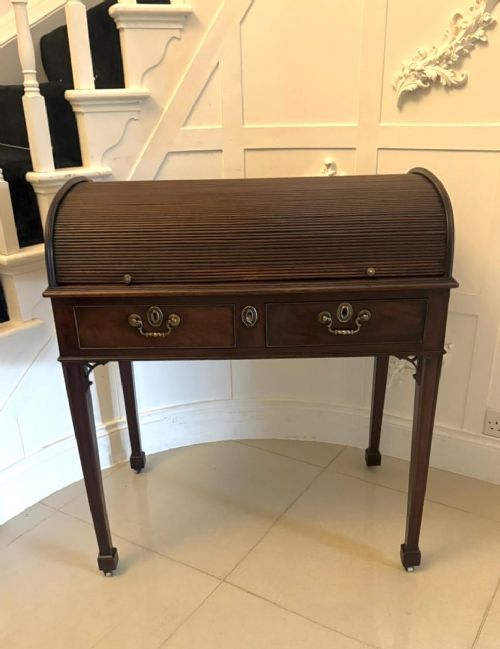
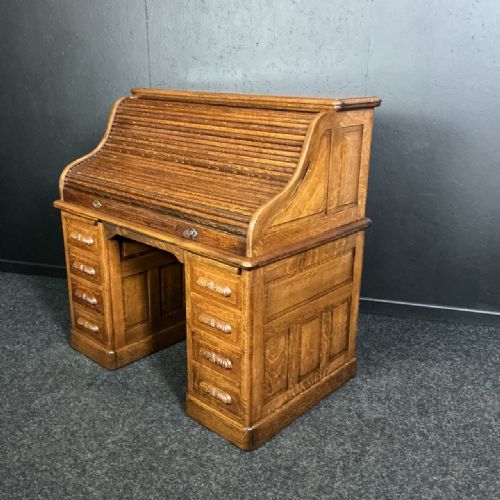
A traditional roll top bureau offers a practical writing station with an enclosed upper compartment for papers and stationery. These pieces range from Georgian cylinder desks to Edwardian and Victorian pedestal examples.
The tambour or cylinder shutter slides down to hide the writing surface and pigeonholes when not in use. Oak and mahogany are the predominant timbers found across these centuries.
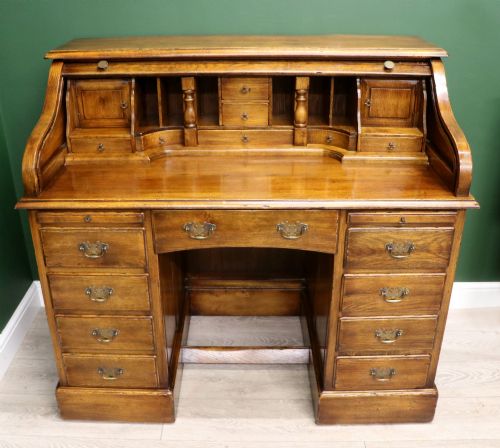
Pedestal formats feature banks of small drawers flanking a central kneehole below the main writing level. Simpler compact variants also appear from the early twentieth century.
How They Were Made
Makers constructed the rolling shutter from narrow wooden slats glued to canvas or fabric backings so the curve operates smoothly along internal tracks. Solid oak and mahogany form the primary carcasses.
Drawer interiors incorporate brass hardware and fitted compartments for inkwells and correspondence. Flame mahogany veneers provide decorative grain patterns on select drawer fronts and writing slides.
Some tambour shutters hide tiny secret drawers behind the pigeonholes, meant for stashing love letters or spare nibs.
What Varies in Quality
The precision of the tambour mechanism dictates the baseline standard of the desk. Slats that glide evenly without binding indicate careful joinery and alignment.
Timber selection and interior complexity distinguish standard production from finer cabinet work. Superior examples feature well-organised internal pigeonholes, secret compartments, and pull-out writing slides.
The Traditional Roll Top Bureau Glossary
- Tambour
- A flexible shutter made of narrow wooden strips attached to a canvas backing. This mechanism slides along a curved track to enclose the desk interior.
- Cylinder Desk
- A form with a smooth, quarter-circle solid rolling lid rather than slatted tambour strips. It serves a similar function to conceal the writing surface.
- Pedestal Desk
- A heavy desk built upon two independent stacks of drawers that support the writing top. These often include internal locking mechanisms tied to the main shutter.
- Flame Mahogany
- A wood veneer cut from the branch forks of the mahogany tree, displaying a distinctive flame-like grain pattern. Cabinet makers used this for visual impact on prominent surfaces.
Traditional Roll Top Bureau: Frequently Asked Questions
How does a tambour top work?
Narrow wooden slats are glued to a flexible canvas backing that runs in recessed grooves along the desk sides. This allows the shutter to follow a curved path around the compartment.
When pushed upwards or backwards, the slats disappear into the body of the desk to reveal the writing surface and interior pigeonholes.
What is the difference between a cylinder desk and a roll top?
A cylinder desk uses a solid curved piece of wood that rotates on a pivot to open and close. Georgian examples often follow this single-piece curved construction.
A traditional roll top utilises multiple small slats joined together, giving it a ribbed appearance as it follows the track around the upper cabinet.
How do I care for the leather writing surface?
Many desks feature inset leather panels on the pull-out slides or main writing surfaces. Keep these surfaces away from direct sunlight and excessive moisture to prevent drying and cracking.
Treat the leather periodically with a suitable conditioning balm to maintain its suppleness and colour over time.
Are these desks suitable for modern home offices?
The enclosed compartments provide convenient storage to conceal laptops, papers, and modern stationery when the working day ends. The compact Edwardian and oak pedestal versions fit well into domestic study spaces.
Ensure you measure the chair clearance beneath the kneehole before pairing it with modern seating.