
Traditional Regency Carver Seating
Traditional regency carver seating brings architectural line and generous arm support to a dining table.
Traditional Regency Carver Seating
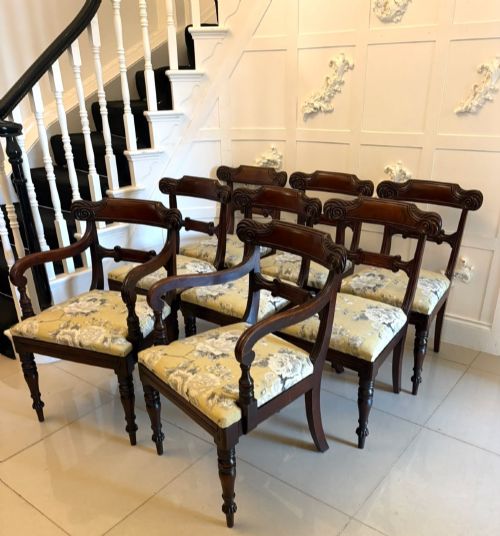
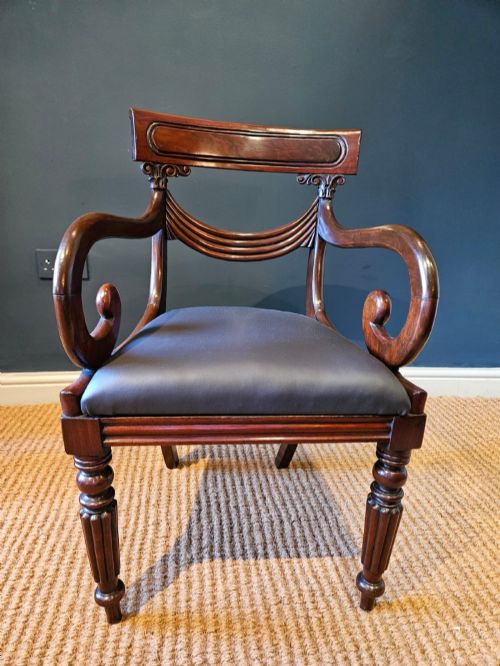
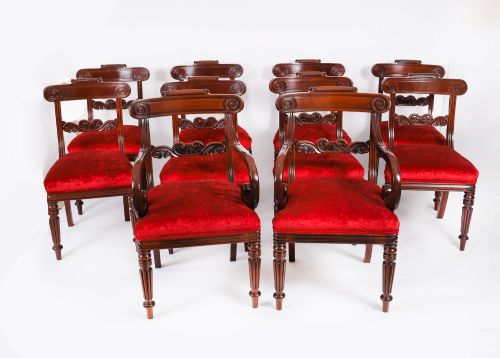
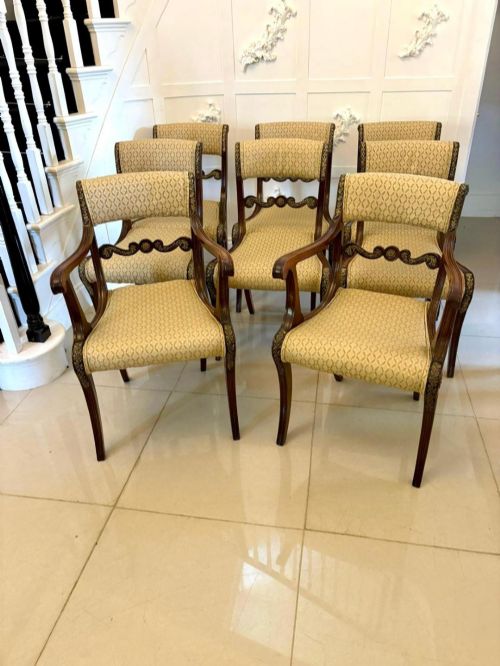
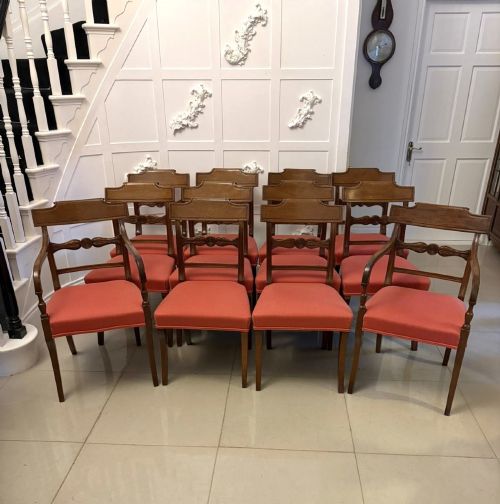
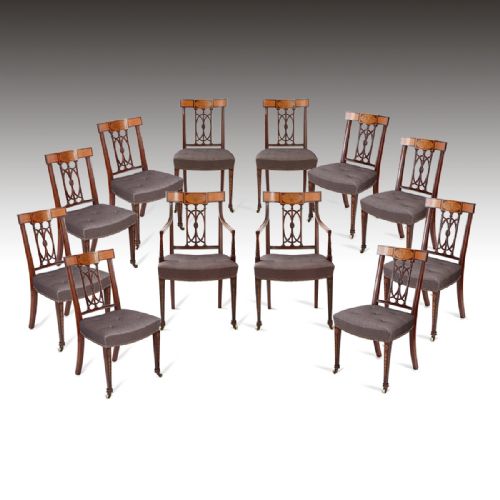
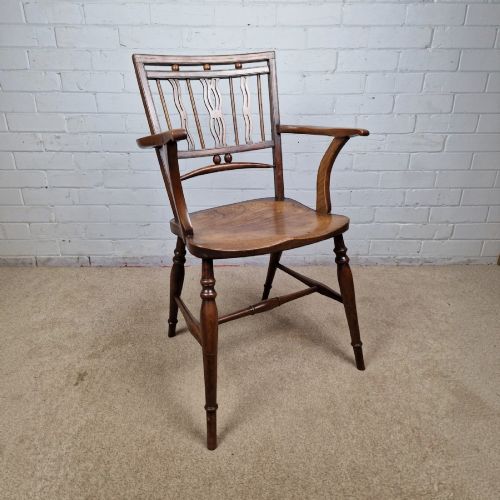
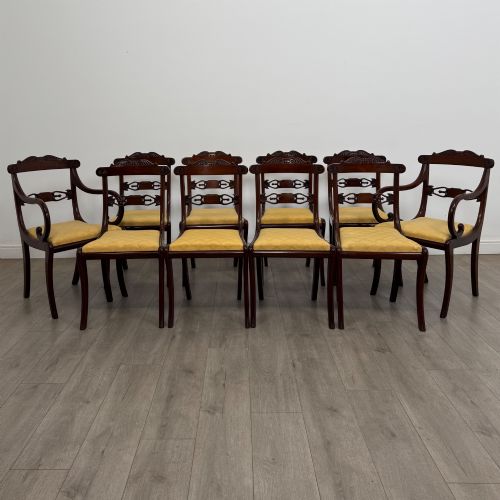
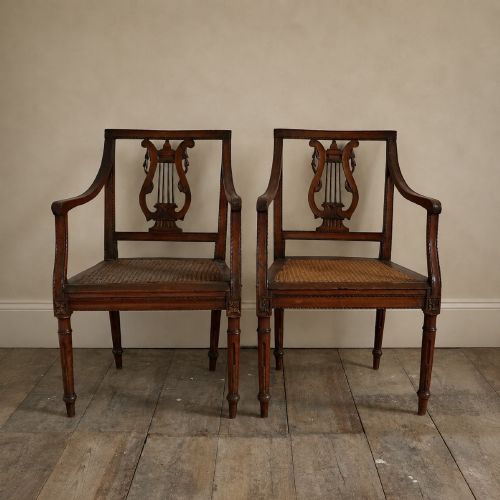
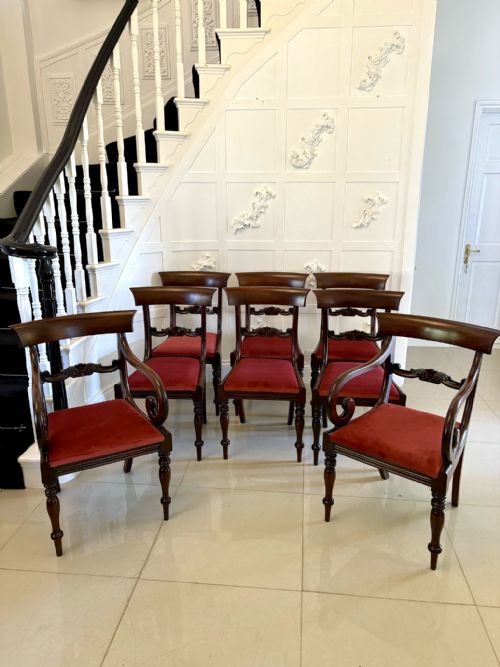
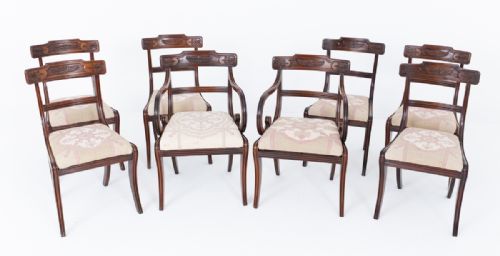
Traditional regency carver seating covers elbow chairs, armchairs, and desk chairs designed with the distinctive upright proportions and classical detailing of the early nineteenth century. Buyers encounter single armchairs, matched pairs, and larger carvers forming part of wider dining sets originating across the Georgian, Regency, and William IV periods, alongside later revival pieces.
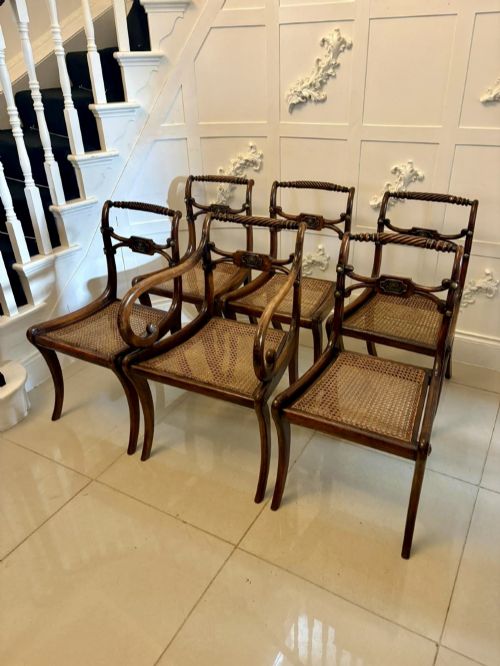
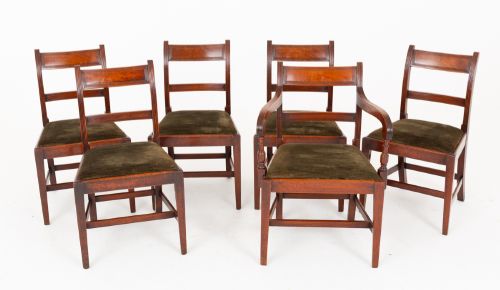
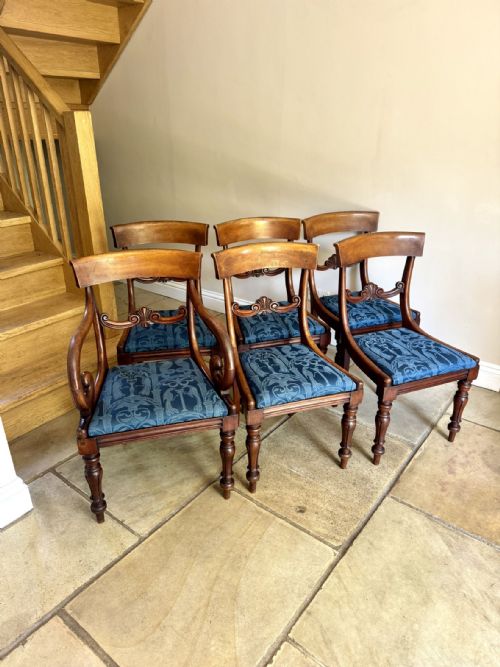
The dominant material visible across these listings is solid mahogany, frequently shaped into curved top rails, bar backs, and lyre motifs, though regional elm and satinwood variants also appear. Seats span woven cane, drop-in pads, and upholstered surfaces finished in fabric, velvet, leather, or textile.
Construction and materials
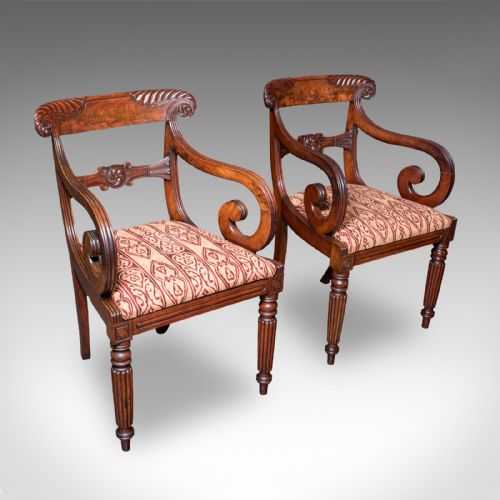
Cabinet makers constructed traditional regency carver seating primarily from dense timbers such as mahogany, elm, and satinwood, joined with traditional framing techniques to withstand the daily strain placed upon arm supports and legs. Turned or sabre legs provide stability, while carved crest rails and brass inlay or studding demonstrate the hand-finishing standard of the period.
Upholstered elements rely on traditional stuffing methods for drop-in and fixed seats, paired with natural materials like leather, velvet, and woven cane panels. These surfaces are secured with traditional brass tacks or textile borders that match the formal character of the woodwork.
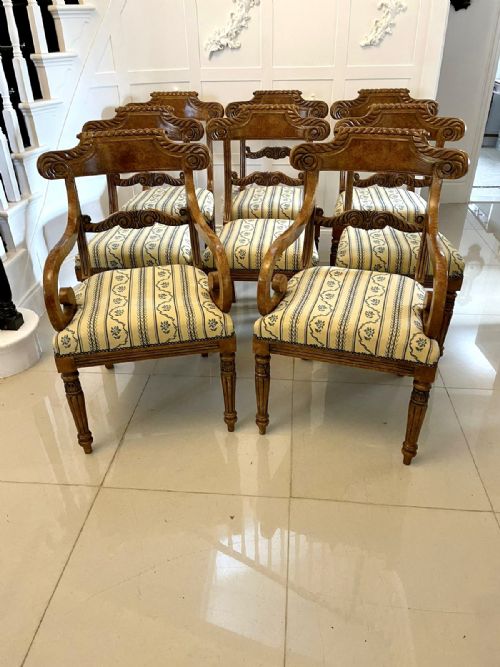
Faux birds eye maple shows that Regency tastes enjoyed a clever painted trick just as much as solid timber.
Judging the standard
Quality in traditional regency carver seating rests on the crispness of the timber carving, the integrity of the joinery at the arm joints, and the selection of well-figured wood. Pieces showing refined proportions, subtle brass inlay, and original surface patination stand apart from plainer provincial examples or later reproductions.
The degree of hand-crafting in the curved backrests and the structural rigidity of the arm attachments dictate the longevity and overall finish of each chair. Higher-grade examples maintain balanced symmetry across matching sets or pairs, preserving both their structural coherence and period detail.
The Traditional Regency Carver Seating Glossary
- Carver chair
- An armchair designed specifically to sit at the head or foot of a dining table, featuring supportive armrests.
- Bar back
- A horizontal wooden slat forming the upper portion of the chair back, frequently curved to fit the spine.
- Cane seat
- A seating surface woven from rattan or cane strips, providing a light and resilient platform.
- Lyre back
- A central splat shaped in the symmetrical outline of a classical lyre instrument.
- Drop-in seat
- A removable upholstered wooden frame that drops into a rebate within the chair seat rails.
Traditional Regency Carver Seating: Frequently Asked Questions
What defines a carver chair?
A carver chair is an armchair built with proportions suited for dining use, historically placed at the head of a table.
These seats include armrests to provide added comfort while maintaining a formal profile that matches surrounding single chairs.
How do I care for cane seats?
Cane seats require gentle cleaning with a damp cloth to maintain moisture in the natural fibres and prevent snapping.
Keeping these chairs away from direct heat sources ensures the woven material stays taut and functional over time.
Are these chairs suitable for daily use?
These chairs are structurally robust thanks to dense hardwood construction and traditional joinery methods built for regular dining.
Routine checks of the leg joints and arm attachments help preserve their stability in active modern settings.
How do I spot a revival piece?
Revival pieces often display machine-cut precision and cleaner timber surfaces that lack the varied patination of early nineteenth-century work.
Examining the construction marks and the ageing of the wood helps distinguish original period items from later Edwardian or twentieth-century copies.