
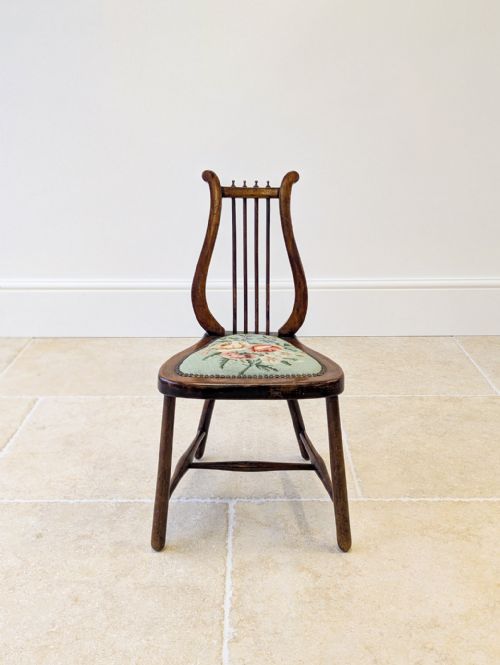


Antique Lyre Back Seat
These antique lyre back seat designs bring classical symmetry to a room, offering graceful scrolling supports shaped like ancient Greek instruments.
Antique Lyre Back Seat
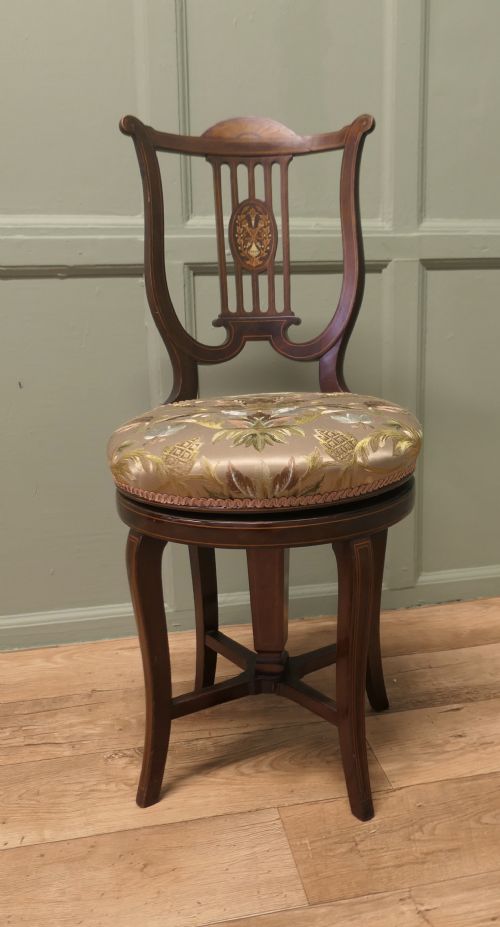
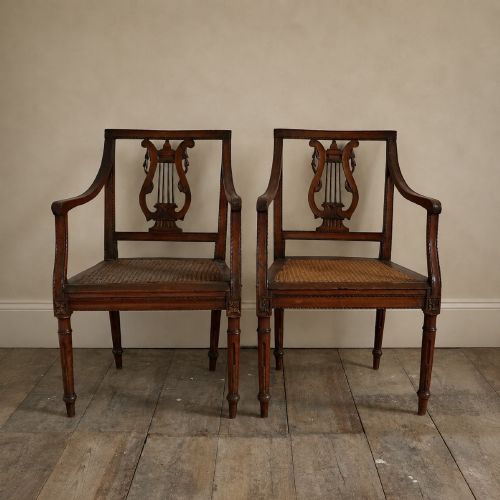
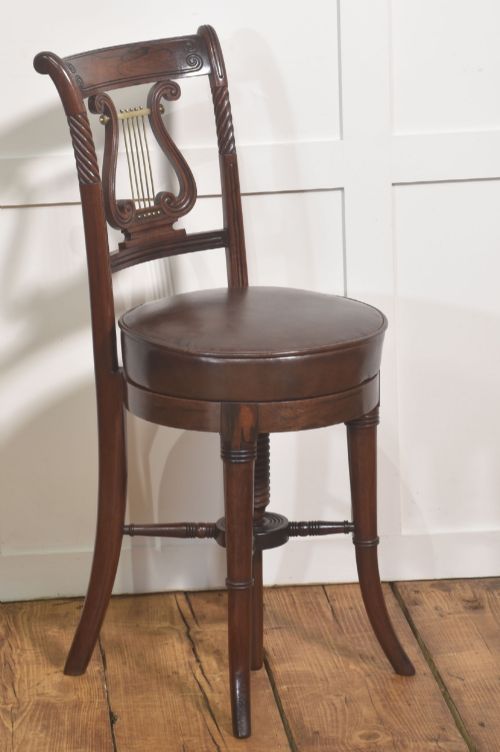
An antique lyre back seat combines structural woodwork with the distinctive openwork profile of a musical lyre incorporated into the central splat. Buyers searching for an antique lyre back seat will encounter varied forms ranging from parlour armchairs and revolving music stools to side chairs.
The selections span distinct periods including Regency, Victorian, and Edwardian eras, alongside revival iterations influenced by Sheraton and Neoclassical tastes. Mahogany and beech frequently form the primary framework, often accompanied by upholstered seats in leather, fabric, or tapestry.
Pieces emerge in configurations suitable for studies, music rooms, and drawing rooms, demonstrating how makers adapted the classical motif across different seating typologies. The central lyre motif remains the defining identifier across these diverse historical periods and timber selections.
Materials and construction methods
Cabinetmakers constructed the characteristic lyre splats using solid hardwoods like mahogany, beech, and walnut, often shaping the intricate curves with hand saws and rasps. Giltwood and brass accents appear on finer examples, adding decorative contrast to the timber frames.
Joinery techniques relied on mortise and tenon joints to secure the backrest and legs, ensuring stability under regular use. Upholstered elements utilised traditional stuffing materials secured over webbing, paired with fabric, leather, or needlepoint coverings.
Listings feature items spanning the Regency, Victorian, and Edwardian periods, constructed in mahogany, beech, walnut, and giltwood.
Markers of quality and craftsmanship
The crispness of the carving on the lyre scrolls distinguishes standard production from superior craftsmanship, where hand-rendered details reveal greater depth and precision. Timber selection also dictates grade, with dense, well-figured mahogany or walnut indicating higher workshop standards than utility beech.
Structural integrity depends on the tightness of the original joints and the preservation of the carved splat without unskilful past repairs. Retaining original upholstery methods or period-appropriate coverings adds to the integrity of surviving examples.
The Antique Lyre Back Seat Glossary
- Lyre back
- A chair back featuring an openwork splat shaped like a musical lyre. This classical motif draws inspiration from ancient Greek instrument designs.
- Regency
- A British design period spanning the early nineteenth century. It is characterised by a strong revival of classical Greek, Roman, and Egyptian motifs.
- Splati
- The vertical central strip of wood down the middle of a chair back. It connects the top rail to the seat and often bears decorative carving.
- Giltwood
- Timber treated with gold leaf or gold paint to simulate solid gold. This finish frequently appears on neoclassical and revival seating frames.
- Bergere
- An enclosed upholstered armchair with wooden framing and cane or upholstered sides. It typically includes a loose cushion for the seat.
Antique Lyre Back Seat: Frequently Asked Questions
What periods do lyre back seats come from?
These seats appear across the nineteenth and early twentieth centuries, encompassing Regency originals alongside Victorian and Edwardian revivals.
Craftsmen recreated the classical lyre motif across these successive eras, adapting the proportions to suit changing domestic fashions.
Where were lyre back seats used in the home?
They served multiple functions in period interiors, appearing as parlour chairs, music stools for pianists and cellists, and desk or dressing table seats.
Revolving variants catered specifically to musicians and writers who required mobility while seated at their instruments or desks.
How do I identify a Regency lyre back seat?
Regency examples typically feature dense mahogany timbers with crisp, classical proportions influenced by ancient Greek and Roman archaeology.
Later Edwardian and Victorian versions often display lighter timbers like beech or walnut alongside stylistic revivals of earlier neoclassical designs.
Are music chairs different from standard side chairs?
Music chairs often incorporate swivel mechanisms or adjustable heights to accommodate performers playing instruments like the harp, cello, or piano.
Their frames are engineered to support movement while retaining the decorative lyre backrest found on stationary seating.