
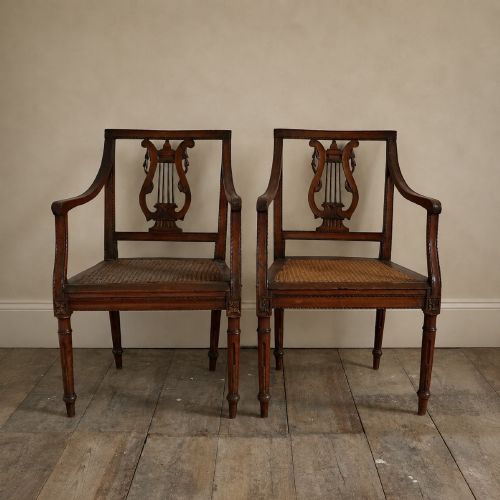
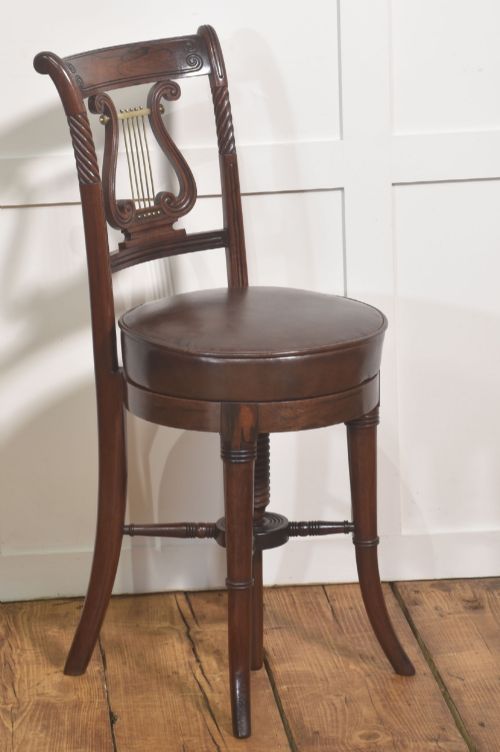


Mahogany Lyre Back Chairs
Mahogany lyre back chairs bring classical music motifs into sitting rooms and studies through timber frames carved into the distinct shape of the ancient instrument.
Mahogany Lyre Back Chairs
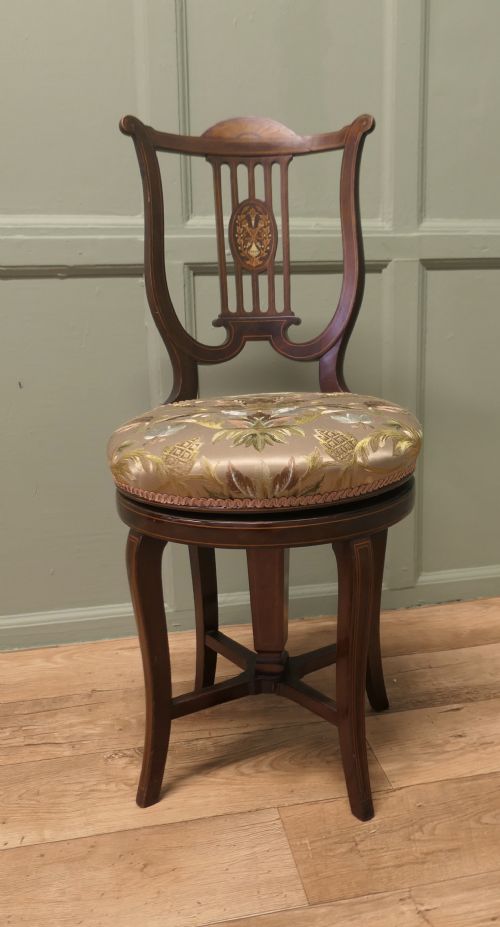
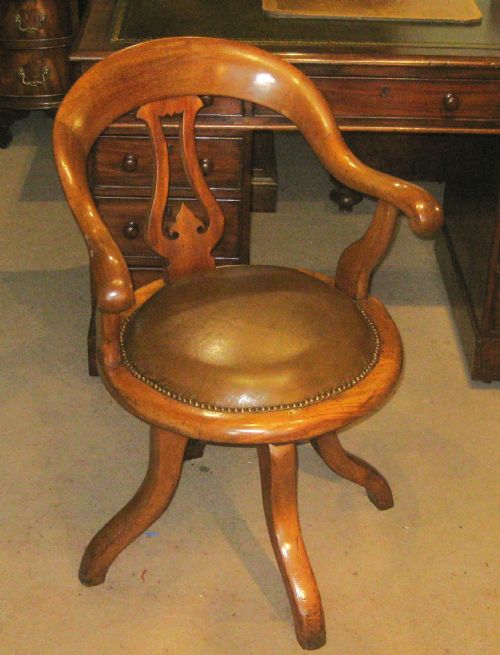
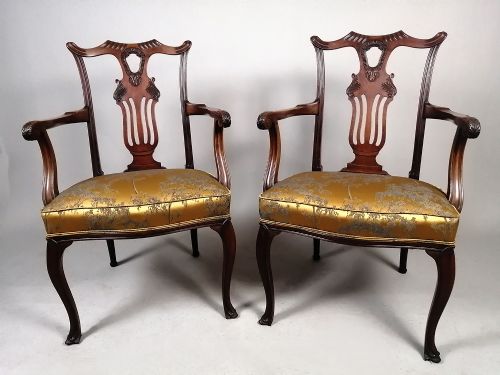
Mahogany lyre back chairs encompass seating forms designed with a central splat shaped like an ancient stringed instrument, appearing primarily across the nineteenth century and early twentieth century. These pieces emerge in styles ranging from Regency and William IV to Sheraton Revival and Hepplewhite style interpretations. Buyers encounter diverse seating types built around this central musical motif, including dining chairs, armchairs, elbow chairs, and revolving music chairs.
Origins stretch across nineteenth century workshops into nineteen-hundred revivals, bringing together English cabinet-making traditions and continental Neoclassical influences. Buyers frequently find pairs of armchairs alongside individual carver chairs and library seating featuring the signature curved uprights. The overarching design unites domestic utility with classical ornamentation inspired by ancient Greek and Roman string instruments.
Evaluating craftsmanship and proportion
Quality rests upon the crispness of the carving within the lyre splat and the structural harmony of the surrounding frame. Superior examples display fluid curves and detailed brass fittings on revolving or adjustable models, whereas lesser versions feature rigid proportions and simpler joinery. The selection of mahogany grain and the precision of any marquetry inlay further separate standard production from finer work.
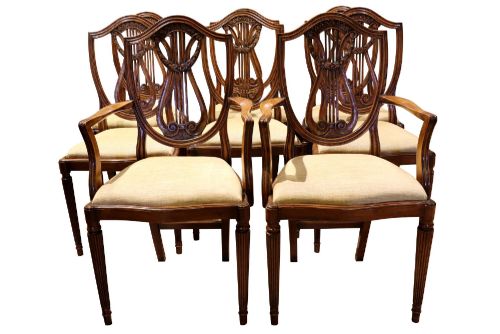
The integrity of the structural joints and the retention of original timber properties dictate the standing of each piece. Matching sets demonstrate uniform carving across all dining chairs, while individual music chairs and elbow chairs depend on the dexterity displayed in the shaped backrest.
Listings feature mahogany timbers combined with brass, cane, leather, and marquetry inlay across periods spanning the nineteenth century and early nineteen-hundreds.
The Mahogany Lyre Back Chairs Glossary
- Lyre back
- A chair back featuring a central splat carved in the symmetrical shape of an ancient Greek lyre. This motif became prominent during the Regency period and returned in later revival styles.
- Carver chair
- An armchair designed with open sides, typically positioned at the head of a dining table. These pieces match or complement the surrounding side chairs in a set.
- Marquetry inlay
- Decorative patterns formed by fitting contrasting pieces of veneer into the primary mahogany surface. This technique adds geometric or floral ornamentation to the woodwork.
- Revolving music chair
- A specialised seat with a pivoting mechanism designed for musicians playing the cello, harp, or piano. These often include adjustable height functions.
- Neoclassical manner
- A style drawing direct inspiration from the art and architecture of classical antiquity. It emphasises symmetry, proportion, and classical motifs such as the lyre.
- Cane seat
- A seating surface woven from peeled rattan cane split into thin strands. This technique provides a lightweight, breathable panel supported by the wooden frame.
Mahogany Lyre Back Chairs: Frequently Asked Questions
What is a lyre back chair?
A lyre back chair is a piece of seating furniture distinguished by a central splat carved to resemble an ancient stringed musical instrument. This design motif emerged strongly during the Regency era and remained popular through subsequent Victorian and Edwardian revivals.
Cabinet-makers applied this feature to dining chairs, armchairs, and specialised music seating. The shape provides both structural support for the spine and a decorative classical focal point.
How do I date a mahogany chair?
Dating a mahogany chair involves examining the timber grain, construction techniques, and stylistic markers associated with periods like the Regency, Victorian era, or Edwardian revival. Lighter mahogany tones and specific inlay styles often point toward later revival phases.
Joinery methods also offer clues, as hand-cut joints differ from later standardised production techniques. Comparing the overall proportion against known period design books helps confirm the era of manufacture.
Were lyre back chairs used for dining?
Lyre back chairs served dining rooms extensively, often found in matching sets of eight or ten pieces around large mahogany tables. Their sturdy wooden frames provided the necessary durability for daily household use.
Makers also adapted the lyre motif for smaller side chairs, elbow chairs, and carvers to maintain a consistent aesthetic throughout domestic entertaining spaces.
What is a revolving music chair?
A revolving music chair is a specialised Victorian or nineteenth century seat designed specifically for musicians playing instruments such as the cello or harp. The pivoting mechanism allowed performers to adjust their seating angle while playing.
These pieces frequently incorporated brass adjustments and revolving seats atop mahogany pedestals. They combined functional utility with the elegant curved lines of the lyre backrest.
How do I care for antique mahogany?
Caring for antique mahogany requires maintaining stable indoor humidity levels and keeping furniture away from direct sources of heat or sunlight. Regular dusting with a soft, dry cloth preserves the polished surface of the timber.
Applying specialised wax sparingly helps nourish the wood without building up heavy residues. Careful handling of cane panels and upholstered sections prevents premature wear on fragile components.