

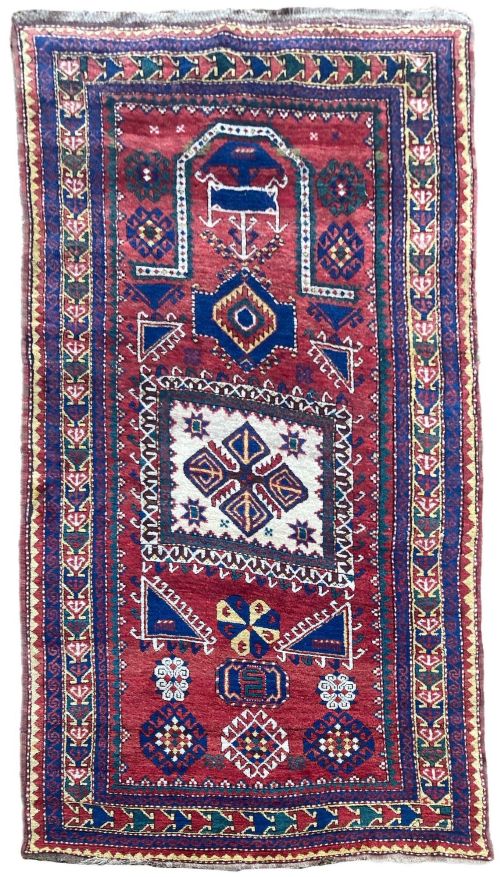



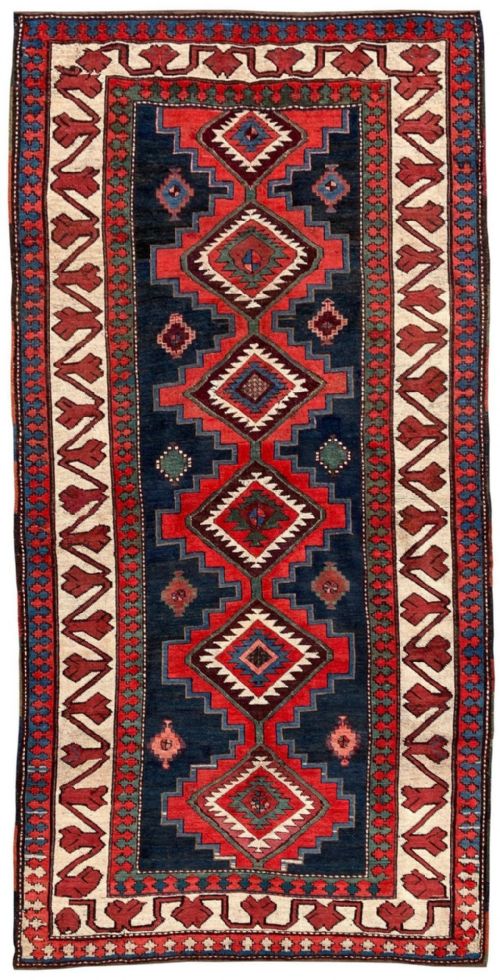
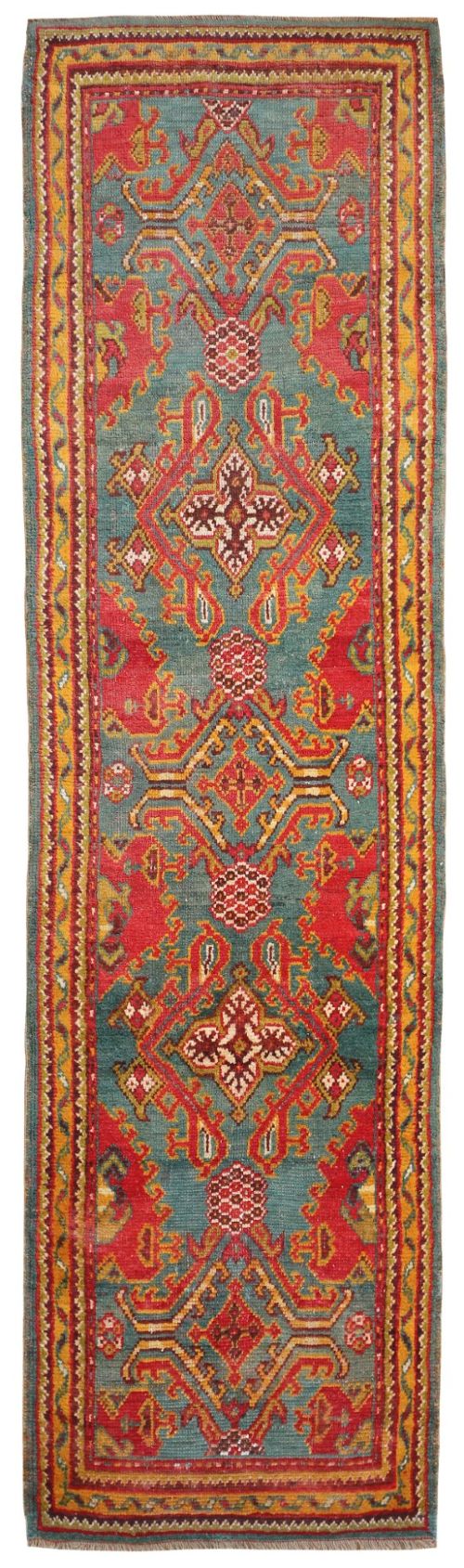
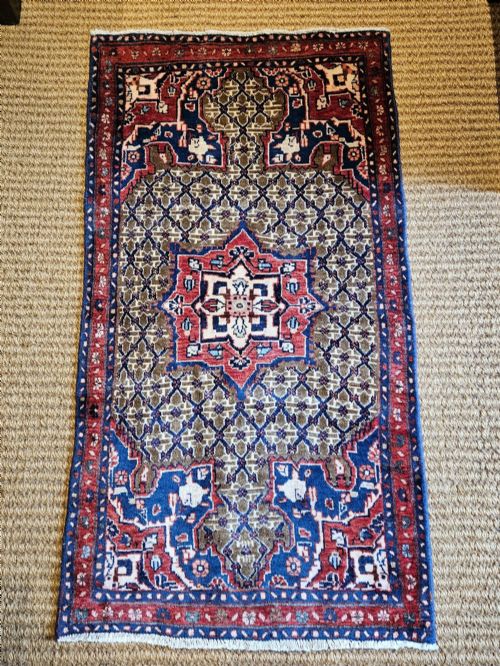
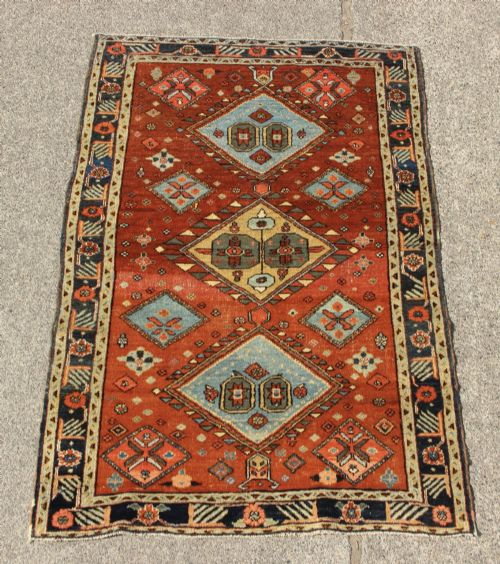
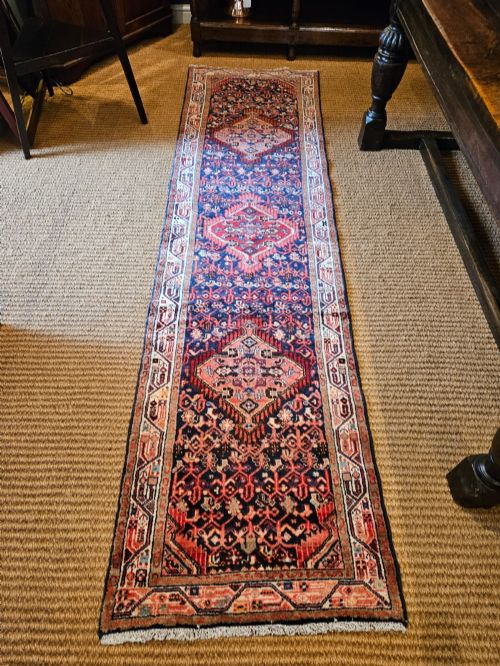
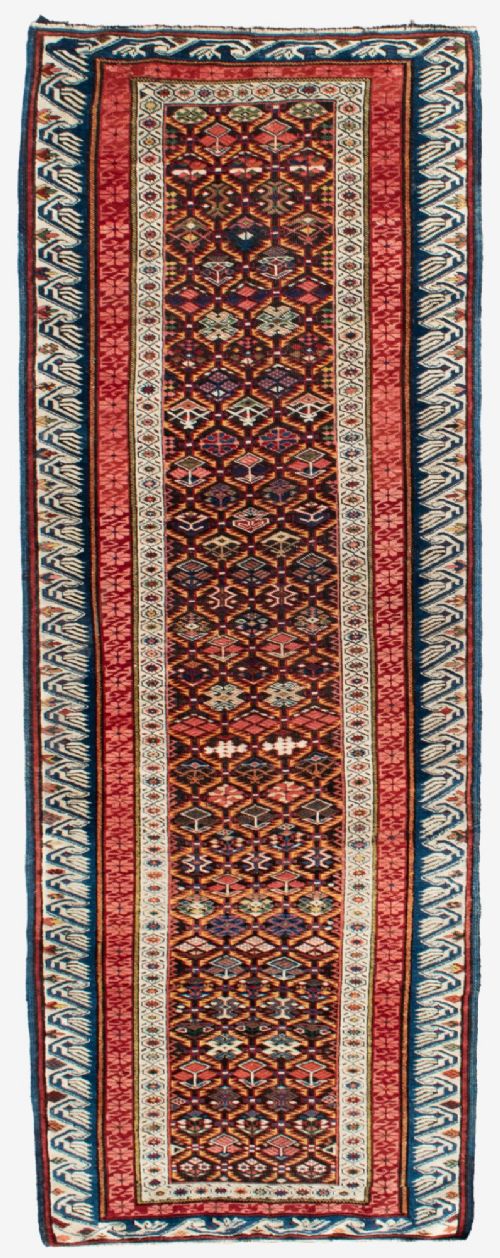
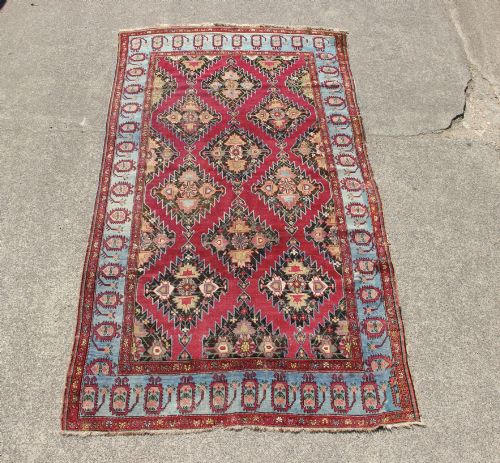
Traditional Red Blue Runner
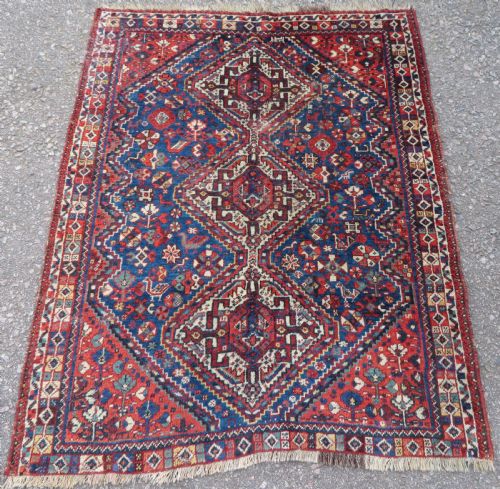
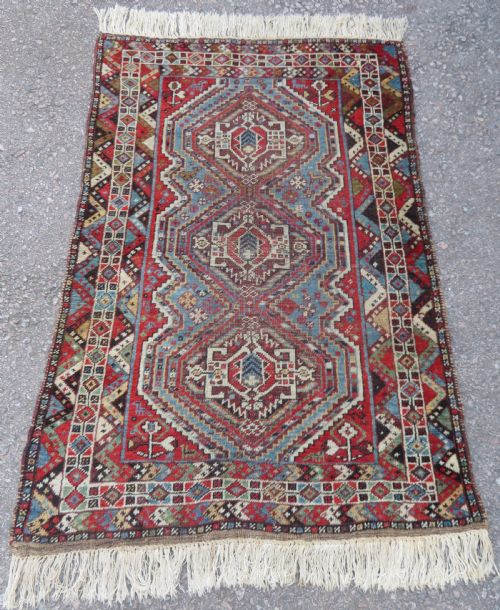
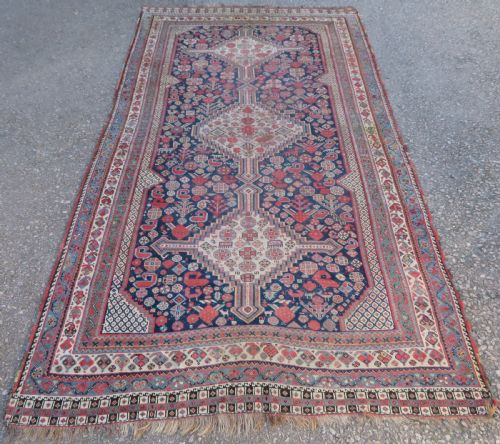
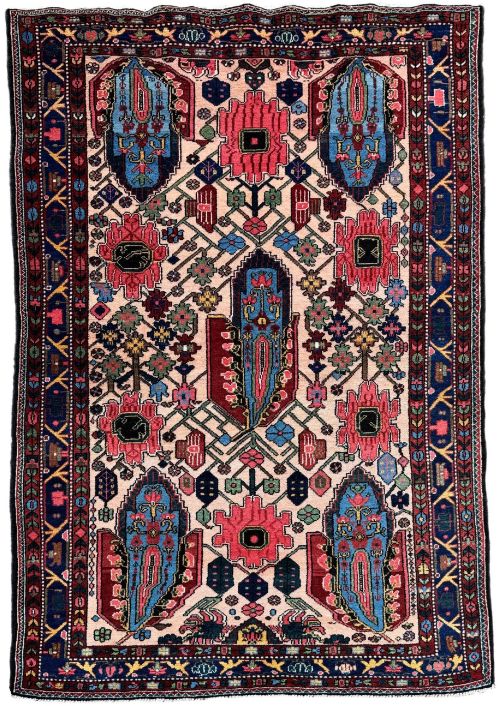
These traditional red blue runner examples are hand-knotted hallway carpets from Persian and Caucasian regions that bring warmth and geometric pattern to long spaces.
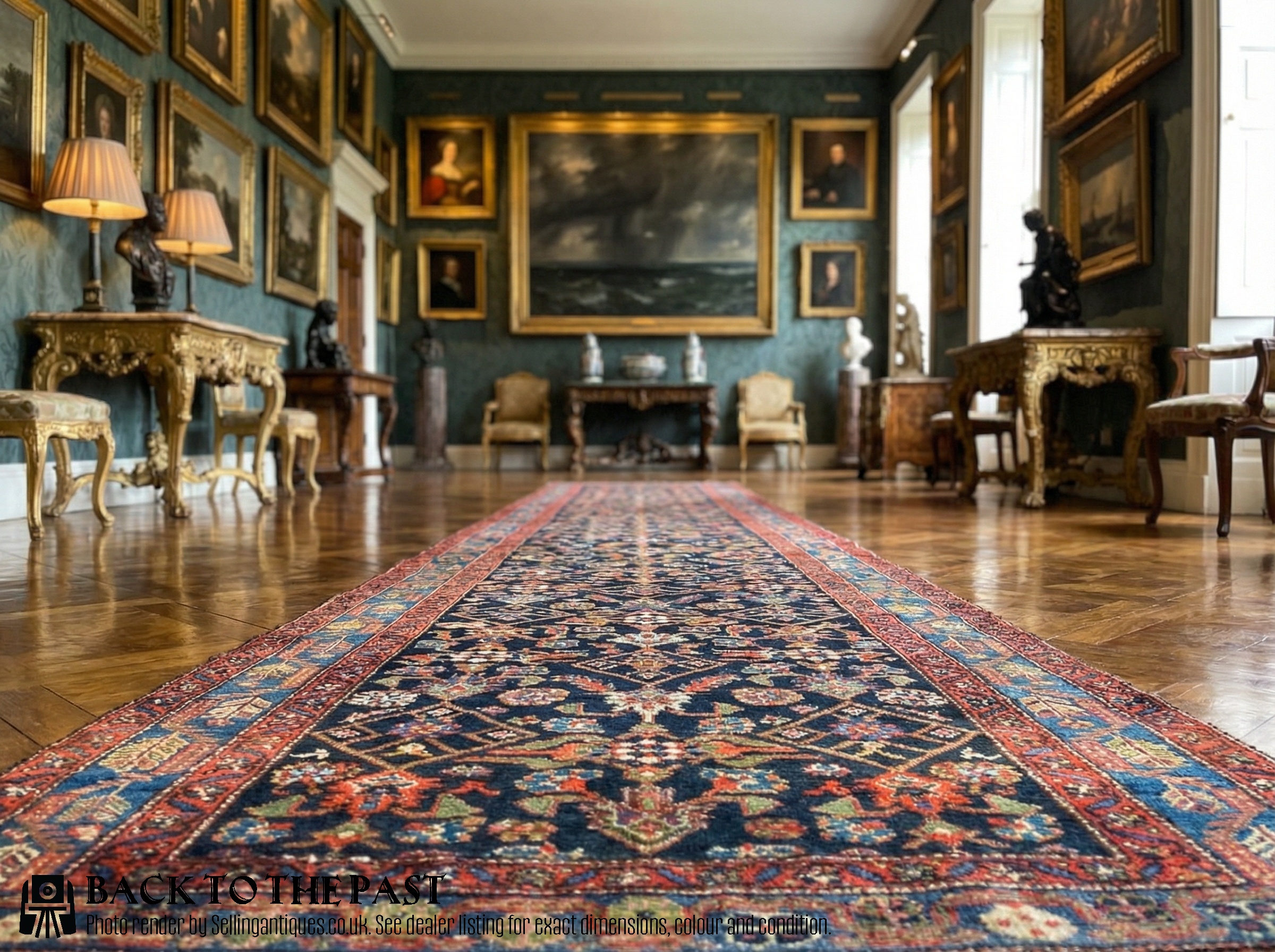
Traditional Red Blue Runner
A traditional red blue runner is typically a long, narrow floor covering originating from Persian villages, tribal groups, or Caucasian weaving centres. These pieces serve to line corridors, hallways, and narrow rooms with rich, saturated tones of red and blue.
The selection on this page draws from late nineteenth and early twentieth-century production, spanning the eighteen seventies up to nineteen forty. Forms include designated hallway runners, long rugs, and tribal flat-weaves.
Makers include various regional tribes and weaving traditions such as Kurdish, Bakhtiar, Kazak, Shirvan, and Heriz. Each region brings distinct border arrangements and medallion structures to the runner format.
How they were made
Construction relies primarily on wool piles knotted onto cotton or wool foundations using hand-spun materials. Natural dyes provide the underlying red and blue colour palette that deepens with age.
Weavers in Persian and Caucasian workshops employed traditional upright looms, tying symmetrical or asymmetrical knots by hand. Certain examples utilise flat-weave kilim techniques without a raised pile.
Listings span production dates from the eighteen seventies through to nineteen forty, featuring wool materials and natural dyes across Persian and Caucasian styles.
What varies in quality
Quality rests on the fineness of the knotting density and the clarity of the regional design. Tighter knots allow intricate geometric motifs and star patterns to remain sharp along the length of the runner.
The integrity of the natural dyes and the resilience of the hand-spun wool determine how well the piece holds its rich contrast over decades of foot traffic.
The Traditional Red Blue Runner Glossary
- Runner
- A long, narrow carpet format designed specifically for hallways, corridors, and stairs.
- Natural Dyes
- Colourants derived from plants, roots, and insects rather than synthetic chemicals, creating varied tones that age gracefully.
- Kazak
- A style of rug originating from the Caucasus region, known for bold geometric medallions and primary colours.
- Kilim
- A flat-woven carpet or rug made without a pile, produced by tightly interweaving warp and weft strands.
- Heriz
- A Persian weaving region distinguished by large, bold geometric corner spandrels and central medallion designs.
Traditional Red Blue Runner: Frequently Asked Questions
Where should I place a traditional red blue runner?
These long carpets suit narrow hallways, corridors, and gallery spaces where linear patterns draw the eye forward. They also add warmth to bedside areas and kitchen walkways.
Ensure you measure both the length and width of your floor space, leaving a uniform margin of bare floor around the edges of the rug.
How do I care for a wool runner?
Regular gentle vacuuming without a rotating brush roll prevents dust and grit from settling into the wool pile. Professional cleaning suited for antique textiles preserves the natural dyes.
Keep the runner out of direct, harsh sunlight to maintain the depth of the red and blue tones over time.
Are these runners made with natural dyes?
Many pieces from the nineteenth and early twentieth centuries utilise traditional natural dye sources derived from regional plants and minerals. These colourants yield rich hues that develop a soft patina.
Examination of the individual wool fibres reveals subtle tonal variations characteristic of traditional dyeing methods.
How do I distinguish Caucasian from Persian runners?
Caucasian pieces typically feature bold geometric motifs, tribal symbols like Lezghi stars, and stark primary colour contrasts. Persian examples often incorporate more curved floral elements, intricate medallion layouts, and softer field designs.
Comparing the border styles and secondary motifs helps identify the specific regional origin of the weaving.