
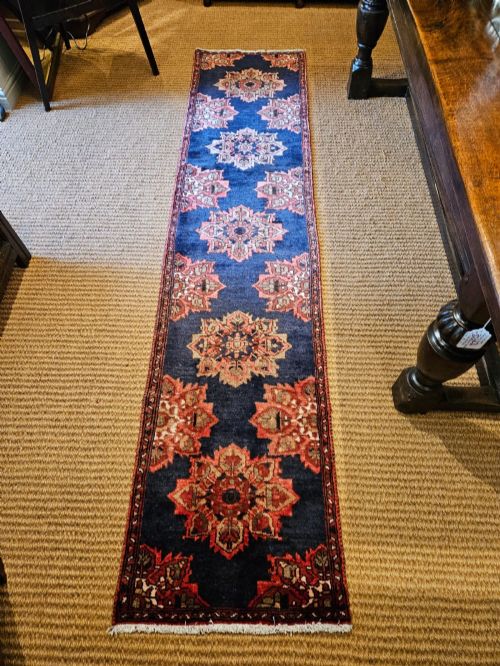
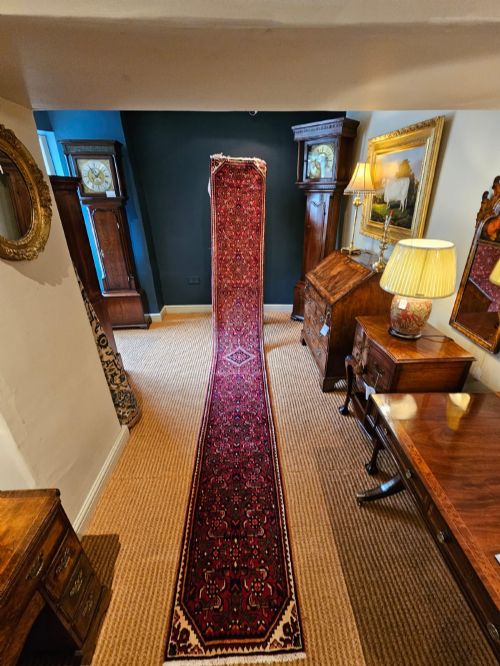


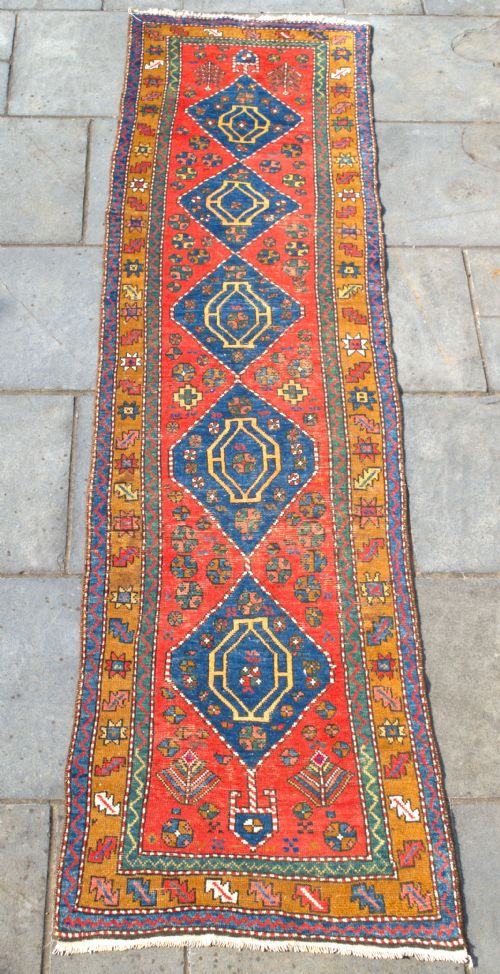


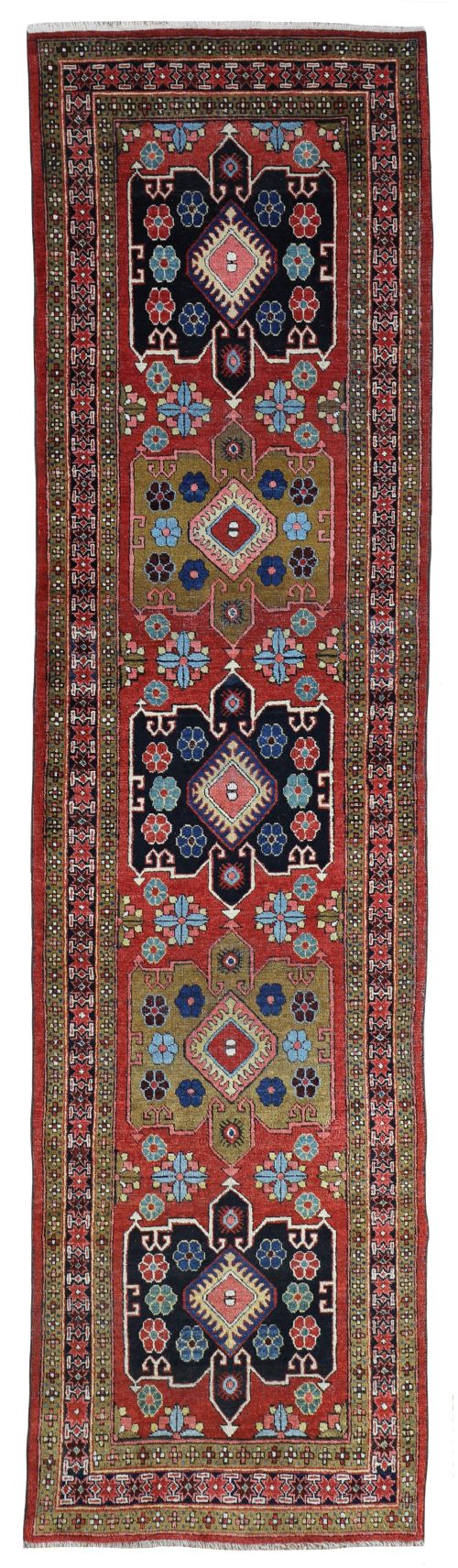
Long Narrow Floor Runner
A long narrow floor runner brings purposeful warmth to a hallway, drawing the eye down the length of a room.
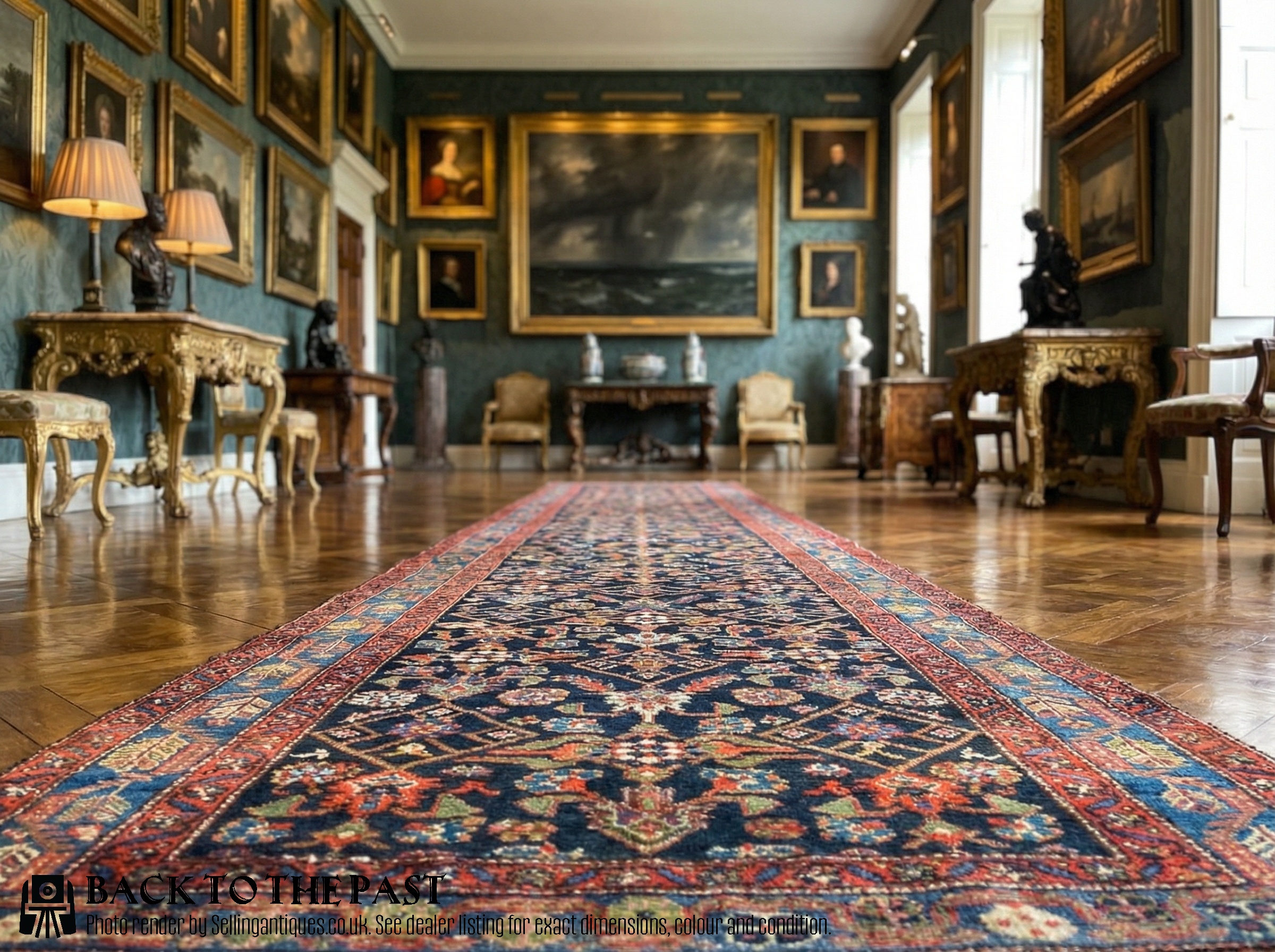
Long Narrow Floor Runner
A long narrow floor runner is designed specifically for corridors, hallways, and elongated spaces where standard carpets fail to fit. These pieces span production dates from the late nineteenth century through to the 1930s, encompassing Persian tribal, Heriz, Bidjar, Moroccan Berber, and Caucasian traditions.
You are most likely to encounter traditional Persian and Heriz room runners on this page, alongside specific regional types such as Kurdish, Hamadan, and Shirvan rugs. They present extended rectangular proportions, often measuring several metres in length while remaining restricted in width to suit narrow passages.
Materials and construction
These floor coverings rely on natural wool and cotton as foundational materials for both pile and foundation. Wool provides the durable, resilient surface necessary for high-traffic areas, while cotton typically serves for structural warps and wefts.
Weavers knotted or wove these textiles by hand, utilising traditional regional techniques that produced dense, hard-wearing piles designed to endure decades of daily foot traffic in domestic interiors.
Several examples stretch past ten metres in length, designed for corridors built long before modern hallways existed.
Judging quality and execution
Quality rests in the precision of the weave and the integrity of the natural materials. Finer examples display tight knotting, clear graphic definition within tribal and geometric motifs, and evenly worn piles that speak to balanced age.
The distinction between standard and superior pieces lies in the sophistication of the dye palette and the crispness of the design layout. Strong structural condition across the entire length of the textile elevates the standing of an individual runner.
The Long Narrow Floor Runner Glossary
- Runner
- A long, narrow carpet format intended for corridors, stairs, and hallways. These pieces balance extended length with restricted width.
- Pile
- The upright yarn loops or cut ends that form the soft surface of a rug. It absorbs foot traffic and protects the structural foundation.
- Warps
- The vertical foundational threads stretched tightly on a loom before weaving begins. Weft threads are passed across them to lock the knots in place.
- Heriz
- A style of Persian carpet originating from the region east of Tabriz. They are known for bold geometric medallions and robust structural wool.
Long Narrow Floor Runner: Frequently Asked Questions
Where do I place a long narrow floor runner?
These textiles find their natural home in hallways, corridors, and narrow passageways where they protect wooden flooring and soften footsteps.
They also serve effectively in kitchens, grand landings, and beside large beds to anchor an elongated space.
How do I care for an antique wool runner?
Regular gentle vacuuming without a beater bar removes trapped grit and dust from the wool pile. Professional cleaning should be undertaken periodically by specialists in antique textiles.
Keeping the piece out of direct, harsh sunlight preserves the natural dyes used in these historic carpets.
How do I identify Persian regional rugs?
Regional attribution relies on observing specific design motifs, border arrangements, and colour combinations unique to weaving centres like Heriz, Bidjar, and Hamadan.
Structural characteristics, such as the twist of the yarn and how the edges are finished, also provide clear clues to origin.
Do these rugs suit modern homes?
The geometric designs and muted tones of nineteenth and early twentieth-century runners integrate seamlessly into contemporary interior schemes. Their weathered textures bring historical depth to minimalist spaces.
Each piece introduces a grounding element of pattern and colour without overwhelming a room.