


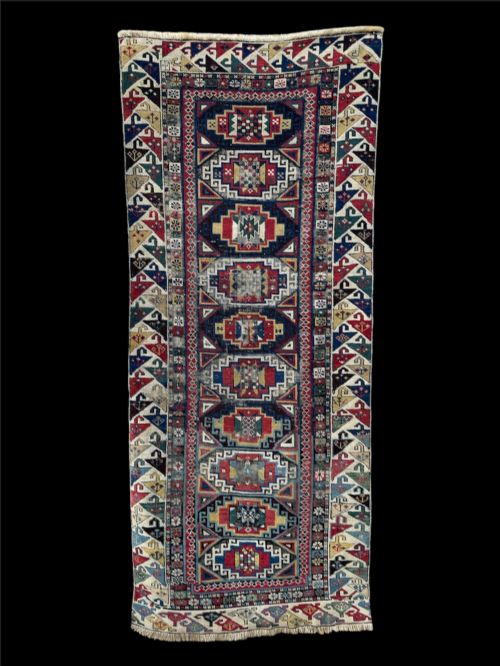
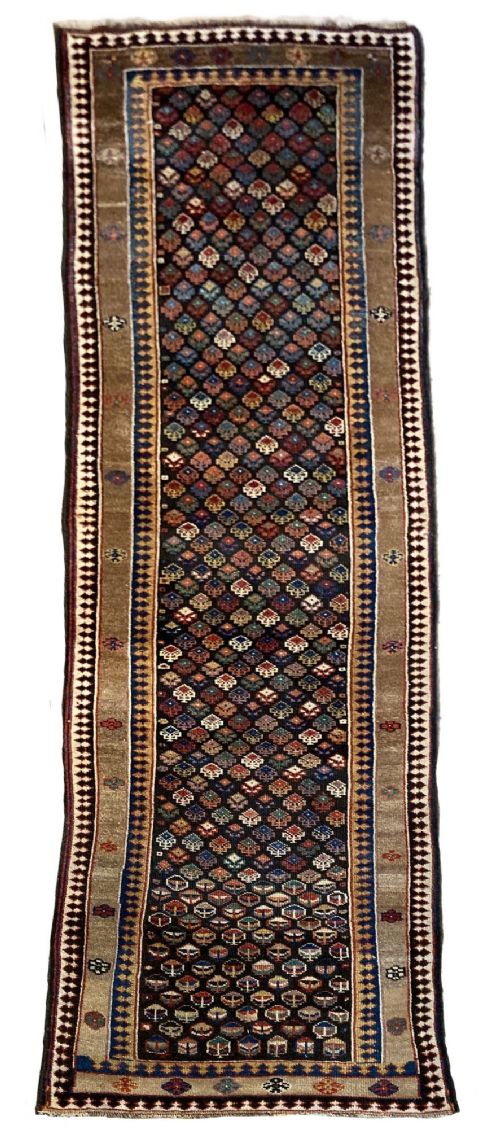


Vintage Persian Hall Runner
A vintage persian hall runner grounds a long corridor with characterful wool weave and traditional tribal patterns.
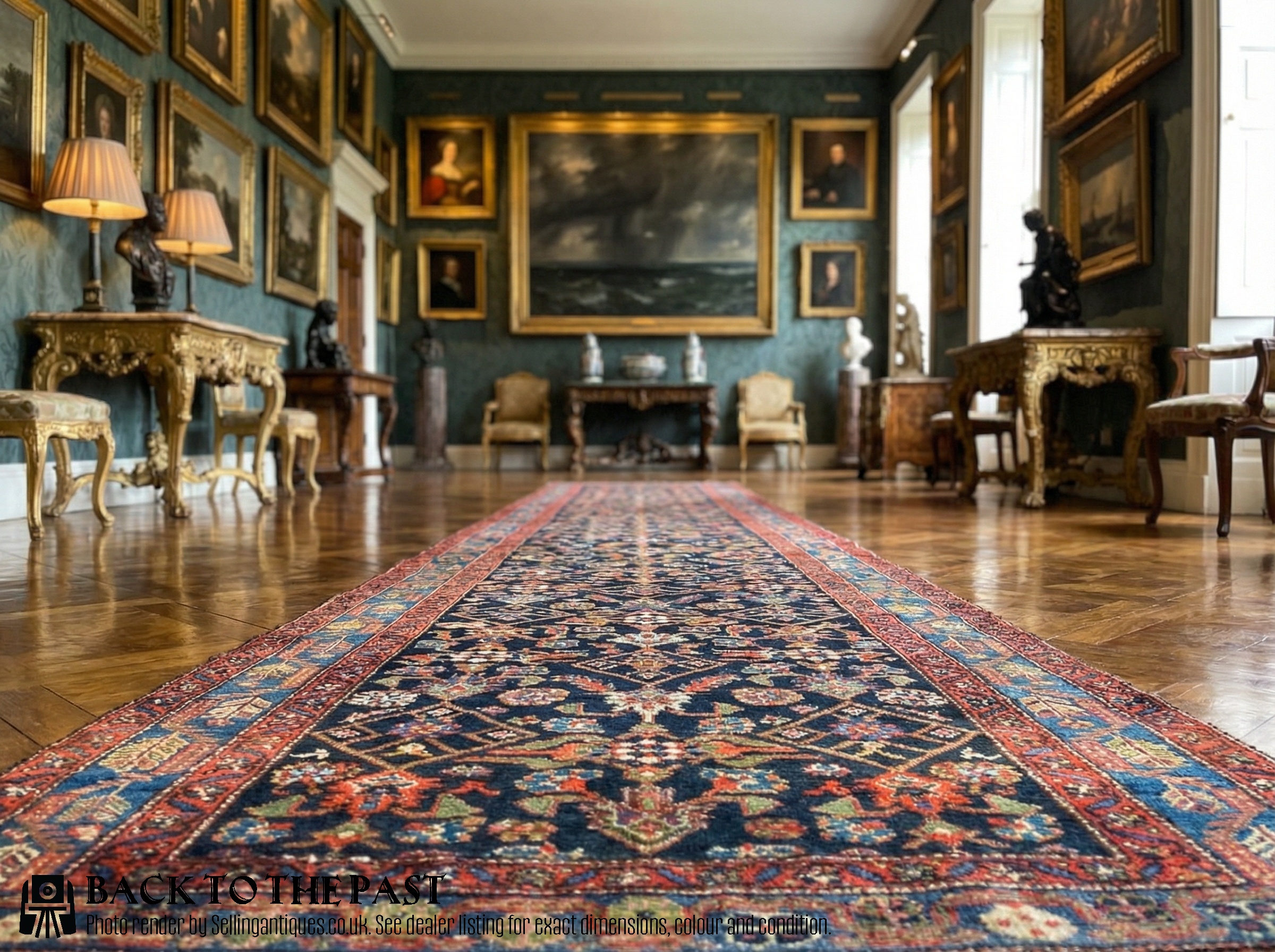
Vintage Persian Hall Runner
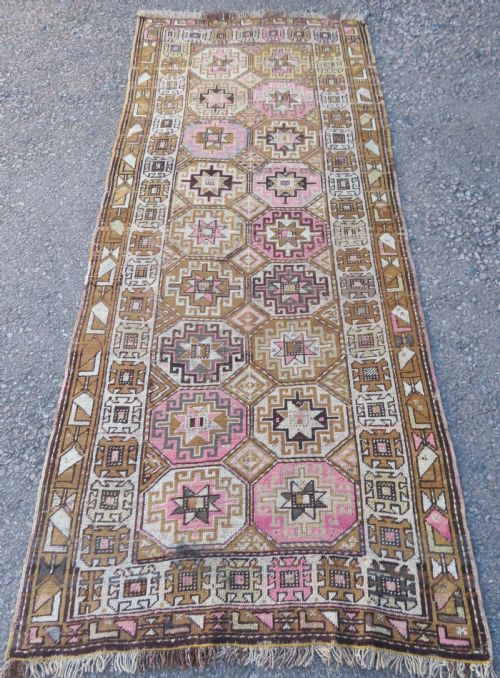
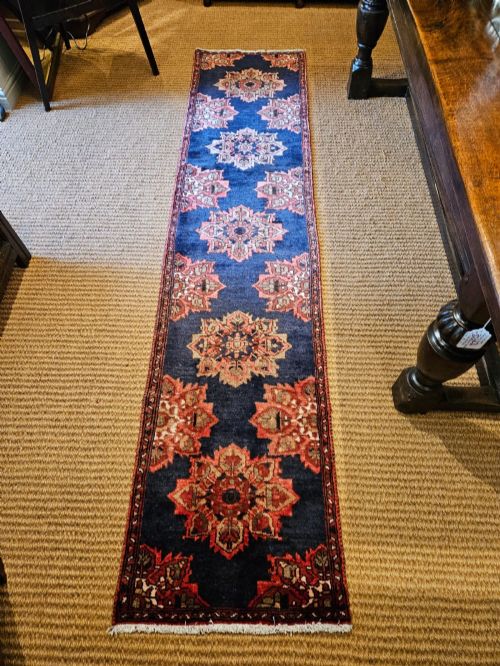
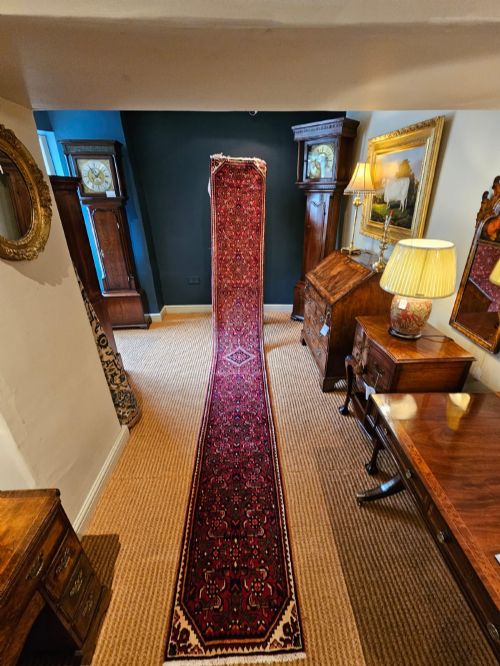
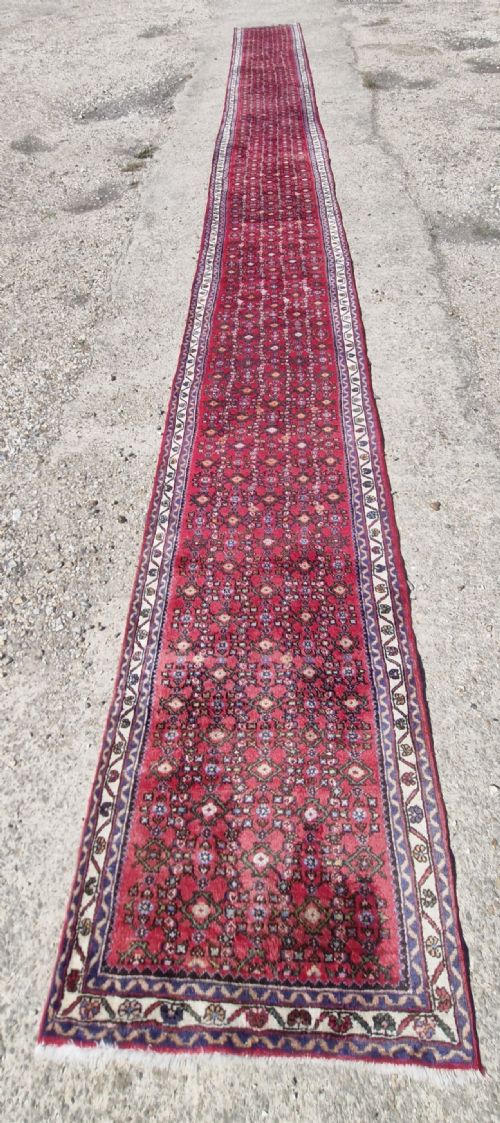
When you search for a vintage persian hall runner, you encounter elongated woven floor coverings designed specifically for narrow corridors, landings and hallways. These pieces originate from various tribal and regional traditions across Persia, dating from the late nineteenth century through to the mid twentieth century. The inventory on this page consists predominantly of woollen runner rugs and long narrow carpets exhibiting traditional styles such as Kurdish tribal, Heriz, Hamadan and Sarouk.
The formats vary considerably in length and width, ranging from standard narrow hallway proportions to exceptionally extended pieces measuring over ten metres. Makers utilised wool for both the pile and the foundation structure, often combining it with cotton depending on the specific regional weaving centre. Buyers select these runners to introduce authentic historical warmth and durable floor coverage to domestic pathways.
How they were made
Weavers constructed these long carpets using hand-knotted wool pile secured onto robust foundational warps and wefts of wool or cotton. The materials reflect pastoral resources, yielding dense, resilient surfaces capable of withstanding heavy foot traffic in domestic hallways over generations.
Natural dyestuffs and traditional hand-knotting techniques produced the rich colour palettes and geometric or stylised floral motifs seen across the inventory. Artisans working within specific tribal groups, such as the Kurds or Heriz communities, applied distinct regional weaving structures that defined the rigidity and drape of each finished runner.
Listings feature wool and cotton materials across nineteenth and twentieth-century Persian and Anatolian traditions.
What varies in quality
The distinction between standard examples and superior pieces lies in the tightness of the knotting, the precision of the tribal design work and the integrity of the wool. Finer knot counts allow for sharper geometric or floral definition within borders and central fields, elevating the visual impact along a corridor.
Preservation of the original wool pile, edge bindings and end finishes also determines the standing of an individual runner. Pieces retaining their full structural proportions without extensive modern intervention command greater appreciation among collectors of traditional textiles.
The Vintage Persian Hall Runner Glossary
- Runner
- A long, narrow carpet format specifically proportioned for corridors, hallways and staircases. These pieces measure significantly longer than their width.
- Warp
- The vertical foundation threads stretched lengthwise on the loom before knotting begins. Wool and cotton serve as the primary materials for these structural elements.
- Weft
- The horizontal threads passed back and forth across the warp threads to bind the knots in place. This technique secures the entire wool pile.
- Pile
- The soft, upright surface of the rug formed by the ends of knotted yarn. Hand-knotted wool pile provides durability and rich texture.
- Knot count
- The density of individual knots tied per square unit of the rug. Higher counts generally indicate greater labour investment and finer detail in the pattern.
Vintage Persian Hall Runner: Frequently Asked Questions
Where should I place a long runner?
These narrow formats suit entrance hallways, long corridors, and landing floors where linear warmth is required. Their proportions guide movement through a home.
Ensure you measure the corridor width and length carefully before selecting a piece. Leave an equal margin of exposed floor around the edges.
How do I date an antique runner?
Stylistic motifs, wool characteristics, and regional weaving structures help establish an approximate era. Nineteenth-century pieces often display distinct natural dye variations.
Compare the border designs and knotting techniques with documented examples from specific tribal groups. Exact years remain estimates based on material wear and construction.
Do these runners require a rug underlay?
Placing a suitable non-slip underlay beneath the runner prevents movement on wooden or tiled hallway floors. This layer also absorbs impact and reduces wool wear.
An underlay protects the historical foundation threads from friction against hard surfaces. It extends the functional lifespan of antique floor coverings.