



Traditional Prayer Rug
When you handle a traditional prayer rug, you touch centuries of woven devotion shaped by village hands across Anatolia, the Caucasus, and Central Asia.
Traditional Prayer Rug
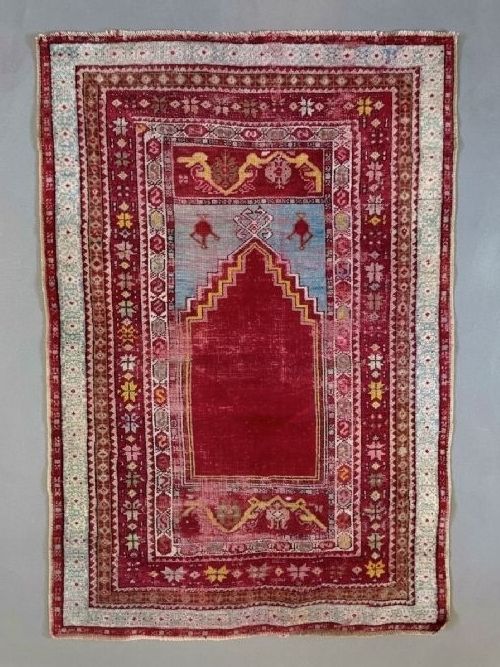
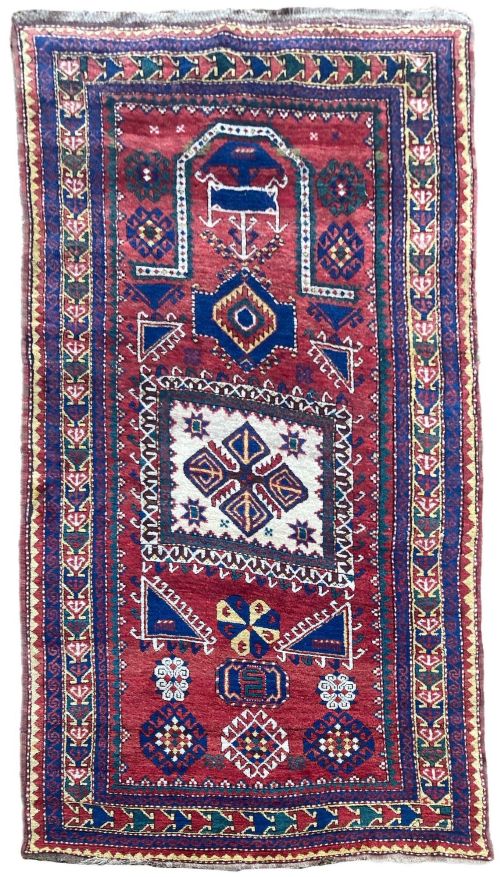
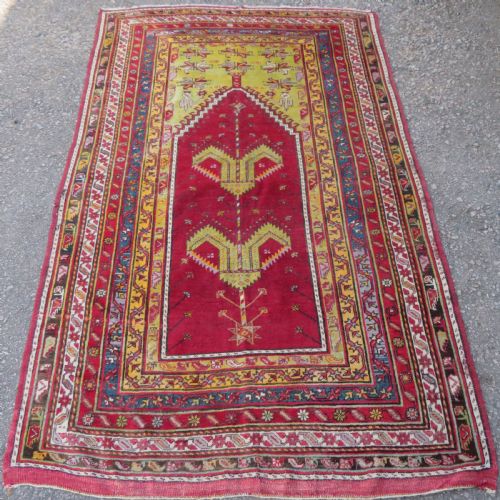
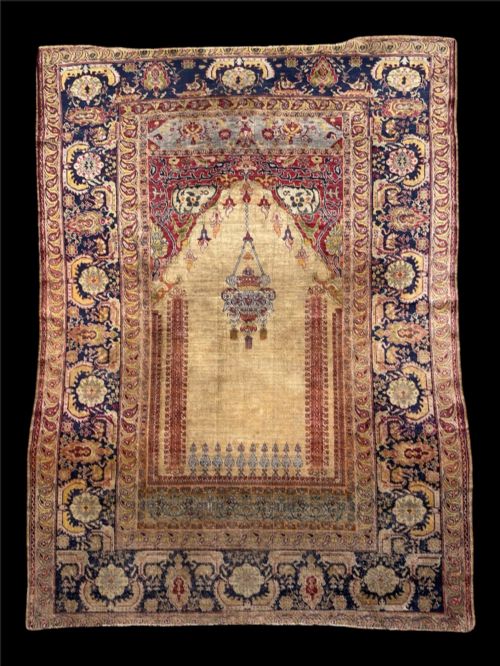
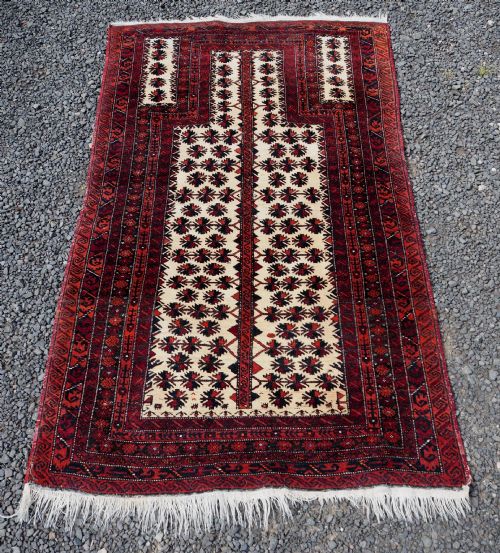
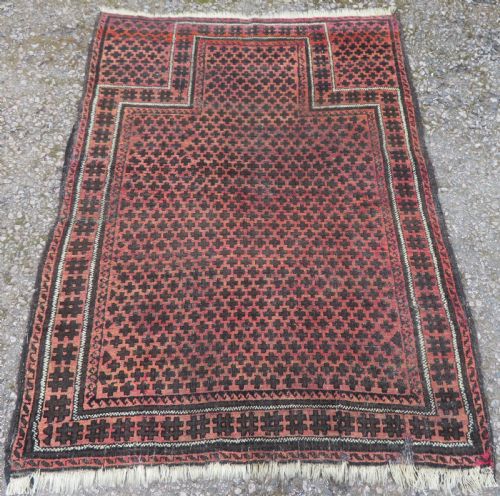
A traditional prayer rug serves a devotional purpose, defined structurally by a distinct mihrab or niche that indicates the direction of prayer. Buyers searching this phrase encounter examples originating from Anatolian, Caucasian, Persian, and Afghan weaving traditions.
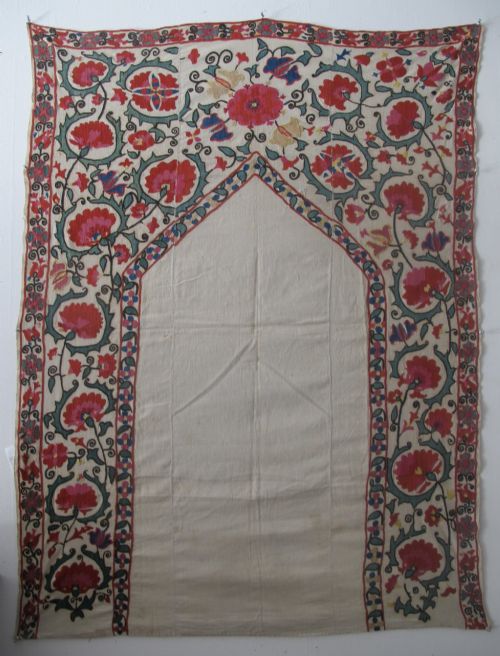
The format typically centres on a single pointed arch, though double mihrab and triple mihrab formats appear frequently in village and tribal output. These floor coverings and wall hangings display regional iconography such as floral vases, lanterns, and geometric borders.
Dating ranges from the eighteenth century through to the early twentieth century, encompassing both nomadic village output and finer workshop pieces. The most common varieties met here are Turkish and Afghan village rugs produced in wool or silk.
Materials and construction methods
Weavers utilised natural materials including wool, hand-spun wool, cotton foundations, silk, silk thread, and occasional goat hair for structural durability. Pile knots are tied densely by hand onto warps andwefts of wool or cotton.
Colour comes from natural dyes yielding deep tones across reds, yellows, and blues that age gracefully over decades of use. Silk embroidery appears on needleworked suzanis while pile carpets rely on looped knots for their surface texture.
Traditional Prayer Rug Retail Price Guide 2026
Typical asking prices for traditional prayer rug among the pieces listed under this phrase on Sellingantiques today, from the lower quarter to the upper quarter. They describe what is for sale here now, not the wider market.
Some Afghan village weavers tucked lucky star motifs and curling rams horns inside the prayer arch to ward off trouble.
Assessing quality in weaving
Quality rests in the precision of the knotting, the handling of the wool, and the complexity of the design layout within the mihrab. Tightly packed knots and resilient hand-spun wool produce a denser pile that resists wear better than looser structures.
The depth and clarity of natural dyes distinguish superior examples, as does the crisp execution of tribal motifs like rams horns or lotus leaves. Material choice also signals grade, where fine silk thread or pure wool commands greater technical skill than mixed cotton foundations.
The Traditional Prayer Rug Glossary
- Mihrab
- The arched niche found at one end of a prayer rug, designed to direct the placement of the head during worship.
- Suzani
- A decorative embroidered textile from Uzbekistan, typically worked in silk thread on a cotton ground.
- Kazak
- A style of geometric rug woven in the Caucasus region, known for bold primary colours and strong tribal motifs.
- Ghiordes
- A historic Turkish weaving centre and a specific prayer rug style characterised by distinctive floral and architectural borders.
- Baluch
- A tribal weaving group originating from the borderlands of Persia and Afghanistan, often producing compact rugs with dark, rich wool.
Traditional Prayer Rug: Frequently Asked Questions
How do I identify a prayer rug?
A prayer rug is easily identified by its characteristic architectural niche, known as a mihrab, which points toward Mecca during use.
This pointed arch design distinguishes devotional textiles from standard area carpets or general floor coverings.
Where were these rugs made?
These textiles originate from traditional weaving regions across Anatolia, the Caucasus, Persia, Uzbekistan, and Afghanistan.
Nomadic tribes, village communities, and urban workshops each contributed distinct regional patterns and colour palettes.
Can I use these on the floor?
Many of these pieces were built for functional use on floors and handle moderate foot traffic when paired with a proper underlay.
Fragile silk examples or older needleworked suzanis are better suited as wall hangings to protect the textiles from wear.
What materials are used?
The primary materials found in these pieces are sheep wool, hand-spun wool, cotton foundations, and silk thread.
Weavers relied on natural dyes extracted from plants and minerals to colour the fibres before knotting or embroidering.