
Traditional Plank Top Table
A traditional plank top table brings honest vernacular warmth into a room through solid timbers and straightforward joinery.
Traditional Plank Top Table
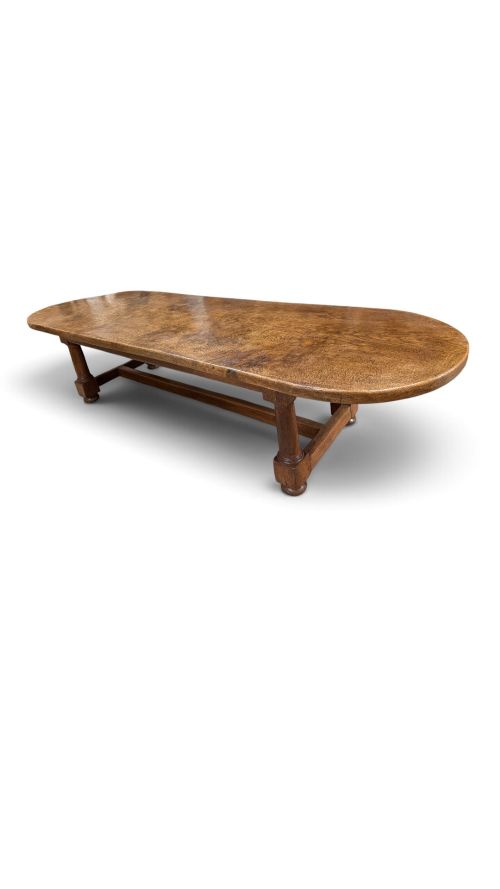
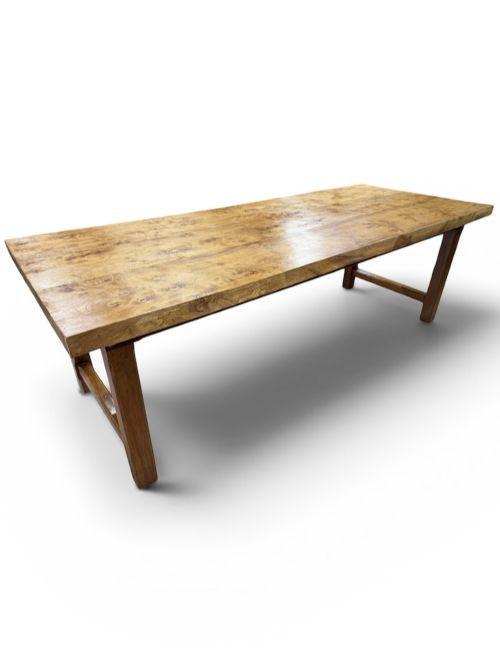
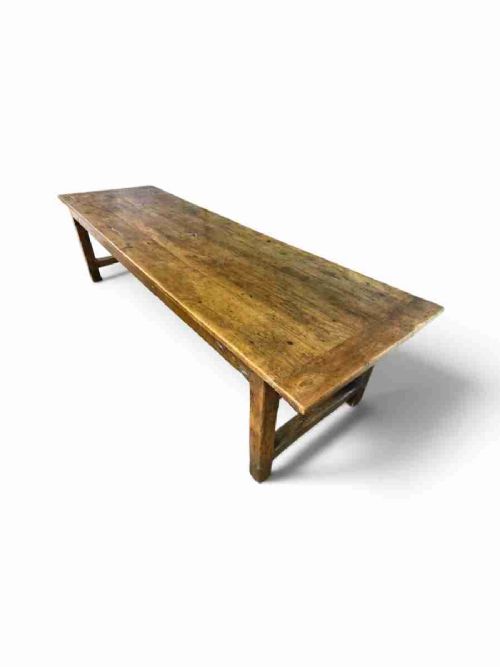
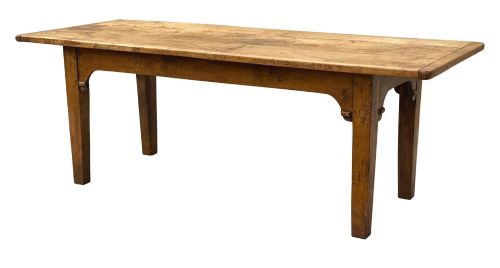
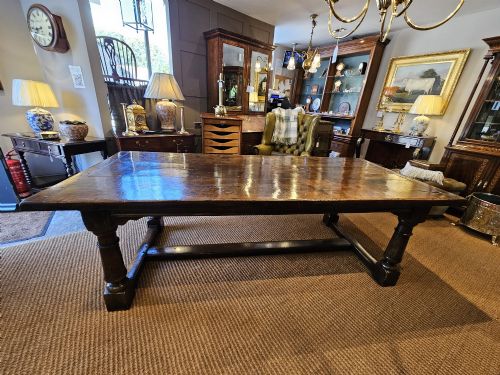
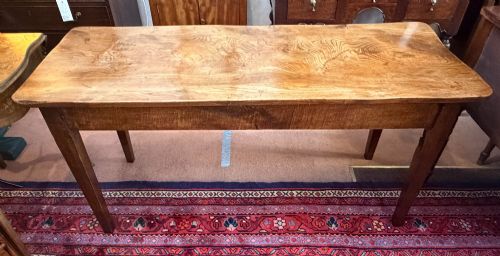
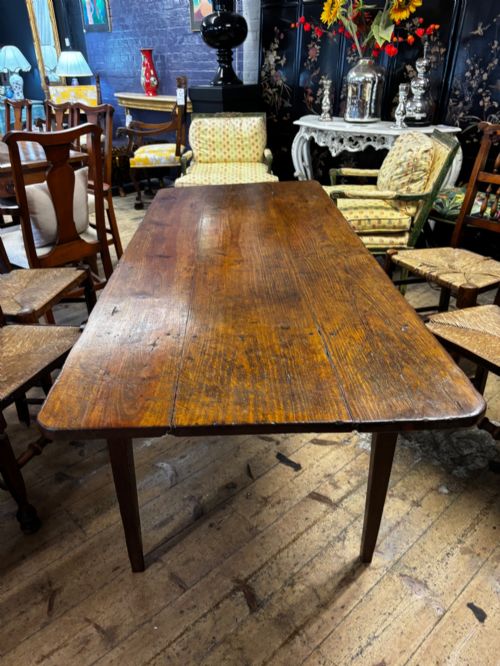
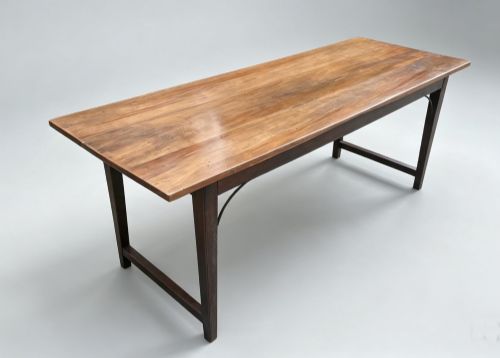
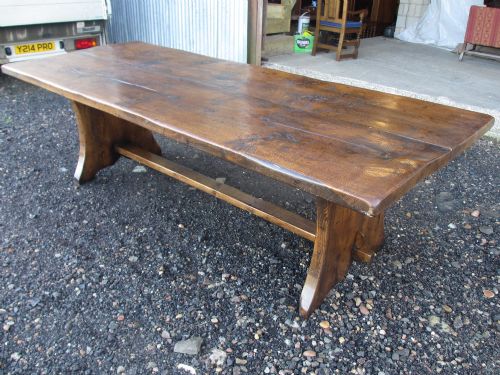
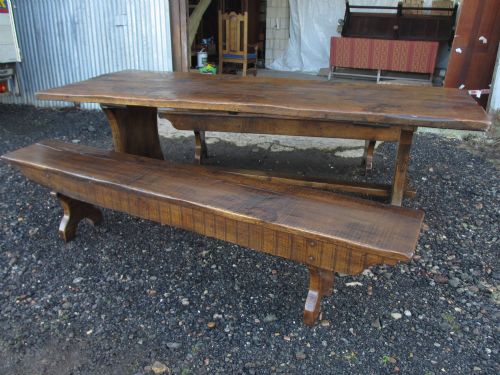
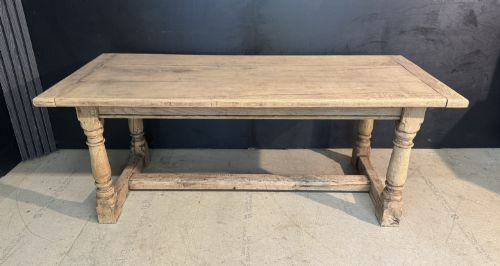
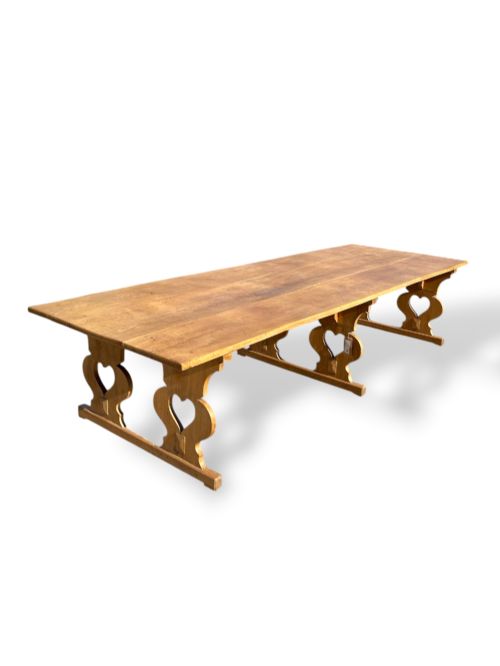
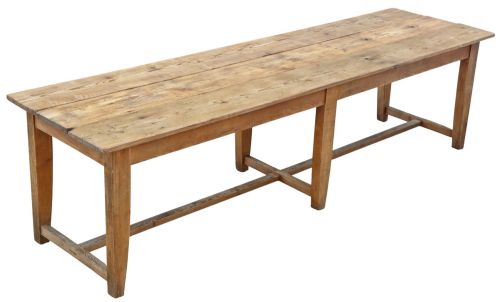
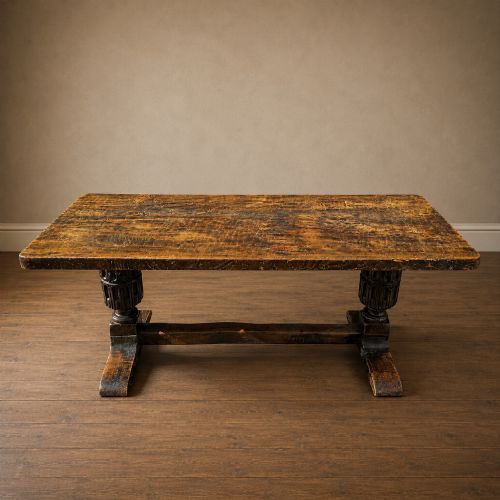
A traditional plank top table is a practical surface constructed from heavy timber boards joined together to form a sturdy dining or kitchen centrepiece. When you search for a traditional plank top table, you encounter robust forms originating from the eighteenth and nineteenth centuries, alongside later twentieth-century interpretations.
The most common versions met on this page include farmhouse tables, refectory tables, and kitchen tables built from domestic hardwoods and softwoods. These pieces reflect rustic country, provincial, and Georgian styles designed for daily communal use.
Makers utilised available regional timber to construct tables suited for dining rooms, kitchens, and libraries. The resulting forms range from large eight-seater dining tables down to smaller coffee and side tables.
Factors separating quality grades
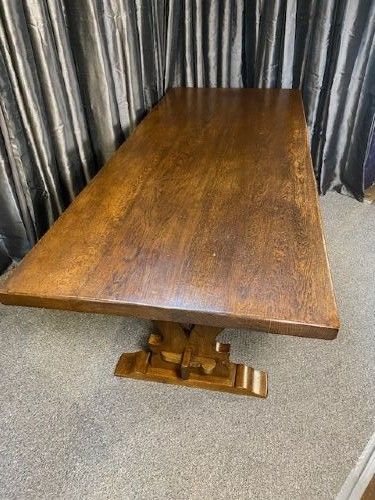
Quality in these tables depends on the selection of timber and the integrity of the original construction. Single plank tops and dense hardwoods such as oak or elm command greater appreciation than multi-board softwoods.
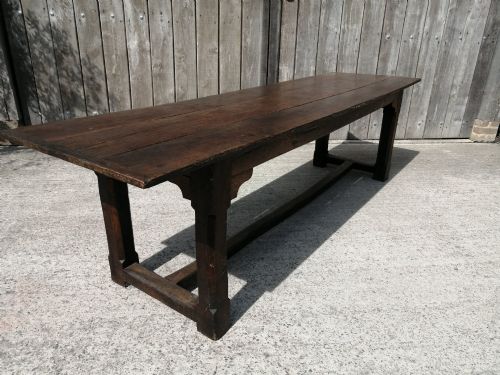
Proportion and structural preservation determine the standing of a piece within its period. Tables retaining their original stretchers, legs, and uncompromised timber thickness represent the finer end of the range.
Listings feature tables spanning from the 17th century through the Edwardian period, built in oak, pine, elm, and fruitwood.
The Traditional Plank Top Table Glossary
- Plank top
- A table surface constructed from multiple wooden boards joined lengthwise. This construction method forms the defining characteristic of vernacular farmhouse and refectory tables.
- Refectory table
- A long narrow dining table traditionally used in communal dining halls. These pieces typically feature heavy trestle ends or legs connected by a low stretcher.
- Stretcher
- A horizontal wooden bar connecting the legs of a table for added structural support. Stretchers are often positioned near the base of nineteenth-century farmhouse tables.
- Fruitwood
- Timber harvested from fruit-bearing trees such as pear or apple, utilised for cabinet work and table tops. It provides a distinct fine grain and warm tone.
Traditional Plank Top Table: Frequently Asked Questions
How do I clean a wooden plank top?
Wipe surfaces gently using a slightly damp cloth to remove everyday dust and debris. Avoid harsh chemical cleaners that strip natural oils from the timber.
Dry the wood thoroughly afterwards with a soft cloth to protect the grain. Regular waxing maintains the finish of older oak and pine surfaces.
Are these tables suitable for daily dining?
Most of these tables were originally built for heavy daily use in kitchens and farmhouses. Their solid timber construction makes them resilient for modern family dining.
Use protective mats under hot dishes to prevent marking the antique finish. Minor knocks and scuffs generally add to the established character of the wood.
How do I identify an eighteenth century table?
Look for construction markers such as hand-cut joints, pegged tenons, and timber thickness. Eighteenth-century examples often display deep patination and wear consistent with age.
Examine the underside for tool marks left by historical hand planes. Oak and elm were frequently selected for framing and tops during this period.
What is the difference between oak and pine?
Oak is a dense hardwood offering deep grain patterns and exceptional durability. It forms the basis of many formal refectory and Georgian tables.
Pine is a softer, lighter timber commonly utilised for nineteenth-century kitchen and farmhouse tables. It develops a paler appearance and absorbs everyday marks differently than hardwood.