
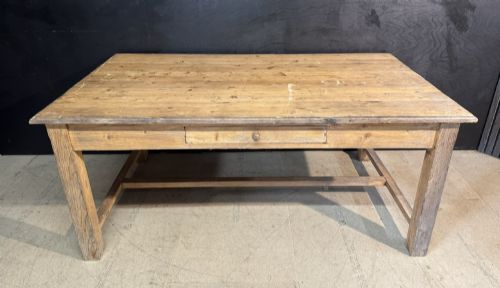
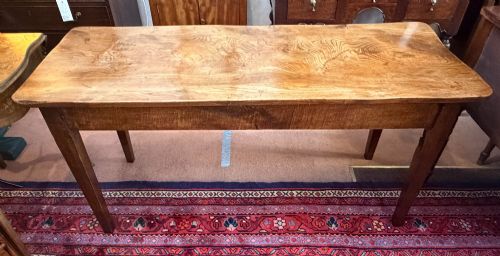
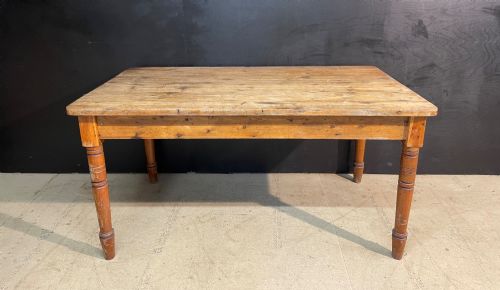
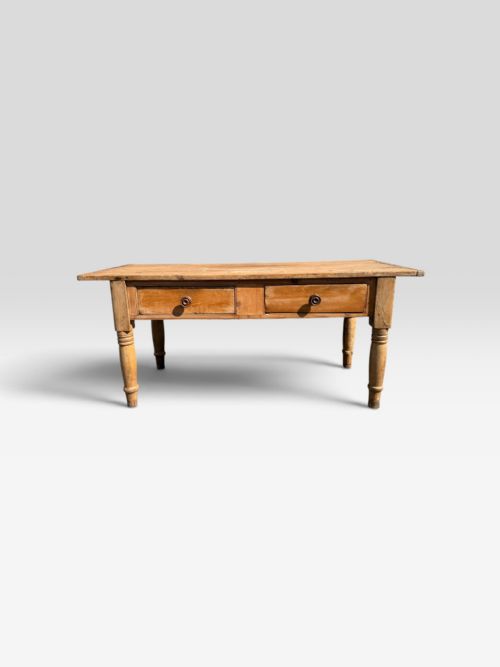
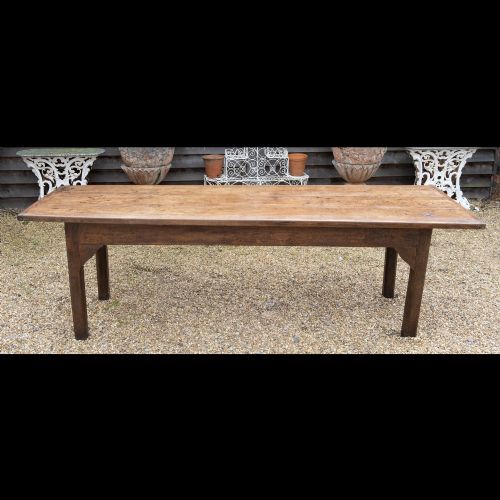


Vintage Harvest Table
These vintage harvest table options offer generous timber dining surfaces built for communal meals, spanning pine, oak, and elm through various rustic periods.
Vintage Harvest Table
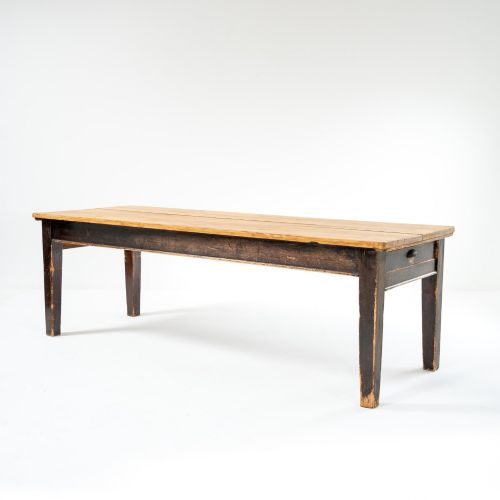
A vintage harvest table represents a large, practical dining surface designed originally for feeding large gatherings in rural settings. The pieces found here span robust 19th century examples, Victorian pieces, and early 20th century country items built to accommodate many guests.
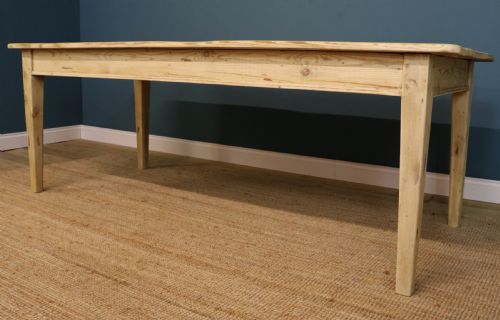
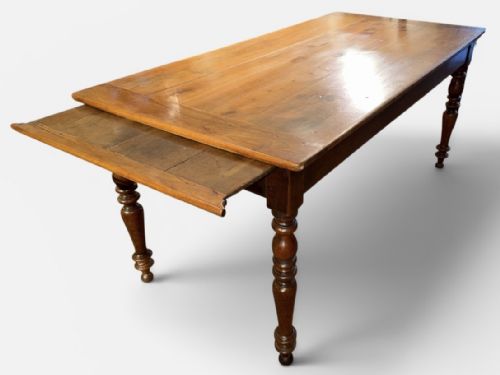
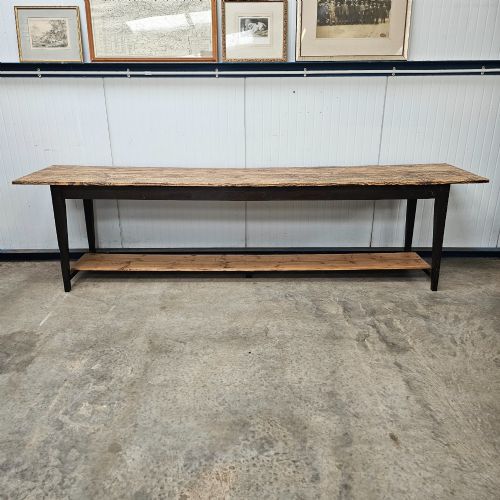
Most pieces on this page are constructed from pine, scrubbed pine, or oak, often measuring several feet in length. Buyers encounter formats ranging from standard kitchen dining tables to long community harvest pieces featuring square section supports or turned legs.
Stylistically, these tables lean heavily into rustic farmhouse, French country, and Georgian country house traditions. They serve today as central kitchen or dining room furniture built with enduring utilitarian strength.
How they were made
Surfaces were frequently left scrubbed or simply treated, allowing the natural grain of the wood to show through decades of use. Iron and brass hardware occasionally appeared in fastenings and structural supports, underpinning the utilitarian nature of the furniture.
Some community tables stretch past twelve feet, practically guaranteeing enough room for unexpected dinner guests.
What varies in quality
The choice of timber creates a fundamental distinction in quality across these tables, with dense oak and well-figured pitch pine sitting differently from standard softwood pine. Grain depth, timber seasoning, and the integrity of the original construction dictate the character of each piece.
Proportion and scale also influence the standing of a table, particularly in longer community formats where timber continuity matters greatly. The execution of structural elements, such as turned legs or fitted H-stretchers, shows the care taken by the original maker.
The Vintage Harvest Table Glossary
- Pitch pine
- A resinous pine variety prized for its durability and strong grain patterns, often utilised in large 19th century tables.
- Scrubbed pine
- Timber that has been thoroughly washed and cleaned down over time, removing old finishes to reveal the pale, raw grain beneath.
- H-stretcher
- A horizontal timber brace connecting the legs of a table in the shape of the letter H, providing rigid support.
- Refectory table
- A long narrow dining table traditionally used in monastic dining halls, adopted into country house and farmhouse traditions.
- D-end
- A table format featuring semicircular ends that can stand alone or accommodate extra leaves for expansion.
Vintage Harvest Table: Frequently Asked Questions
How long are these tables usually?
These dining pieces vary significantly in length, with many measuring several metres to accommodate large groups. Community formats can stretch past nine or twelve feet.
Buyers should measure their dining space carefully to ensure adequate clearance around these substantial timbers.
What woods are used most often?
Pine and oak appear most frequently across these listings, alongside elm, fruitwood, and pitch pine. Each timber brings distinct weight and grain character to the piece.
Softwoods like pine offer a paler, scrubbed aesthetic, while oak provides denser framing.
Are these tables French or English?
The selection includes both English and French country origins, reflecting regional timber choices and joinery styles. French examples often feature fruitwood or bleached pine.
English pieces frequently utilise local oak or heavy pitch pine frames.
How do I date a table?
Dating relies on timber treatment, structural joinery methods, and the specific period characteristics recorded in the piece. Items range from 18th century oak to Victorian and early 20th century pine.
Examining the stretcher construction and leg supports helps confirm the era of manufacture.