



Traditional Persian Rug Medallion
These hand-knotted floor coverings anchor a room with centuries of central weaving tradition.
Traditional Persian Rug Medallion
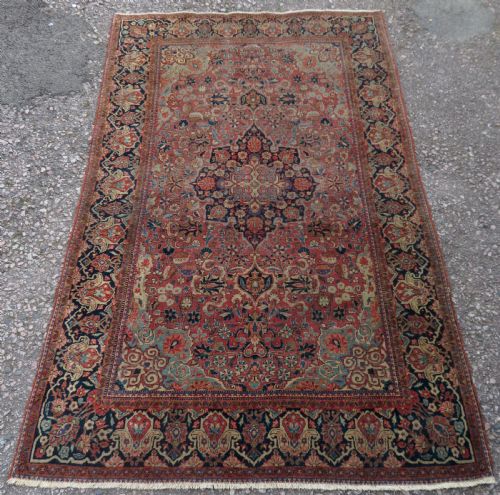
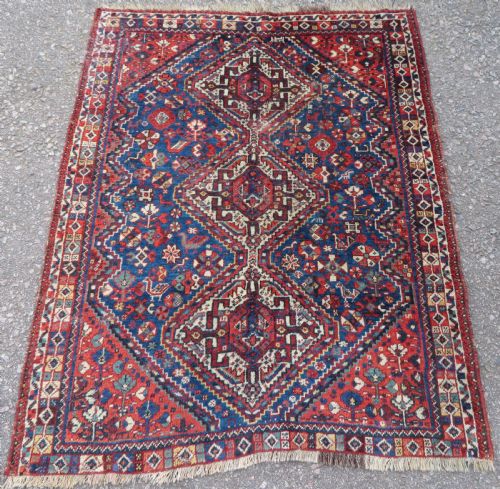
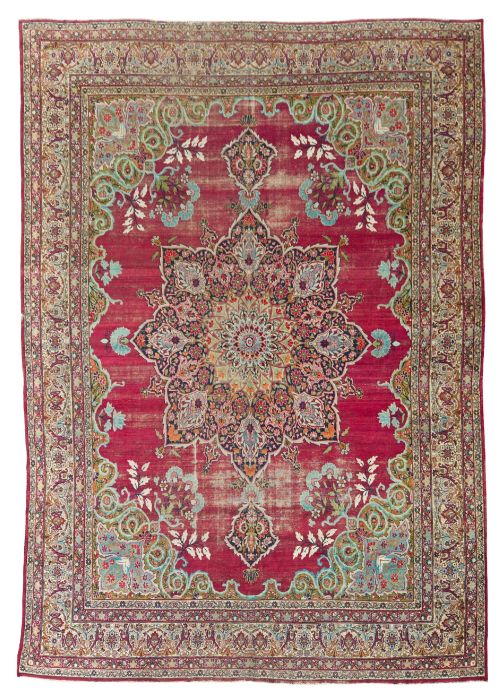
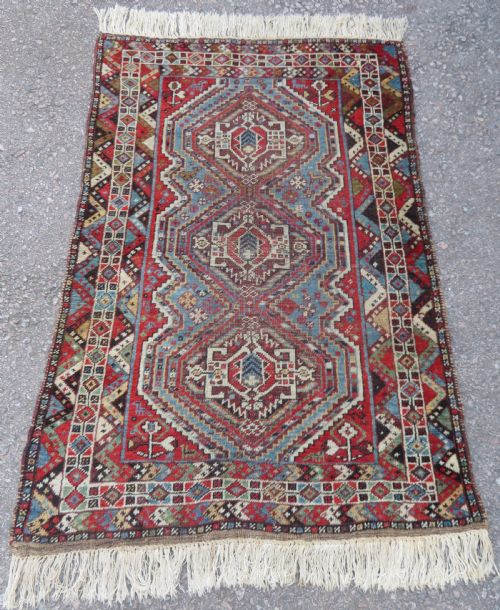
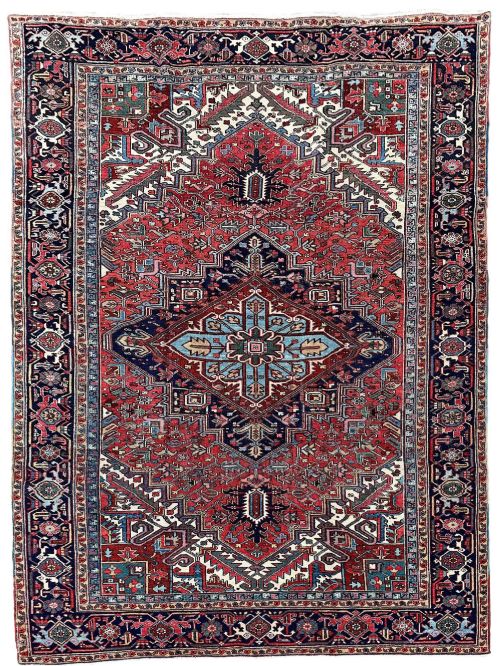
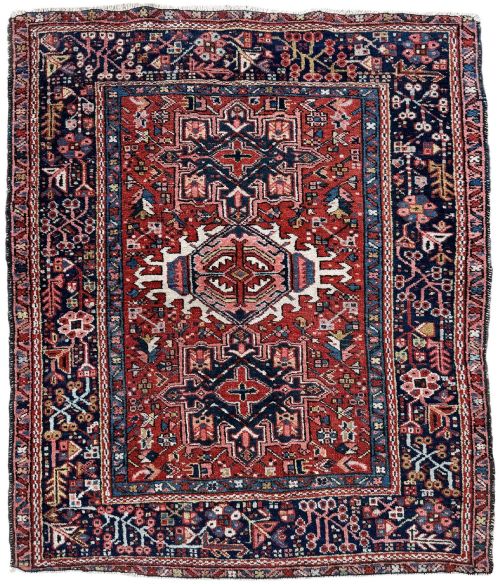
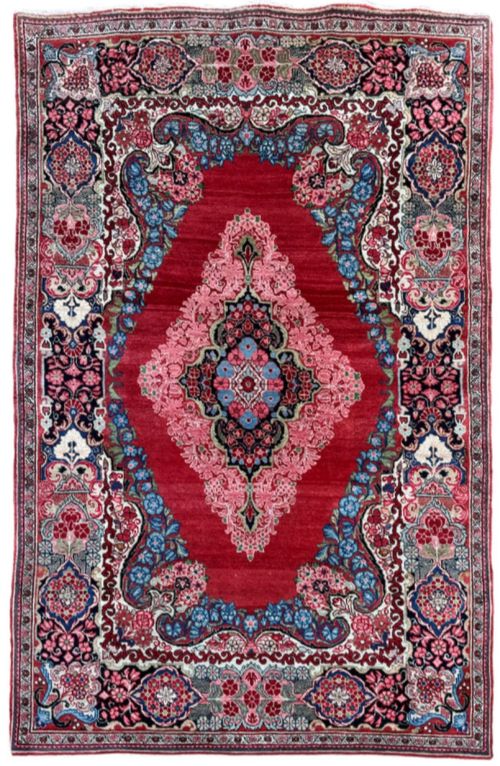
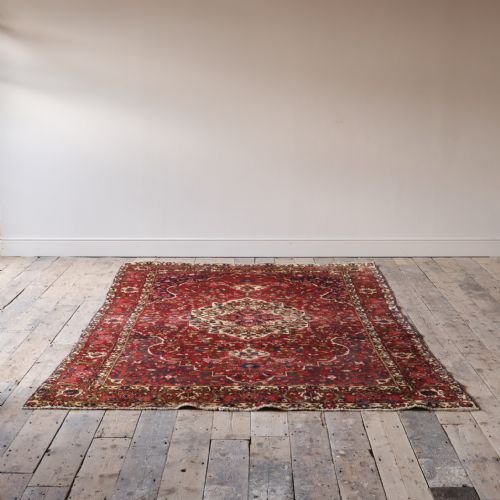
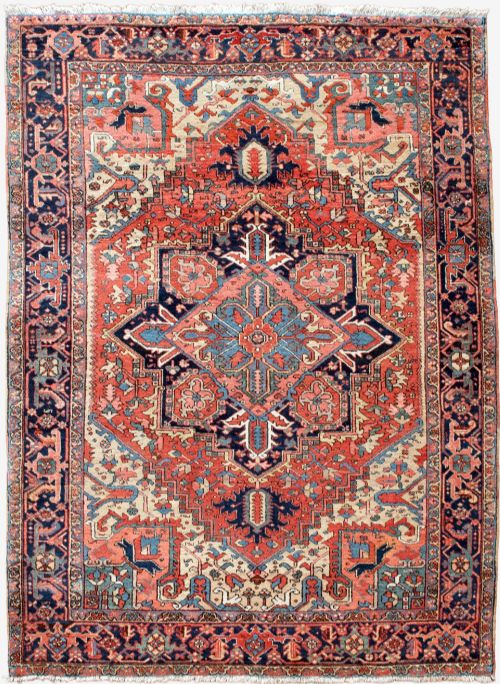
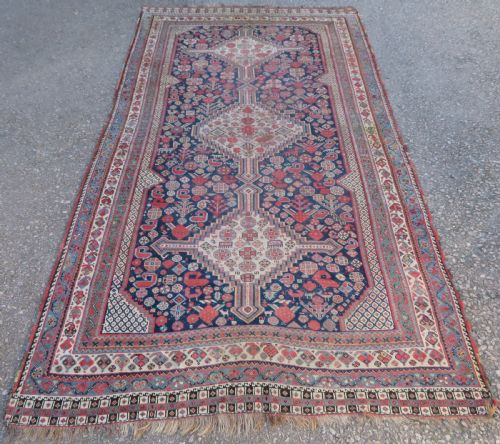
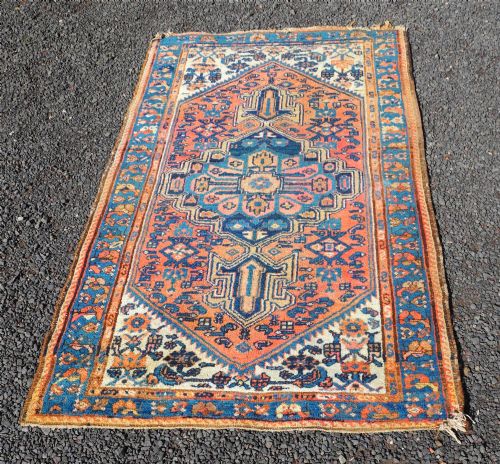
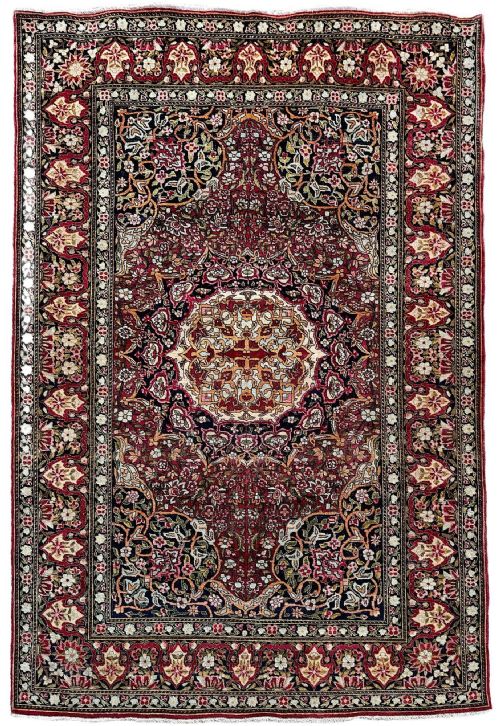
When searching for a traditional persian rug medallion, a buyer encounters hand-woven floor pieces originating from various Persian and regional workshops, towns, and tribal confederacies. These items span from the late nineteenth century through the early decades of the twentieth century, appearing as area rugs, large carpets, runners, and hearth-sized pieces.
The characteristic central motif serves as the focal point of the composition, surrounded by field patterns, corner spandrels, and patterned borders. Village and tribal examples such as Heriz, Bakhtiar, Khamseh, and Hamadan sit alongside city workshop productions like Tabriz, Isfahan, and Saroukh.
Formats range from compact hearth rugs to room-sized carpets exceeding four metres in length. The selection reflects both geometric tribal expressions and curvilinear city designs executed in wool, cotton, and occasional silk highlights.
Materials and construction methods
The structure relies on hand-spun wool pile knotted onto foundation warps and wefts typically made of cotton or wool. Natural and early synthetic dyes colour the yarns, yielding deep tones of navy, rust, madder, and ivory.
Weavers tied symmetrical or asymmetrical knots by hand across vertical looms, varying the density according to regional tradition. Sturdy cotton foundations provide structural stability for heavy village carpets, while finer city pieces utilise tighter knot counts to define intricate curves.
Some weavers playfully incorporated tiny stray animal figures or misplaced geometric knots into the borders.
Distinctions in quality
The depth and consistency of the dye work dictate visual harmony as the piece ages. Superior examples retain saturated colour variation across the field without muddying the central medallion or border details.
The Traditional Persian Rug Medallion Glossary
- Medallion
- The central ornamental motif placed in the middle of the carpet field. It usually takes a circular, hexagonal, or diamond shape.
- Spandrels
- The triangular corner areas situated between the central medallion field and the outer borders. They often echo the design motifs found within the central medallion itself.
- Kelleh
- A large format rectangular carpet traditionally proportioned as a long runner or gallery piece. These are considerably longer than they are wide.
- Kilim
- A flat-woven carpet or rug produced without a pile. They utilise interlocking warp and weft techniques to create geometric patterns.
- Warp
- The vertical foundation threads stretched lengthwise on the loom before knotting begins. The fringe of the rug is typically a continuation of these structural threads.
Traditional Persian Rug Medallion: Frequently Asked Questions
How do I identify a village rug?
Village rugs display bolder geometric motifs, heavier wool, and less symmetrical layouts compared to city workshop pieces.
They originate from specific districts like Heriz, Bakhtiar, or Hamadan, reflecting local weaving traditions rather than court designs.
What is a Serapi carpet?
Serapi refers to an older, finer nineteenth-century sub-type of Heriz carpet.
These pieces feature spacious geometric compositions with open fields and muted, luminous vegetable dyes.
Can these rugs go in hallways?
Long runner formats and gallery sizes suit corridors and high-traffic transitional spaces.
Sturdy wool pile and cotton foundations handle everyday footfall while protecting delicate flooring underneath.
How should I care for wool pile?
Vacuum gently without using a rotating beater bar to protect the hand-knotted pile and fringes.
Professional specialist cleaning is recommended for antique wool and cotton textiles to preserve the dye stability.