

Traditional Oak Trestle Table
A traditional oak trestle table brings sturdy timber and honest joinery into a room, offering a functional surface built to endure.
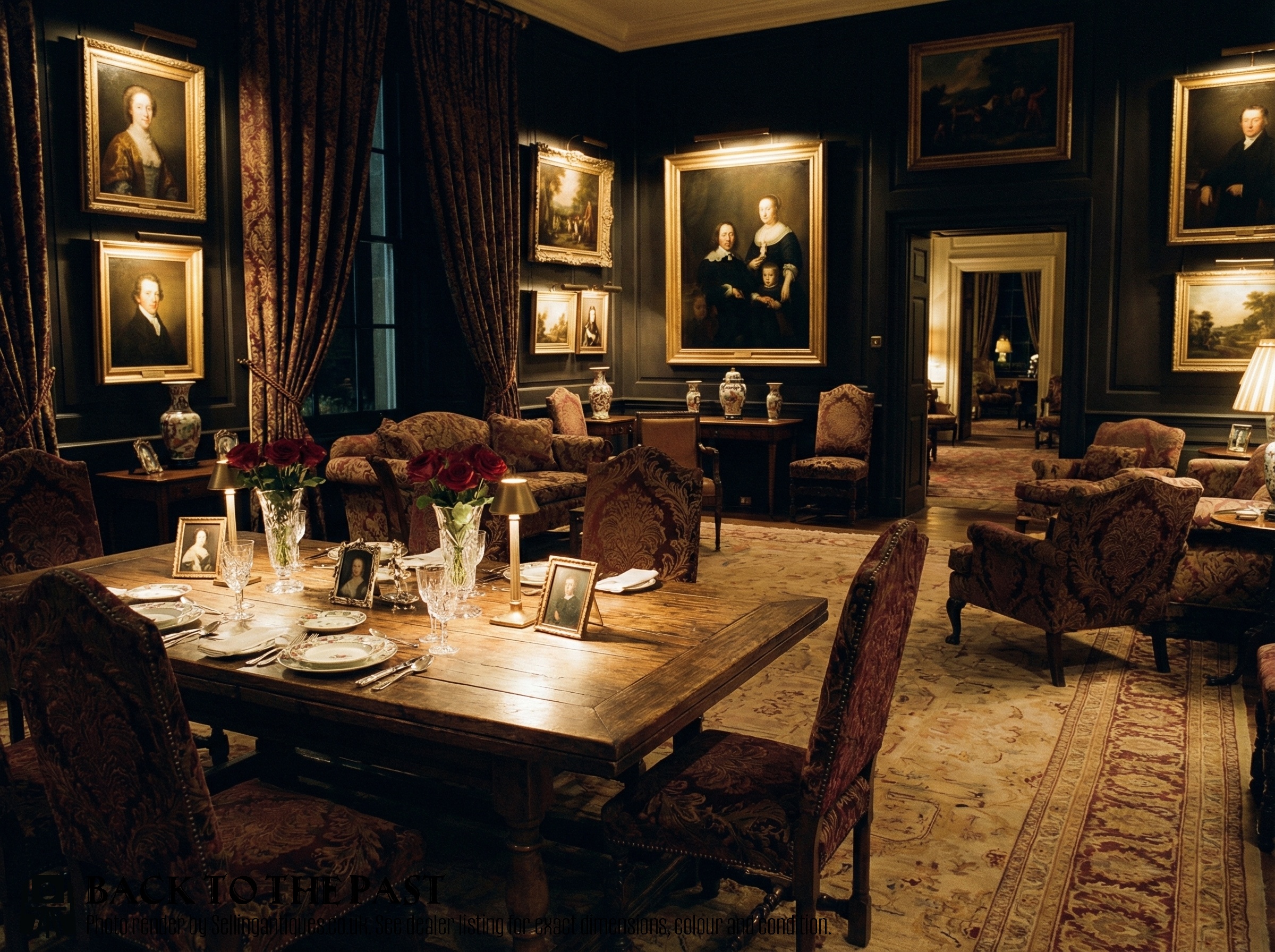
Traditional Oak Trestle Table
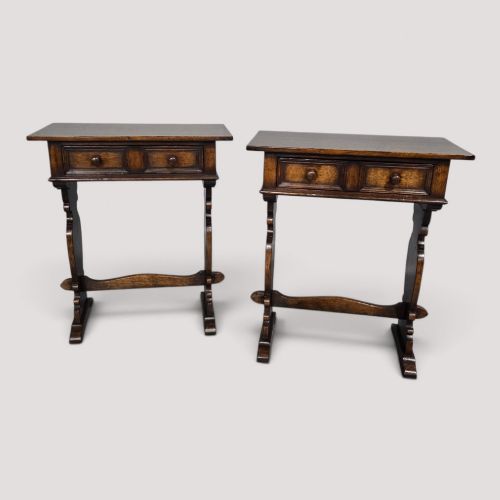
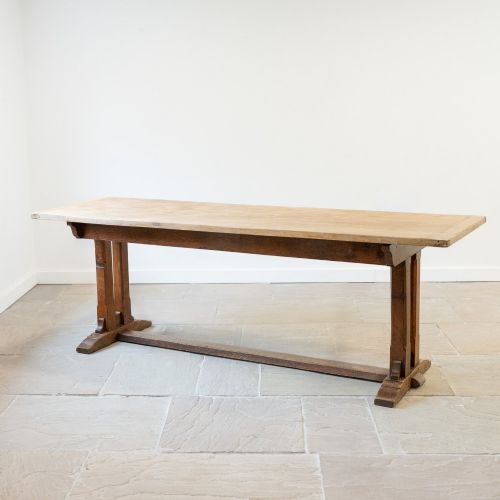
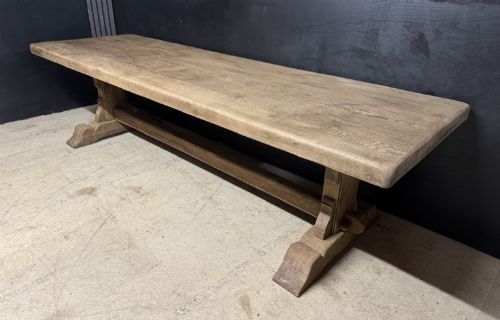
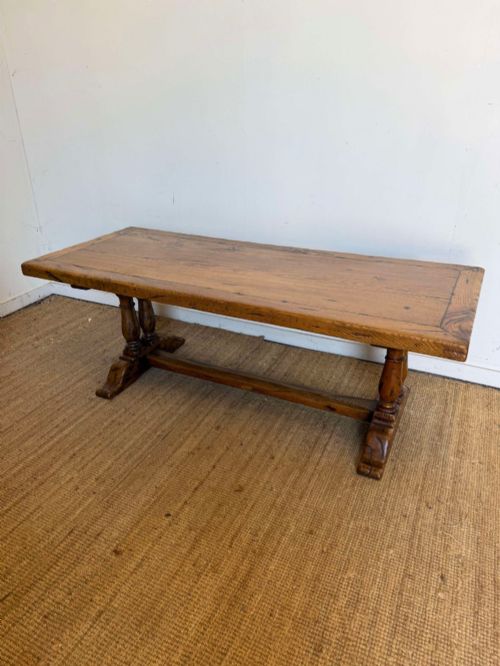
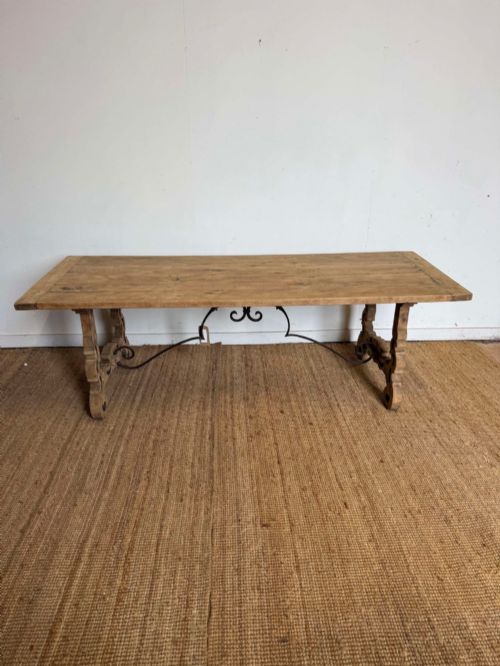
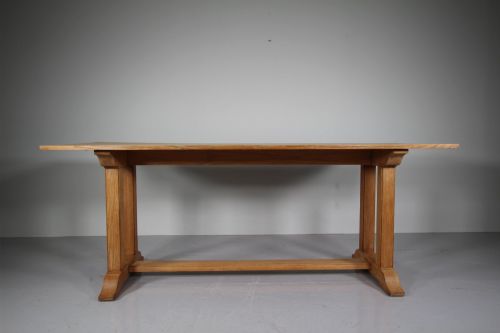
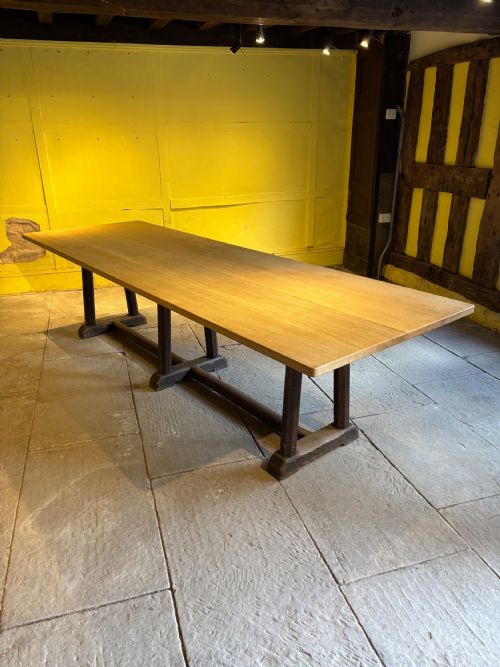
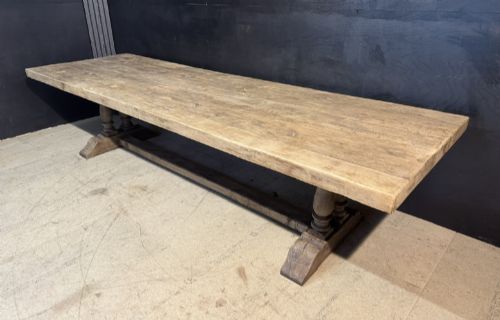
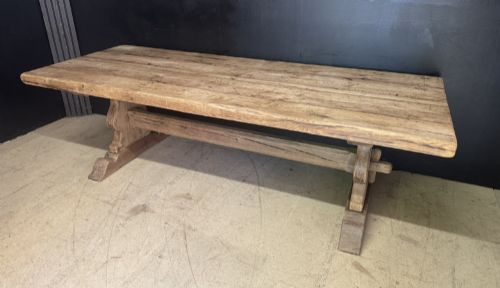
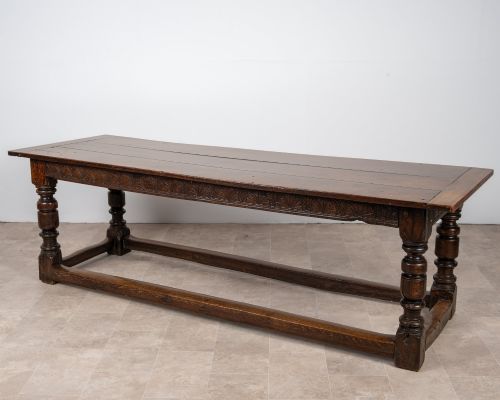
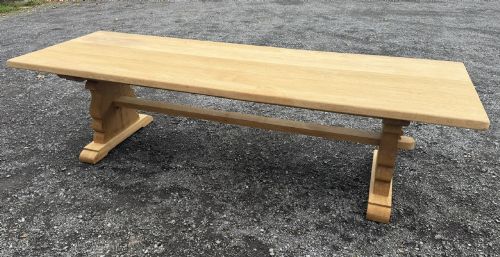
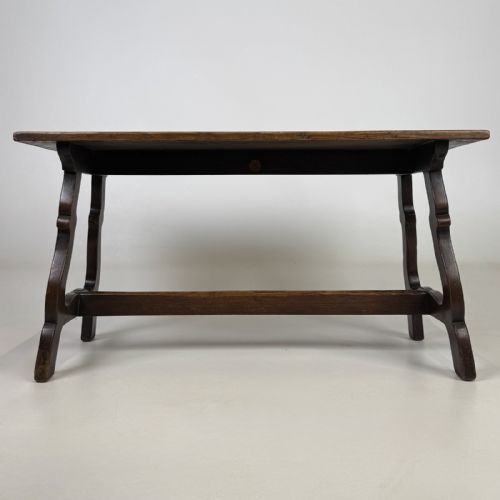
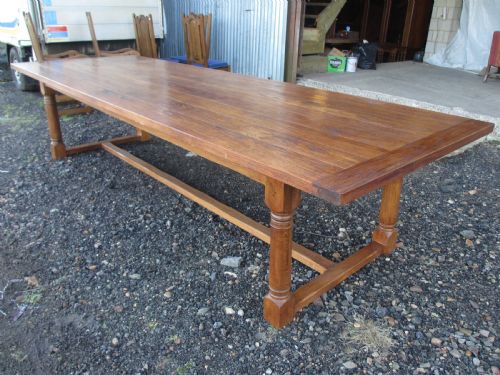
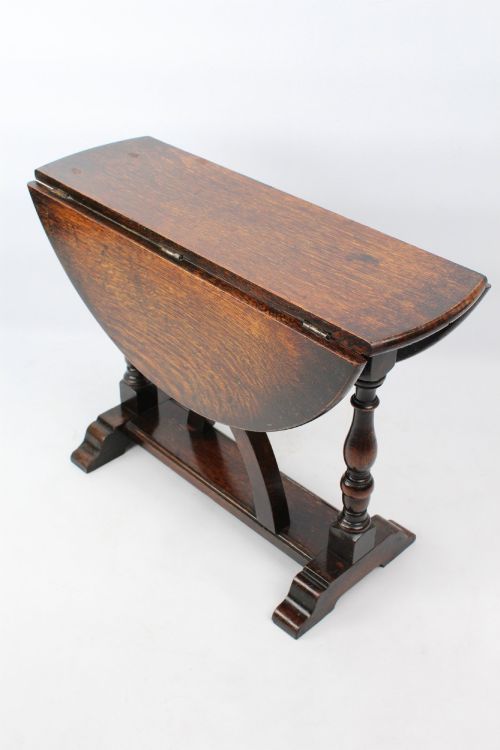
A traditional oak trestle table is a substantial piece of furniture designed primarily for dining, featuring a long top supported by shaped trestle ends rather than standard corner legs. These tables appear in forms such as long refectory pieces, extending kitchen formats, and smaller coffee or serving variants.
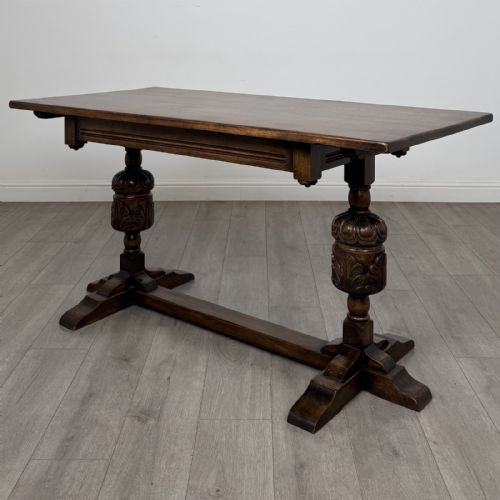
The pieces available span from the seventeenth and eighteenth centuries through to the Edwardian period and the early twentieth century. Buyers encounter rustic farmhouse designs, Jacobean revival interpretations, and Arts and Crafts examples alongside straightforward utilitarian dining formats.
Origins range across English and French country workshops, utilising sturdy regional woods suited to heavy daily use. The emphasis across all periods remains on long, thick planks and stable underframes.
How they were made
Construction relies heavily on solid oak, often paired with elm, beech, pine, or timber for secondary structural elements or secondary tops. Woodworkers selected heavy planks to ensure stability, sometimes utilising a single wide board for the primary surface.
Joints were pegged and tenoned by hand to withstand decades of heavy dining and kitchen work. Iron brackets or braces occasionally reinforced the sturdy wooden underframes of tavern and refectory formats.
Traditional Oak Trestle Table Retail Price Guide 2026
Typical asking prices for traditional oak trestle table among the pieces listed under this phrase on Sellingantiques today, from the lower quarter to the upper quarter. They describe what is for sale here now, not the wider market.
Periods represented span from the seventeenth century through the Georgian era, the Victorian period, and into the nineteen thirties.
What varies in quality
Quality separates tables built with thick, single-plank timber tops from those assembled with multiple joined boards. The weight and grain density of the solid oak dictate the longevity and visual gravitas of the piece.
Refinement in the shaping of the trestle ends and the crispness of any carved detail indicate the maker's skill. Tables retaining their original surface patination and uncompromised structural timbers hold greater integrity.
The Traditional Oak Trestle Table Glossary
- Trestle table
- A table consisting of two or more supports connected by a longitudinal beam that holds a horizontal top. This design allows for maximum seating space along the length.
- Refectory table
- A long, narrow dining table traditionally used in monasteries and large halls for communal meals. Later adaptations became standard for domestic dining and kitchen spaces.
- Draw leaf table
- A table equipped with sliding leaves tucked beneath the main top that pull out to extend the surface length. This mechanism accommodates extra diners when required.
- Single plank top
- A tabletop fashioned from one wide board rather than multiple joined strips. This feature indicates a tree of significant maturity and adds considerable heft.
- Jacobean revival
- A nineteenth and twentieth century style mimicking the heavy, carved ornamentation of seventeenth century English furniture. Pieces in this style often feature bold geometric turning and deep relief work.
Traditional Oak Trestle Table: Frequently Asked Questions
How do I seat people comfortably around a trestle table?
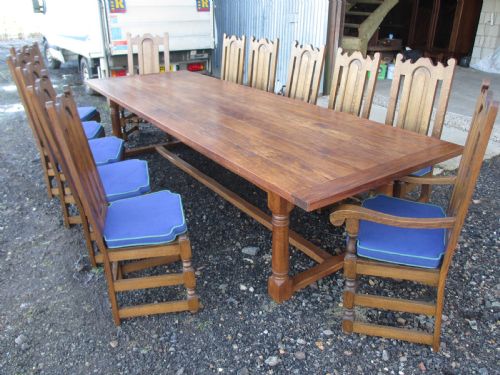
The absence of corner legs allows chairs or benches to tuck entirely beneath the surface along the full length. Benches matching the trestle ends are often paired with these tables to maximise seating flexibility.
Ensure you check the clearance beneath the side stretchers to confirm your dining chairs slide in without obstruction.
Can I use a traditional oak table in a modern kitchen?
These tables adapt readily to contemporary kitchen spaces, serving as robust surfaces for daily meal preparation and family gatherings. Solid oak withstands heavy domestic use and develops a richer character with age.
Pairing a rustic or refectory form with modern seating creates a practical and grounded centrepiece for open plan living.
How do I distinguish an 18th century table from a later revival piece?
Early pieces display hand-cut tool marks, pegged joinery, and natural timber shrinkage consistent with centuries of movement. The grain patination on older oak develops a deep, mellow warmth that factory sanding cannot replicate.
Revival pieces from the Edwardian era or the early twentieth century often show more uniform machine sawing and standardised hardware beneath the top.
What is the difference between a refectory table and a tavern table?
Refectory tables are typically long and narrow, designed to seat large households or communities along substantial trestle ends. Tavern tables are usually more compact, built for public houses or smaller domestic spaces with sturdy legs or trestles.
Both types utilise heavy timber tops intended to endure rigorous daily service.